Steel framed buildings have a good reputation when it comes to fire. The frame does not burn, they are often quick to escape from, and insurers generally look on them favourably. That said, it is easy to be lulled into a false sense of security. A steel structure can still be badly damaged in a fire, and poor layout or cladding choices may put people at risk or fall foul of UK regulations.
This guide explains how steel behaves in a fire, outlines the key compliance issues in the UK, and sets out practical steps you can take to keep people, property and business operations safer.
How Steel Behaves in a Fire
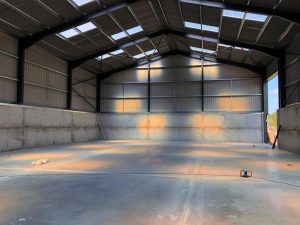 Steel is non-combustible, which is a major advantage. It will not add fuel to a fire in the way that timber can. However, under sustained high temperatures the strength and stiffness of steel reduce.
As temperatures rise, beams and columns may start to deflect and eventually lose their load-bearing capacity. In a serious fire that is not controlled, this can lead to local failure or even partial collapse. The building contents are usually the real fuel: hay and straw, packaged goods, vehicles, machinery, chemicals and plastics can all create intense heat.
So while a steel building is an excellent starting point, it still needs a considered fire strategy. Assuming “it is steel, so it will be fine” is where many projects go wrong.
UK Fire Safety Regulations – The Essentials
Fire safety in the UK sits under a few main pieces of legislation and guidance. A blog post cannot replace professional advice, but the broad picture looks like this:
- Building Regulations: New buildings and many refurbishments must comply with the Building Regulations, with fire safety covered primarily in Approved Document B. This influences escape routes, structural fire resistance, compartmentation, cladding choices and more.
- Regulatory Reform (Fire Safety) Order 2005: For occupied non-domestic premises, a “responsible person” must carry out a suitable and sufficient fire risk assessment and implement appropriate measures. This is an ongoing management duty, not a one-off tick box.
- Other guidance: Insurers, industry bodies and local fire and rescue services may issue guidance or requirements of their own, especially for higher-risk uses such as large storage sheds, workshops and livestock buildings.
For most owners, the practical takeaway is simple: design needs to consider fire safety from the start, and once the building is in use the risk assessment must be kept up to date.
Designing Steel Buildings for Fire Safety
Compartmentation and Layout
Good fire safety often starts with a sketch. Where are the high-risk areas? How quickly can people get out? Can fire and smoke be contained long enough for evacuation and firefighting?
Typical layout strategies include:
- Separating workshops, machinery areas, chemical stores or hay and straw from offices and welfare spaces.
- Using fire-resisting walls or partitions to create compartments so a fire in one area does not immediately threaten the whole building.
- Keeping escape routes short, direct and protected, with exits that are easy to find even in smoke.
In agricultural buildings especially, it can be tempting to keep everything under one big roof. In practice, breaking uses into more sensible fire compartments may be safer and, in the long term, better for business continuity.
Fire-Resistant Elements and Cladding
Doors, shutters and internal linings play a big part. Fire-rated doors and shutters can slow down spread between compartments and should be specified and installed correctly, not swapped later for cheaper alternatives.
Cladding and insulation choices matter too. Many modern systems achieve good fire performance, but some insulating cores are more combustible than others. Careful detailing around joints, penetrations and eaves is vital so that fire cannot bypass the protection you thought you had.
Structural Fire Protection for Steel
Whether the steel frame itself needs added fire protection depends on building height, use, occupancy, and the fire resistance period required under the Building Regulations and risk assessment. Where protection is needed, common options include:
- Intumescent coatings – paint-like products which swell in the heat of a fire, forming a char layer that insulates the steel. They are often chosen where exposed steelwork is part of the aesthetic.
- Board encasement – fire-resisting board systems fixed around beams and columns, often cost-effective in more utilitarian spaces.
- Sprayed protection – mineral-based sprays applied to the steelwork, more typical in some industrial projects.
Each approach has pros and cons in terms of appearance, cost, programme and maintenance. A design and build partner who understands both structural engineering and fire performance can help choose the right route.
Fire Detection, Suppression and Building Services
Detection and Alarm
Even the best structure needs early warning. In large open steel buildings, smoke detection and alarm zoning need thought. High ceilings, ventilation and dust can all affect detector performance.
Practical measures may include:
- A mix of heat and smoke detectors, chosen for the environment.
- Manual call points by exits and strategic locations.
- Sounders and, where machinery noise is high, visual alarms or beacons.
Suppression and Control
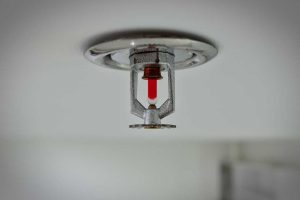
Full sprinkler systems are not mandatory in every steel building, but they may be strongly encouraged by insurers or risk assessments where there is high-value stock, complex processes or vulnerable occupants. Smaller premises might rely on well-placed extinguishers and hose reels, but these need to be supported by training, not just hung on a wall.
Meanwhile, smoke and heat vents in large roofs can help firefighters and reduce smoke damage, but they must be designed as part of a coordinated strategy, not bolted on at the end.
Electrical and Mechanical Safety
Cables, lighting, heating and plant all introduce potential ignition sources. Routing and supporting services through a steel frame should avoid unnecessary penetrations in fire-resisting elements, and any that are needed must be properly sealed. Cheap shortcuts here have a habit of showing up in fire investigation reports.
Managing Fire Risk Day to Day
A building can be compliant on paper and still unsafe in practice. Over time, storage creeps into escape routes, doors get wedged open and temporary wiring becomes permanent.
Key management points include:
- Keeping exit routes clear and emergency doors unobstructed.
- Storing flammable liquids, fuels and gases in suitable locations and containers.
- Managing waste and offcuts so they do not accumulate in corners.
- Operating a hot-work permit system for welding or cutting.
- Training staff and, where relevant, farm workers or yard teams in what to do if they discover a fire.
Regular inspections should also check that fire doors close properly, extinguishers are in date, detectors are tested and any structural fire protection has not been damaged.
Common Mistakes Seen in Steel Buildings
A few recurring issues tend to crop up:
- Assuming the steel frame never needs protection, even where regulations clearly call for a rated structure.
- Adding mezzanines, storage racking or new uses without revisiting the fire strategy or risk assessment.
- Blocking vents or covering detectors because they “get in the way” of day-to-day operations.
- Cutting holes through fire-resisting walls and ceilings for new services, then leaving them unsealed.
None of these are glamorous design topics, but they are exactly the sort of details that determine how a real fire behaves.
Working with a Specialist Partner
Fire safety is rarely about one clever product. It is usually about hundreds of small, sensible decisions joined up into a coherent strategy. That is why early dialogue between the client, designer, fire engineer, building control and contractor tends to pay off.
A specialist steel building provider can:
- Shape layouts with fire compartments and escape routes in mind from day one.
- Coordinate steel frame design with the required fire resistance period and chosen protection system.
- Help select cladding, doors and linings that meet both performance and budget expectations.
- Incorporate the practical needs of farming, industrial or commercial operations so safety measures are realistic to manage.
Conclusion
Steel framed buildings can offer excellent fire performance, but only when structure, layout, cladding, services and day-to-day management are all pulling in the same direction.
If you are planning a new building, extending an existing one or changing how a space is used, it may be worth revisiting fire safety now rather than after a problem arises. A short conversation at the design stage can prevent expensive alterations later – and, more importantly, help keep people and livelihoods safe.