
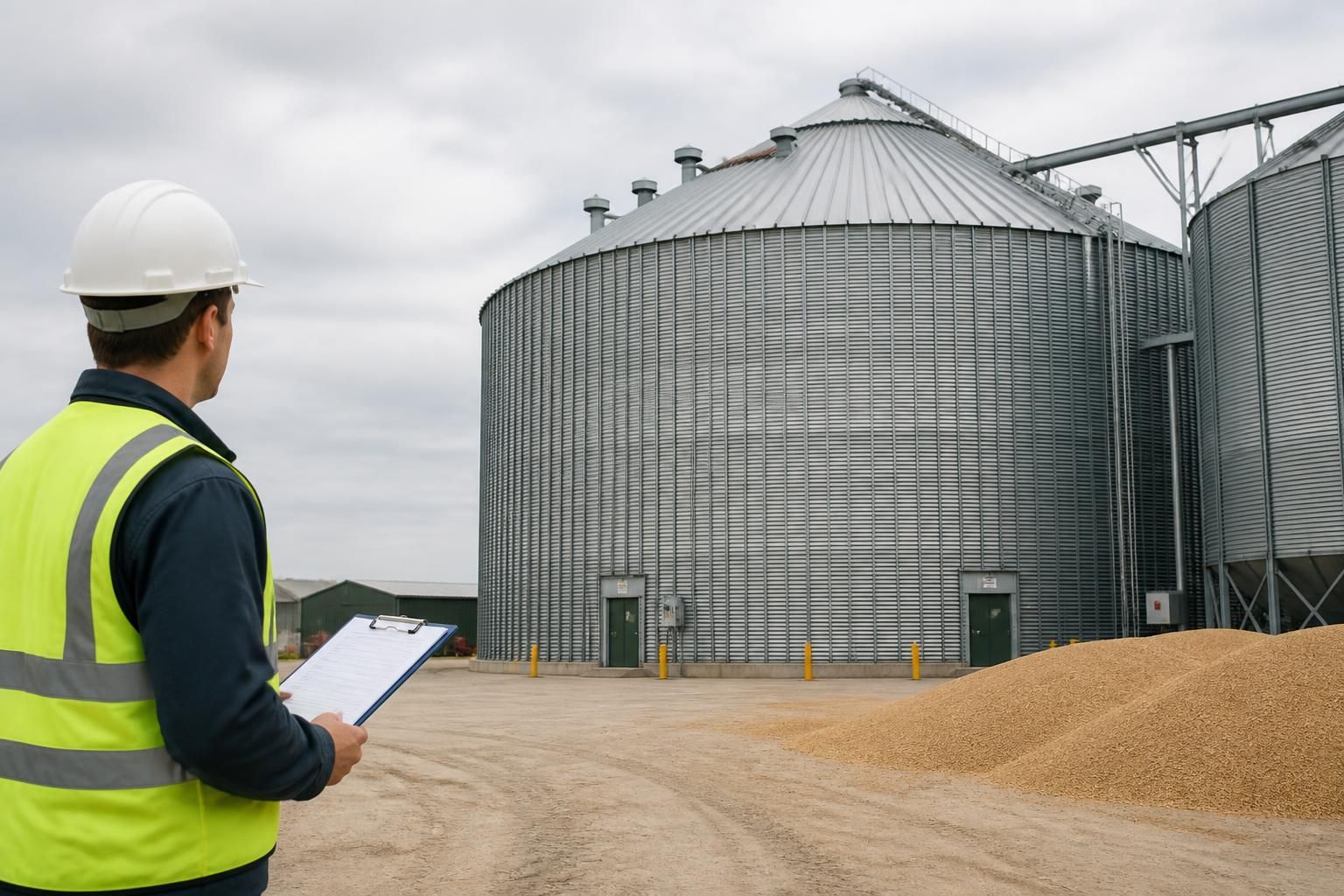
What fire safety measures should grain stores and silos incorporate?
Grain stores and silos should incorporate controlled ventilation, effective dust management, suitable fire detection and alarms, safe electrical installations, accessible firefighting equipment, and clear emergency access routes. Design should also minimise ignition sources, prevent dust accumulation, separate combustible materials where practicable, and provide safe procedures for inspection, maintenance and hot work.
Fire safety in grain stores and silos depends on controlling both conventional fires and combustible-dust explosions. A suitable approach combines a documented risk assessment with construction, process controls and emergency procedures that reflect the type of grain, storage arrangement, handling equipment and adjoining activities.
Start with a task-specific fire risk assessment. The assessment should map the movement of grain from intake through cleaning, drying, conveying and storage, identifying where dust clouds, deposits, heat or ignition could occur. It should also consider less obvious hazards, including vehicle movements, temporary equipment, battery charging, fuel storage, maintenance work and nearby workshops. Where combustible dust may create an explosive atmosphere, the assessment should determine whether the Dangerous Substances and Explosive Atmospheres Regulations (DSEAR) apply and whether hazardous-area classification is required.
Design for dust explosion protection. Grain dust can ignite rapidly when suspended in air, even where a store appears tidy. Silos, intake areas, cleaners, elevators and conveyors should therefore be assessed as connected parts of one process rather than isolated items. Explosion relief panels or other engineered pressure-relief arrangements may be appropriate, but they must discharge towards a safe location and be designed for the equipment and dust characteristics. Explosion isolation is also important: a fire or pressure event in one vessel should not be allowed to travel through connected ducts, conveyors or transfer points. These measures require competent specialist design rather than improvised openings or unverified modifications.
Control self-heating in stored grain. Grain can develop localised heating through biological activity, contamination or uneven storage conditions. Temperature trends should be monitored where appropriate, with defined action levels for investigation, turning, transfer or controlled removal. A rising reading should not simply be treated as a routine variation. Staff should know how to respond without creating a dust cloud or exposing themselves to heat, smoke or unstable material. Any cooling or emptying strategy should take account of the possibility of smouldering grain and re-ignition.
Use fire-resisting separation where it reduces escalation. The building layout should consider separation between grain storage, drying plant, intake machinery, workshops, offices, fuel stores and other combustible contents. Fire-resisting walls, doors or protected service penetrations may help limit spread, subject to the building design and the relevant fire strategy. Storage arrangements should also leave sufficient clearance around structural members, plant and inspection points so that heat damage or concealed smouldering can be identified.
Specify equipment for the environment. Fans, motors, bearings, conveyors, elevators and cleaning machinery should be selected, installed and maintained for grain-handling conditions. Mechanical faults such as seized bearings, belt slip, misalignment and blocked transfer points can generate heat before a fire is visible. Interlocks, automatic shutdowns and fault indication can help stop affected equipment, provided they are tested and linked to a clear response procedure. Earthing and bonding arrangements should address static electricity, while modifications should be recorded and assessed rather than added informally.
Plan for safe intervention in a silo. A silo fire presents additional hazards, including engulfment, bridging, collapse, toxic smoke and oxygen-deficient atmospheres. Entering a silo to inspect or tackle a suspected fire should never be treated as an ordinary maintenance task. The site procedure should define isolation, atmospheric assessment, access control, rescue arrangements and communication with the emergency services. Discharging grain can alter the stability of the contents and may intensify a fire by introducing air, so the correct sequence should be established by a competent person for the specific installation.
Provide information for the fire and rescue service. A current site plan should identify silos, stores, conveyors, shut-off points, electrical isolation points, fuel locations, access gates and any areas where collapse or explosion could occur. The plan should also record the types and quantities of stored materials, construction details and the location of relevant safety data. Keeping this information available at the site entrance can help responders make safer decisions during an incident.
Support the arrangements with training and review. Employees and contractors should understand the signs of overheating, smoke, burning odours, unusual machinery noise and dust releases, together with the procedure for raising an alarm and withdrawing from danger. Fire risk assessments should be revisited after changes to capacity, grain-handling equipment, building layout or working methods, and after any fire, near miss or significant overheating event. For a new grain store or silo, these requirements are best considered during the structural and process design stage so that fire separation, equipment locations, inspection access and emergency planning work together.
Buildings UK Ltd can incorporate relevant design considerations into bespoke British-made steel-framed agricultural buildings, with planning elevations and fabrication drawings developed for the proposed arrangement. Fire engineering requirements, hazardous-area assessments and specialist explosion-protection design should be confirmed with the appropriate competent professionals for the individual site.
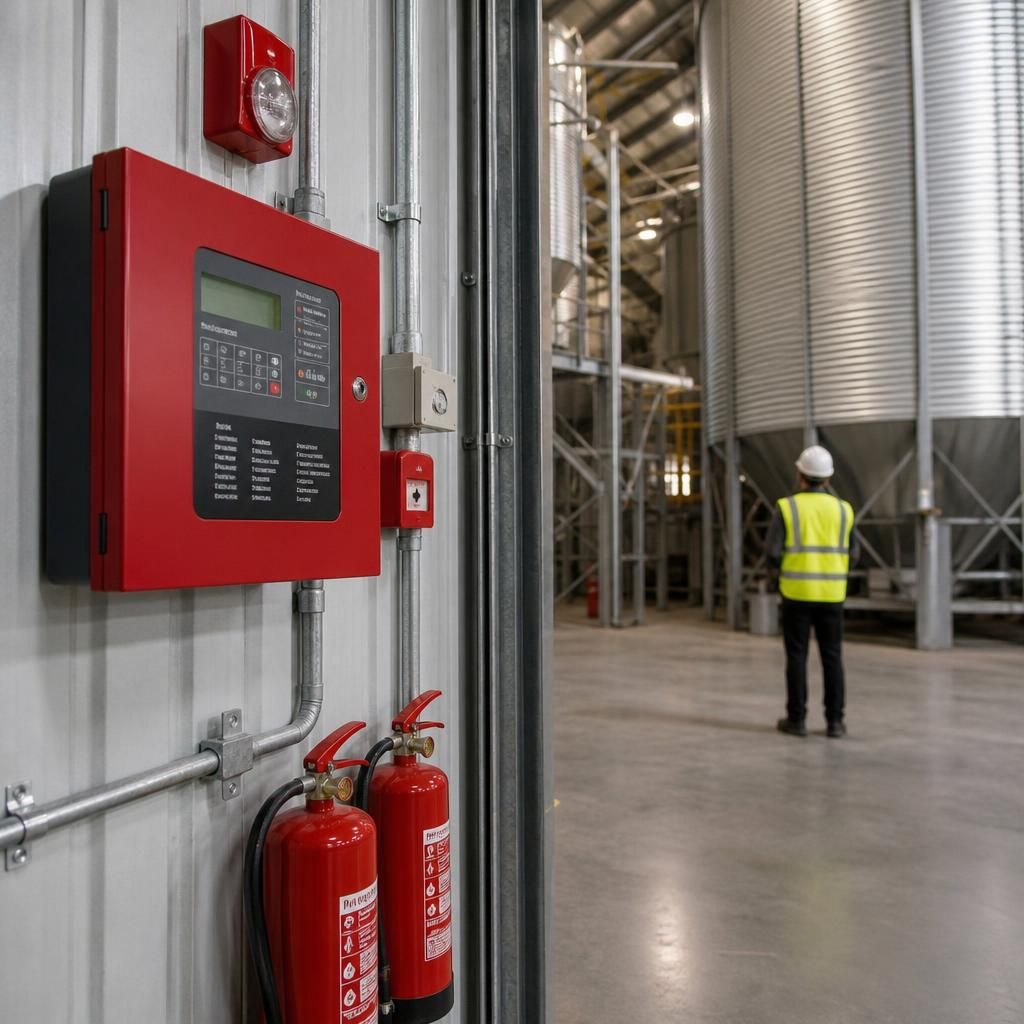
Fire detection in grain stores and silos should be selected and positioned according to the areas being monitored, rather than treated as a single alarm point. Heat detection may suit dusty machinery spaces where smoke detectors could produce unwanted alarms, while smoke, flame or aspirating detection may be appropriate in cleaner areas or where early warning is particularly important. Silos and enclosed conveyors require careful consideration because a fire may develop inside equipment before smoke is visible within the building.
Detection systems should cover likely ignition points such as dryers, bucket elevators, transfer towers, electrical rooms and drive machinery, with alarm signals that can be heard or seen in noisy operating areas. Detectors must remain accessible for inspection and cleaning, since dust deposits can affect performance. Testing should confirm that alarms, fault indications and any linked shutdown functions operate correctly, with results recorded and defects addressed promptly.
Discuss Your Grain Store or Silo Design
If you are planning a new grain store or silo, discuss the proposed layout, storage arrangement and fire safety requirements with Buildings UK Ltd before the design is finalised. This allows relevant structural and access considerations to be addressed alongside the wider fire strategy.