
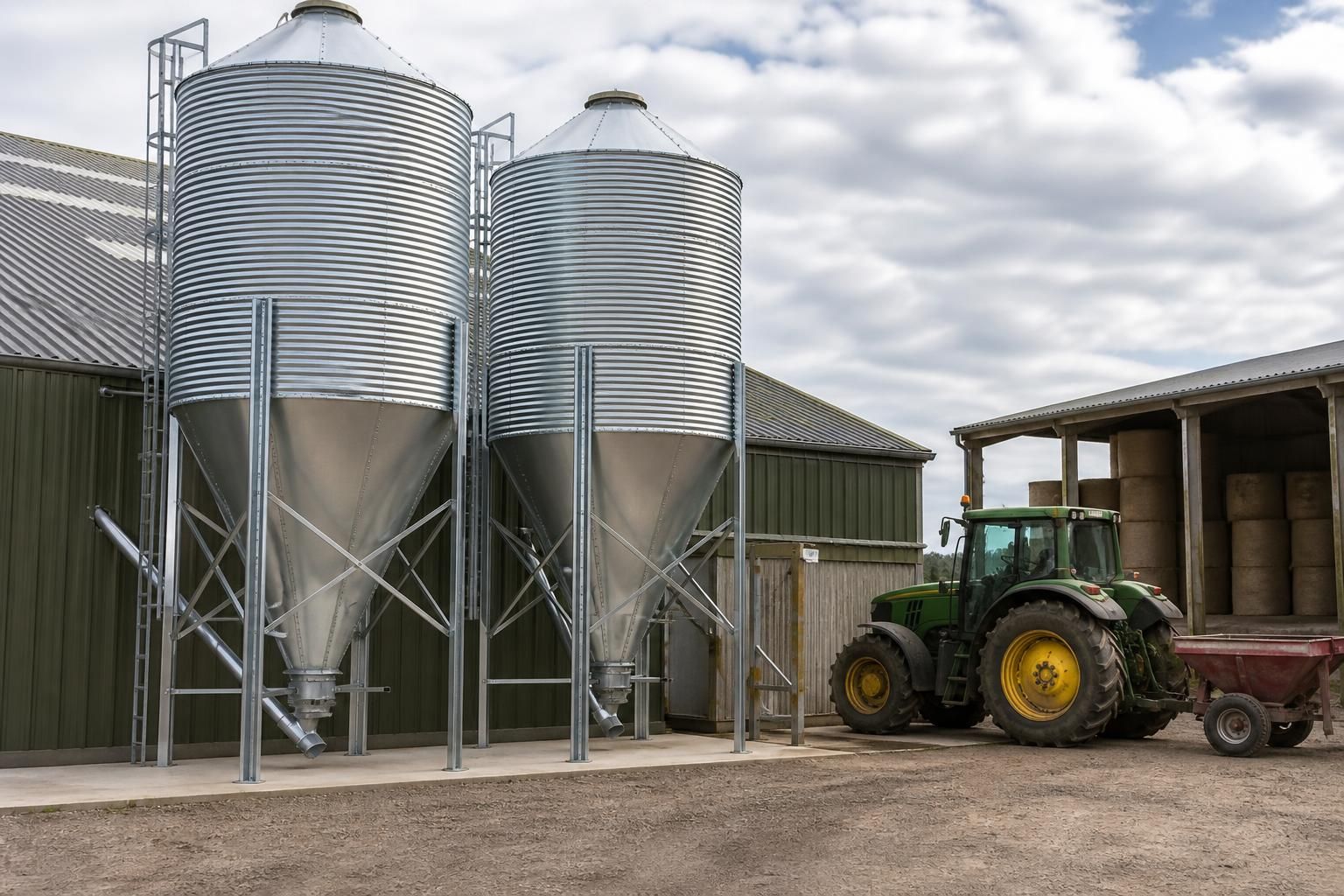
Feed Bins & Grain Hoppers
Feed bins and grain hoppers are purpose-designed storage units for keeping cattle feed and grain contained, dry and accessible. Their capacity, discharge arrangement and steel construction should suit the material stored, handling equipment and available space on the farm.
Choosing the Right Feed Bin or Grain Hopper
When is a grain hopper preferable to a conventional grain store?
These systems suit farms needing organised bulk storage, controlled transfer to feeders or augers, and protection from contamination, particularly where regular deliveries, limited handling space, or expansion justify dedicated capacity.
What capacity should a cattle feed bin provide?
Capacity should reflect average feed demand, delivery frequency, storage duration and reserve requirements. Allow headroom without leaving excessive space, while bin dimensions remain compatible with loading access and discharge equipment.
Which site conditions affect feed bin installation?
Ground stability, drainage, access for delivery vehicles, overhead clearance and proximity to existing handling equipment all influence placement. Planning constraints, underground services and safe maintenance access should also be assessed.
Which livestock feeds can be stored in feeding bins?
Feeding bins can store dry cattle rations, rolled cereals, pellets, meal and other free-flowing feeds. Moist, sticky or poorly flowing materials may bridge, requiring specialist equipment or alternative storage methods.
What maintenance access do feed bins require?
Provide safe access for inspection points, inlet equipment, discharge mechanisms and structural connections. Fixed ladders, platforms or guarded walkways may be appropriate, subject to risk assessment and the bin’s design.
Comparing Feed Bins, Grain Hoppers and Alternative Storage Options
Choosing between cattle feed bins, feeding bins, grain hoppers and alternatives depends on handling method, moisture control, available headroom and required scale. Each option suits a different storage arrangement, from individual bags to bulk farm infrastructure.
Feed Bins
Feed bins are suited to storing dry cattle feed in a dedicated, contained unit. Their vertical form uses limited floor space and keeps stock separate from other materials, while the size and outlet should match the feeding system and delivery equipment.
Grain Hoppers
Grain hoppers are designed around controlled gravity discharge, making them appropriate where grain needs to move regularly into augers, conveyors or other handling equipment. Their tapered lower section supports emptying but requires suitable headroom and access around the outlet.
Bagged Feed Storage
Bagged storage offers flexibility for smaller quantities, changing feed types or operations without bulk-handling equipment. It can use an existing enclosed room or store, although it requires more manual handling and floor space than a vertical bin.
Flat-Floor Grain Stores
A flat-floor grain store is more adaptable when capacity, crop type or internal layout may change. It provides broad usable space rather than the compact vertical profile of a hopper, but loading, aeration and removal usually need a planned handling arrangement.
Integrated Steel Storage Buildings
A larger steel-framed building suits projects combining grain storage with machinery, feed or other agricultural uses. It offers greater scope for access doors, circulation and future layout changes, but has a larger physical and planning footprint than an individual bin or hopper.
Feed Bin and Grain Hopper Features
A suitable installation combines correctly specified hot-rolled steelwork with a design package addressing loading, access and discharge requirements. CE-marked components provide a documented structural basis, while planning elevation drawings and isometric fabrication blueprints help coordinate the arrangement before manufacture.
Kit supply, delivery and full erection can be selected to suit site access, available labour and handling arrangements.
Hot-Rolled Steel Construction
Feed bins and grain hoppers use British-made, CE-marked hot-rolled steelwork to provide a documented structural basis for the installation.
Application-Led Sizing
The design can account for the stored feed or grain, required capacity, available footprint and the equipment used to load and empty the unit.
Integrated Discharge Arrangement
Hopper outlets and discharge points can be coordinated with the intended handling system, helping the storage unit fit the working layout of the agricultural or industrial site.
Detailed Design Information
Planning elevation drawings and isometric fabrication blueprints define the proposed arrangement and provide clear information for project coordination.
Worcestershire Manufacture
Steel components are manufactured in Worcestershire, with fabrication based on the agreed design for the individual feed bin or grain hopper installation.
Kit Supply or Erection
Customers can choose building kit supply for their own installation arrangements or select a full erection service as part of the project.
Questions to Ask Before Choosing Feed Bins or Grain Hoppers
Before selecting cattle feed bins or grain hoppers, confirm the required capacity, overall height, footprint and clearance for filling, inspection and emptying. Check whether the proposed position suits the material stored, vehicle movements and any future changes to the farm’s handling system, and establish whether planning permission, drainage or site-specific foundation information is required.
Ask for a complete cost breakdown covering the bin or hopper, supporting steelwork, foundations, transport, installation and any connecting equipment. It is also important to confirm the expected lead time, the information needed before manufacture, and who is responsible for surveys, approvals, ground preparation, delivery, assembly and final checks.
What capacity and dimensions are required?
Capacity should be assessed against current feed or grain usage, delivery quantities and the space available for the installation. The bin or hopper must also fit the site without restricting vehicle access or routine inspections.
Confirm the working dimensions
Ask for the usable capacity as well as the overall height, diameter or footprint, inlet position and outlet height. Check the clearance needed for delivery vehicles, augers, conveyors and maintenance access, including any allowance for future changes to the handling system.
Are planning or design approvals needed?
A feed bin or grain hopper can affect the appearance, height and operation of a farm installation. Confirm the approval requirements before the layout is finalised or materials are ordered.
Clarify the planning information
Ask whether the proposed arrangement requires planning permission, building control input or other site approvals. Request planning elevation drawings showing the position and profile of the equipment, and establish who will prepare, submit and amend any information required by the relevant authority.
What ground and foundation information is required?
The supporting arrangement depends on the condition and bearing capacity of the ground, not only on the size of the bin or hopper. Foundation decisions should be made before the steelwork is manufactured.
Check the supporting works
Ask whether a ground investigation, level survey or engineer’s foundation design is needed. Confirm the required slab, pads, holding-down bolts, drainage and finished levels, together with responsibility for excavation, reinforcement, concrete, curing and checking that the foundations are ready for installation.
How should the bin or hopper be specified?
The specification needs to reflect the stored material and the way it will be loaded, discharged and cleaned. Small differences in outlet arrangement or access can affect the connected handling equipment and supporting steelwork.
Review the technical specification
Confirm the material type, flow characteristics, loading method, discharge outlet, slide gates or auger connections, inspection access and corrosion protection. Ask for the relevant CE-marked structural details and isometric fabrication blueprints, and check that interfaces with existing conveyors, fans or other equipment are clearly identified.
What should the quoted cost include?
A low equipment price may not represent the complete project cost if associated works are excluded. Request an itemised quotation before comparing options.
Separate equipment from site costs
Ask the supplier to identify the costs for the bin or hopper, support steelwork, design documentation, foundations, delivery, lifting, assembly and connections. Confirm whether excavation, electrical work, access improvements, commissioning and removal of temporary works are included, excluded or supplied by others.
What is the programme and who manages each stage?
The programme depends on the information available for design, site readiness and the chosen supply arrangement. Responsibilities should be recorded so that preparation and installation do not become unclear between different parties.
Agree milestones and responsibilities
Ask when design information must be approved, when manufacture can begin and what conditions affect delivery and erection. Set out who is responsible for the site survey, approvals, final measurements, groundworks, transport access, unloading equipment, assembly, connections, inspection and handover, whether the project is supplied as a kit or with full erection.
Once these points have been answered, the next step is to turn them into a written specification for the proposed feed bins or grain hoppers. This should set out the selected arrangement, supporting structure, interfaces with existing handling equipment and the drawings included for review.
Review the specification with everyone involved in the project before approval, including the farm operator, designer and any contractor preparing the site. A clear agreed scope helps prevent misunderstandings and provides a sound reference through manufacture, installation and future maintenance.
Request a Bespoke Feed Bin Design and Quotation
Discuss your proposed feed bin or grain hopper with Buildings UK Ltd to clarify the required arrangement, supporting steelwork and design information. Request a bespoke quotation based on your project requirements, with the drawings and supply or erection option included.