
What security options are available for steel sheds?
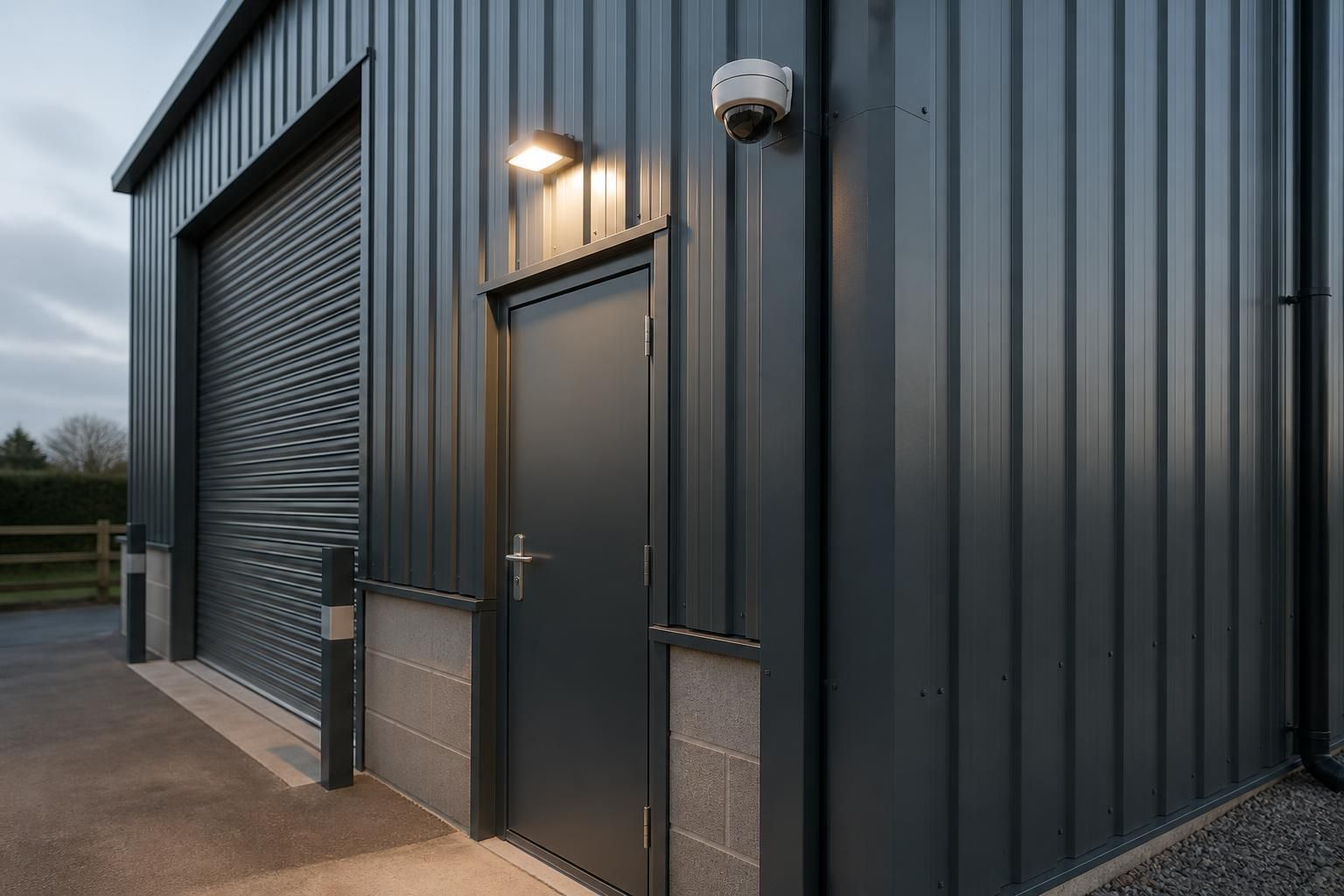
Security options for steel sheds include high-security locks, reinforced doors, alarms, security lighting, CCTV and controlled access systems. The most suitable combination depends on the building’s use, the value of the stored equipment and the level of site security already in place.
Effective steel shed security is based on layers: delay unauthorised entry, detect an attempted breach, make the building difficult to approach unnoticed and control who can enter. The right specification depends on the shed’s contents, its location, the number of users and whether access is needed by people, vehicles or both.
Start with the doors and access points. Doors are usually the most vulnerable part of a building, so their construction and hardware should match the value of the equipment inside. Options include:
- Heavy-duty steel personnel doors with reinforced frames and protected hinges.
- Multi-point locking, which secures the door at more than one position rather than relying on a single latch.
- Anti-drill or otherwise security-rated cylinders where keyed entry is used.
- Protected hasps and shrouded padlocks, reducing the opportunity to cut or attack the locking hardware.
- Security-rated roller shutters or sectional doors for vehicle access, with controls positioned where they cannot easily be reached from outside.
- Separate pedestrian access where practical, allowing the large vehicle door to remain closed when it is not required.
Doors should be designed so that the frame, hinges and surrounding steelwork are not significantly weaker than the lock itself. Any emergency exit must remain usable for safe escape, so additional security measures should not obstruct it or conflict with fire safety requirements.
Limit other possible entry routes. Windows, rooflights, vents and service openings should be considered during the design stage. Security glazing, internal bars or grilles and restricted-opening windows can reduce vulnerability, while mesh guards can protect vents without preventing necessary airflow. Openings for cables, pipes and extraction equipment should be kept as small as practicable and properly sealed around the installed service.
Where a shed has valuable machinery or stock, internal separation can provide another layer of protection. A lockable store, tool room or enclosed equipment area means that gaining access to the main building does not automatically give access to every asset. High-value items can also be secured to fixed structural points using suitable chains or anchors, provided the arrangement does not interfere with vehicle movements or safe working areas.
Use detection to identify unauthorised activity. Intruder systems can be configured around the building’s layout rather than treating the whole shed as one space. Door contacts can identify an opening, while internal detectors can monitor movement in selected areas. Larger buildings may benefit from separate zones for offices, workshops, storage areas and vehicle bays, enabling authorised activity in one zone without disabling protection everywhere else.
Where an alarm is fitted, consider how it will be armed and disarmed, who receives alerts and how false alarms will be managed. Systems may use a keypad, fob, mobile application or another access method. Equipment should be positioned and protected so that an intruder cannot easily reach the control panel before the system raises an alert.
Make the site visible and controllable. Security lighting can remove dark approaches and improve the usefulness of cameras, but it should be aimed carefully to avoid glare, nuisance to neighbours or shadows immediately beside doors. Lights operated by movement sensors can be useful around infrequently used elevations, while permanently illuminated areas may be more appropriate around regular loading or parking zones.
CCTV is most effective when cameras cover the approaches, entrances, loading areas and internal locations where valuable equipment is stored. The camera position should show faces and activity clearly rather than only recording the roof or the top of a vehicle. Check that footage can be retained for an appropriate period, that the system remains usable in low light and that access to recordings is restricted to authorised people.
For sites with several users, electronic access control can provide more accountability than a shared key. Fobs, cards, keypad codes or mobile credentials can be issued to individuals or groups and removed when access is no longer required. Different permissions can be applied to offices, stores and workshops, while an audit trail may show when a controlled door was used. Mechanical keys may still be suitable for smaller buildings, but they should be managed carefully and not left in vehicles or unsecured offices.
Consider the surrounding site as part of the specification. A secure building can still be exposed if gates are left open, boundary fencing is poor or vehicles and portable tools are stored directly beside an accessible wall. Clear sightlines, controlled parking, secure gates and the removal of concealment points can make unauthorised approach more difficult. Signage can also indicate that the site is monitored, although it should accurately reflect the systems that are actually installed.
Electrical security equipment should have a suitable power arrangement and protected cabling. Where a building is isolated or subject to power interruptions, the designer may need to consider battery backup, communications coverage and how alerts are handled if the primary connection fails. These details are particularly important for agricultural and industrial buildings that may be separate from occupied offices.
The security specification should be agreed alongside the building layout, door sizes, ventilation, lighting and intended use. This avoids retrofitting cameras where their view is blocked, placing lights where doors cast shadows or selecting access equipment that does not suit vehicle traffic. A practical design review should identify the assets requiring the greatest protection, likely entry points, authorised users and the consequences of losing access to the building.
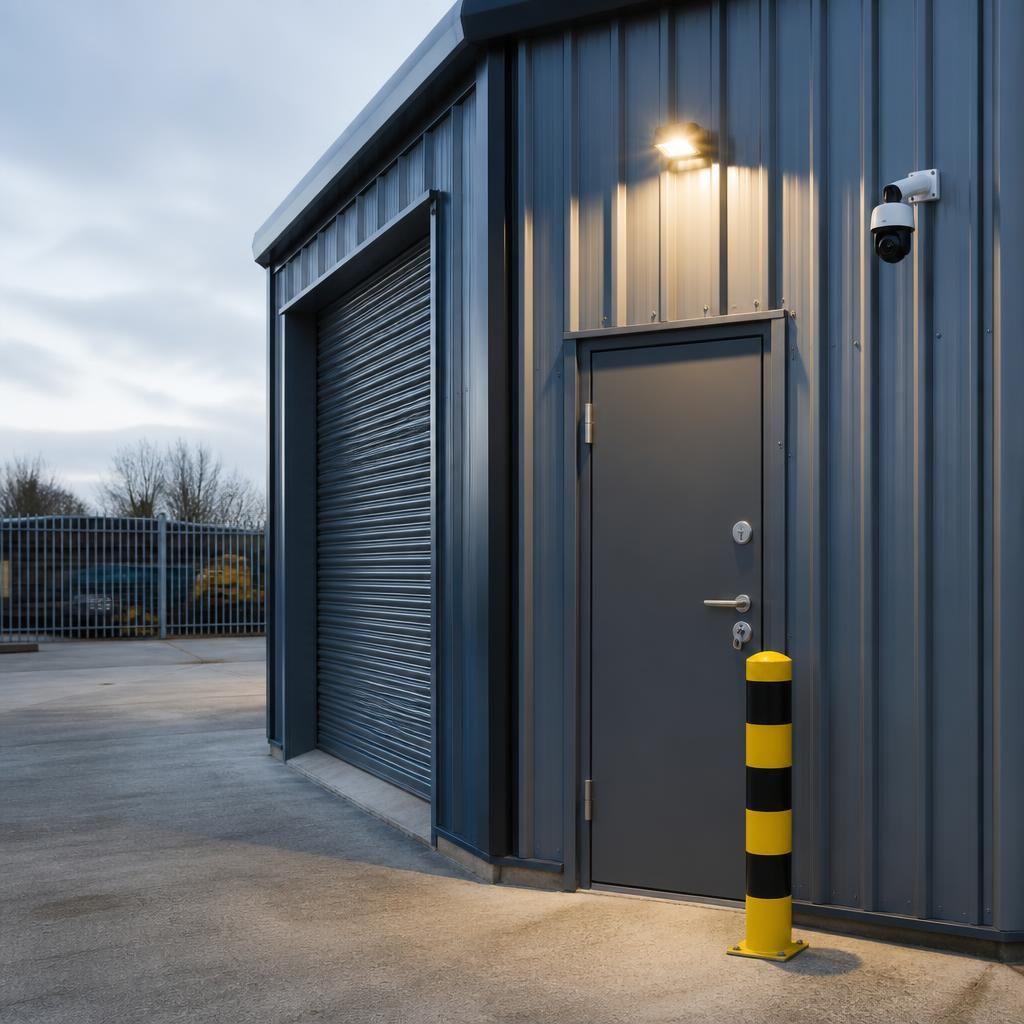
Security performance should be assessed as a complete assembly rather than by the lock alone. When comparing options, check the stated security rating or test evidence for the door, frame, hinges, cylinder and locking points together. A strong cylinder fitted to a lightly constructed door may provide limited additional protection if the surrounding components can be forced or removed.
Ask for the intended level of resistance and confirm that the selected hardware is suitable for the building’s environment. Agricultural and industrial sheds may expose locks and doors to dust, moisture, impact from vehicles or frequent use, so the specification should balance attack resistance with reliable day-to-day operation. This gives a more meaningful basis for selecting security equipment than descriptions such as “heavy duty” alone.
Discuss your steel shed security requirements
Discuss your steel shed security requirements with Buildings UK Ltd so suitable security provisions can be considered alongside the building specification. Share details of the intended use, stored equipment and required access arrangements to support an informed design discussion.