
How are prefabricated steel building components manufactured?
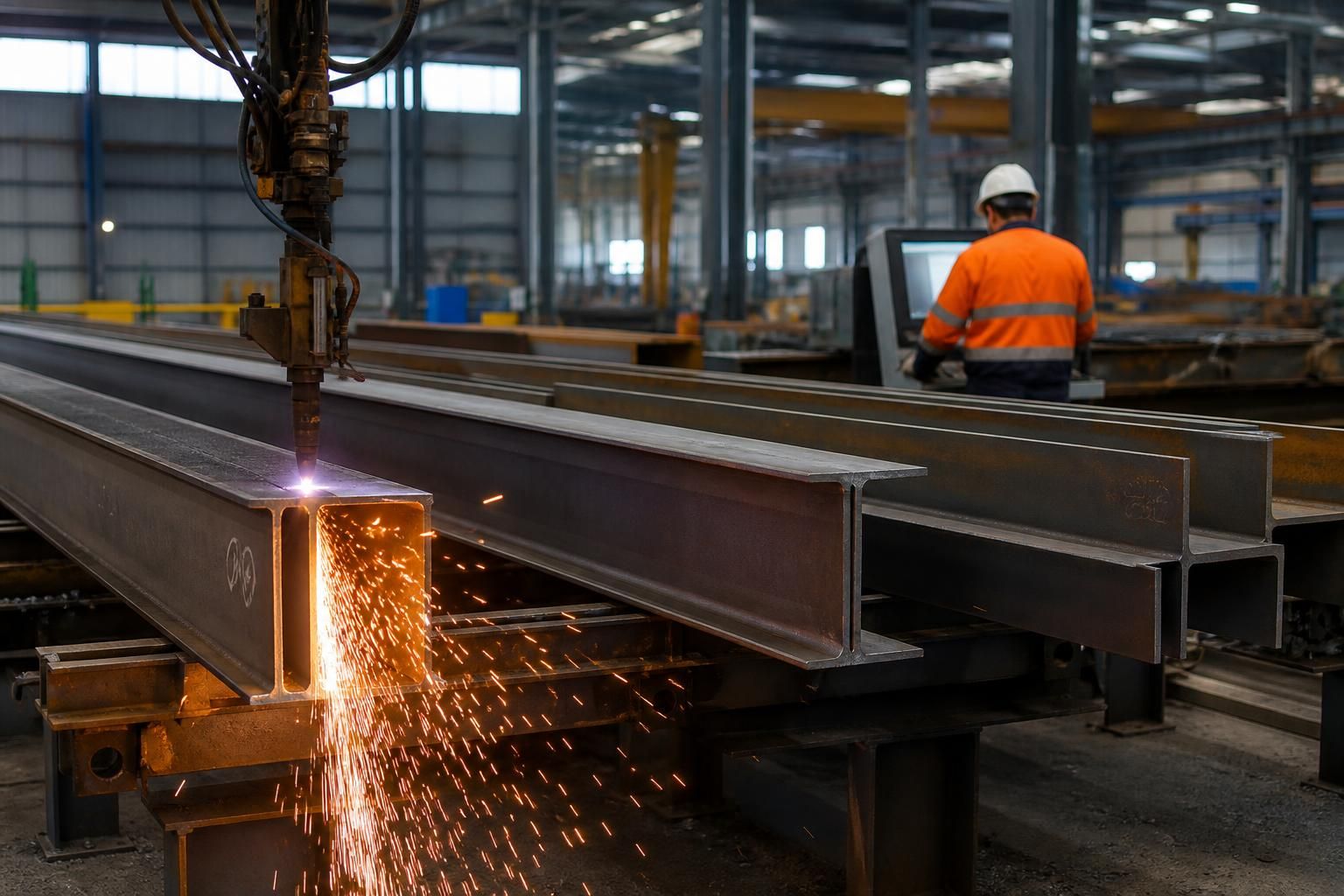
Prefabricated steel building components are manufactured from hot rolled steel using detailed structural designs and fabrication drawings to define each part’s dimensions, connections and assembly requirements. The steel is then cut, drilled and welded into accurately prepared frames and components, with quality checks carried out before the finished kit is supplied for construction.
Prefabricated steel building components are manufactured as a controlled sequence of engineered parts, each produced to match the building design and identified for accurate assembly on site. The process converts structural calculations and fabrication information into primary frames, secondary steelwork, connection plates and associated components that can be transported and assembled as a coordinated building kit.
Production begins with the approved fabrication information. This defines the member sizes, steel grades, connection details, component references and required finishes. It also establishes how the individual parts relate to one another, so that columns, rafters, purlins, side rails, bracing and connection hardware are made as a complete system rather than as unrelated items. For bespoke buildings, openings, roof geometry, eaves heights and imposed loads must be reflected in the manufacturing information before fabrication starts.
The main stages generally include:
- Material control: suitable hot rolled steel sections and plate are selected for the specified structural members. Incoming material is checked against the required specification before it is released for production.
- Component preparation: steel sections and plates are prepared to the dimensions shown on the fabrication information. This can include producing column and rafter members, base plates, cleats, brackets, splice plates and other connection components.
- Connection manufacture: plates, cleats and brackets are positioned in relation to the structural members so that bolted or welded connections correspond with the intended assembly sequence. Accurate positioning is important because small errors at a connection can affect the alignment of an entire frame.
- Assembly and welding: where a component requires welded attachments or a built-up arrangement, parts are held in suitable positions before welding. The finished welds and surrounding steel are then checked for conformity with the specified requirements.
- Identification: completed members are marked or otherwise referenced so they can be matched to the relevant position in the building. This helps distinguish similar-looking components and supports an orderly erection process.
- Finishing: surface preparation and any specified protective coating are applied in accordance with the project requirements. The finish selected depends on the building’s exposure, intended use and wider specification; it should not be treated as a substitute for correct detailing or site protection.
- Inspection and dispatch preparation: components are checked, grouped and packed with the associated parts needed for the planned installation. The arrangement should protect the steel during handling and make it possible to identify the contents when they arrive on site.
Quality control applies to more than the finished appearance of the steel. Checks can cover member dimensions, hole positions, plate locations, weld quality, component identification and the condition of protective finishes. These checks are intended to confirm that the manufactured parts correspond with the approved design and that connection interfaces are compatible. Structural steelwork supplied for a prefabricated building should also be accompanied by the appropriate conformity information for the specified product and execution requirements.
Manufacturing accuracy is particularly important at junctions between prefabricated parts. Base plates must align with the intended holding-down arrangements, frame connections must meet their corresponding plates or cleats, and secondary members must fit between the primary frames at the positions allowed by the design. The manufacturing process therefore considers the complete load path and assembly sequence, not just the dimensions of individual pieces.
Once fabrication is complete, the components are organised for delivery as a coordinated package. Larger frame members may be supplied separately from smaller secondary steelwork, bracing, connection plates and fixings, but the references used should allow each item to be located within the building layout. This approach reduces uncertainty during erection and helps the contractor verify that the supplied steelwork matches the intended building configuration.
In practice, the final quality of a prefabricated steel building depends on the relationship between engineering, fabrication and site assembly. Accurate manufacture cannot correct an incomplete design, and a correctly manufactured kit still needs suitable foundations, access and erection procedures. For that reason, fabrication information should be reviewed alongside the site and construction requirements before components are released for manufacture.
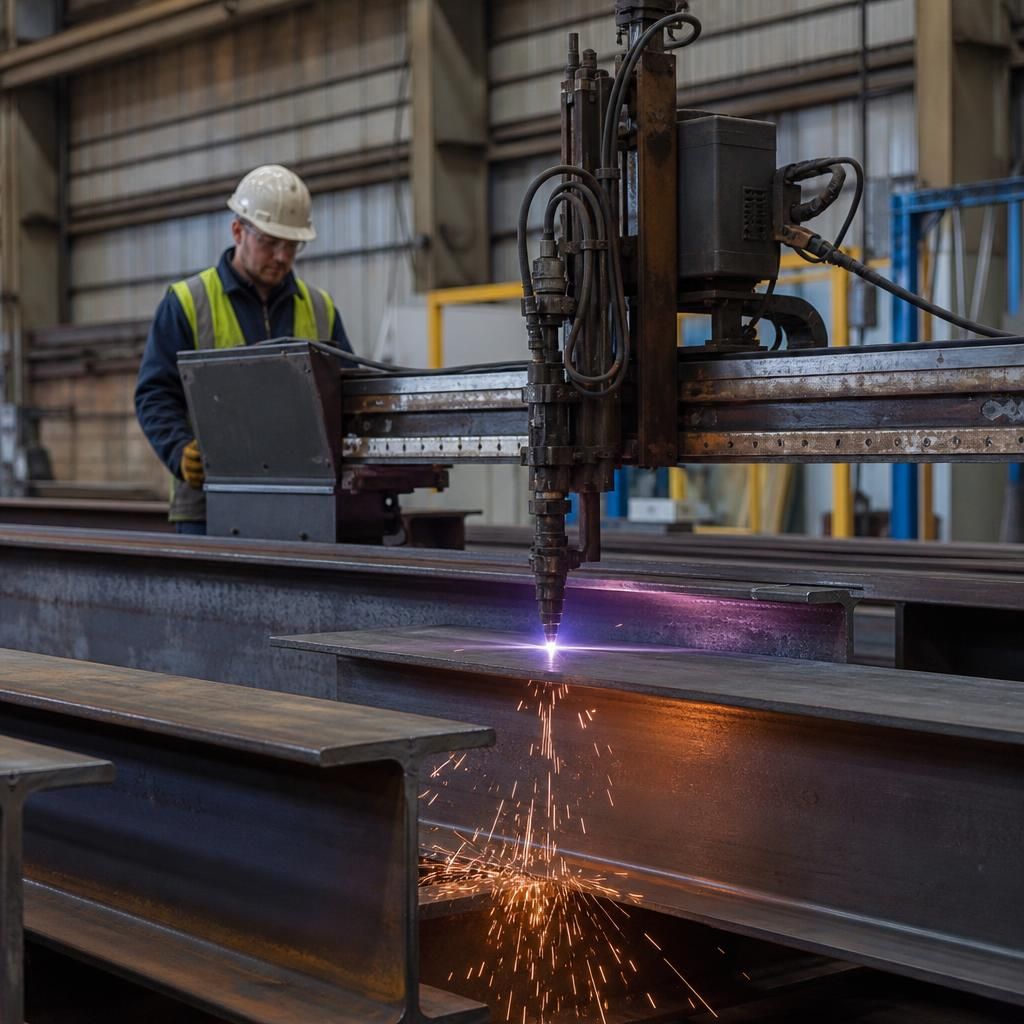
Transport and lifting requirements can influence how prefabricated steel components are manufactured. Large frames may need to be divided into manageable sections, with splice connections positioned so the parts can be loaded, handled and assembled safely. The fabrication layout must therefore consider member length, weight, vehicle loading and available lifting equipment, as well as the structural design.
This planning helps prevent a component from being structurally suitable but impractical to move or install. Where lifting points, temporary supports or staged assembly arrangements are needed, they should be identified within the engineering and fabrication information before production begins.
Discuss Your Prefabricated Steel Building Requirements
Discuss your prefabricated steel building requirements with Buildings UK Ltd to review the design, specification and intended use of your project. This can help establish the appropriate components and fabrication information before manufacture begins.