
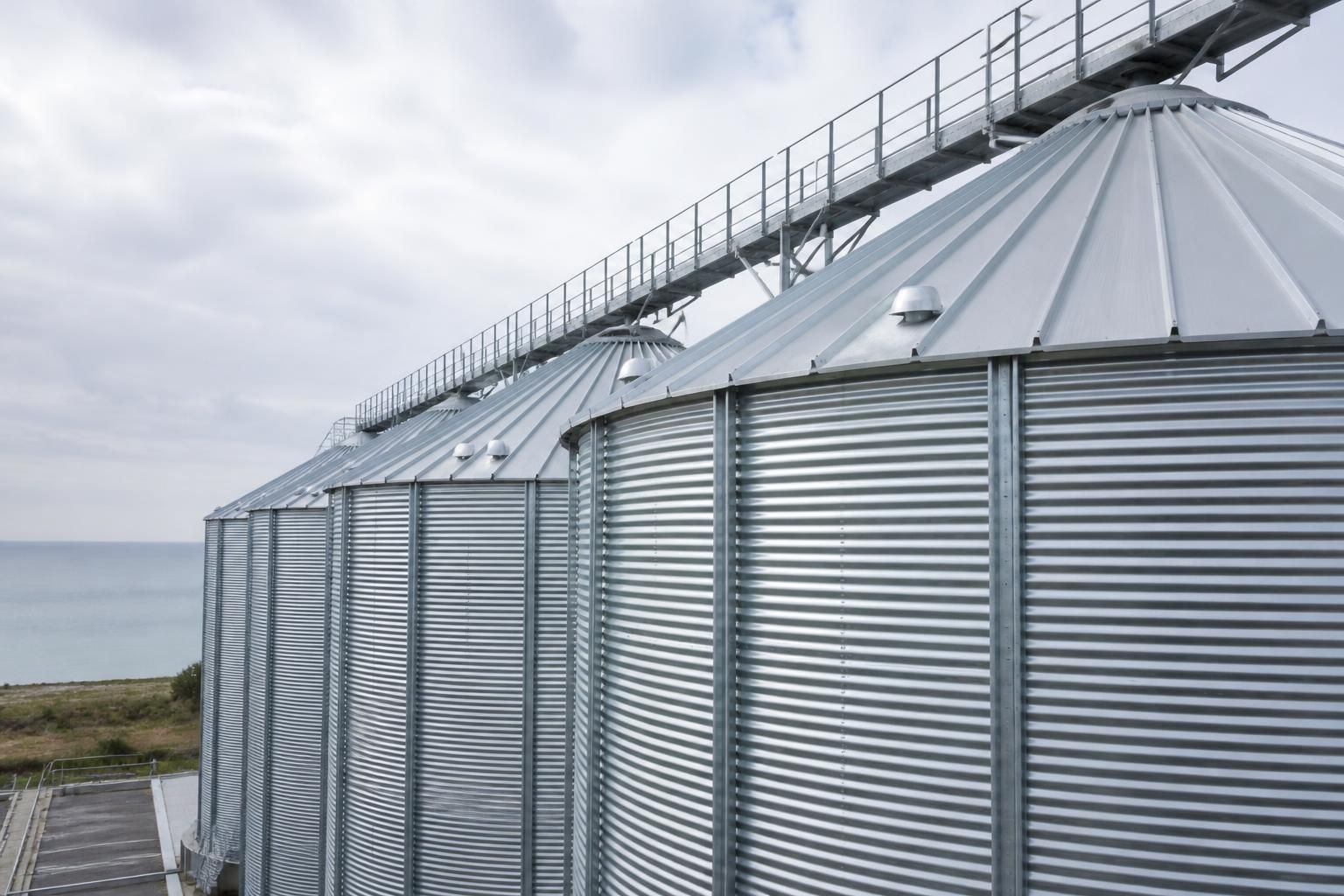
How should grain silos be protected against corrosion?
Grain silos should be protected against corrosion through suitable steel coatings, sealed joints and effective drainage that prevent prolonged contact with moisture, condensation and grain dust. Regular inspections should check the roof, walls, base, access points and fittings for coating damage or early rust so defects can be cleaned, repaired and recoated before corrosion affects the structure or grain hygiene.
Effective corrosion protection for a grain silo begins with a risk-based specification that considers the steel, the stored commodity, the surrounding environment, aeration equipment and the way the silo will be operated. The protection system should be selected before fabrication, then maintained as part of the silo’s operating regime rather than treated as a one-off surface treatment.
Assess the sources of corrosion. External steel is exposed to rain, atmospheric pollutants and temperature changes, while internal surfaces may be affected by grain dust, organic residues and localised humidity. Some stored products can create a more aggressive environment than clean, dry grain, particularly where residues remain against the steel. The assessment should also consider whether the silo is installed near livestock buildings, fertiliser storage, coastal air or other sources of corrosive contamination.
- Identify areas where grain, dust or fines can accumulate.
- Consider the effect of frequent filling, emptying and aeration cycles.
- Review exposure at supports, ladders, platforms, roof fittings and discharge equipment.
- Check whether cleaning chemicals or disinfectants could affect the selected protection system.
Specify compatible materials. Galvanised steel, painted steel and stainless components each behave differently and should be selected for the exposure conditions. Where dissimilar metals are connected, electrical contact can produce galvanic corrosion, causing the less noble metal to deteriorate faster. Isolation washers, sleeves or suitable jointing materials may be needed, while fixings should be compatible with the surrounding steel and its protective finish.
Protective systems must also be compatible with grain hygiene requirements. Any internal lining, sealant or repair material should be suitable for its intended location and should not shed particles into the stored product. The specification should identify surface preparation, product compatibility, curing requirements and the treatment required after drilling, cutting or welding.
Reduce mechanical damage. Corrosion protection is vulnerable to impact and abrasion around inlet pipes, inspection openings, ladders, sweep equipment and discharge points. Grain movement can wear surfaces gradually, while tools and access equipment can cause sudden damage. Components in these areas should be arranged to minimise rubbing and impact, and vulnerable finishes should be repaired using the procedure specified for the original system.
Welded areas and fabricated edges require particular care because heat, sharp profiles and incomplete preparation can reduce the performance of a protective finish. Design and fabrication drawings should identify areas requiring treatment after welding and should avoid details that trap product or make future cleaning impractical.
Control the internal environment. Good grain management is an important part of corrosion prevention. Grain should be stored at an appropriate moisture content, and aeration should be operated in accordance with the storage plan so that warm, moist air does not create persistent damp zones. Uneven cooling can produce local condensation, so temperature and moisture monitoring should be used to identify developing problems before they affect the silo structure.
Spilled grain and settled dust should be removed from ledges, equipment interfaces and surrounding areas. Organic residues can retain moisture and may promote corrosion at isolated points even when the main silo wall appears sound. Cleaning methods should avoid damaging the protective finish or forcing water into joints, bearings, electrical components and enclosed spaces.
Use a structured inspection programme. Inspections should be recorded by location, date and condition so that gradual deterioration can be distinguished from isolated damage. In addition to visual checks, investigate blistering, flaking, staining, pitting, distorted panels, loose fixings and powdering around connections. Pay close attention to the underside of roof components, internal stiffeners, support connections and areas hidden by attached equipment.
- Clean or prepare the affected area using a method appropriate to the existing finish.
- Establish whether corrosion is superficial or has reduced the steel section.
- Measure and document significant pitting or section loss where necessary.
- Repair, replace or reinforce components only after the cause has been addressed.
- Restore the protective system and record the materials and work completed.
Where corrosion has caused perforation, cracking, deformation or notable loss of section, the silo should be assessed by a suitably competent structural professional before it is returned to service. A surface repair alone may conceal a reduction in load-bearing capacity. The assessment should include the effect on the shell, stiffeners, supports and connections, rather than considering the damaged area in isolation.
Maintain records and controls. Keep the original material and coating specifications, repair details, inspection findings and photographs with the silo’s maintenance information. Record changes such as new augers, aeration equipment or access platforms, since modifications can introduce unprotected edges, dissimilar-metal connections or areas where moisture and dust collect. A clear record helps future inspections identify whether a defect is stable, recurring or worsening.
The most reliable approach combines appropriate material selection, hygienic grain management, protection from mechanical damage and disciplined inspection. Corrosion should be treated as a condition to monitor throughout the silo’s working life, with repairs based on the severity and cause of deterioration rather than applying the same treatment to every affected area.
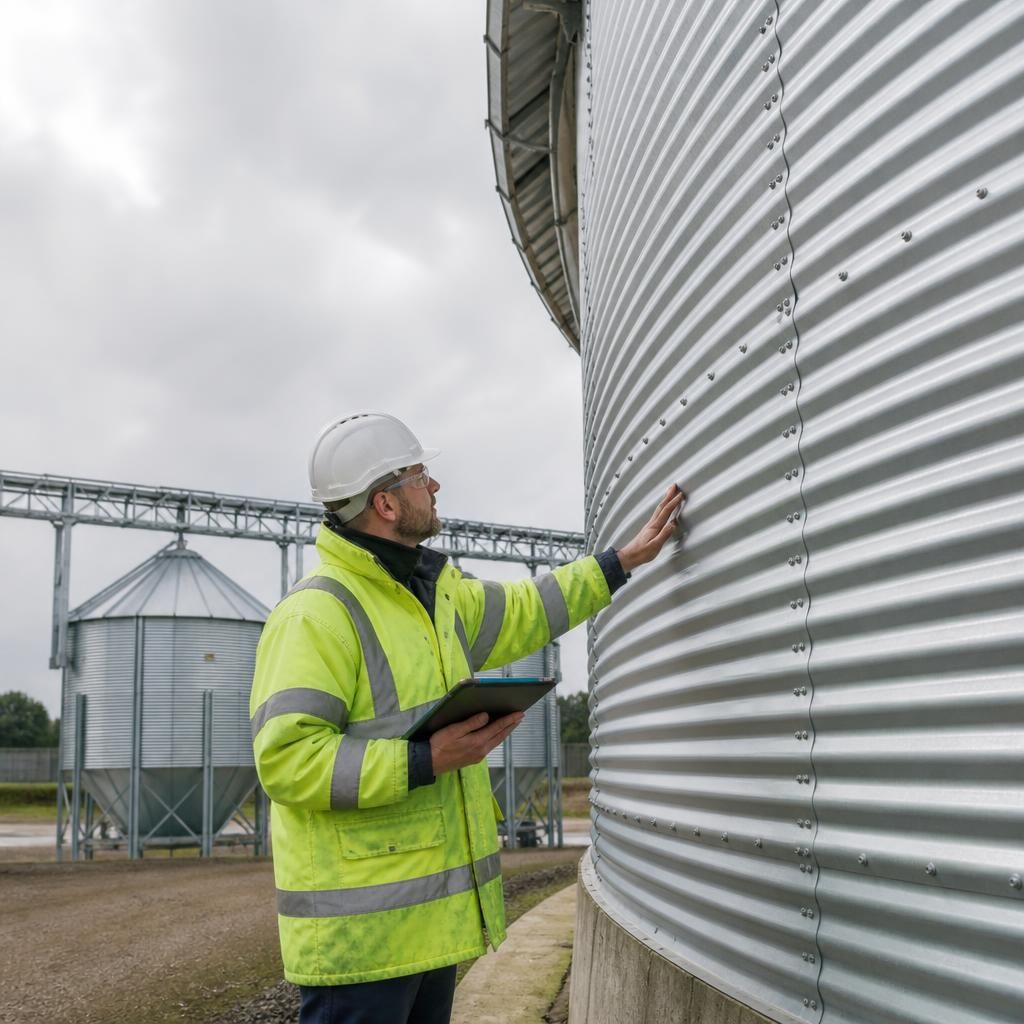
A corrosion-protection coating is only effective when it is applied to a properly prepared surface and verified before the silo is assembled. Surface contamination, inadequate preparation or incomplete curing can leave weaknesses that are difficult to inspect once panels, stiffeners and fittings are in place.
- Confirm that steel preparation meets the coating system specification before application.
- Check coverage around welds, corners, bolt holes, seams and other details where coatings may be thinner.
- Allow each coat to cure for the specified period before applying another layer or enclosing the surface.
- Inspect the completed finish for pinholes, runs, missed areas, lifting or poor adhesion.
- Document the coating products, preparation method, application conditions and inspection results for future maintenance.
Factory-applied protection is particularly valuable on surfaces that will become inaccessible after erection. Any site cutting, drilling or welding should be followed by a controlled repair to the exposed steel and surrounding finish, using materials compatible with the original coating system.