What site risks should be considered during roof sheet installation?
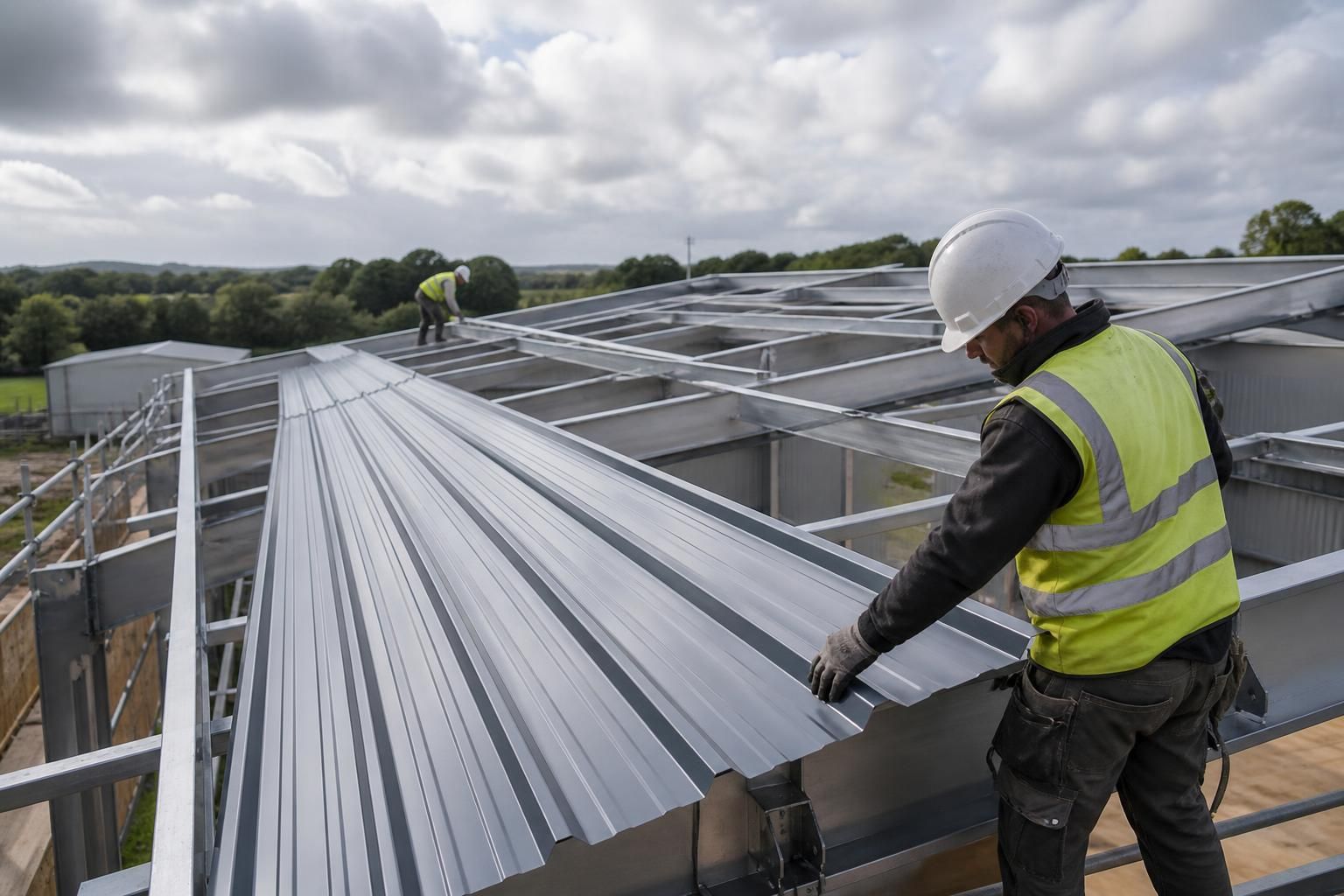
Roof sheet installation involves site risks such as falls from height, unstable access equipment, adverse weather, manual handling injuries and contact with overhead services. These risks should be assessed before work begins, with suitable edge protection, safe lifting methods, controlled access and clear procedures for changing site conditions.
Roof sheet installation risks extend beyond the immediate fitting of the sheets. A safe project also depends on confirming that the supporting structure is suitable, identifying fragile or hazardous existing materials, controlling fire and falling-object risks, and coordinating the work with other site activities.
Structural condition and suitability
Before installation, the roof structure should be checked against the design information and the intended sheet system. Damaged, corroded, distorted or inadequately braced purlins may not provide reliable support. Unplanned loading from stored materials, tools or workers can also affect partially completed frames. Installation should not proceed until discrepancies between drawings and the structure on site have been investigated by a competent person.
Particular attention is needed where sheets are being replaced or added to an existing building. The condition of the original frame, fixings, rooflights, gutters and cladding should be assessed rather than assuming that the existing construction can carry new loads. Openings, roof edges and incomplete areas should be identified on the working plan and protected using suitable measures.
Fragile surfaces and rooflights
Older roof sheets, translucent rooflights, asbestos-containing cement sheets and deteriorated panels may not support a person, even when they appear intact. Dirt, paint and surface weathering can conceal weak areas. A roof plan should mark fragile zones, and work methods should prevent anyone from relying on the sheets for support. Where an existing roof may contain asbestos, the material should be identified and managed in accordance with the relevant regulations before disturbance.
Falling objects and exclusion areas
Sheets, offcuts, fixings, tools and packaging can fall through gaps or from roof level. The risk is greater around entrances, loading areas, walkways and neighbouring workfaces. A suitable exclusion area should be established below the work, with clear communication to everyone affected. Tools and small components should be secured where appropriate, and materials should not be left where they can slide, roll or obstruct escape routes.
Fire, heat and combustible materials
Cutting, grinding and other heat-producing activities can ignite insulation, packaging, dust or combustible materials hidden within the building. Sparks may travel through gaps in the roof or wall build-up. The method statement should identify whether hot work is necessary, specify suitable controls and keep combustible waste away from the work area. Fire points, emergency arrangements and any required inspection after hot work should be agreed before installation starts.
Interfaces with other work
Roof installation often takes place alongside steelwork, insulation, electrical work, internal fit-out, deliveries or agricultural and industrial operations. Conflicting activities can create unexpected hazards, such as personnel working below an open roof area or plant moving beneath the installation zone. A coordinated programme should define who controls each area, when work must stop, and how changes to the sequence will be communicated.
Sheet edges, cut-outs and fixings
Untrimmed sheet edges and cut-outs can cause lacerations or snag clothing. Incorrectly positioned fixings may leave sharp projections, damage the sheet profile or fail to secure the panel properly. Sheets should be cut using an appropriate method, with swarf and offcuts removed because metal particles can cause corrosion staining. Fixings should match the specified substrate and sheet system, and completed areas should be inspected for missing, loose or over-tightened fasteners.
Water ingress and incomplete weathering
A partly installed roof can allow water into insulation, internal finishes, stored goods or electrical equipment. Risks arise where laps, flashings, penetrations or temporary closures are incomplete. The installation sequence should account for how the building will be protected at the end of each shift or when work is interrupted. Any damaged sheets, sealants or closures should be recorded and corrected rather than concealed by later work.
Site-specific hazards and emergency planning
A site assessment should also consider ground conditions, nearby public areas, restricted working space, contamination, animal movement on agricultural premises and the presence of occupied industrial operations. Emergency arrangements should cover first aid, communication, access for emergency services and the recovery of a person who becomes injured or incapacitated at roof level. These arrangements need to be understood by the installation team before work begins.
Effective control therefore starts with a documented risk assessment and method statement, supported by competent supervision and regular checks. The assessment should be reviewed when the structure, work sequence, materials or surrounding site conditions change. Records of inspections, identified defects and corrective actions provide evidence that risks have been actively managed throughout the installation.
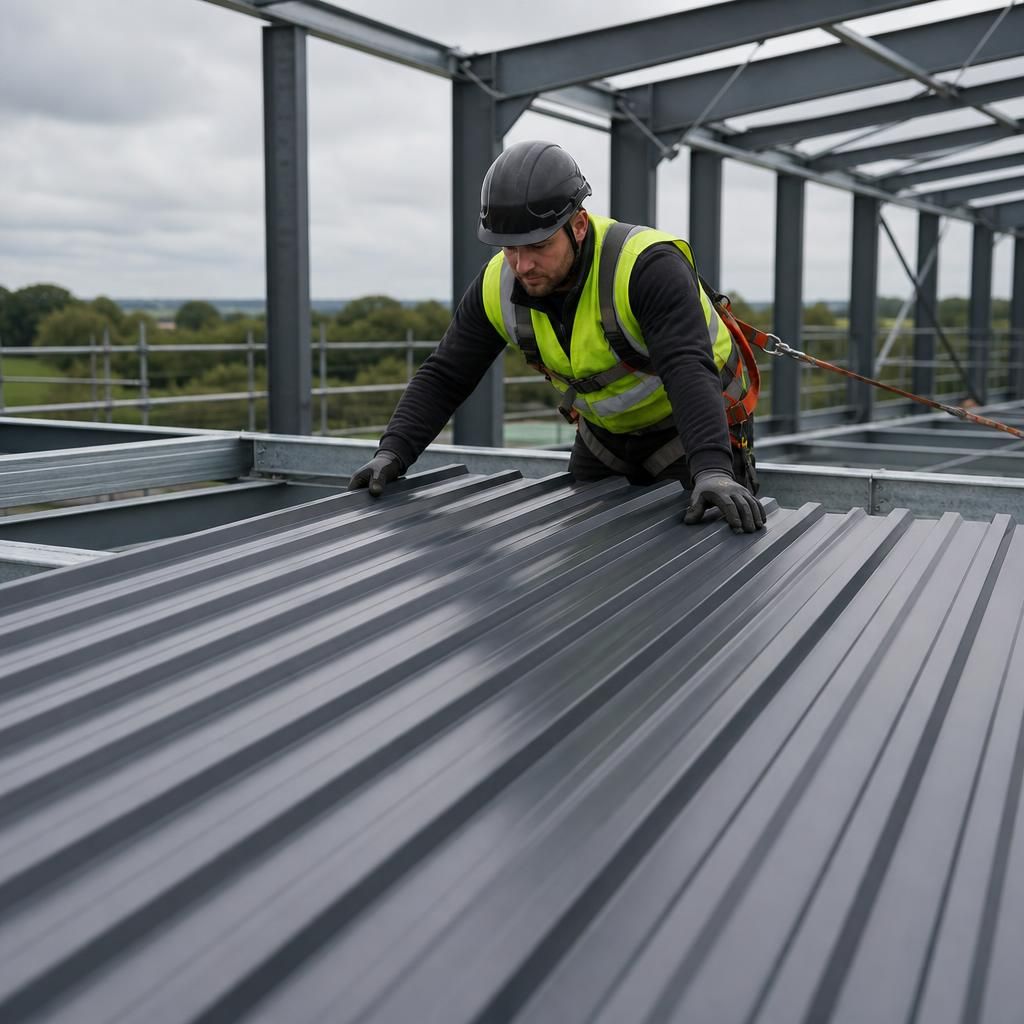
Roof sheet installation can create health risks from dust, fumes, noise, vibration and contact with sealants or protective coatings, even where the main fall hazards have been controlled. These exposures should be identified before work starts and managed through the risk assessment, product information and the planned installation methods.
Cutting or drilling sheets may produce metal particles and noise, while sealants, cleaning products and coatings can irritate the skin, eyes or respiratory system. Controls may include suitable respiratory, eye, hearing and hand protection, together with ventilation and procedures for handling substances safely. Workers should follow the relevant safety data sheets and avoid using products in ways that create unnecessary exposure.
Noise and vibration should also be considered where powered tools are used repeatedly. Selecting suitable equipment, maintaining it correctly, limiting exposure and rotating tasks where appropriate can reduce the risk of longer-term harm. PPE supports these controls but should not replace choosing a safer process or properly maintained tool.