How should metal roof panel coatings be selected for exposure and service conditions?
Metal roof panel coatings should be selected by matching the steel substrate and coating system to the building’s exposure, including moisture, pollutants, salt and ultraviolet light. Service conditions such as temperature, condensation, abrasion and maintenance access should also be considered so the finish provides appropriate corrosion protection and durability.
Metal roof panel coatings should be specified as a complete corrosion-protection system rather than selected by colour alone. The assessment should consider the panel’s base steel, metallic protective layer, organic finish, building environment, expected service life and the consequences of coating failure. A suitable specification protects the steel while remaining compatible with the roof’s construction, detailing and maintenance requirements.
Start with the exposure classification. The external environment is a primary influence on coating selection. A roof in a rural setting may face relatively low atmospheric pollution, whereas an industrial location can expose the finish to airborne contaminants or process emissions. Coastal buildings require particular care because salt-laden moisture can accelerate corrosion, especially at laps, penetrations, cut edges and areas where water remains trapped. Agricultural buildings may be exposed to ammonia and other corrosive compounds generated by livestock, manure, fertiliser or stored feed. The coating specification should reflect the actual use of the building rather than relying solely on its geographical location.
Consider the building’s position and form as well as its general surroundings. Sheltered elevations, roof zones beneath overhangs and areas near openings can dry at different rates from fully exposed surfaces. Complex junctions, shallow falls, poorly drained laps and locations beneath roof-mounted equipment can retain moisture or collect deposits. These details may create a more demanding local environment than the main roof area, so the coating and detailing should be reviewed together.
Assess the complete panel construction. Common metal roof panels comprise a steel substrate, a metallic coating and an applied paint or polymer finish. The metallic layer provides sacrificial protection to exposed steel, while the outer coating supplies additional resistance to weathering, chemicals and ultraviolet degradation. The performance of the finished panel depends on the interaction of these layers. A premium topcoat cannot compensate for unsuitable substrate protection, damaged metallic coating or badly formed details.
- Confirm the steel substrate and metallic coating specified by the panel manufacturer.
- Check that the organic finish is intended for external roofing and the stated environmental conditions.
- Review the coating’s resistance to ultraviolet exposure, chemical attack, abrasion and handling damage.
- Ensure that the coating system is compatible with flashings, sealants, fixings, gutters and other adjoining materials.
- Check whether the finish is suitable for the panel profile, forming process and any site cutting or folding required.
Select the finish according to the dominant risk. Standard painted finishes may be appropriate for many normal external applications, but more demanding conditions can justify a higher-performance coating. Enhanced systems may offer improved resistance to colour change, chalking, chemical exposure or mechanical wear. The correct choice depends on the exposure assessment and the manufacturer’s technical data; a thicker or more expensive finish is not automatically the correct solution if the underlying system or detailing is unsuitable.
Colour is also a technical consideration. Dark finishes generally absorb more solar heat than lighter colours, which can increase temperature movement within the panel and its fixings. Colour stability matters where the roof is highly visible or where replacement panels may need to blend with the original installation. The specification should identify the required colour and finish, but should not treat appearance as a substitute for corrosion or chemical-resistance data.
Give special attention to agricultural and industrial conditions. In livestock buildings, the internal atmosphere may be more aggressive than the external environment. Ventilation, lining arrangements and the management of condensation can affect how long corrosive vapours remain in contact with the underside of the panel. Areas around eaves, ridge details, openings and internal steelwork should be examined for deposits and moisture. Where chemicals, fertilisers, wash-down water or industrial processes are present, obtain documented compatibility information before selecting the coating.
Some substances can attack the coating without producing immediate visible failure. Loss of gloss, fading, blistering, softening, peeling or localised rusting can indicate that the finish is being affected. The specification should therefore identify likely contaminants and any cleaning agents used on the building. A coating suitable for atmospheric exposure may not be suitable for repeated contact with concentrated chemicals or regular wash-down.
Check edges, penetrations and interfaces. Factory-applied coating normally provides the most consistent finish, but site operations can expose or damage the panel. Cut edges, drilled holes, notches, scratches and areas compressed by fixings require careful treatment in accordance with the panel manufacturer’s instructions. Swarf left on the roof can rust and stain the surface, while incompatible metals or treated timber in contact with the panel can create corrosion at interfaces.
Fixings and washers should be selected as part of the same system. Their protective finish, material and sealing performance need to suit the panel coating and exposure. Over-tightened fixings can deform the washer and damage the finish; under-tightened fixings can permit water entry or movement. Sealants should likewise be confirmed as compatible, since some products can soften, stain or undermine a coating over time.
Use technical documentation to verify the choice. The specification should record the panel manufacturer’s coating designation, substrate protection, colour, application, exposure limitations and any required edge-treatment procedure. Ask for evidence covering:
- corrosion resistance for the intended environment;
- ultraviolet and colour-retention performance where appearance is important;
- chemical compatibility with substances present in the building;
- temperature and forming limitations;
- repair procedures for transport, fabrication and installation damage; and
- cleaning and inspection requirements.
Where the exposure is uncertain, the designer should identify the most severe reasonably foreseeable condition rather than specifying for an average location. This is particularly important when the building combines uses, such as agricultural storage with fertiliser handling, or industrial production with frequent cleaning. The roof specification, drawings and fabrication information should use the same coating description so that the selected system is not changed inadvertently during manufacture or installation.
Plan maintenance around the coating. Maintenance does not replace correct selection, but it helps reveal early deterioration. Inspections should look for damaged edges, blocked drainage points, loose or failed fixings, staining, flaking, blistering and corrosion around penetrations. Deposits should be removed using the approved cleaning method; harsh abrasives, unsuitable solvents and aggressive pressure washing can damage the finish. Any repair coating should be compatible with the original system and applied only after the surface has been properly prepared.
For a bespoke steel building, coating selection should therefore be coordinated with the roof profile, falls, drainage, ventilation, internal lining, fixings and intended use. Buildings UK Ltd can incorporate the required roof and steelwork information into design and fabrication documentation, allowing the coating specification to be considered alongside the wider building design rather than as an isolated finish choice.
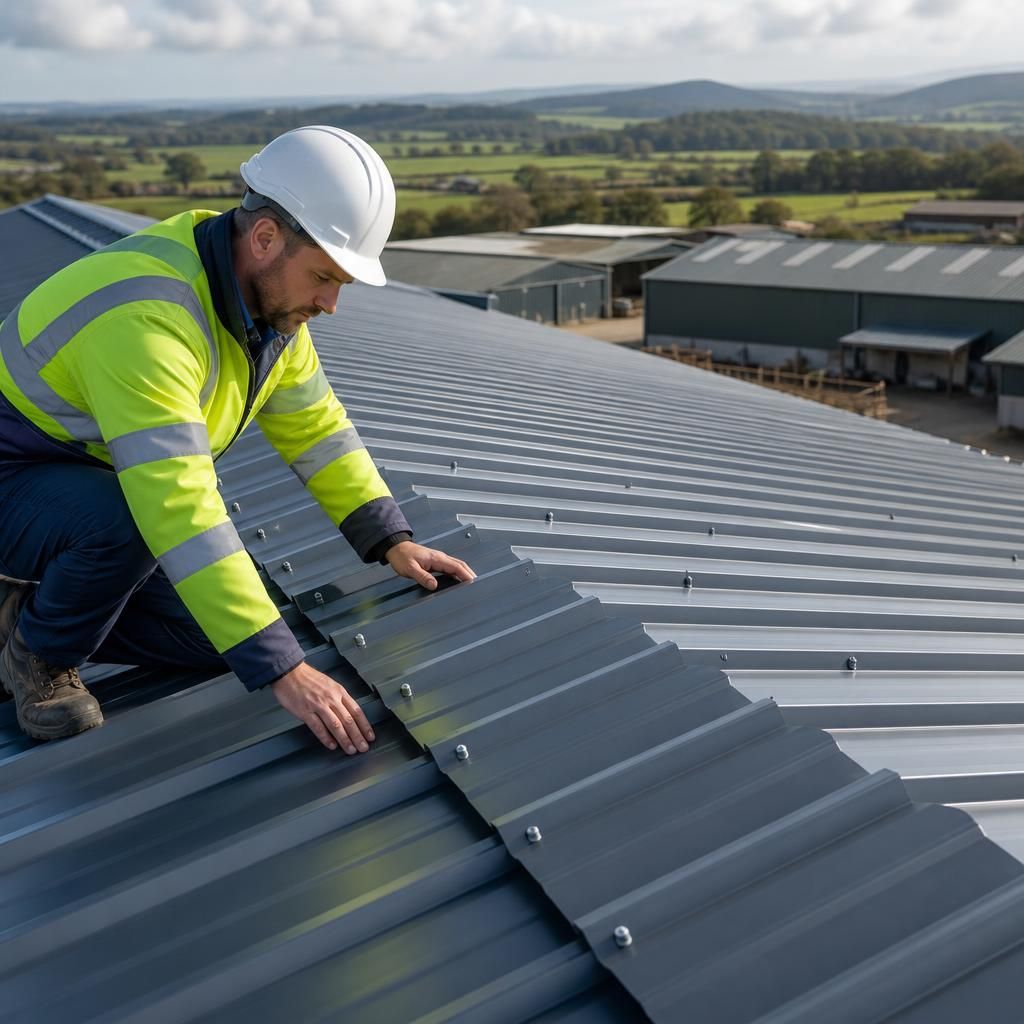
Expected roof access is an important service condition when selecting a metal roof panel coating. Routine inspection, maintenance of roof-mounted equipment or work around penetrations can expose the finish to abrasion, impact and concentrated loading. The coating specification should therefore be checked for resistance to the types of handling and access the roof is expected to receive, while the roof design should provide suitable access routes rather than relying on the coating to withstand unrestricted foot traffic.
Damage is particularly likely around laps, fixings and other raised details where people may place their feet or tools. Designated walkways, suitable load-spreading measures and clear access instructions can reduce contact with vulnerable areas. After maintenance work, the roof should be checked for scratches, denting and displaced sealants, with any damage repaired using materials compatible with the original coating system.