Which coating systems are suitable for industrial steel roofing?
Suitable coating systems for industrial steel roofing include acrylic, polyurethane and high-performance corrosion-protection systems, selected according to the roof’s existing finish, substrate condition and site exposure. The correct specification should provide sound adhesion, weather resistance and compatibility with the steel, rather than simply applying a new coating over deteriorated or contaminated surfaces.
Suitable coating systems for industrial steel roofing are usually built around a compatible primer and a weather-resistant finishing coat. Acrylic systems are commonly selected for general refurbishment and UV exposure, polyurethane systems where greater toughness and colour retention are required, and multi-coat corrosion-protection systems where the steel has more demanding exposure conditions. The correct choice depends on the steel grade, existing coating, degree of corrosion, roof use and expected environmental stresses.
Acrylic coating systems are water-based or solvent-based formulations designed to provide a flexible, weather-resistant surface. They are often appropriate for sound steel roofs requiring renewed protection and may be suitable where ease of application, solar reflectivity or reduced solvent use is important. Acrylics are less suitable where the roof is exposed to severe abrasion, persistent chemical attack or regular foot traffic unless the complete system has been specified for those conditions.
Polyurethane systems generally offer a harder and more abrasion-resistant finish than standard acrylic coatings. They can be appropriate for buildings exposed to strong sunlight, fluctuating temperatures and mechanical wear, particularly when long-term colour and gloss retention are relevant. Polyurethane finishes must be applied over a compatible prepared surface or primer; applying them directly over an unsuitable existing coating can lead to adhesion failure or premature peeling.
Epoxy primers and intermediate coats are used where additional barrier protection is needed. Epoxy can provide strong adhesion and resistance beneath a suitable topcoat, making it useful for prepared steel affected by corrosion. It is not normally relied upon as the exposed final finish on its own because prolonged ultraviolet exposure can cause chalking and loss of appearance. A compatible acrylic or polyurethane topcoat is therefore often specified above it.
High-performance corrosion-protection systems may combine a corrosion-inhibiting primer, an intermediate barrier coat and a durable finishing coat. Zinc-rich primers can be considered for appropriately prepared carbon steel, while high-build epoxy and polyurethane combinations may be used where the exposure category calls for a more robust specification. The products must be assessed as a complete system rather than chosen independently, since chemical incompatibility between layers can reduce adhesion and shorten service life.
Factory-applied finishes such as galvanising, pre-finished metallic coatings and older resin-based coatings need particular care. The proposed system should be checked against the existing finish, including its resin type, degree of weathering and ability to accept a new coat. A small trial area can help confirm adhesion, appearance and compatibility before full application. Where the existing coating is loose, blistered or extensively degraded, coating over it is unlikely to provide a reliable result; defective material normally needs to be removed and the exposed areas treated correctly.
Steel roof preparation is as important as the coating chemistry. The specification may include washing to remove dirt, salts, grease and biological growth, mechanical preparation of corrosion, feathering of sound coating edges and treatment of exposed steel. Rust scale and poorly bonded layers should not be sealed beneath a new finish. Damaged fixings, laps, flashings and sealants also need assessment because water entry at these details can undermine an otherwise sound coating system.
Site exposure should guide the performance requirements. Considerations include:
- industrial pollutants, chemical vapours or airborne salts;
- regular condensation or high internal humidity;
- ultraviolet exposure and repeated temperature changes;
- rainwater run-off, ponding and poor drainage;
- abrasion from maintenance access or adjacent operations; and
- the possibility of future cleaning, inspection or recoating.
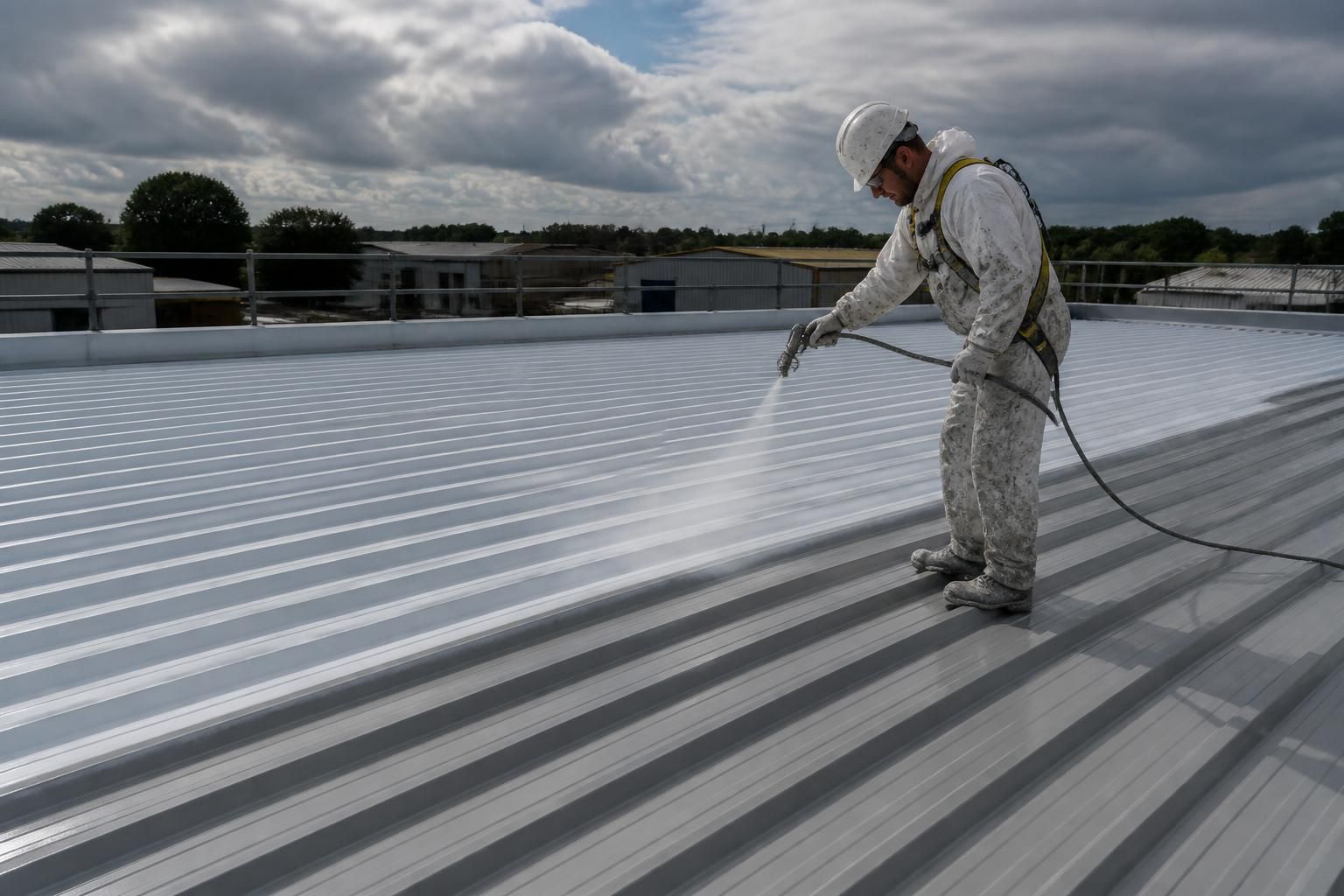
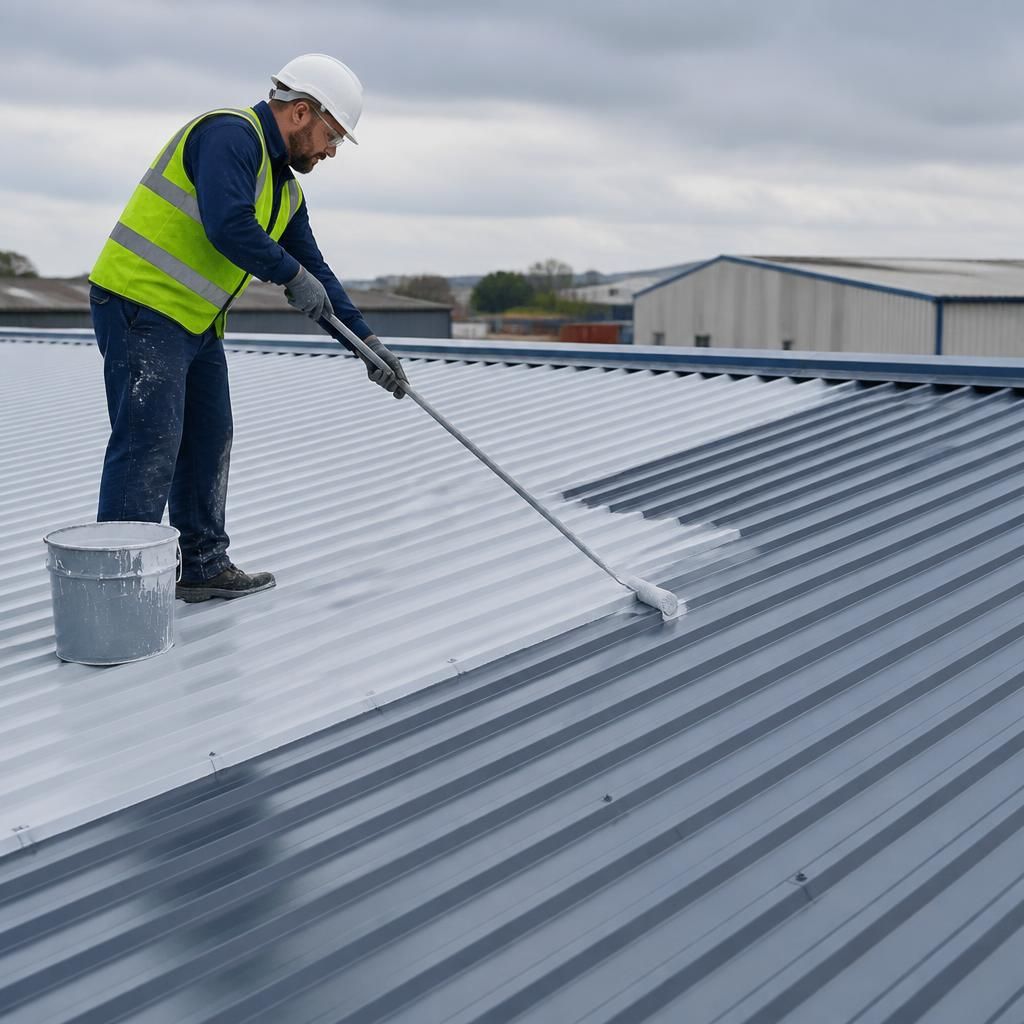
The roof’s profile and construction also affect application. Coating must reach laps, seams, penetrations, ridge details and around fixings without leaving thin spots or trapped contamination. Airless spray can provide an even finish over broad areas, but brush or roller work may be needed at edges and complex details. Application should follow the specified recoat intervals, surface-temperature limits and moisture restrictions, with the finished film checked for consistent coverage and defects.
For a sound roof in a relatively ordinary environment, an acrylic or polyurethane refurbishment system may be sufficient. Where corrosion is established or exposure is aggressive, a primer-led system with a barrier coat and compatible topcoat is more appropriate. The specification should record the preparation standard, coating sequence, areas requiring local repair and the inspection requirements, so future maintenance can be carried out without compromising the original system.
For industrial buildings, a coating assessment is therefore preferable to selecting a product by finish or colour alone. A suitable system must match the substrate and existing layers, provide the required corrosion resistance and tolerate the conditions created by the building’s use. Where the steel is too deteriorated for reliable preparation, the technically appropriate solution may be repair or replacement rather than additional coating.
Coating selection should also account for where corrosion or moisture is occurring. An external coating will not resolve corrosion on the underside of a sheet, condensation caused by internal humidity or water trapped within insulation. If the roof has concealed corrosion or persistent condensation, the assessment should consider the internal environment and roof build-up as well as the exposed steel surface.
This distinction is particularly important in industrial buildings used for washing, processing or housing livestock, where moisture levels can be higher. The coating system may protect the external face, but longer-term performance depends on addressing the source of moisture and checking whether the underlying roof construction remains suitable.
Discuss Suitable Coating Systems for Your Industrial Steel Roof
Discuss your industrial steel roof with Buildings UK Ltd to establish whether a coating system is technically suitable and what specification the building requires. A considered assessment can help determine the appropriate next step before any coating work is planned.