When is a steel frame storage shed preferable to a smaller metal shed?
A steel frame storage shed is preferable when you need substantial floor space, greater structural capacity or a building configured around vehicles, machinery, stock or future expansion. A smaller metal shed may be more suitable for limited storage needs, but it offers less scope for bespoke sizing, access arrangements and long-term adaptation.
A steel frame storage shed is preferable when storage forms part of an ongoing agricultural, industrial or commercial operation rather than being a short-term answer to a modest storage problem. The deciding factors are usually the building’s intended use, the loads it must carry, the access required and the extent to which the layout may need to change over time.
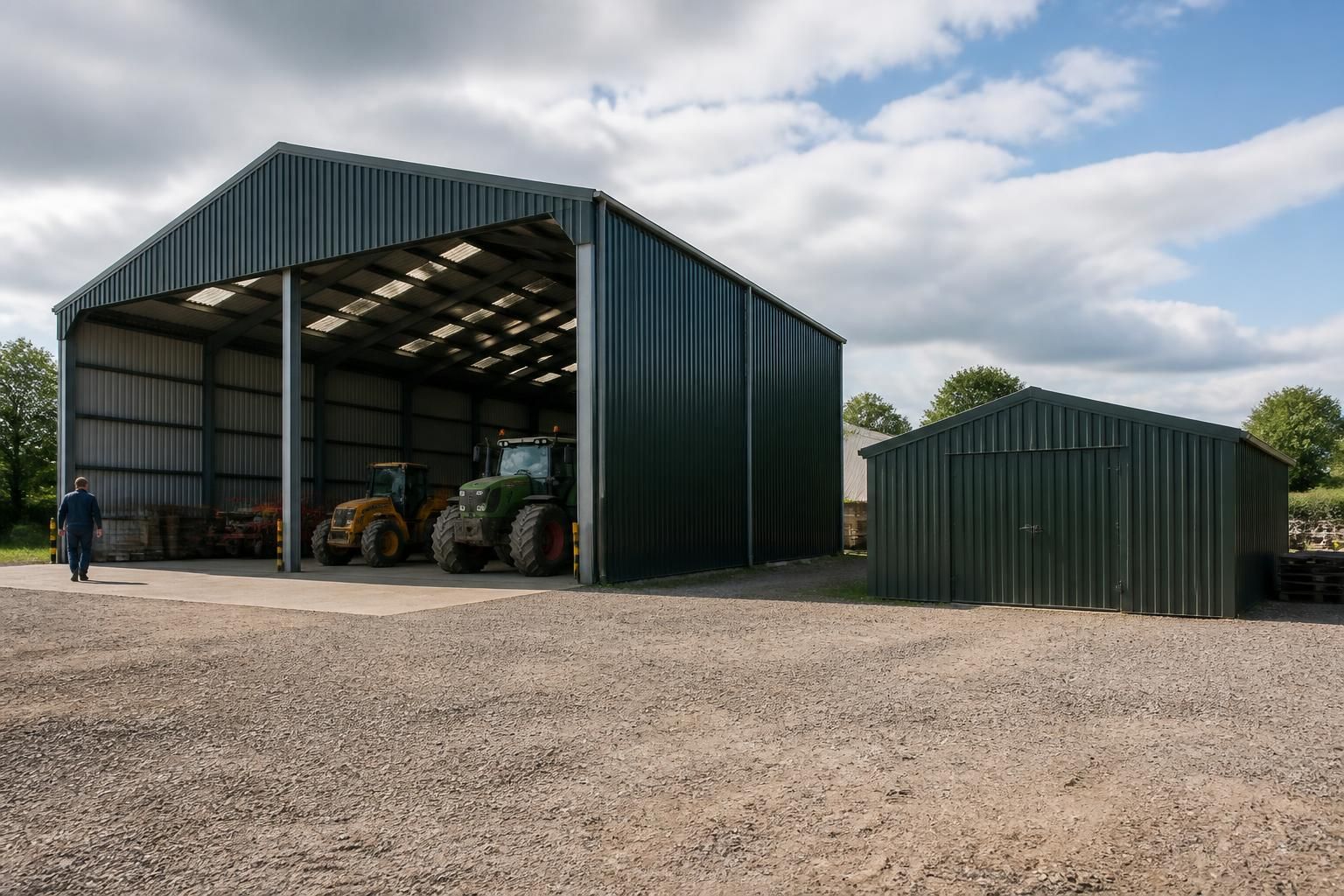
Choose a steel frame building when the contents justify a purpose-designed space. A smaller metal shed can be adequate for hand tools, seasonal equipment or a limited volume of boxed goods. It becomes less suitable when storage involves tractors, trailers, forklifts, palletised materials, workshop equipment or bulky stock. These uses require clear access routes, practical door positions and sufficient internal clearance, rather than simply more enclosed floor area.
Steel framing is also advantageous where the building must accommodate regular vehicle movements. Larger openings can be incorporated into the design for machinery and delivery access, while the overall arrangement can allow turning space and safer movement inside the building. Planning these requirements at the design stage avoids adapting a compact shed around awkward entrances or restricted circulation.
Structural demands are another important distinction. Hot rolled steel framing is suited to buildings engineered for their proposed use, including the effects of the roof, cladding, wind and any specified imposed loads. This matters where the building may contain heavy equipment, stored materials or internal fittings. A smaller, lighter-duty shed may not offer the same practical scope for these requirements, particularly if its original purpose was general domestic or light storage.
Consider a steel frame storage shed where the building may later need additional functions. Storage areas are often combined with maintenance space, machinery shelter, loading zones or a controlled working environment. A properly planned frame can provide a sound basis for internal divisions, upgraded access arrangements or changes in how the floor area is used. That does not mean every future alteration will be automatic: proposed changes should be checked against the original design and any relevant planning or building-control requirements.
Longevity and maintenance should be assessed over the whole ownership period. A small metal shed may have the lower initial commitment where its use is limited, its contents are low value and replacement or relocation would be straightforward. A steel frame building is more likely to make sense where the structure will remain part of the operation for many years and where interruption caused by inadequate capacity would be inconvenient or costly. Its value lies not only in the initial storage volume but in how well the building continues to support the work carried out inside it.
Site conditions can affect the comparison as well. A larger structure may require more involved foundations, drainage, access preparation and planning consideration than a small shed. These requirements should be reviewed before selecting a building type. They are not reasons to avoid a steel frame building; they are part of establishing whether its scale and specification are appropriate for the site and intended use.
For an informed comparison, list the items to be stored, their dimensions and weights, the largest vehicle or machine entering the building, the required door openings, and any likely internal divisions. Include space for safe manoeuvring and for stock to be handled without blocking access. If these requirements leave little flexibility in a standard small shed, a bespoke steel frame design is likely to be the more suitable option.
Buildings UK Ltd provides British-made, CE-marked hot rolled steel framed buildings with design information that can include planning elevation drawings and isometric fabrication blueprints. Customers can choose a building kit or a full erection service. This approach is relevant when the comparison depends on precise dimensions, access, structural requirements and the building’s intended working life, rather than on storage volume alone.
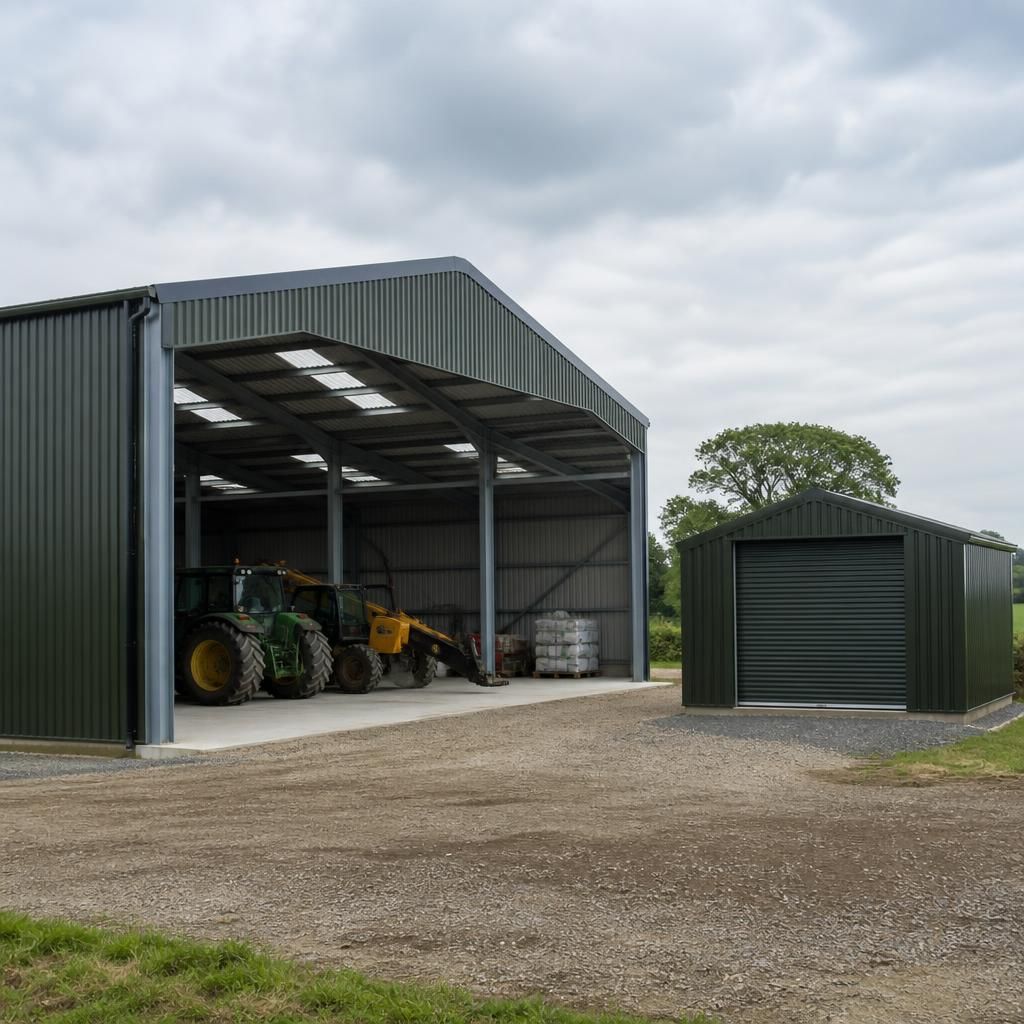
A steel frame storage shed is preferable when its additional scale and specification solve a defined operational requirement, rather than simply providing more space. Before choosing one, separate confirmed needs—such as the dimensions of stored items, handling methods and required working clearances—from possible future uses. This helps prevent an unnecessarily large building while showing whether a smaller metal shed would impose practical compromises from the outset.
The comparison should therefore consider usable capacity, not just the advertised footprint. A building with space that cannot be reached, organised or used safely may deliver less value than its size suggests. Conversely, if the proposed contents can be stored without restricted access or wasted floor area, a smaller shed may remain the proportionate choice. The stronger case for a steel frame design is where its additional specification directly supports the way the space will be used.
Discuss Your Steel Frame Storage Shed Requirements
Discuss your proposed storage shed with Buildings UK Ltd, including any site constraints, access requirements and possible future uses that remain unresolved. Their team can help you assess whether a steel frame design is proportionate to the way the building will be used.