
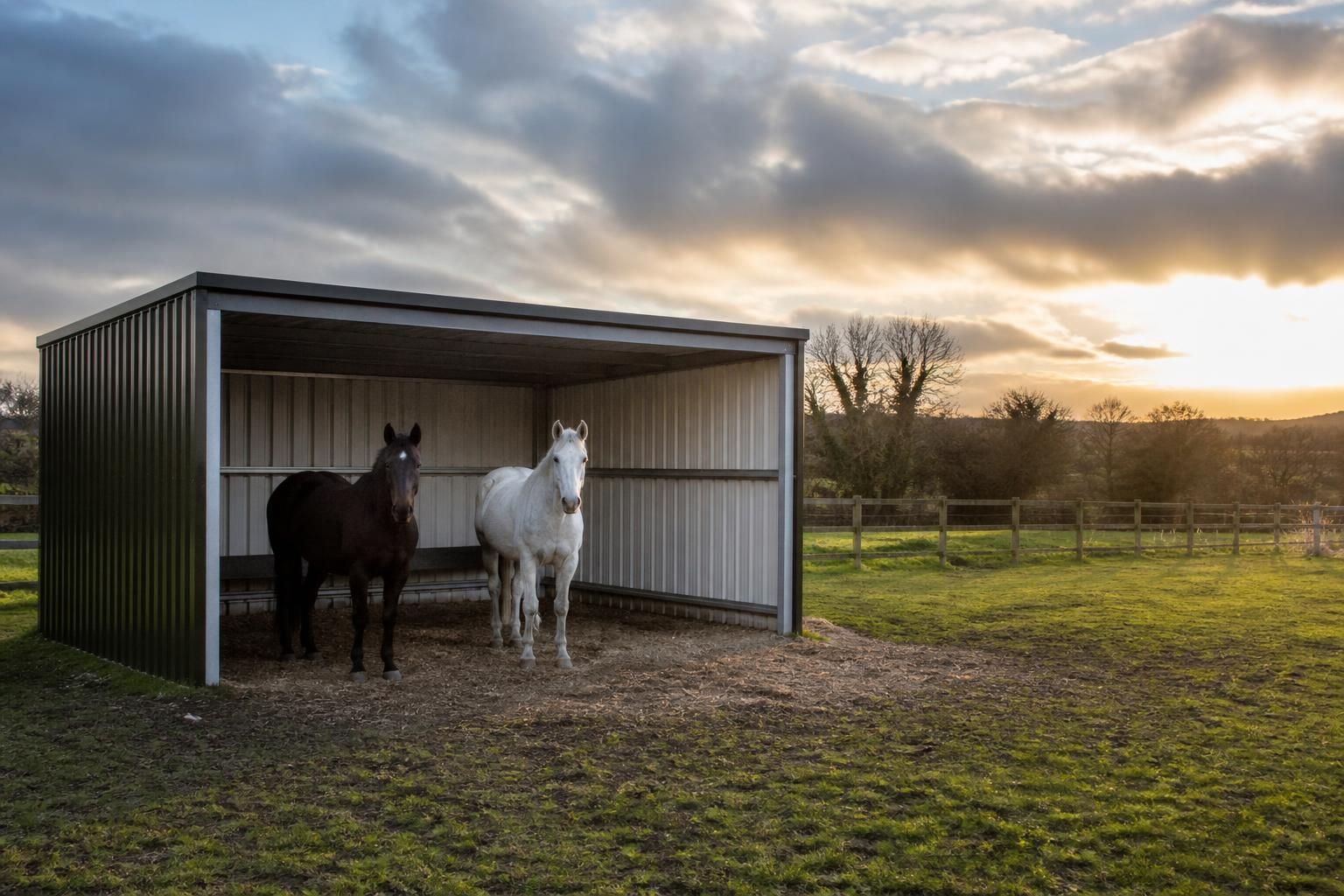
When are field shelters for horses most useful?
Field shelters for horses are most useful whenever horses are turned out in exposed fields and need protection from rain, wind, strong sun or cold conditions. They also provide a practical refuge during everyday turnout, helping horses remain more comfortable without requiring constant access to a stable.
Field shelters for horses are most useful when turnout conditions vary, when horses spend extended periods outdoors, or when grazing areas lack natural protection. Their value is greatest where a horse needs to choose between shelter and open ground rather than being exposed continuously to the same weather conditions.
During changing seasons
Spring and autumn often bring alternating rain, wind, warmth and cooler nights. A shelter gives horses a consistent dry area during wet spells while allowing them to continue grazing and moving freely. This can be particularly useful when fields have little hedgerow or tree cover, or when natural protection is unevenly distributed across the turnout area.
In summer, the main benefit may be shade rather than warmth. Horses can use a roofed space to reduce direct exposure to strong sunshine and remain more comfortable during hotter parts of the day. The shelter should still have adequate airflow, as a poorly ventilated structure can become hot and stale. Its position should also avoid creating a confined area where dominant horses can block others from entering or leaving.
For horses with different needs
A shelter can be especially useful for horses that are older, underweight, clipped, recovering from illness, or less able to cope with wet and windy conditions. It may also help horses that are sensitive to insects or unsettled by particular weather. However, the structure is not a replacement for assessing each horse individually. Rugs, feed, veterinary advice, field condition and the horse’s body condition may still need to be considered alongside access to shelter.
Horses kept together may not use the building equally. A quieter horse can be excluded if the entrance, internal space or approach is too restrictive. Where several horses share a field, the shelter should provide sufficient room for the group and allow more than one route in and out where practical. This reduces the risk of one horse controlling access.
For turnout and grazing management
Field shelters are useful when horses need to remain outside while the owner manages stable use, grazing rotation or turnout routines. They provide a defined refuge without requiring horses to be brought indoors whenever weather changes. This can support a more flexible management plan, provided the field remains suitable for turnout and the shelter is checked regularly.
They are also valuable in exposed paddocks with limited natural features. A structure can supplement, but should not automatically replace, safe boundaries, reliable water, suitable forage and appropriate ground conditions. In wet periods, the area around the entrance can become heavily trafficked and muddy, so drainage and a durable surface are important. A well-used shelter may need more frequent cleaning and ground maintenance than a lightly used one.
When shelter is most beneficial
- During prolonged rain, particularly where horses have no dry natural cover.
- In strong winds or exposed locations where horses cannot find a natural windbreak.
- During hot, sunny weather when shade is limited.
- When horses are turned out for long periods or overnight, subject to their individual management requirements.
- For horses that are less tolerant of cold, wet or insect activity.
- When grazing is divided into paddocks and each area does not contain sufficient natural protection.
The most useful shelter is therefore one that matches the horses, the field and the management routine. Its size, entrance arrangement, orientation, ventilation, flooring and position all affect whether horses can use it safely and comfortably. A steel-framed field shelter can be designed as part of a wider turnout plan, with the layout considered alongside access for feeding, cleaning and maintenance.
Regular checks remain necessary in every season. Inspect the roof and frame, remove accumulated bedding or manure where used, monitor the ground at entrances, and confirm that water and fencing remain accessible. A field shelter works best as one element of responsible turnout management rather than as the sole response to difficult weather or poor field conditions.
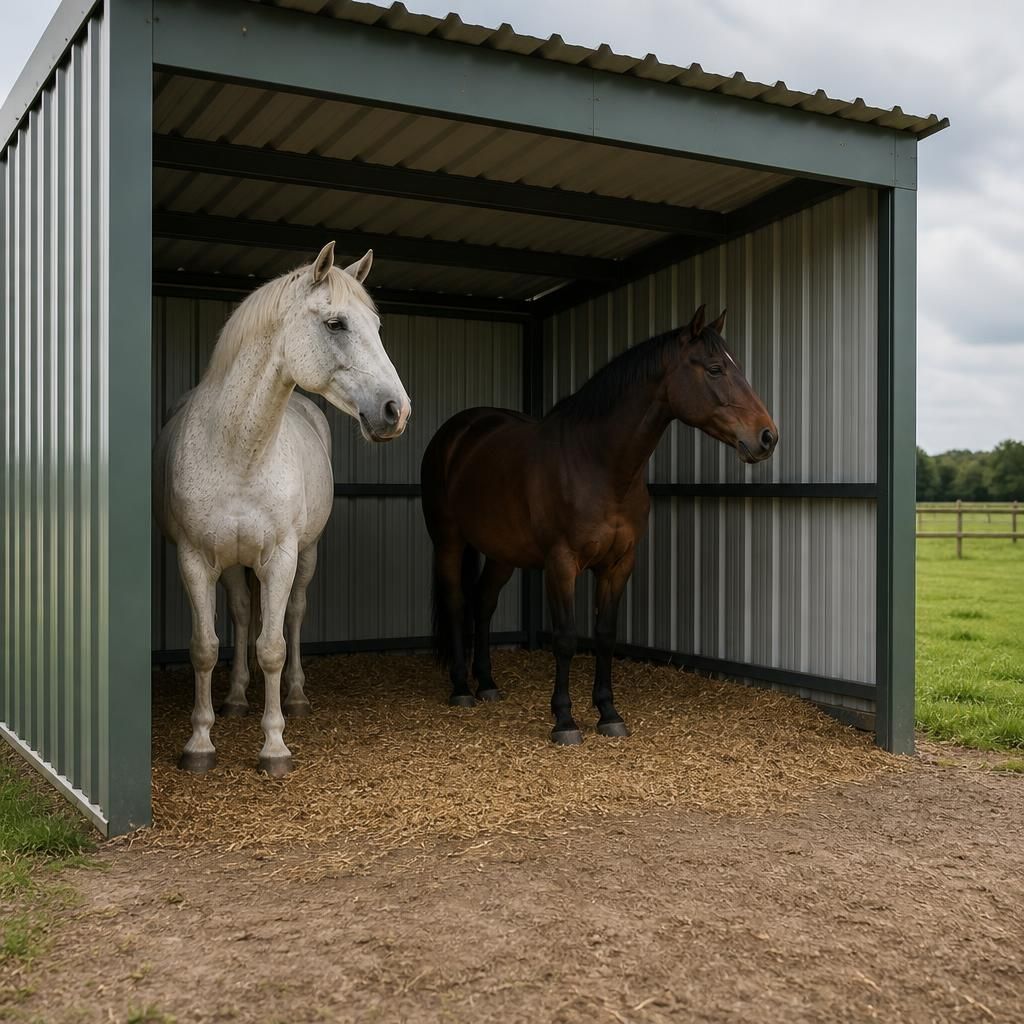
Field shelters for horses are particularly useful when turnout is being increased or changed and horses need a familiar place to withdraw without being brought back into a stable. This can help during the transition to longer periods outdoors, movement between seasonal paddocks or changes to a horse’s daily routine.
They can also provide a quieter option for horses that become unsettled when confined indoors. The shelter should remain an optional refuge rather than a substitute for observing behaviour, appetite, movement and general condition. If a horse consistently avoids the shelter or is prevented from using it by another horse, the turnout arrangement should be reviewed.