When are steel roofing sheets the most economical option?
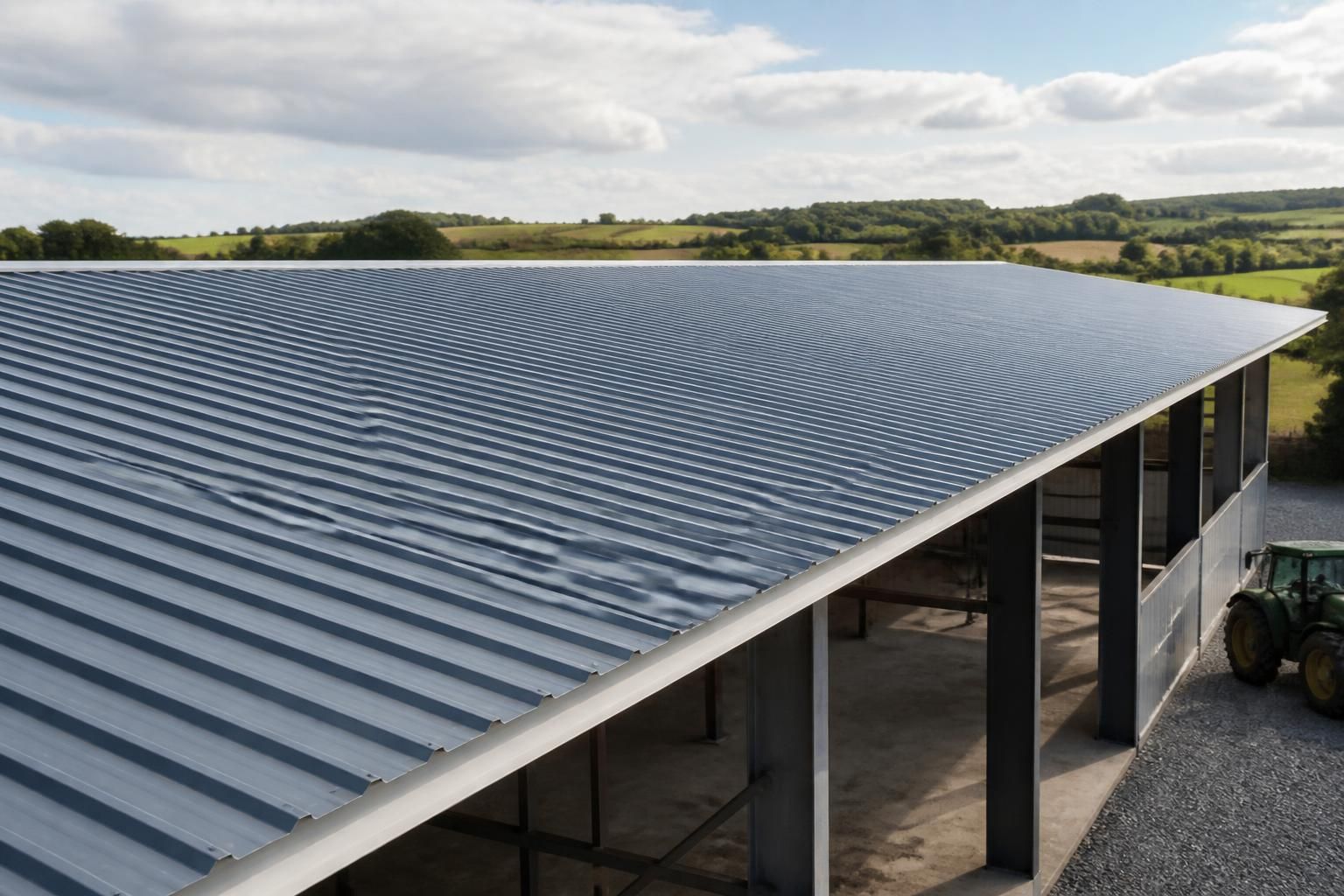
Steel roofing sheets are usually the most economical option where a durable, straightforward roof is required and the building does not need the thermal performance of an insulated system. They are particularly cost-effective for agricultural, industrial and equestrian buildings with simple roof designs, provided the sheet specification, structure, installation and long-term maintenance are assessed as part of the overall cost.
Steel roofing sheets are most economical when the building needs a robust, relatively simple roof and does not require the thermal performance of an insulated roof system. The strongest value is usually achieved on agricultural, industrial and equestrian buildings where the internal environment is not continuously heated, the roof layout is uncomplicated and the sheet specification is matched accurately to the structure.
Economy should be assessed as the total installed and service-life cost, rather than the price of the sheets alone. A suitable comparison includes the sheets, flashings, fixings, insulation if required, transport, installation, access equipment, maintenance and any alterations needed to the supporting steelwork. A lower-priced sheet can become less economical if it is unsuitable for the roof pitch, exposed location, internal conditions or expected service life.
Steel roofing sheets tend to offer particularly good value in the following situations:
- Open-sided or lightly serviced buildings: agricultural stores, machinery buildings, hay and grain stores, workshops and many equestrian buildings may not need a fully insulated roof. In these cases, a single-skin sheet can provide weather protection without adding the cost and construction complexity of a composite roof.
- Simple roof forms: straightforward single-span or dual-pitched roofs usually require fewer cuts, junction details and specialist flashings than roofs with numerous valleys, changes in level, rooflights or penetrations.
- New buildings designed around the roofing system: coordinating the frame, purlins, roof pitch, sheet lengths and drainage before manufacture can reduce remedial work and avoid paying for materials that are later altered or discarded.
- Projects where rapid enclosure matters: standard sheet arrangements can be relatively uncomplicated to install, provided the building has been properly detailed and the installation method is suited to the site.
- Buildings with manageable internal condensation: single-skin steel sheets are more economical where condensation can be controlled through ventilation, suitable roof design and appropriate internal conditions.
The intended use of the building is a key test. A cold store, livestock building or machinery shed may place greater emphasis on weather resistance, corrosion protection and condensation control than on insulation. An industrial or agricultural building used for offices, temperature-sensitive storage, workshops with regular occupancy or heated processes may need an insulated roof instead. Choosing single-skin sheets where insulation is necessary can create additional costs later through internal lining, remedial condensation measures or a complete roof upgrade.
Roof geometry also affects the value of steel sheets. A simple roof with consistent spans and long, accurately measured sheets can minimise joints and detailing. More complex designs may still use steel sheets economically, but the estimate should allow for ridge and verge details, eaves, gutters, valleys, rooflights, penetrations and changes in roof direction. These secondary components can represent a significant part of the finished roof cost, so comparing sheet prices without including them gives an incomplete result.
Specification is equally important. The sheet profile, thickness, coating and finish should reflect the building’s exposure and internal environment. Agricultural buildings can contain moisture, dust and corrosive substances, while equestrian buildings may have particular ventilation and condensation considerations. Industrial sites may expose the roof to pollutants or process-related moisture. An appropriate coating and correctly specified fixings may cost more initially but can be more economical than premature deterioration or frequent replacement.
Installation quality has a direct effect on value. Sheets need correct support, lap arrangements, fixings, edge detailing and flashings. Poorly aligned sheets or inadequate sealing can lead to leaks, damage and avoidable maintenance. The most economical option is therefore not necessarily the sheet with the lowest unit price; it is the specification that can be installed correctly with the proposed structure and detailing.
Steel roofing sheets may also be economical for refurbishment where the existing roof structure is suitable and the new covering can be planned without extensive strengthening or alteration. Before choosing this route, the existing frame, purlins, roof pitch, drainage, corrosion and previous coverings should be assessed. If the structure needs substantial repair, or if the new roof must provide a significantly higher level of insulation, a different roof build-up may offer better overall value.
A practical comparison should therefore ask:
- Does the building need insulation, or is weather protection the main requirement?
- Will condensation be controlled by the proposed roof build-up and ventilation strategy?
- Is the roof shape simple enough to limit cutting, junctions and specialist detailing?
- Are the supporting steelwork and purlins suitable for the selected sheets?
- Have flashings, fixings, drainage, rooflights, access and installation been included in the assessment?
- Will the coating and sheet specification suit the building’s internal and external environment?
- Would a higher initial specification reduce likely maintenance or future alteration costs?
For a new steel-framed building, these decisions are best made while the frame and roof are being designed. Buildings UK Ltd provides bespoke design information, including planning elevation drawings and isometric fabrication blueprints, allowing the roof arrangement to be considered alongside the wider building design. This helps establish whether standard steel sheets, an insulated system or another roof build-up is the most economical solution for the building’s actual use.
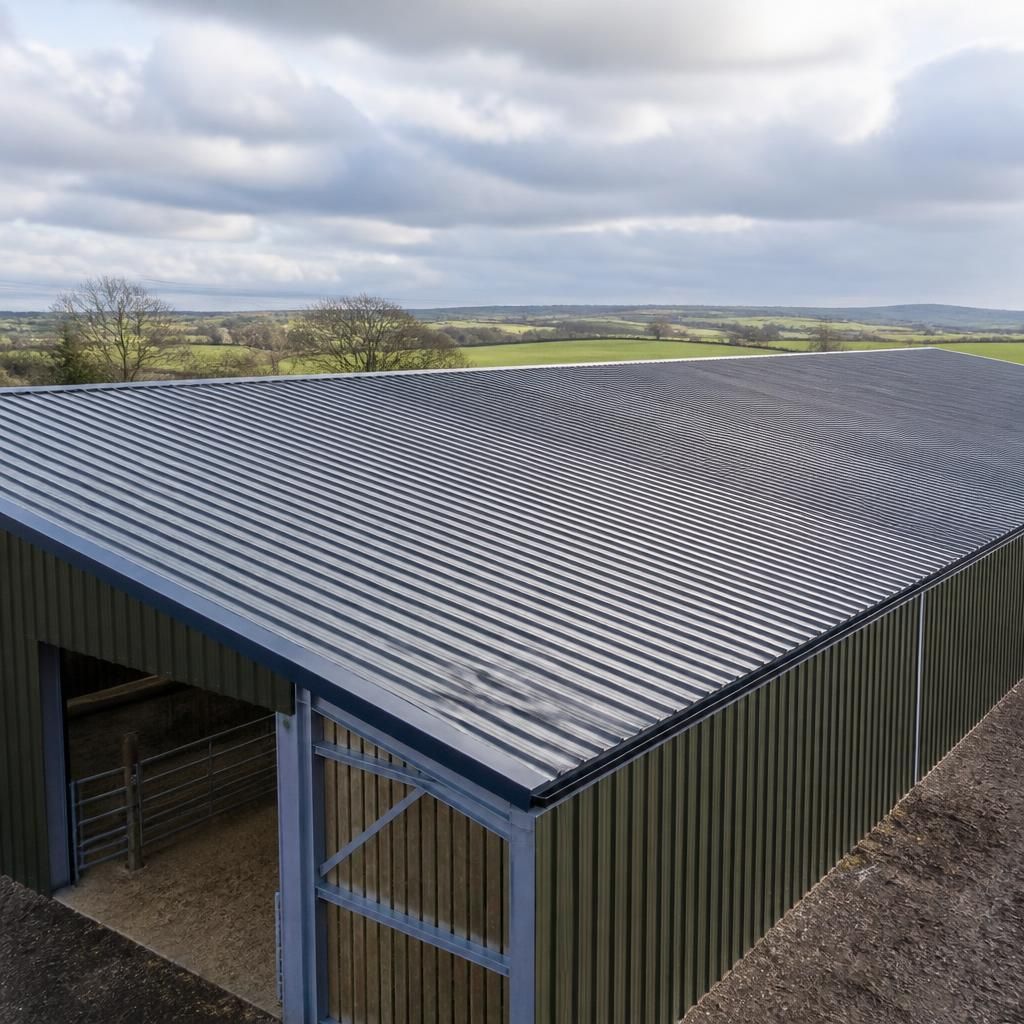
Steel roofing sheets are most economical when the building’s future use is unlikely to change significantly. A single-skin roof may suit an open agricultural store or machinery shed today, but could become a costly choice if the building is later converted into an occupied workshop, office or temperature-controlled space.
Before comparing prices, consider whether the roof will need upgrading during the building’s service life. If future insulation, internal lining or additional services are likely, allowing for these requirements at the design stage may provide better overall value than selecting the lowest-cost covering initially.