
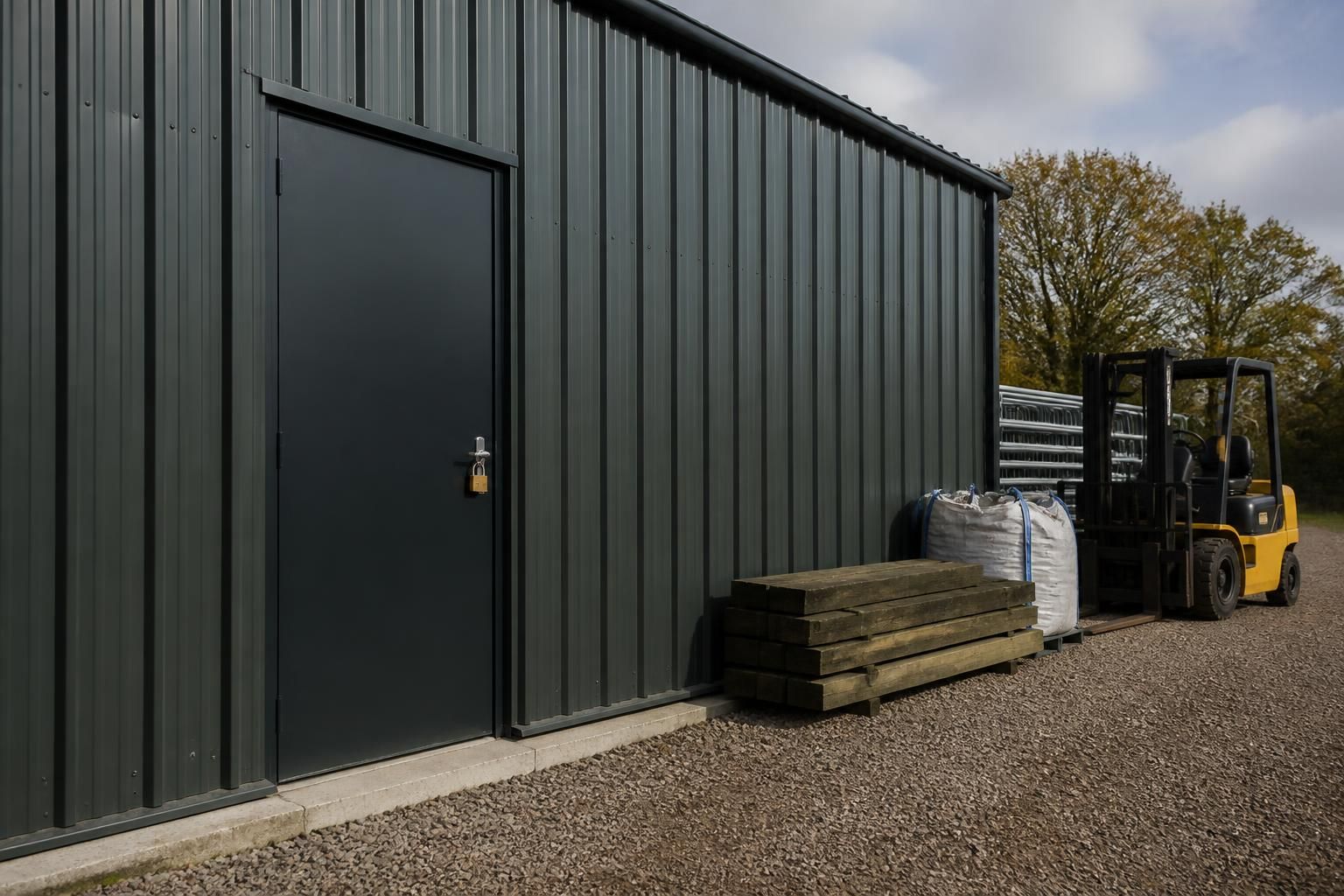
How secure are metal storage sheds?
Metal storage sheds can provide a secure enclosure for tools, equipment and valuables because their steel frames and cladding are difficult to force through when properly specified and installed. Security also depends on the door, locking system, anchoring, lighting and regular checks for damage or corrosion.
Metal storage sheds are generally secure when the complete building is designed as a controlled enclosure rather than treated as a steel shell alone. The level of protection depends on the value of the contents, the likely method of attack, the building’s location and the quality of its doors, openings, connections and surrounding site.
Steel framing and cladding can make unauthorised entry more difficult than it would be with a lightweight timber structure, but metal is not automatically tamper-proof. Determined intruders may exploit weak points such as door leaves, hinges, fasteners, roof edges, service openings or gaps at the junction between the building and its base. Security should therefore be assessed as a whole system.
Key areas to assess include:
- Doors and frames: The main access door should be appropriately sized and engineered for its intended use, with a rigid frame and protected fixing points. Large vehicle doors may be essential for agricultural or industrial equipment, but their size and operating mechanism need to be considered as part of the security design.
- Hinges and hardware: Exposed hinge pins and externally accessible fixings can create avoidable weaknesses. Hinge protection, concealed hardware or anti-tamper fittings may be suitable where the risk justifies them.
- Windows and openings: Windows, personnel doors, roof lights, vents and cable penetrations can all become entry points. Their position, size and construction should be reviewed, particularly if the shed stores portable tools or machinery.
- Cladding and joints: Security is affected not only by the thickness of the cladding but also by how sheets overlap and are fixed to the frame. Poorly secured edges, accessible fasteners and damaged panels should be corrected rather than assumed to be harmless.
- Internal layout: Separating high-value items from the external walls, using lockable internal stores and keeping equipment away from doors can add another layer of protection. A clear layout also makes missing items easier to identify.
Consider the likely attack method before specifying security measures. A shed used for low-value materials may need straightforward access control and good site management, whereas one containing compact power tools, fuel, chemicals or expensive machinery may require a more resistant door set, restricted access and additional internal security. Keeping an inventory, recording identifying numbers and marking equipment can assist with identification if an item is removed, although these measures do not physically prevent entry.
The site around the shed is also important. Unrestricted access for vehicles, concealed approaches and nearby objects that can be used to gain leverage may increase risk. Positioning the building where activity is visible from occupied areas, controlling who has access to keys or codes and removing unnecessary obstructions can reduce opportunities for unauthorised access. Any external security equipment should be selected and installed so that it does not create new blind spots or interfere with normal agricultural or industrial operations.
Moisture and corrosion should be treated as security issues as well as maintenance concerns. Corrosion can weaken panels, fixings and door components over time, while impact damage may leave gaps that are not immediately obvious. Routine inspections should include the lower edges of cladding, door thresholds, hinges, roof penetrations and areas around loading access. Repairs should restore the intended construction, not simply cover a damaged section cosmetically.
Insurance requirements may also influence the specification. Insurers can set their own conditions for locks, alarms, records, separation of certain materials or the storage of particular equipment. Those requirements should be checked before construction, especially for commercial, agricultural or industrial premises. Building control, fire safety and hazardous-material rules may impose additional requirements that affect how secure doors and access routes can be arranged.
For a new building, security can be considered during the design stage by limiting unnecessary openings, selecting suitable access points and showing the intended arrangement on the design drawings. A bespoke steel building can therefore be planned around the equipment it will contain, the way it will be loaded and unloaded, and the level of access required by staff or visitors. Existing buildings can still be improved, but retrofitted measures need to be compatible with the frame, cladding, doors and base.
In summary, a metal storage shed can offer a strong and practical level of security, but its performance depends on the weakest accessible component. A suitable specification, sound installation, controlled access, sensible internal storage and continuing inspection provide a more reliable outcome than relying on metal cladding alone.
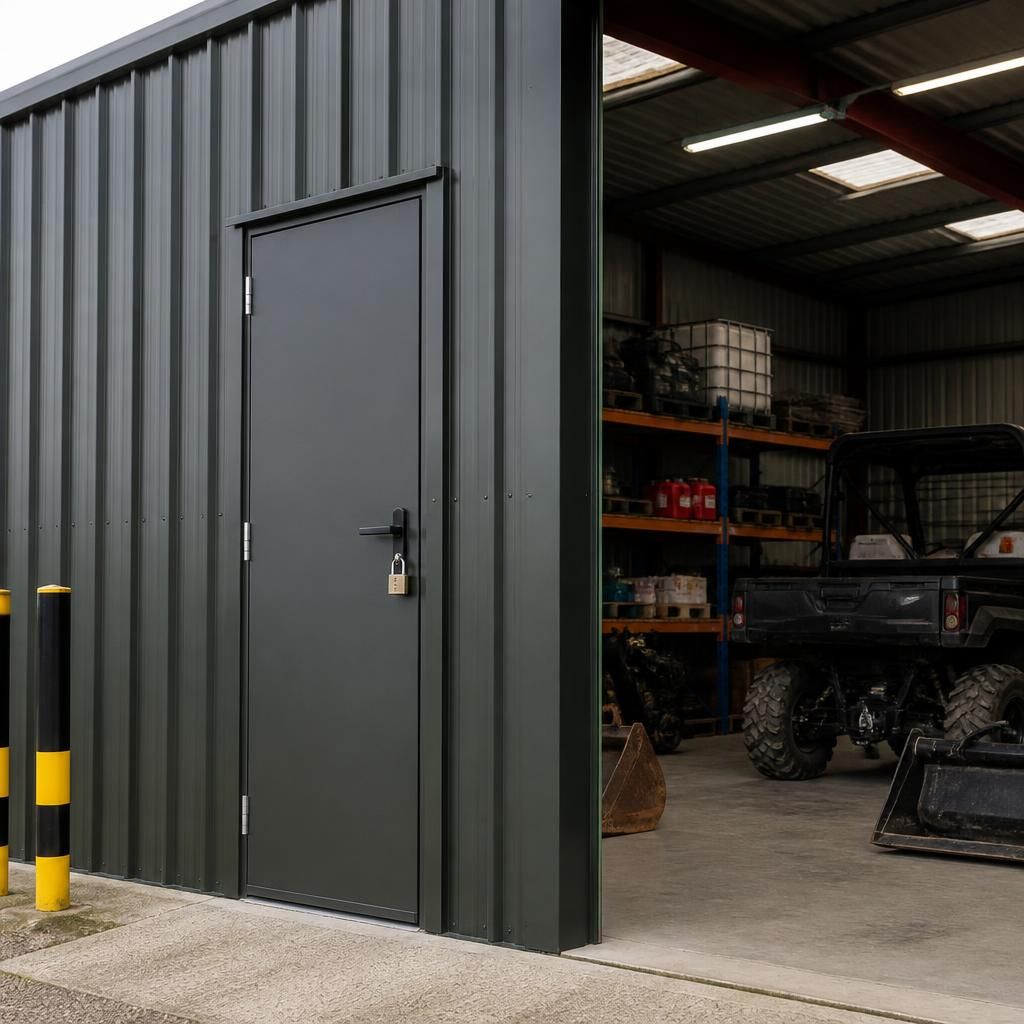
Security measures for a metal storage shed must be balanced with safe storage and emergency access. If the building contains fuel, chemicals, fertilisers or other hazardous materials, restricting entry should not prevent required ventilation, safe separation or access for emergency responders.
Use storage arrangements that match the material and keep incompatible substances apart. Do not block vents, fire equipment, inspection points or escape routes in an attempt to create a more secure enclosure. Site procedures should also ensure that authorised users know where hazardous items are kept, while keys or access codes remain controlled. Any additional security work should be checked against relevant fire safety, workplace and hazardous-substance requirements before it is installed.