Are galvanised roofing sheets suitable for my building?
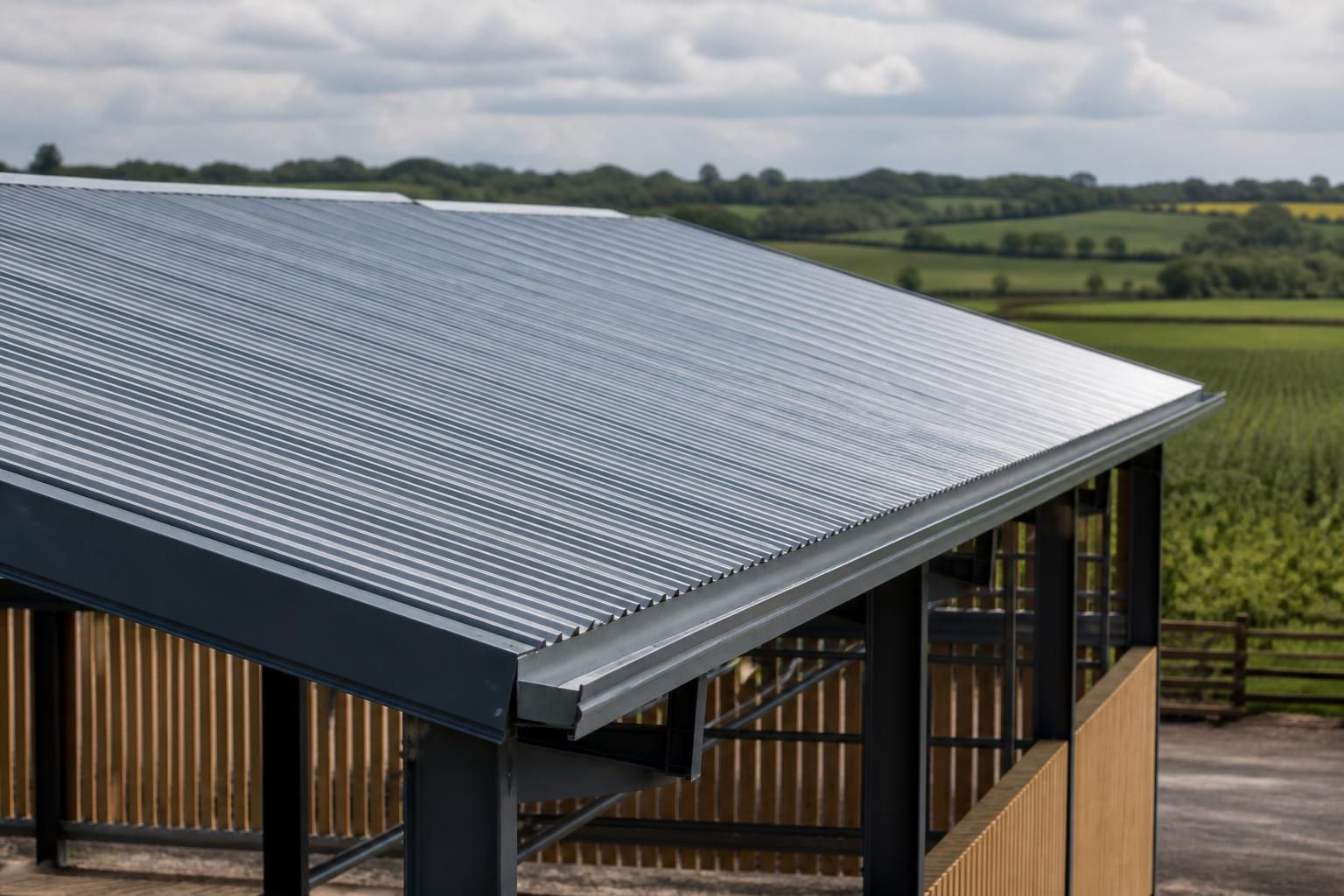
Galvanised roofing sheets are suitable for many industrial, agricultural and equestrian buildings because their zinc coating helps protect the steel from corrosion. Suitability depends on the building’s design, local exposure, roof pitch, insulation requirements and the sheet specification selected.
Galvanised roofing sheets are usually a practical choice for buildings where a robust, low-maintenance metal roof is required, particularly workshops, storage buildings, farm buildings, industrial units and equestrian structures. The right specification depends on how the building will be used, the surrounding environment and whether the roof forms part of an insulated building envelope.
They are most suitable for:
- Unheated agricultural buildings, machinery stores and general-purpose farm buildings.
- Industrial workshops, warehouses and storage units where a durable sheeted roof is required.
- Garages, shelters and equestrian buildings, provided the roof design deals appropriately with moisture and ventilation.
- Buildings with straightforward roof geometry where profiled sheets can be installed with compatible flashings, fasteners and edge details.
For an uninsulated building, galvanised sheeting can provide an economical and functional roof covering. It is less automatically suitable for occupied, heated or humidity-sensitive spaces. A single metal skin can allow condensation to form on the underside when warm, moist air meets the colder sheet. Depending on the use of the building, the design may therefore need insulation, a liner, an anti-condensation layer or additional ventilation.
Building use is an important consideration. Livestock housing, equestrian buildings and agricultural stores can contain considerable moisture, particularly where animals, wet equipment or stored materials are present. Ventilation and the control of condensation should be considered alongside the sheet itself. In industrial buildings, fumes, dust, heat and chemical exposure may also affect the choice of coating, lining and internal finishes.
The surrounding environment affects specification. Galvanised steel is not a universal solution for every exposure. Coastal air, persistent dampness, aggressive industrial atmospheres and contact with chemically treated materials can place greater demands on the protective coating. Water should be prevented from becoming trapped at laps, fixings and junctions, and the roof should be detailed so that it can drain effectively. Where unusually harsh conditions are expected, a different coating system or an additional finish may be more appropriate.
Roof design must be checked before ordering. The sheet profile, thickness, span capability, support spacing, roof pitch and fixing pattern all need to suit the structural design. Wind and snow loads, overhangs, valleys, rooflights and openings can affect the required specification. Sheets should not be selected by appearance alone, because two products that look similar may have different structural and weathering characteristics.
Compatibility between materials is another practical issue. Fasteners, washers, flashings and other components should be suitable for use with galvanised steel. Unprotected cut edges should be treated in accordance with the product guidance, and swarf from drilling or cutting should be removed so that it does not cause staining or localised damage. Direct contact with incompatible metals or persistently wet materials should also be avoided.
Galvanised roofing sheets may not be the best option where the building requires a highly controlled internal environment, a particular architectural finish or very high resistance to a specific chemical atmosphere. They can still form part of a suitable build-up, but the complete roof system—not just the external sheet—should be assessed.
A suitable specification should establish:
- The building’s purpose and whether it will be heated, insulated or naturally ventilated.
- The roof dimensions, pitch, spans, support arrangement and local loading conditions.
- The sheet profile, material thickness, galvanising specification and required lengths.
- The treatment of laps, ridges, verges, eaves, valleys, rooflights and penetrations.
- The appropriate fixings, flashings, insulation and condensation-control measures.
- Any unusual exposure, including coastal conditions, livestock housing or industrial contamination.
For a new steel-framed building, these points can be considered alongside the structural design and fabrication drawings. A detailed building specification should confirm whether galvanised sheets are appropriate for the intended use and identify the associated components needed to complete the roof correctly.
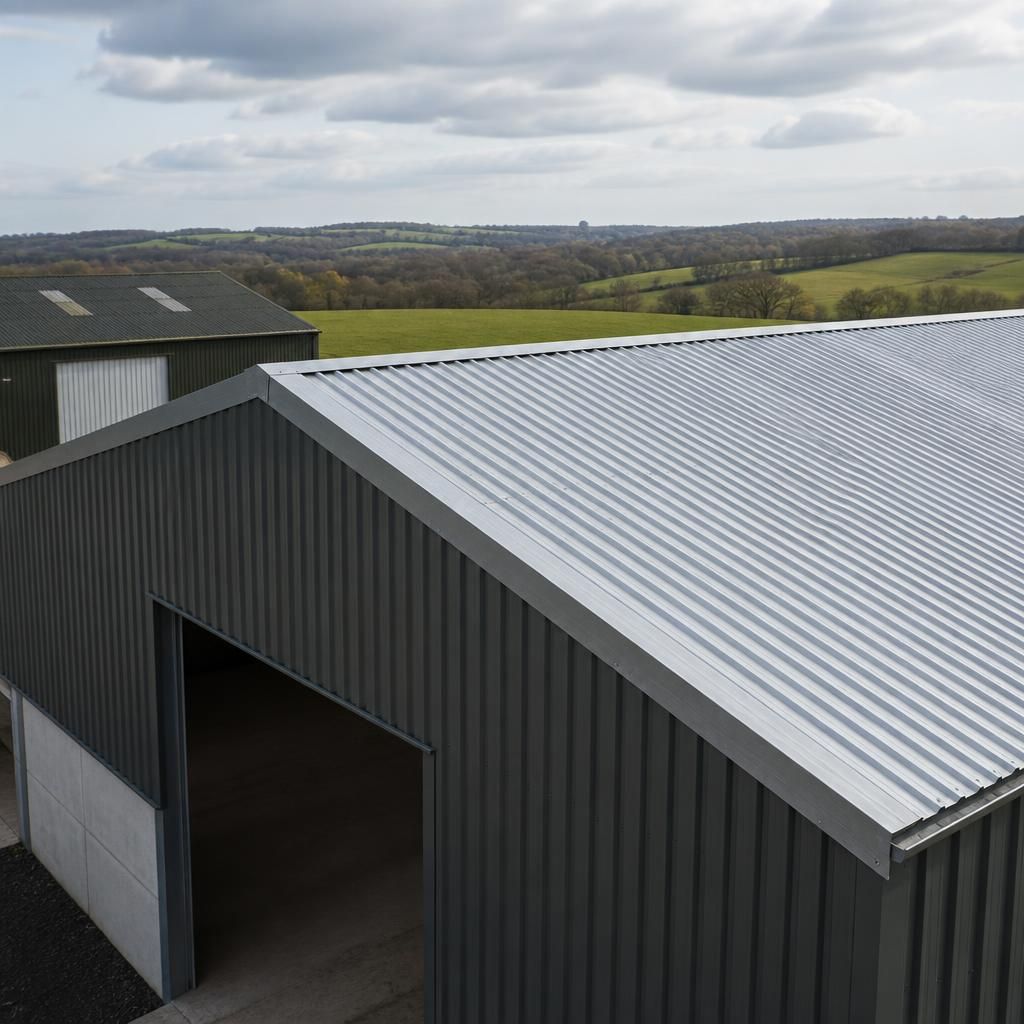
Galvanised roofing sheets are most suitable where the roof can be inspected and maintained as part of the building’s normal upkeep. The zinc coating protects the underlying steel, but scratches, damaged areas, loose fixings and debris should not be left unchecked, particularly around laps, roof penetrations, gutters and other points where moisture can collect.
For agricultural, industrial and equestrian buildings, periodic visual checks can identify staining, coating damage or localised corrosion before these issues spread. Any repair should follow the sheet manufacturer’s guidance and use compatible materials, so the protective finish is not compromised during maintenance work.
Discuss Your Galvanised Roofing Sheet Requirements
Discuss your galvanised roofing sheet requirements with Buildings UK Ltd, providing the building use, roof design and site conditions for review. This will help establish whether the proposed sheet specification and associated roof components are suitable for the project.