
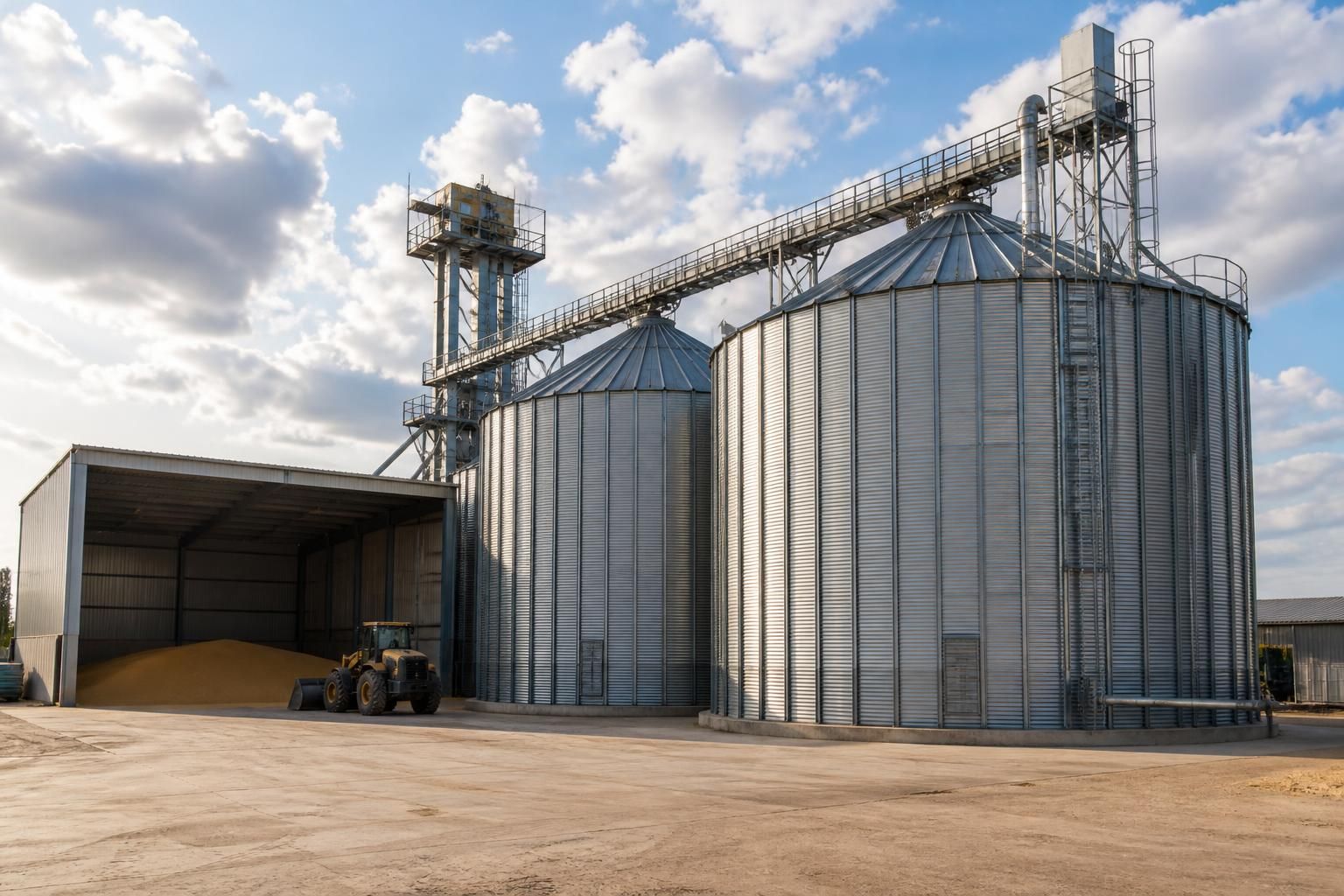
When Are Grain Silos Preferable to Other Storage Options?
Grain silos are preferable when an operation needs enclosed, high-capacity storage with controlled conditions, efficient loading and unloading, and a compact use of available space. They are most suitable where regular grain movements, long-term storage requirements and integration with handling equipment justify the greater investment and fixed installation compared with floor stores or temporary storage.
Grain silos are preferable to other storage options when an operation needs a dedicated, repeatable system for receiving, conditioning, storing and discharging bulk grain. They are usually the stronger choice for businesses handling substantial volumes, moving grain regularly or needing storage that can be managed as part of a wider grain-handling process. Floor stores and temporary solutions may remain more suitable where volumes are modest, storage is short term or maximum flexibility matters more than controlled bulk handling.
Choose a silo where storage forms part of a planned handling system. A silo can be positioned alongside intake pits, conveyors, elevators, dryers, cleaners and outloading equipment. This allows grain to move through the site with fewer manual transfers and makes it easier to allocate separate cells to different crops, qualities or destinations. The value of the silo is therefore not only the container itself; it is the way its outlet, access, aeration and monitoring arrangements work with the rest of the installation.
Silos are particularly suitable in the following circumstances:
- Regular intake and outloading: where grain arrives from harvest or scheduled deliveries and is dispatched progressively, fixed discharge points and mechanical handling can provide a more consistent process than repeated loading and unloading of a floor store.
- Multiple batches: separate silos or compartments can reduce the need to mix grain with different moisture levels, grades, varieties or ownership. This supports clearer stock control and can prevent one unsuitable batch affecting a larger store.
- Limited ground area: vertical storage can make better use of a constrained site than spreading the same volume across a large floor area. This must be assessed alongside vehicle access, foundations, working clearances and the space required for handling equipment.
- Planned conditioning: when aeration, temperature monitoring or drying equipment is required, a silo can be designed around those functions. It should not be assumed that a silo alone dries grain or corrects poor-quality intake; the conditioning equipment and operating procedures are equally important.
- Repeated use over many seasons: a permanent installation can be justified where the same site will store grain year after year and the operating pattern is sufficiently predictable to support the initial capital investment.
Floor stores can be preferable where flexibility is the priority. A suitable shed may accept different materials, machinery and non-grain uses, and it can accommodate grain in broad, shallow heaps rather than fixed compartments. This can be useful for irregular batches, changing crops or operations that need to repurpose storage space. However, floor storage generally requires careful management of heap construction, access, cleaning, segregation, ventilation and mechanical loading. The available volume may also be reduced by traffic routes and safe working clearances.
Temporary storage suits occasional or fluctuating demand. Grain bags, hired capacity or other temporary arrangements can avoid committing to a permanent structure when production varies significantly, land use may change or a business is testing a new storage approach. These options may offer less integration with fixed intake and outloading equipment, and their suitability depends on site management, handling requirements and the period for which grain must be protected. They should be assessed as a complete operating method rather than simply compared on the purchase price of the storage unit.
Cost should be considered across the life of the installation, not only by comparing the price of a silo with the price of an empty shed. The assessment may include foundations, access platforms, ladders, loading and discharge equipment, aeration, temperature monitoring, electrical work, cleaning provisions, maintenance and any necessary planning or site works. A silo may be economically preferable when it reduces repeated handling or makes existing equipment more productive, but that conclusion depends on the operation’s actual throughput and storage pattern. A smaller or less automated business may find that a floor store has a more appropriate cost structure.
Capacity and turnover are also decisive. A silo installation should have enough usable capacity for the intended grain programme without forcing batches together or leaving valuable equipment underused. Consider peak intake, the number of crops or grades stored separately, average storage duration, drying capacity and the rate at which grain must be loaded out. Capacity that looks adequate on paper may be unsuitable if grain cannot be moved through the system quickly enough, or if one full cell prevents the separation needed for the next delivery.
Site conditions can favour one option over another. Silos need appropriately designed foundations and sufficient space for their height, access equipment, maintenance and safe operation. The route for delivery vehicles, the position of existing buildings, drainage, ground conditions and the relationship with power and handling systems all affect feasibility. Where these constraints make a tall structure impractical, a floor store or a combination of storage methods may provide a better overall arrangement.
The practical decision is therefore to compare storage options against the whole grain process. A silo is generally preferable when bulk flow, segregation, monitoring and repeatable mechanical handling justify a permanent installation. A floor store or temporary method is generally preferable when flexibility, occasional use, variable batch sizes or lower initial commitment are more important. Many operations benefit from a combination: silos for regular, higher-value or carefully segregated grain, with floor storage retained for overflow, unusual batches or materials that do not suit fixed-cell storage.
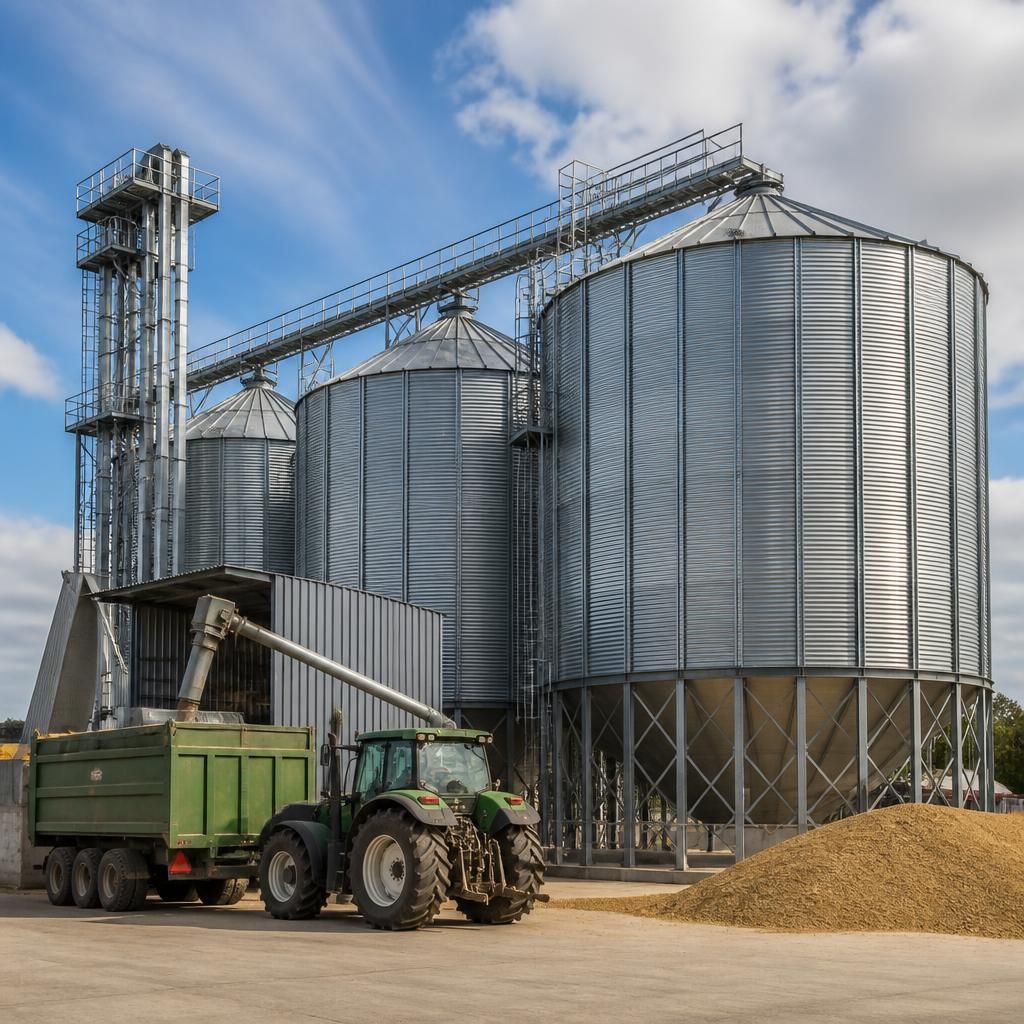
Grain silos are particularly preferable where clear stock traceability is important. Assigning each intake to a defined cell makes it easier to record the crop, grade, moisture condition, ownership and subsequent movements without relying on memory or repeated reshaping of a floor heap. This can simplify stock reconciliation when grain is sold, transferred or blended under controlled procedures.
The arrangement is most effective when cell identification, intake records, sampling and discharge records are treated as part of the storage system. A silo therefore offers more than physical containment: it can provide a structured basis for managing grain as separate, identifiable lots throughout its storage period.