
What flooring is suitable for field shelters for horses?
Suitable flooring for a field shelter should be firm, level, well drained and safe for horses. Compacted hardcore or other suitable aggregate provides a practical base, while concrete with durable rubber matting offers a more stable, comfortable surface where ground conditions and use justify it.
The most suitable flooring for a field shelter is usually a properly prepared aggregate base, with rubber matting or another non-slip finish added where horses will spend extended periods inside. The right specification depends on the site’s drainage, the shelter’s permanence, the number of horses using it and whether it will be used for standing, feeding or overnight accommodation.
Compacted aggregate is a practical choice for many field shelters. A well-graded stone base can create a stable surface that resists rutting and remains serviceable in wet conditions. It should be laid over ground that has been stripped of soft organic material and compacted in suitable layers. On weaker or particularly wet ground, a geotextile separation membrane may help prevent the stone from mixing with the soil.
The aggregate should be chosen carefully. Very coarse stone can leave an uncomfortable, uneven surface, while loose rounded gravel may shift under hoof pressure and make standing less secure. A properly consolidated material with a reasonably smooth finish is preferable, and exposed sharp stones should be removed. Regular inspection is still necessary because hoof traffic, gateways and feeding areas can create hollows or displaced material.
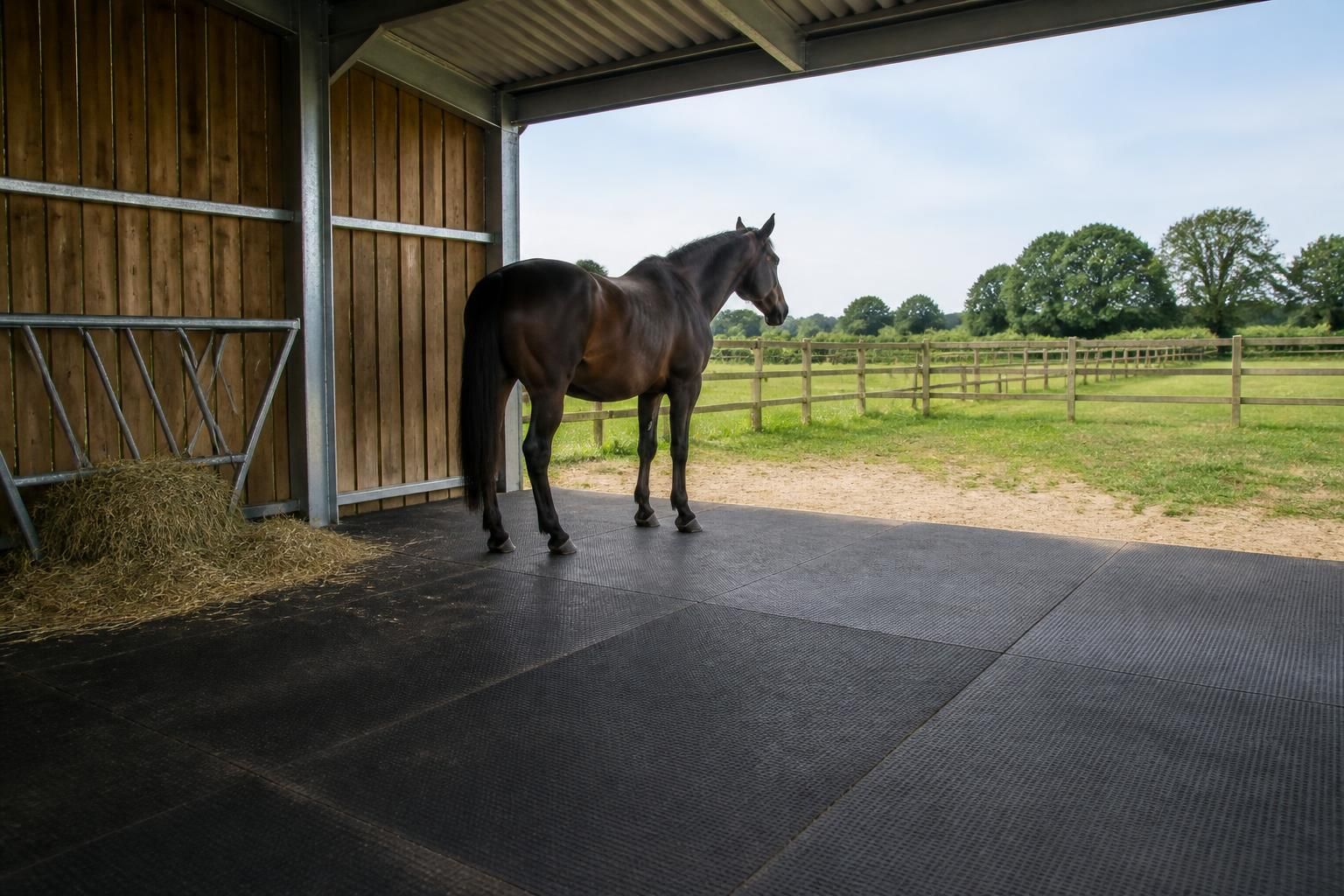
Concrete with rubber matting is more appropriate where a permanent, easily cleaned floor is required. Concrete provides a consistent base, while thick equestrian rubber mats improve comfort, grip and insulation. Mats should fit closely, remain stable when walked over and be checked for curling edges, gaps or trapped moisture. Concrete left uncovered can become hard and slippery, particularly when wet or contaminated with bedding and manure.
A concrete floor should be designed with drainage in mind rather than treated as a flat sealed area. A slight fall towards a suitable drainage point can help prevent standing water, but the gradient should not be so pronounced that horses feel unstable. Any drainage channel, outlet or change in level needs to be protected so that it cannot catch a hoof. Surface water should also be kept from entering the shelter through the entrance.
Rubber paving or loose rubber surfaces can be considered for specific installations, but they need a stable, well-drained substrate beneath them. Loose material may migrate towards the entrance or become mixed with bedding and soil, so it is less suitable where the floor is not contained. Interlocking systems can provide a neat finish, although their joints and edges need periodic checking.
Natural ground, grass and bare soil are generally unsuitable as the sole permanent floor inside a shelter. They can become churned, muddy and uneven, especially around entrances, hay racks and water points. Wet footing increases cleaning difficulty and can make it harder for horses to stand comfortably. If a shelter is used only occasionally on firm, free-draining ground, natural footing may be adequate for short periods, but it should be assessed after wet weather rather than assumed to remain suitable.
- Keep the finished surface level enough for secure footing, without creating a trap for water.
- Provide a firm transition between the shelter floor and the surrounding field to reduce a step or muddy lip at the entrance.
- Avoid exposed sharp stone, loose deep gravel and damaged rubber that could cause bruising or tripping.
- Position feeding and watering equipment so that repeated traffic does not damage one small area of flooring.
- Remove manure and wet bedding regularly, and inspect the surface for contamination, movement and deterioration.
For a permanent field shelter, the floor should be considered alongside the site levels, access, drainage and the proposed shelter frame. A building plan can show how the entrance, floor edge and drainage arrangements work together, helping to avoid a usable shelter becoming surrounded by mud or retaining water.
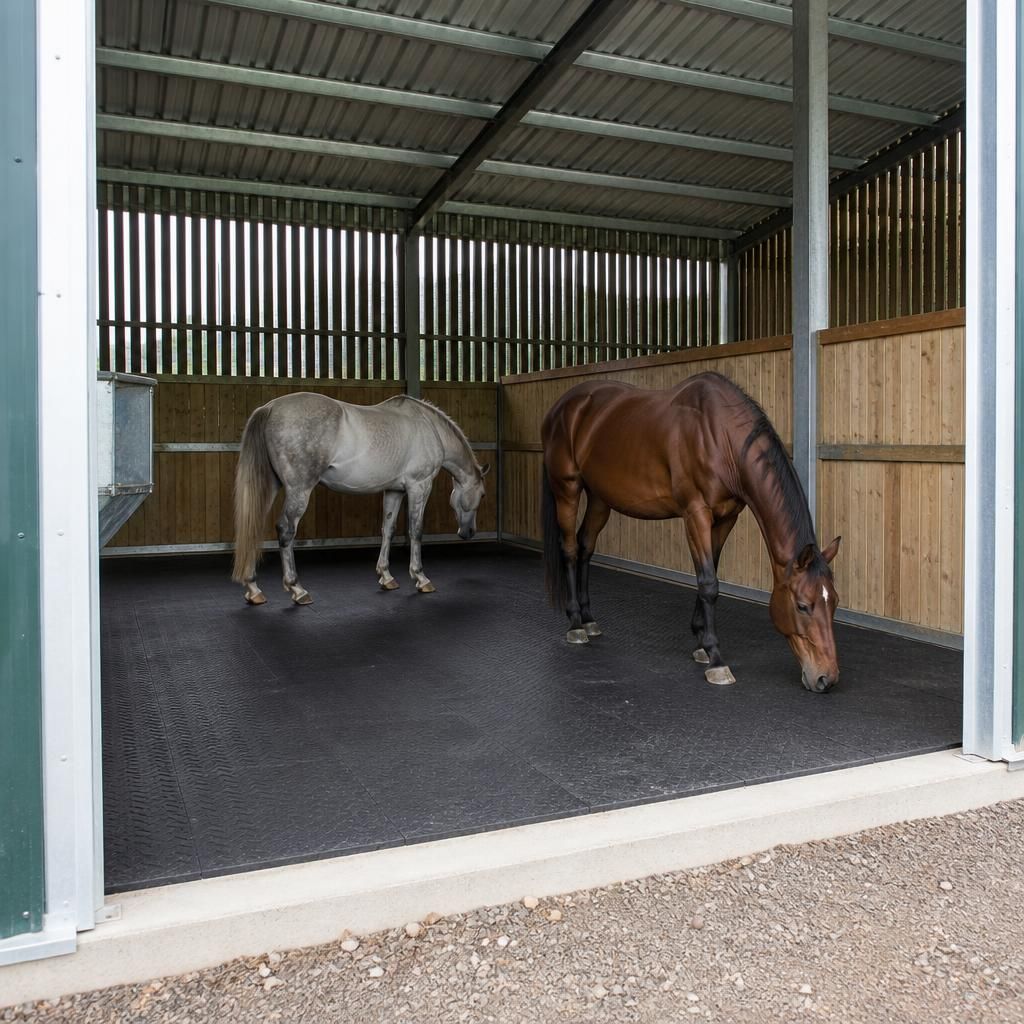
Rubber matting is most effective when treated as part of the shelter’s overall floor design. Allow for the finished floor thickness when setting door thresholds, partitions and fixed feeding equipment, so the completed surface does not create awkward steps or interfere with access. Mats should also be trimmed neatly around posts and other fittings, leaving no exposed edges for horses to catch with a hoof.