
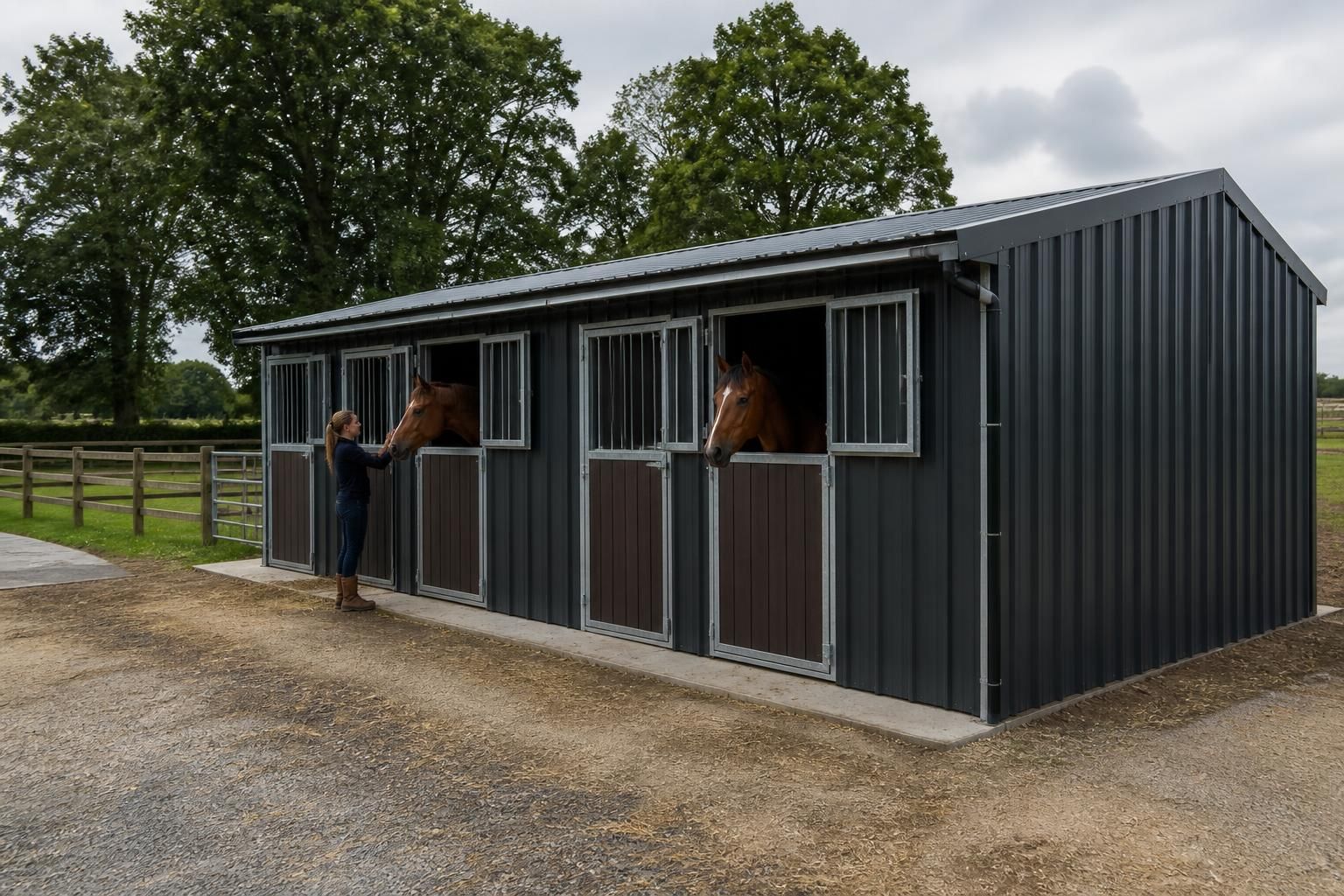
Do temporary stable buildings need planning permission?
Temporary stable buildings may still need planning permission; being designed for short-term use does not automatically exempt them from planning control. The requirement depends on factors such as how long the building will remain, its connection to the land, its intended use and local planning rules, so check with the relevant planning authority before installation.
There is no blanket planning exemption for a stable simply because it is temporary or capable of being moved. In practice, the proposed use, siting and duration should be assessed with the local planning authority before the building is ordered or installed. A temporary structure can still amount to development, particularly where it remains in place, is connected to the land or is used as part of an established equestrian operation.
Why the intended use matters
Planning authorities distinguish between different types of equestrian use. Stabling horses kept as part of an agricultural enterprise may be assessed differently from private leisure use, livery, riding instruction, breeding, competition or commercial yard activities. The use of surrounding land can also be relevant. Installing a stable on land that has not previously been used for horses may involve a material change of use, even if the structure itself is temporary.
It is also important to separate temporary occupation from temporary construction. A building intended to remain for several seasons is unlikely to be treated in the same way as a genuinely short-term facility used for a specific event or defined period. Removing and reinstalling a structure does not, by itself, prevent planning control from applying.
Permitted development is not automatic
Some agricultural developments may benefit from permitted development rights, subject to detailed conditions and, in some cases, a prior approval process. Those rights are not a general permission for equestrian buildings. They may depend on the land’s lawful use, the building’s purpose, its dimensions, its position and the planning rules applying in the relevant part of the UK.
Temporary use provisions should also be treated carefully. A limited period of use for land is not necessarily permission to install a stable and retain it for ongoing horse keeping. The local authority may consider the structure, access, hardstanding, storage of feed and bedding, lighting, drainage and associated activity together.
When planning permission may be needed
- the stable will be retained as a continuing facility rather than used for a clearly defined short period;
- the proposal changes the use of the land to equestrian or commercial use;
- new access, parking, hardstanding, lighting, fencing, drainage or services are required;
- the building is close to a dwelling, highway, boundary, watercourse or neighbouring property;
- the site is in a conservation area, national park, Area of Outstanding Natural Beauty, Green Belt or another area with additional controls;
- the land or an existing building is listed, locally important or subject to restrictive planning conditions; or
- the authority has previously limited the use of the site or imposed conditions affecting agricultural or equestrian development.
Even where the stable itself appears straightforward, these associated works can affect the planning assessment. Environmental matters, including protected species, surface-water management and proximity to designated habitats, may also need to be considered.
Planning permission and building regulations are separate
Planning permission controls whether the development is acceptable in its location and use. Building regulations concern matters such as structural stability, fire safety, access and certain health and safety requirements. A movable or demountable stable is not automatically outside building regulations, and satisfying one regime does not remove the need to consider the other. The structure’s construction, foundations and connection to services will affect the assessment.
How to check before installation
- Identify the site’s lawful existing use and any planning conditions, previous applications or enforcement history.
- Prepare an accurate site plan showing boundaries, neighbouring buildings, access, the proposed stable, hardstanding and drainage.
- Describe the intended horse use honestly, including whether it is private, agricultural, livery, commercial or associated with instruction or events.
- Ask the relevant planning authority whether permission, prior approval or another formal application is required. A written response is more useful than relying on an informal assumption.
- Check building regulations and any separate controls affecting listed buildings, highways, drainage, ecology or watercourses.
A certificate of lawfulness may be relevant in some circumstances where the question is whether an existing or proposed use is lawful, but it does not make an unacceptable development acceptable. The planning authority’s requirements vary between England, Wales, Scotland and Northern Ireland, so advice should be obtained from the authority responsible for the site.
For an application or pre-application enquiry, clear planning elevation drawings and a site-specific layout can help explain the building’s appearance, position and use. Buildings UK Ltd can provide design information for its steel-framed building packages, but only the relevant planning authority can determine whether permission is required or grant consent. Do not commit to foundations, delivery or erection until the planning position and any conditions have been checked.
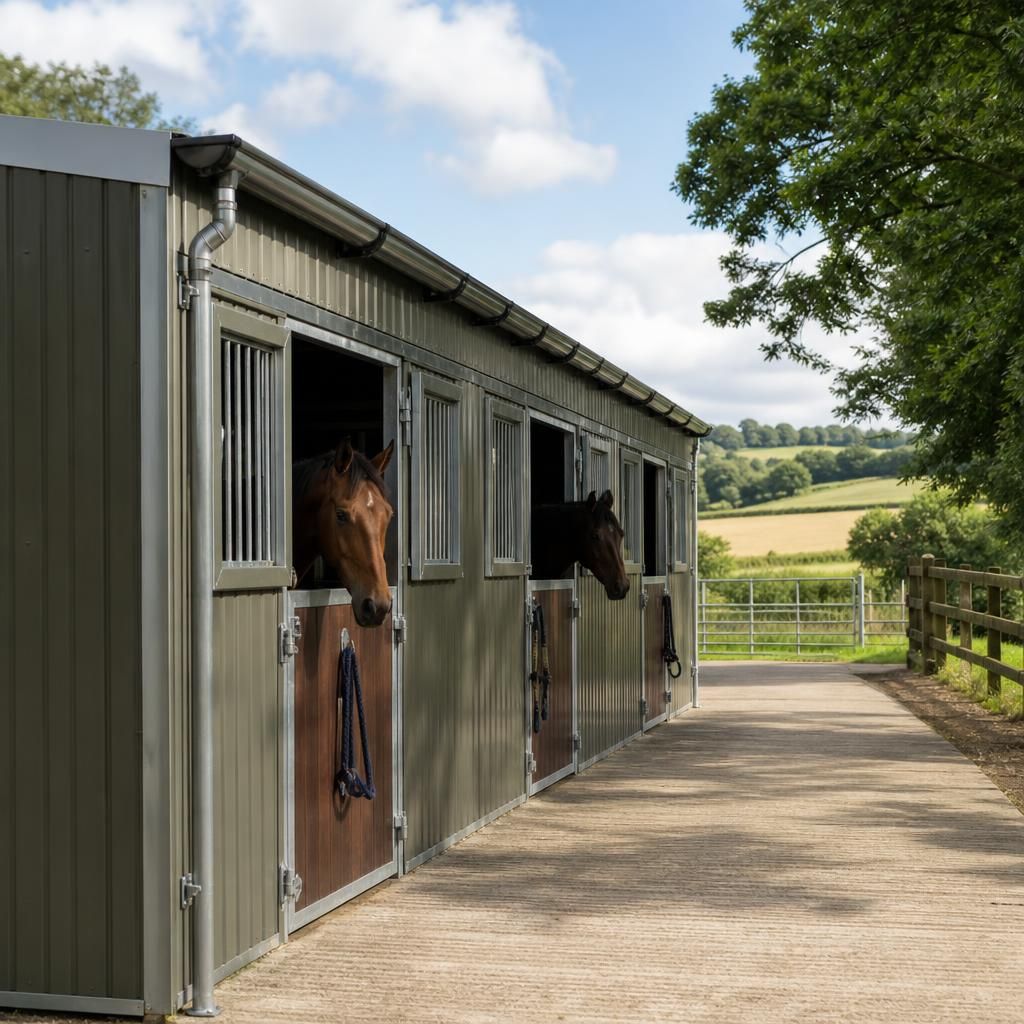
Where a temporary stable is proposed for a defined period, the planning information should explain what will happen when that period ends. A clear removal and reinstatement plan can show how the land, access and any hardstanding will be returned to their previous condition. The authority may also consider whether the stated duration is realistic in relation to the proposed use, rather than relying only on the building being demountable.
Keep records of the agreed position, including any time limit or reinstatement condition. If the stable remains beyond that period, or its use changes, a further planning assessment may be necessary.