
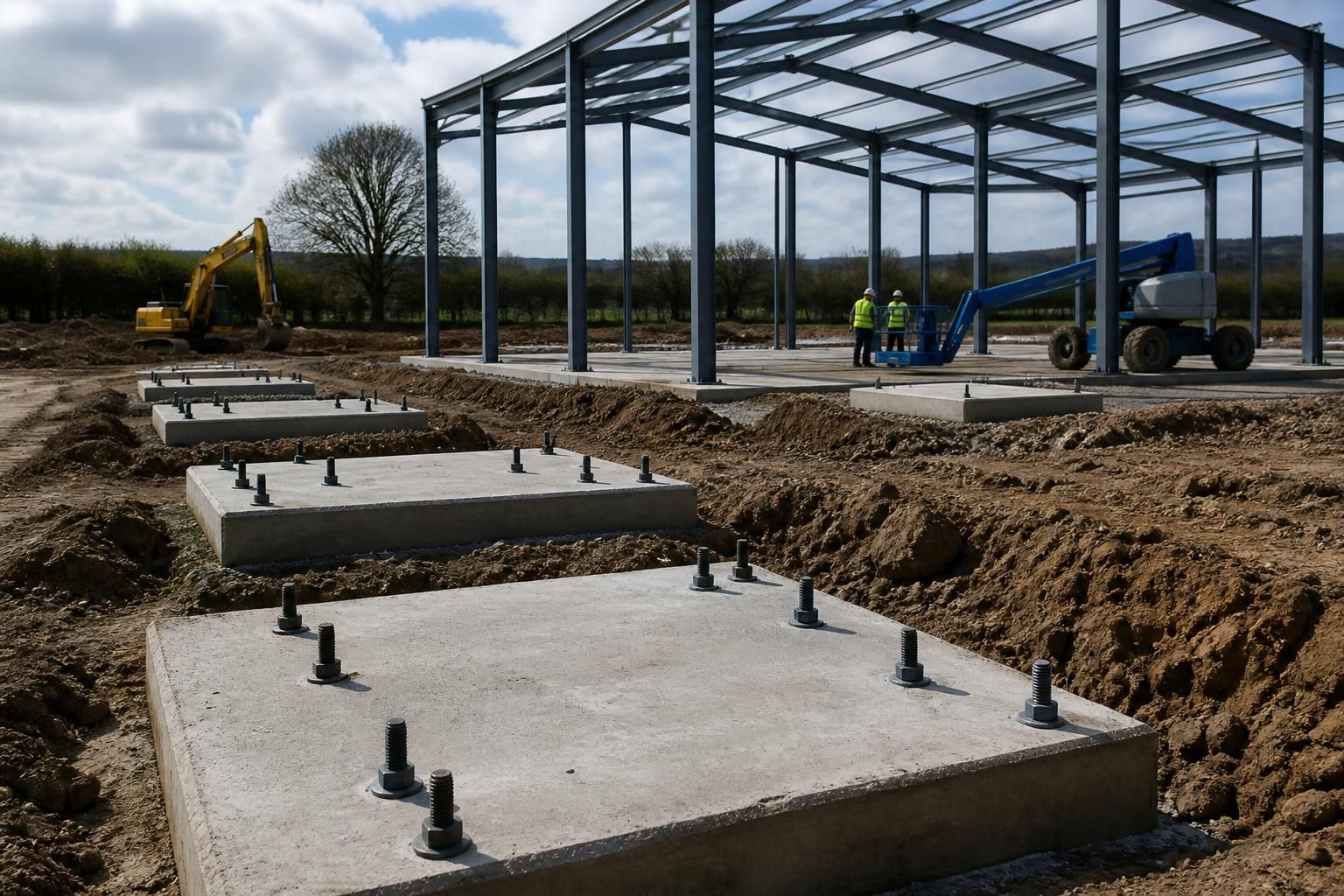
Who is responsible for preparing the site before steel erection?
The building owner or principal contractor is usually responsible for appointing the groundworks contractor to prepare the site, including access, foundations and drainage. The steel erection contractor then confirms that the completed base and surrounding conditions are suitable for safe frame installation, unless the contract specifically assigns site preparation to them.
Responsibility for site preparation is governed by the building contract and construction plan, not simply by the fact that a steel erection contractor is attending site. The party controlling the wider construction works must ensure that the groundworks and preparatory operations are properly commissioned, coordinated and completed before the steelwork team is scheduled to arrive. The steel erector’s responsibility is normally limited to the installation package unless site preparation has been expressly included in the quotation.
Responsibility should be recorded in a clear scope of works. This avoids assumptions about who is arranging specialist operations such as:
- site clearance, reduced-level excavation and made-ground removal;
- soil investigation, compaction and formation preparation;
- reinforced concrete bases, ground beams or pads;
- holding-down bolts, base plates and bolt setting templates;
- underground services, surface water management and permanent drainage;
- temporary or permanent access for delivery vehicles, cranes and other lifting equipment; and
- surveys, setting out and recording the completed foundation positions.
The client, developer or principal contractor should also establish whether the proposed ground conditions are suitable for the intended building. This may require information from a structural engineer, geotechnical specialist or building control professional. A steel frame design is based on known support reactions and foundation arrangements; it does not, by itself, confirm that the site can support the foundations or that unsuitable material has been removed.
Before erection starts, the prepared works should be checked against the steelwork drawings and the engineer’s requirements. Important checks include the position and level of the supports, the spacing and projection of holding-down bolts, concrete condition, foundation dimensions, surrounding ground stability and the availability of a safe route for delivery and lifting equipment. Any discrepancy should be referred to the responsible engineer or project manager before steel members are unloaded. Cutting, drilling or repositioning components on site should not be treated as a substitute for correcting inaccurate groundwork without written technical approval.
The principal contractor has an important coordination role where several trades are involved. They should sequence excavation, concrete work, service installation, surfacing and steel erection so that one trade does not undermine or obstruct another. They should also control site access, temporary works, exclusion zones and lifting arrangements during the erection phase. Where the project has no principal contractor, the client must make sure these responsibilities are allocated to suitably competent parties rather than leaving them implied.
A steel erection contractor may agree to undertake some preparatory work, but this needs to be stated specifically in the quotation and order. The documents should identify the exact extent of the work, design responsibility, required surveys, materials, testing, temporary works, plant and any exclusions. For example, an installer may be responsible for setting out steelwork positions while a separate groundworks contractor remains responsible for excavation and concrete. Similarly, checking bolt locations may be part of the erection service without making the erector responsible for the original foundation design.
A practical pre-erection handover should include:
- the latest approved structural and foundation drawings;
- survey information confirming support positions, levels and bolt locations;
- confirmation that concrete or other support materials have reached the required condition;
- details of buried services and restrictions on excavation or lifting;
- an agreed delivery, crane access and storage arrangement; and
- a record of outstanding defects, restrictions or agreed remedial actions.
If the site is not ready, the erection contractor should document the issue and obtain instructions from the party responsible for the preparatory works. Starting installation on incomplete, inaccurate or unstable supports can create safety, structural and programme risks. The safest arrangement is therefore to define site-preparation duties at tender stage, link them to the relevant drawings and approvals, and require a formal handover before steel erection begins.
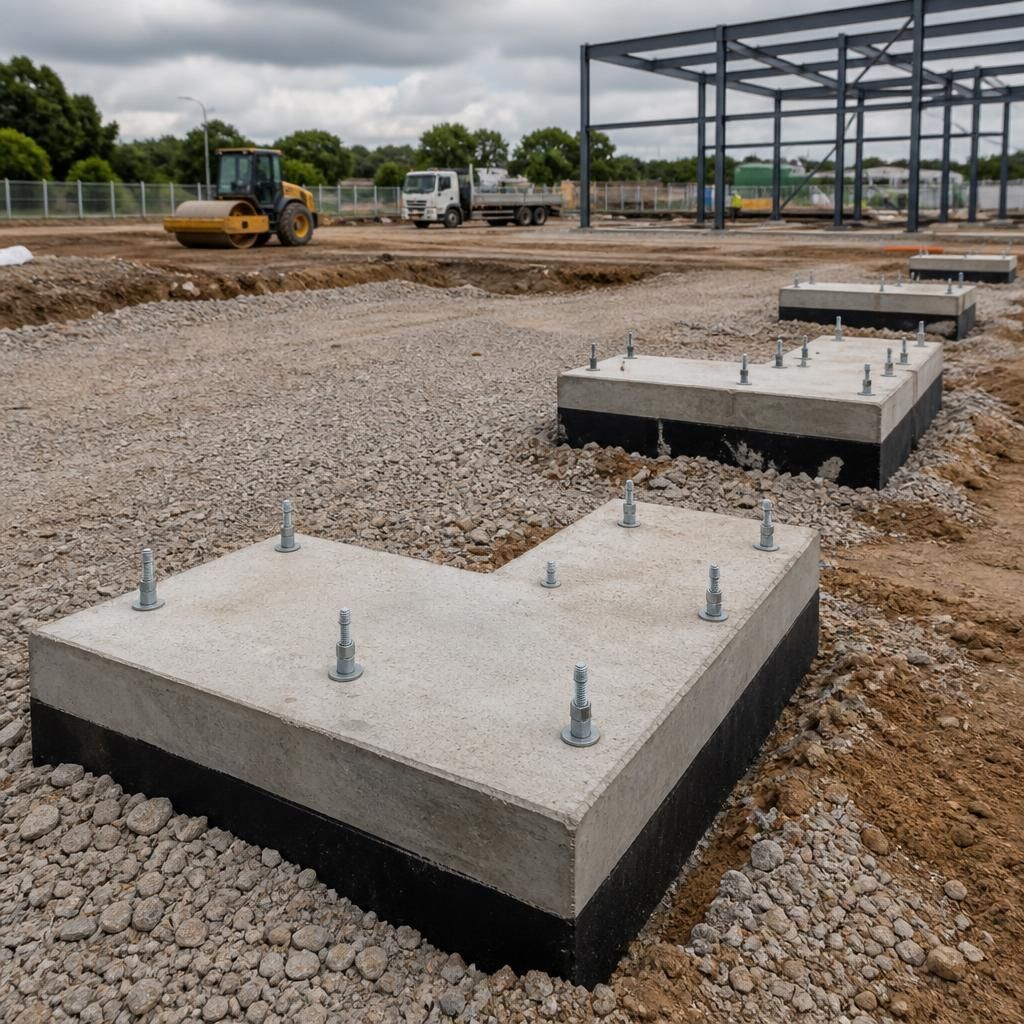
Site preparation does not necessarily mean that every part of the building plot is finished before steel erection begins. In some projects, the frame can be installed before the final floor slab, surfacing or permanent drainage is complete, provided the designed foundations are accepted, lifting areas are stable and access arrangements are suitable for the planned equipment.
The decision should be made by the project’s responsible technical and construction team, rather than by assuming that unfinished ground is acceptable. Any remaining works must be assessed for their effect on crane stability, vehicle movements, working platforms, excavation edges and the protection of completed steelwork. This separates genuine erection readiness from general site completion and should be reflected in the agreed construction sequence.