Which finish is appropriate for specialist corrugated roofing sheets?
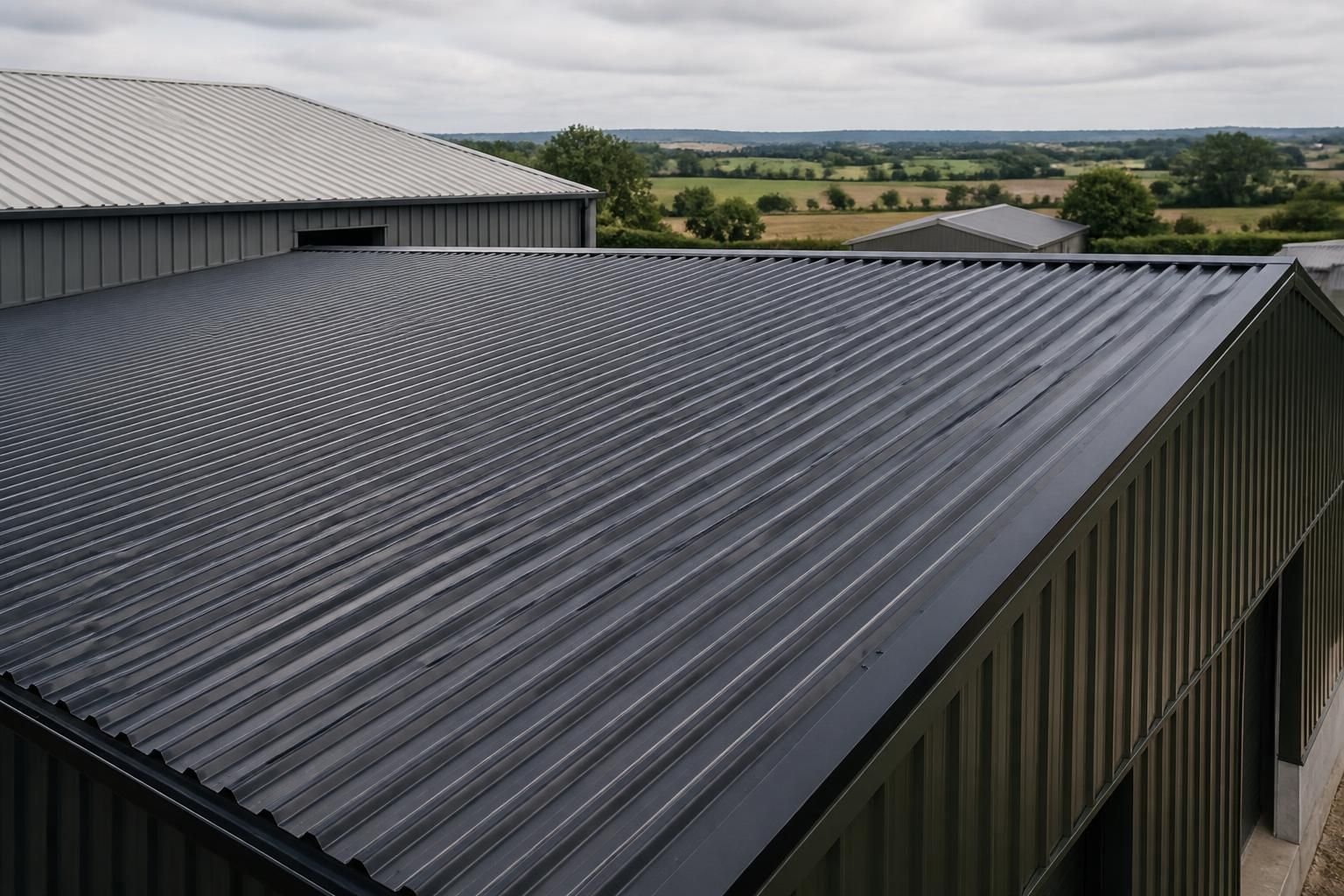
The appropriate finish for specialist corrugated roofing sheets depends on the building’s exposure, appearance requirements and maintenance expectations. Galvanised steel provides robust corrosion protection, while pre-coated steel adds a coloured, factory-applied finish where visual consistency and reduced maintenance are priorities.
The most appropriate finish is determined by the roof’s exposure, the required service life, the appearance of the building and how much maintenance is acceptable. Plain galvanised steel is generally suited to practical agricultural and industrial applications where a metallic finish is acceptable, while factory-coated steel is usually preferable when colour, appearance and consistent long-term protection are important.
Galvanised finish
Galvanised corrugated sheets have a zinc coating applied to the steel to protect it from corrosion. The zinc acts as a barrier and also provides sacrificial protection to small areas where the surface is damaged. This makes galvanised sheeting a practical choice for barns, workshops, storage buildings and other structures where function is more important than a decorative finish.
Its suitability still depends on the environment. Moisture, salt-laden air, chemical fumes, animal waste and persistent condensation can all affect the rate at which the coating weathers. In exposed or aggressive conditions, the specification should identify a galvanising level and product suitability appropriate to that environment rather than treating all galvanised sheets as equivalent.
Galvanised steel gradually develops a weathered appearance. That may be acceptable, or even desirable, on agricultural and utilitarian buildings, but it may not meet the visual requirements of a site close to housing, a public-facing premises or a building designed to complement existing architecture.
Factory-coated finish
Pre-coated steel has a metallic substrate protected by a corrosion-resistant coating system and a factory-applied coloured surface. The coating can provide a more uniform appearance than untreated galvanised steel and allows the roof to be coordinated with wall cladding, trims, doors and surrounding buildings.
A coated finish is often the better option where the appearance must remain consistent, where the building is prominent, or where regular painting would be difficult. The correct choice is not based on colour alone. The coating type, thickness, flexibility, resistance to ultraviolet exposure and suitability for the site environment should all be checked in the product specification.
Different coating systems have different performance characteristics. A polyester coating may be suitable for many standard applications, whereas a more heavily specified coating may be appropriate where the roof faces severe weathering, pollution or cleaning requirements. The manufacturer’s environmental guidance should be followed, particularly for coastal, high-condensation, livestock or industrial locations.
Points to assess before selecting the finish
- Exposure: Consider wind-driven rain, coastal salt, industrial pollutants, high humidity and whether the roof is likely to remain damp.
- Building use: Livestock housing, workshops, manufacturing premises and storage buildings can create different levels of condensation or airborne contamination.
- Visual requirements: A coated finish offers more control over colour and coordination, while galvanised steel has a changing metallic appearance as it weathers.
- Maintenance access: A finish that is difficult to inspect or clean should be selected with particular attention to its documented durability and the roof’s detailing.
- Compatibility: Gutters, fixings, flashings and other adjoining materials should be compatible with the sheet finish. Direct contact or runoff from dissimilar metals can increase corrosion risk.
- Fabrication: Drilling, cutting and forming should follow the sheet supplier’s instructions. Exposed cut edges, scratches and swarf need appropriate treatment so that they do not become points of premature deterioration.
The finish cannot compensate for poor roof design. Adequate falls, drainage, ventilation, correctly specified fixings and well-detailed laps are essential to prevent water retention and condensation-related problems. On buildings with a particularly damp internal environment, an appropriate liner, insulation or anti-condensation arrangement may be required in addition to the external sheet finish.
For refurbishment work, the existing sheet condition should be assessed before choosing a replacement finish. Matching the appearance of adjacent roofing may be useful, but the new material must also be compatible with the existing structure, fixings and drainage details. If old sheets are being overclad or partly replaced, trapped moisture and contact between different metals should be considered.
In practical terms, choose galvanised sheets when a robust, functional metallic finish is suitable for the building and its surroundings. Choose a factory-coated system when appearance, coordinated colour and reduced dependence on future painting are central requirements. For demanding environments, the final decision should be based on the coating specification and exposure guidance rather than on the finish name alone.
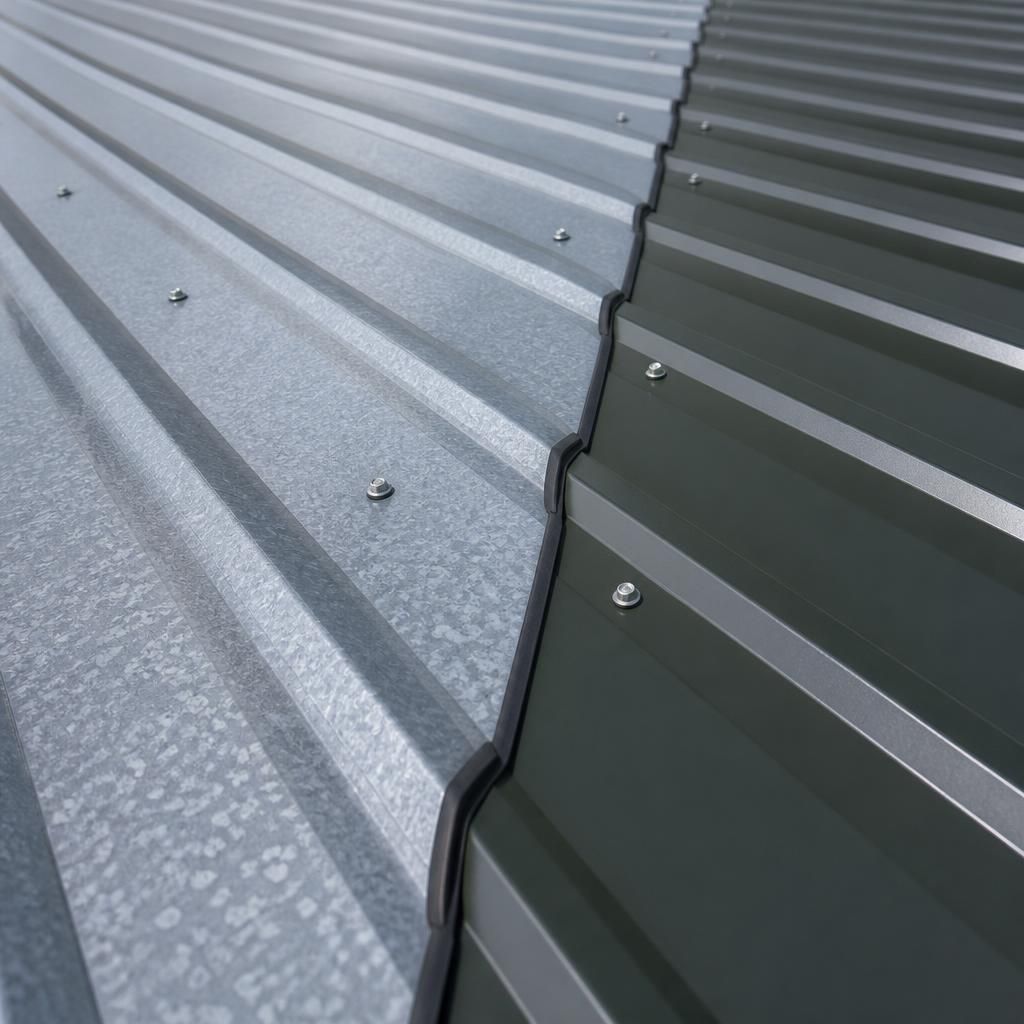
The finish should also be assessed for how it will be maintained after cutting, drilling and installation. Minor damage to galvanised steel may still receive some sacrificial protection from the surrounding zinc, but exposed steel at cut edges or deep scratches should be treated in accordance with the sheet supplier’s instructions.
Factory-coated sheets require particular care because an unsuitable touch-up product can affect adhesion, colour matching or corrosion protection. Any damaged area should be clean, dry and prepared before applying an approved repair coating. This makes the manufacturer’s guidance an important part of the finish specification, especially where sheets will be cut or altered on site.
Discuss the right finish for your specialist corrugated roofing sheets
Discuss your building’s exposure, use and appearance requirements with Buildings UK Ltd to identify a suitable corrugated roofing sheet finish. Their design team can help incorporate the selected finish into the wider building specification.