
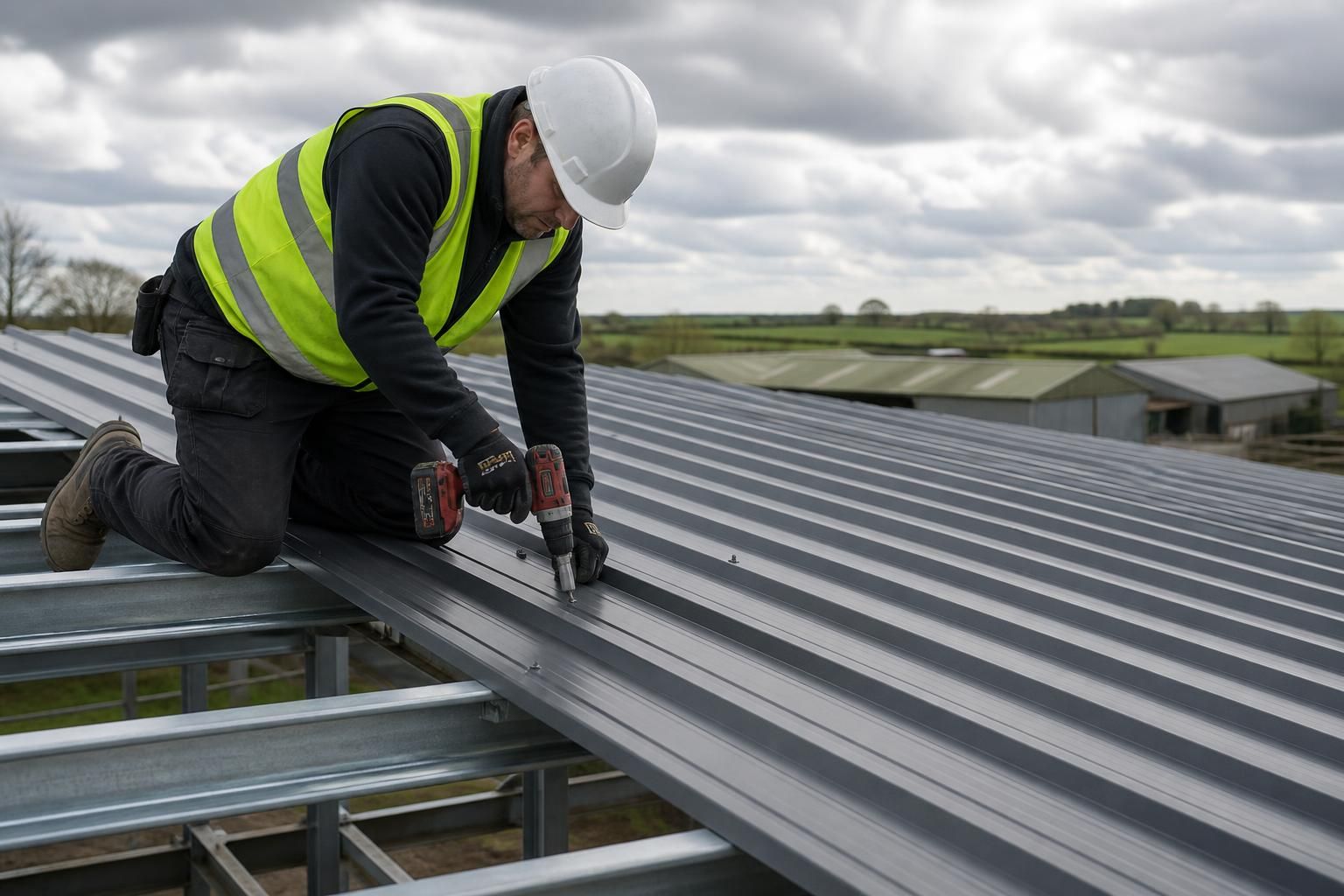
How are sheet metal roof sheets fixed during installation?
Sheet metal roof sheets are fixed to the supporting purlins with corrosion-resistant roofing screws fitted with sealing washers. The sheets are laid to the specified side and end laps, with fixings positioned correctly and laps sealed where required to provide a secure, weather-resistant covering.
Sheet metal roof sheets are fixed by transferring the sheet loads into the supporting purlins through correctly specified fasteners, installed in a planned pattern and tightened sufficiently to compress the sealing washer without damaging the sheet. The exact fixing method depends on the sheet profile, thickness, purlin material, roof exposure and the manufacturer’s installation requirements.
Before fixing starts, the supporting steelwork is checked for line, level, spacing and suitability. Any deviation in the purlins can affect sheet alignment and place stress on the fixings. The first sheet is positioned carefully at the roof edge, because its location establishes the alignment of the remaining sheets. Sheets are normally installed progressively across the roof, keeping the profile ribs and edges correctly engaged as work proceeds.
Fasteners are selected for the construction beneath the sheets. Self-drilling or self-tapping roofing screws may be used for steel purlins, while other substrates require a compatible fixing system. The fastener must have adequate thread engagement and corrosion resistance for the building’s environment. Its sealing washer should be suitable for roofing use and compatible with the sheet material, as an unsuitable washer can deteriorate or fail to seal effectively.
Fixings are placed through the designated part of the profile, normally in accordance with the sheet manufacturer’s instructions. Their position must provide reliable support without obstructing the designed overlap or causing the sheet to deform. Fixing too close to an edge can damage the sheet or reduce the strength of the connection, whereas fixing in an incorrect part of the profile can leave the washer poorly seated.
Each screw is driven square to the sheet rather than at an angle. It is tightened until the washer forms a continuous seal, but not so far that the washer splits, bulges excessively or becomes embedded in the coating. Under-tightening can allow water movement around the fastener; over-tightening can distort the sheet, strip the thread or reduce the washer’s service life. Installers also remove swarf from drilling, since loose metal particles can rust and stain the finished roof.
At side laps, the sheets are held together with the specified stitching or lap fasteners where the roofing system requires them. These fixings help maintain a close joint between adjacent sheets and prevent the lap from lifting or opening under movement. End laps require particular care: the supporting purlin arrangement, sealant or sealing tape, and fixing positions must all match the approved roof detail. Sealants are applied only where specified, and the mating surfaces need to be clean and properly aligned.
The fixing pattern is not necessarily identical across the whole roof. Areas around eaves, verges, ridges, corners and roof edges can experience different wind forces and may require additional or differently positioned fixings. Open-sided agricultural buildings and exposed sites can be especially sensitive to wind uplift, so the design information should determine the number and arrangement of fasteners rather than relying on a standard visual pattern.
Where sheets are cut on site, the cut edge is kept accurately aligned and protected in accordance with the roofing specification. Cut-outs for roof features need sufficient support and must not remove the material needed for a secure fixing. Penetrations are finished with suitable flashings or proprietary details so that the fastener connection remains weather-resistant while allowing for normal thermal movement.
Once installation is complete, the roof is inspected for missed fixings, loose or damaged washers, distorted sheets, open laps and exposed swarf. Fasteners should be replaced if the washer has been damaged or the screw has not formed a sound connection; simply applying sealant over a defective fixing is not a substitute for correcting it. A properly installed roof therefore depends on the complete fixing system: sound purlins, compatible fasteners, accurate positioning, controlled tightening and correctly detailed laps and penetrations.
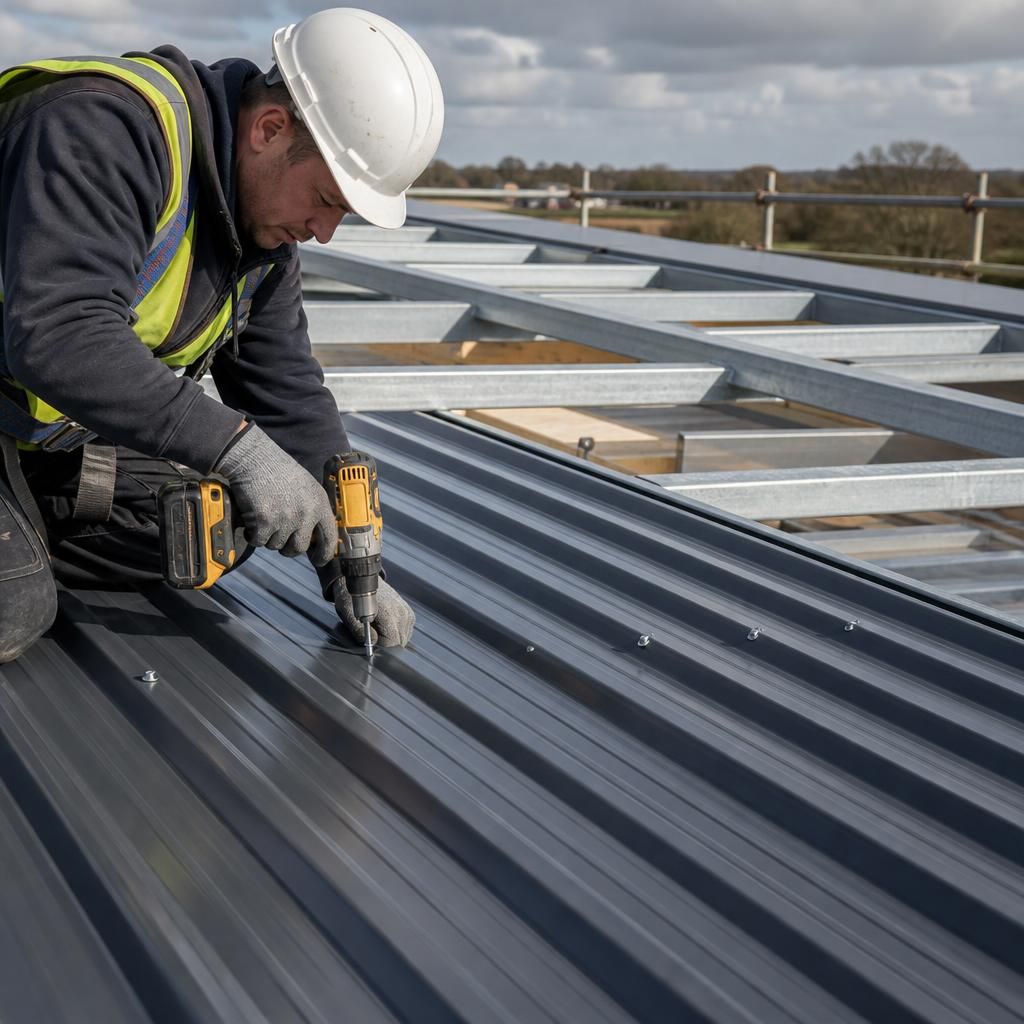
Roof sheets should be fully seated and aligned before the screws are tightened. The fixings are intended to secure the sheet to the supporting structure, not to force a twisted sheet, open lap or misaligned profile into position. If a screw is used to pull the sheet into place, it can leave local distortion around the washer and place unnecessary stress on the connection.
Installers therefore work from the established roof line, checking that each sheet remains flat against its supports as fixing progresses. Any misalignment, damaged edge or obstruction should be corrected before the next fixing is installed. This produces a more even load transfer and helps the sealing washers remain uniformly seated across the completed roof.