
What fixings are suitable for fitting steel roofing sheets?
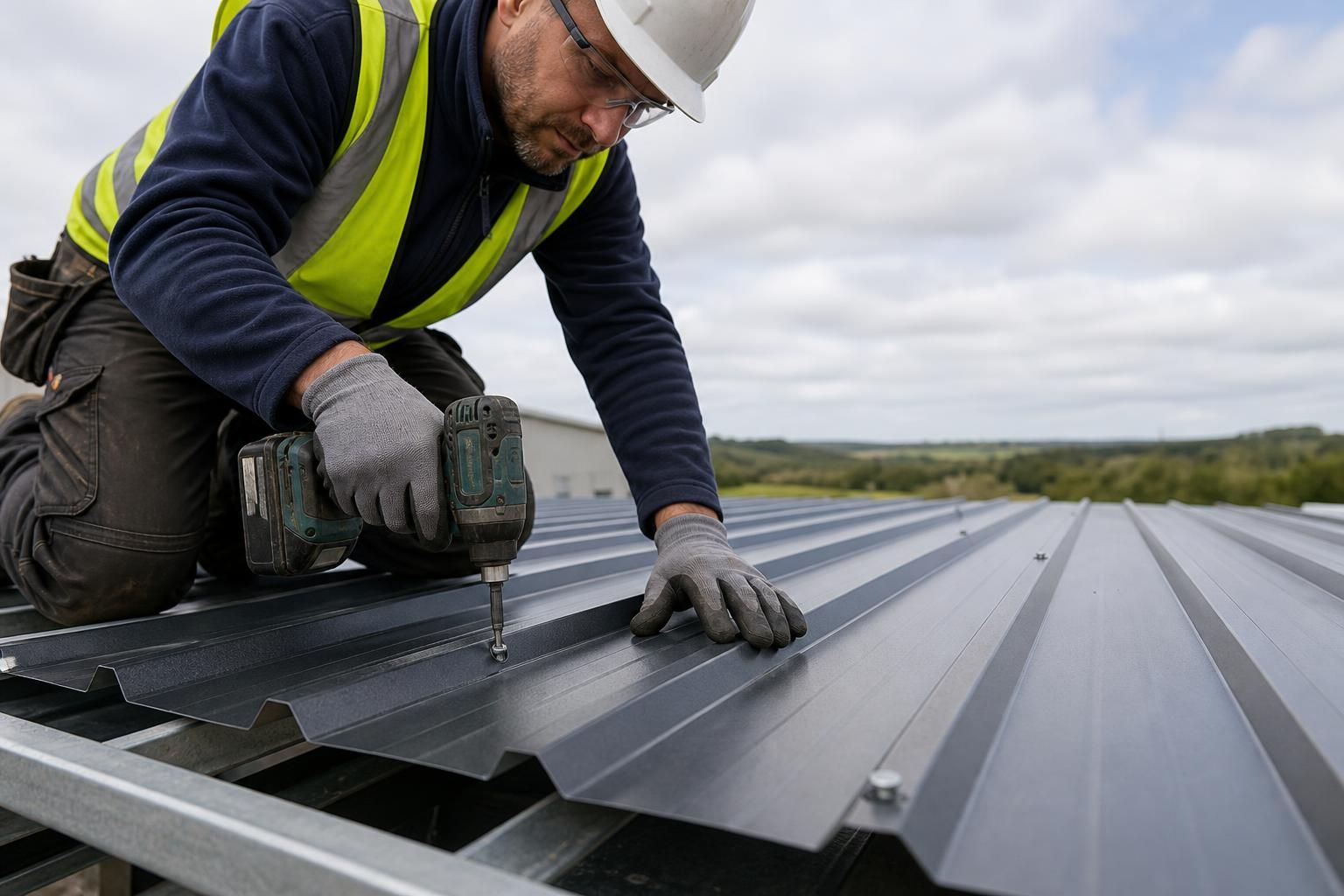
Steel roofing sheets are typically fixed with corrosion-resistant self-drilling roofing screws fitted with bonded sealing washers, which secure the sheet to the supporting steelwork while helping prevent water ingress. Use stitching screws for side laps where required, selecting each fixing to suit the sheet profile, support material, exposure and manufacturer’s installation guidance.
The suitable fixing depends on the roofing sheet profile, the material and thickness of the supporting purlins or rails, the roof exposure and the fixing schedule specified for the system. For most steel sheets fixed to steel purlins, the standard choice is a corrosion-resistant self-drilling roofing screw with a bonded sealing washer. Sheets fixed to timber require a screw designed for timber rather than a fastener intended only for light-gauge steel.
Self-drilling screws for steel supports
Self-drilling screws have a drill-point that forms the hole through the sheet and steel support, reducing the need to pre-drill separate holes. The screw must have sufficient drilling capacity for the combined thickness of the sheet and supporting steelwork, while still providing adequate thread engagement. A screw that is too short may not develop the required grip; one that is unnecessarily long can project beyond the support and create an avoidable snag or corrosion point.
Use a fastener with a corrosion-resistant finish suitable for the building’s environment. More demanding conditions, such as persistent moisture, coastal exposure, industrial atmospheres or contact with incompatible materials, may require a higher level of corrosion resistance. The fixing specification should also be compatible with the sheet coating, as unsuitable metals can promote galvanic corrosion.
Fasteners for timber purlins
Where the sheets are supported by timber, use roofing screws with a thread and point designed to penetrate and hold in wood. The screw length must provide adequate embedment in the purlin without penetrating so far that it causes an obstruction or creates a safety issue inside the building. The washer should be sized for the sheet profile and compressed evenly against the crown or valley, as specified for that roofing system.
Bonded sealing washers
A bonded washer normally combines a metal backing washer with a resilient sealing element. It spreads the clamping force over the sheet and helps seal the hole against rainwater. The washer must be appropriate for the screw diameter and sheet profile. Over-tightening can crush the profile, distort the sheet or damage the seal, while under-tightening may leave the washer loose and allow water to track around the penetration. Drive the screw until the washer is seated and lightly compressed, not flattened or forced below the sheet surface.
Stitching screws for side laps
Side laps are generally secured with smaller stitching screws, where required by the sheet profile and installation instructions. These fasten adjacent sheets together rather than fixing the sheet to the purlin. They should include a suitable sealing washer or other approved sealing arrangement and be positioned consistently along the lap. Do not substitute stitching screws for the primary purlin fixings, because they serve a different purpose.
Fixings for flashings and accessories
Ridge, eaves, verge and other sheet-metal flashings may use shorter self-drilling screws, stitching screws or sealed rivets, depending on the joint and the material being connected. The selected fastener should accommodate the combined thickness of the flashing and support, avoid obstructing drainage paths and provide a weather-resistant joint. Where dissimilar metals meet, use compatible materials or an approved isolating method to reduce the risk of corrosion.
Placement and fixing quantity
Fixings must be installed at the locations specified for the particular profile. Depending on the system, primary fixings may be placed through the crowns or valleys of the profile, and the correct position can affect both weathering and resistance to wind forces. The fixing schedule should account for sheet length, purlin spacing, roof edges, corners and the building’s exposure. Edge and corner zones commonly require particular attention because wind loading can be more demanding there.
- Check the sheet manufacturer’s fixing diagram before drilling.
- Use the specified screw diameter, length, washer type and corrosion resistance.
- Keep holes square to the supporting member so the washer seats evenly.
- Remove swarf after drilling, since loose steel particles can rust and stain the coating.
- Replace damaged, cross-threaded or poorly seated fixings rather than relying on sealant as a correction.
Sealants should not normally be used to compensate for an incorrect fixing or washer. Where a lap sealant, butyl strip or other sealing product is part of the roofing system, it must be compatible with the sheet coating and applied in the position stated by the system instructions. The fixing pattern, washer compression and lap treatment should be checked before the roof is exposed to weather.
For a bespoke steel building, the fixing choice should be confirmed against the structural design, sheet manufacturer’s installation guidance and the actual support material. This is particularly important where the roof includes mixed support types, unusual spans, high exposure or interfaces with rooflights and penetrations.
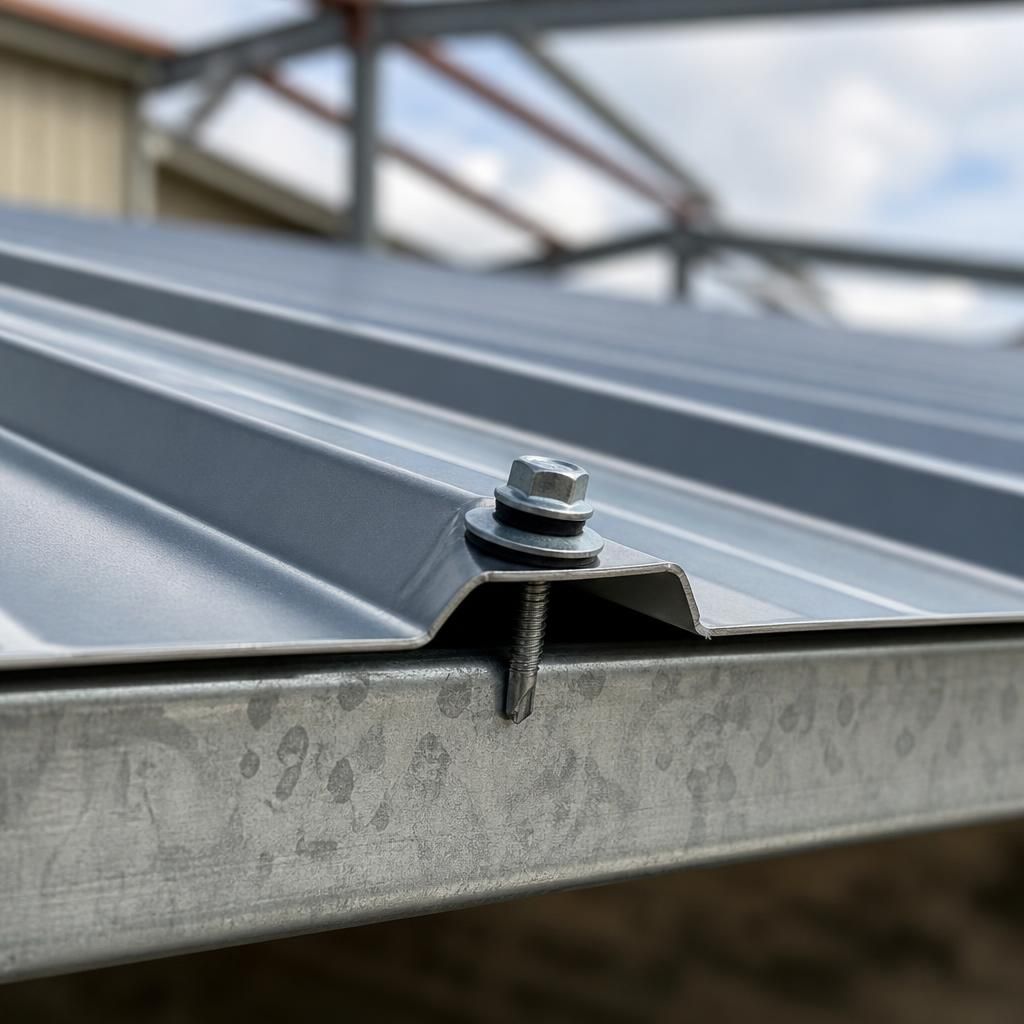
Use purpose-made roofing fixings rather than general-purpose construction screws. Roofing fasteners are designed with a suitable head, point and sealing washer to clamp profiled sheet without damaging its coating or creating an unreliable weather seal. A plain screw or exposed washer may loosen, cut into the sheet or allow water to enter around the fixing, even if it appears to hold the sheet securely.
Need help selecting suitable fixings for steel roofing sheets?
If you need to confirm a fixing schedule for a steel building, speak to Buildings UK Ltd with the sheet profile, support material and roof details to hand. Their team can help relate the fixing specification to the building design and installation requirements.