
What fixings are suitable for steel roof panel installation?
Steel roof panels are typically installed with corrosion-resistant self-drilling or self-tapping roofing screws fitted with sealing washers, selected to suit the panel profile, thickness and supporting steelwork. The fixing specification should also account for wind loads, exposure conditions and compatibility between the screw, washer and roof materials so that the connection remains secure and weather-resistant.
The most suitable fixings for steel roof panels are engineered roofing screws matched to the panel system and the supporting structure. Through-fix systems generally use self-drilling screws with an integrated sealing washer, while insulated sandwich panels may require longer fasteners designed to pass through the panel and engage correctly with the purlin or rail. Side-lap stitching screws, panel-end fixings and any special fasteners for flashings are selected separately.
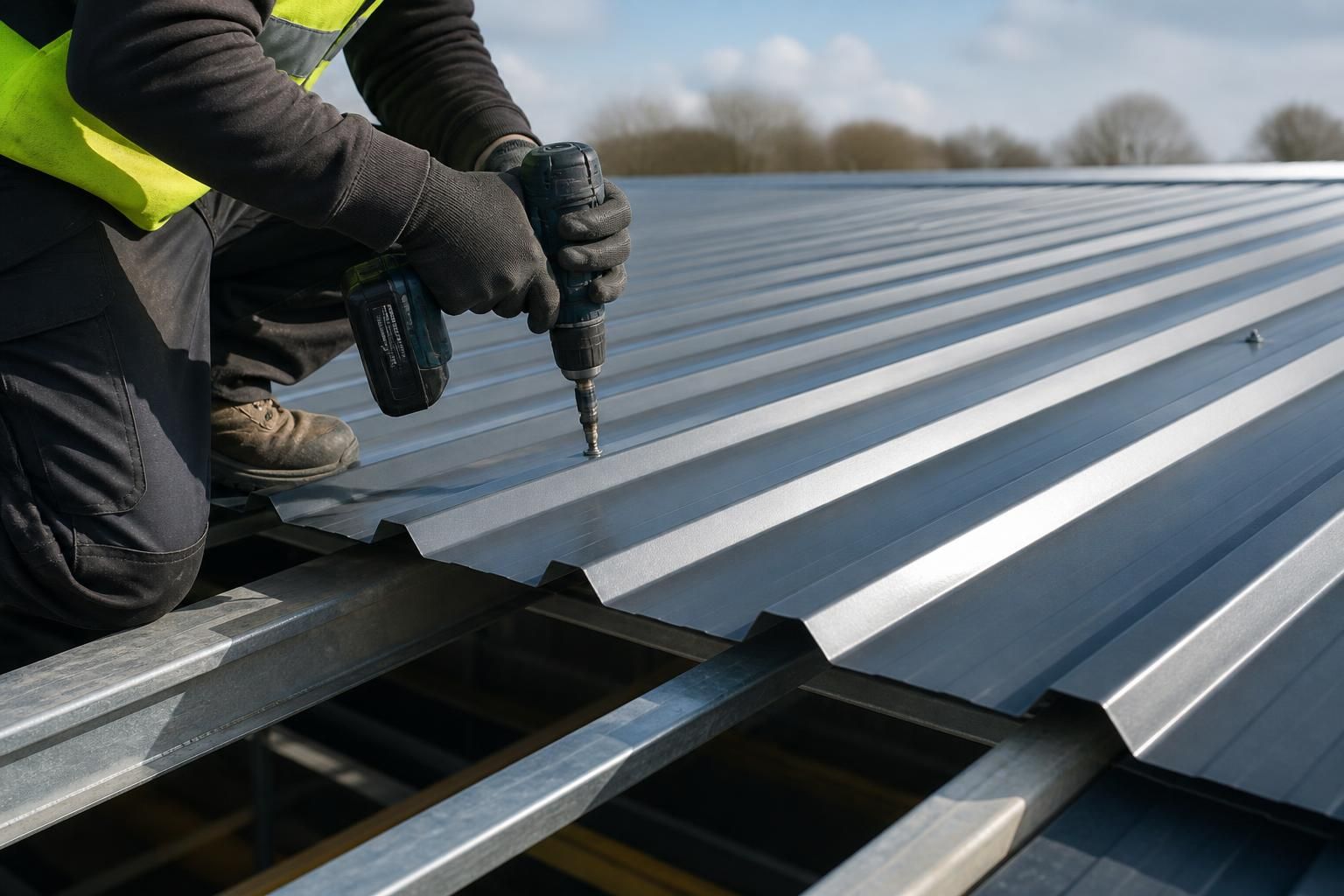
Through-fix roofing screws are commonly used for single-skin profiled sheets. Their drill point forms the hole in light-gauge steel purlins, reducing the need for pre-drilling, and the threaded section provides engagement with the support. The screw length must allow the required penetration into the purlin without leaving an unsuitable projection or interfering with services and internal linings. If the support is timber rather than steel, a screw with a thread and point intended for timber should be used instead of a metal-drilling screw.
Fasteners for insulated panels need to accommodate the panel thickness, the outer and inner skins, and the supporting steelwork. These are often longer than those used for single-skin sheets and may incorporate features intended to maintain the panel’s restraint without crushing the insulation. The fixing schedule should follow the panel manufacturer’s technical information, particularly at panel ends, roof edges, corners and areas subject to higher wind suction.
Side-lap stitching screws join adjacent sheets or panel skins and help maintain the integrity of the lap. They are smaller than the primary purlin fixings and should be positioned at the spacing specified for the particular profile. They must not be treated as a substitute for fixings into the structural supports. Where a lap seal or sealing tape is specified, the stitching screw should clamp the lap evenly without damaging the seal.
Washer selection is part of the fixing specification. A bonded sealing washer, usually incorporating a weather-resistant elastomer such as EPDM, forms the seal around the fastener. The washer diameter and material must suit the screw and panel profile. A washer that is too small may not seal reliably; one that is over-compressed can split, distort the sheet or lose its ability to accommodate movement. Plain washers are not normally an adequate weather seal for exposed roof penetrations.
Corrosion resistance should reflect the roof environment. The screw coating, washer, panel coating and supporting steel should be compatible, especially in agricultural buildings where moisture, fertiliser residues, animal waste or cleaning chemicals can create a more aggressive atmosphere. Coastal exposure and industrial atmospheres may also require a higher corrosion-resistance specification. Stainless steel may be appropriate in some environments, but it should not be selected automatically: contact with other metals can create galvanic corrosion, so the complete material combination needs checking.
Fixing capacity is established from the design rather than from screw diameter alone. The assessment may include pull-out resistance from the purlin, pull-over resistance through the sheet, shear, fastener spacing, support thickness and the effect of wind pressure and suction. Perimeter and corner zones commonly need particular attention because roof-edge forces can differ from those in the central roof area. The structural designer or system supplier should confirm the number and location of primary fixings for the building’s calculated actions.
Installation quality affects both structural performance and weather-tightness. The screw should be driven square to the sheet, using a controlled tool setting and the correct driver bit. It should be tightened until the sealing washer is evenly seated, not so far that the washer extrudes, splits or causes a depression in the sheet. Under-tightening can leave a leakage path, while over-tightening can damage the coating and reduce the washer’s effectiveness.
Drilling swarf and metal filings should be removed from the roof during installation. If left in place, they can rust and stain the coating or obstruct drainage paths. Damaged coatings should be treated in accordance with the panel system’s repair instructions. Holes should not be enlarged casually, and a misplaced or stripped fixing should be replaced with an approved solution rather than simply being left in the sheet.
Where the roof includes flashings, ridge details, eaves closures or roof penetrations, the fixing must suit the detail as well as the panel. Flashing screws need a washer appropriate to the flashing material, and the fastener should not obstruct designed movement or drainage. Penetrations may require a separate support frame, kerb or proprietary sealing arrangement; relying on a standard panel screw alone is unsuitable for a large or heavily loaded roof fitting.
Before ordering, the fixing schedule should identify the panel profile, panel thickness, support material and thickness, exposure conditions, required corrosion class, washer type, screw length, lap-fixing requirements and any special edge or penetration details. Technical drawings and the panel supplier’s installation instructions should take precedence over generic screw-selection tables. For a bespoke steel building, these details can be incorporated into the design and fabrication information so that the roof fixing arrangement aligns with the structural layout.
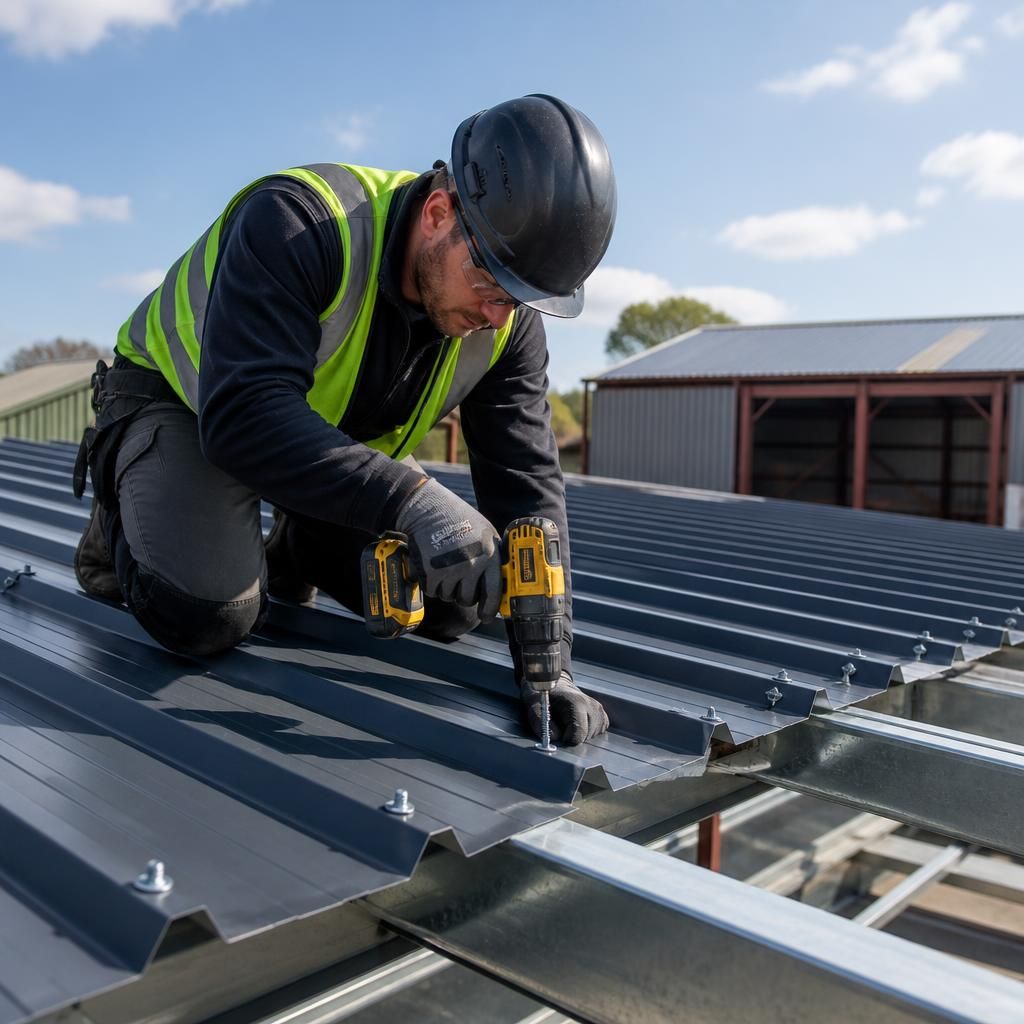
For refurbishment work or any roof where the supporting steelwork is of uncertain condition, fixing suitability depends on the actual substrate as well as the panel. Existing purlins may be thin, corroded or weakened, reducing the reliable engagement available to a new screw. The support should therefore be inspected before the fixing type is confirmed, with specialist assessment or pull-out testing used where the condition cannot be established visually. A replacement fixing is not a remedy for inadequate structural steelwork; damaged supports may need repair or strengthening before the roof panels are installed.