
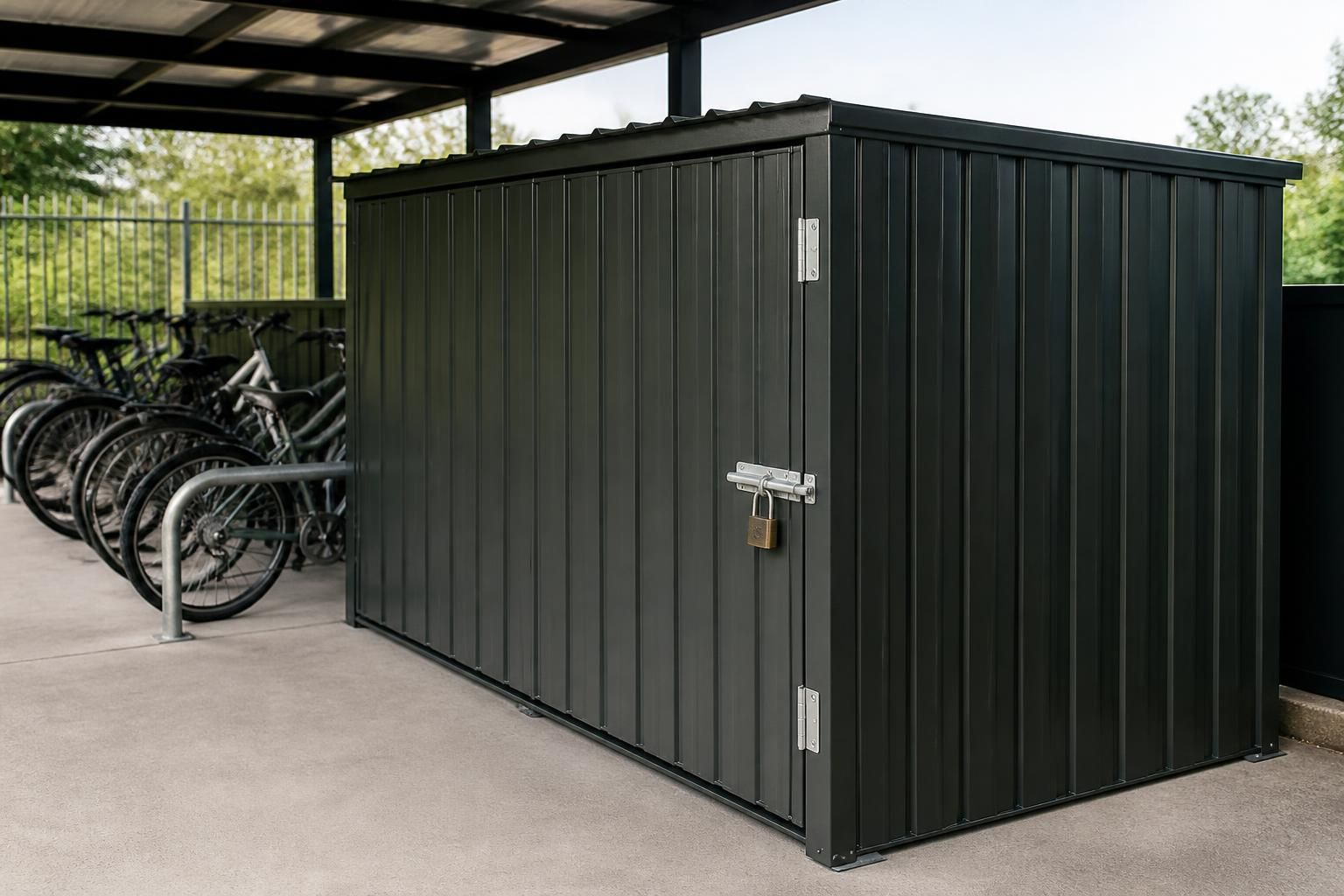
Can steel bike sheds be fitted with secure locking systems?
Yes. Steel bike sheds can be designed with lockable access doors and suitable hasp, cylinder or electronic locking hardware, depending on the required level of security and access control. The locking arrangement can be considered within the bespoke design and fabrication drawings for the building.
Yes, but the security of a steel bike shed depends on the complete access assembly rather than the steel cladding alone. The door leaf, frame, hinges, threshold and locking hardware need to be specified as a coordinated system, with the arrangement matched to the location, number of users and value of the bicycles being stored.
For lower-risk sites, a robust external hasp and padlock arrangement may be suitable, particularly where a small number of authorised users require access. A cylinder-operated lock can provide a more controlled everyday solution, while electronic access control may be considered for shared facilities, workplaces or developments where entry needs to be limited to approved users. Electronic systems also need suitable power, cable routing and protection from tampering.
Important design considerations include:
- Door construction: the door should resist flexing and be properly aligned with the frame so that force cannot easily be applied at the locking edge.
- Hinge protection: exposed hinges can create a vulnerable point on an outward-opening door. Concealed or protected hinge arrangements can reduce the opportunity for tampering.
- Frame and threshold: the locking points are only effective if the surrounding frame and threshold are sufficiently robust and securely fixed to the building structure.
- Internal security: cycle racks can help keep bicycles organised while allowing frames to be secured individually. Where appropriate, racks or other fixing points can be anchored to the base or structural elements.
- Access management: consider whether users need individual credentials, a shared key, controlled key issue or a system that can be changed when access rights alter.
- Emergency access: shared or electronically controlled buildings should include a practical method for authorised emergency entry and exit without undermining day-to-day security.
The site itself also affects the specification. A shed in a supervised workplace may need a different arrangement from one positioned in an isolated car park or public access area. The required level of protection should be assessed alongside lighting, visibility, surrounding fencing and the likely tools available to an intruder. If the building is being designed to meet an insurer’s conditions, those requirements should be confirmed before the door and locking hardware are finalised.
For larger communal sheds, it can be useful to separate the security requirements into two parts: securing the building against unauthorised entry and securing each bicycle inside it. A strong external door does not prevent theft from an unlocked cycle rack, while individual bicycle fixings do not compensate for a weak entrance. Combining both measures gives a more complete security arrangement.
Buildings UK Ltd can incorporate the chosen security requirements into a bespoke steel building design, allowing the door position, frame details, access arrangement and internal layout to be considered together before fabrication. The appropriate solution is therefore determined by the site’s risk profile and access requirements, rather than by selecting a lock in isolation.
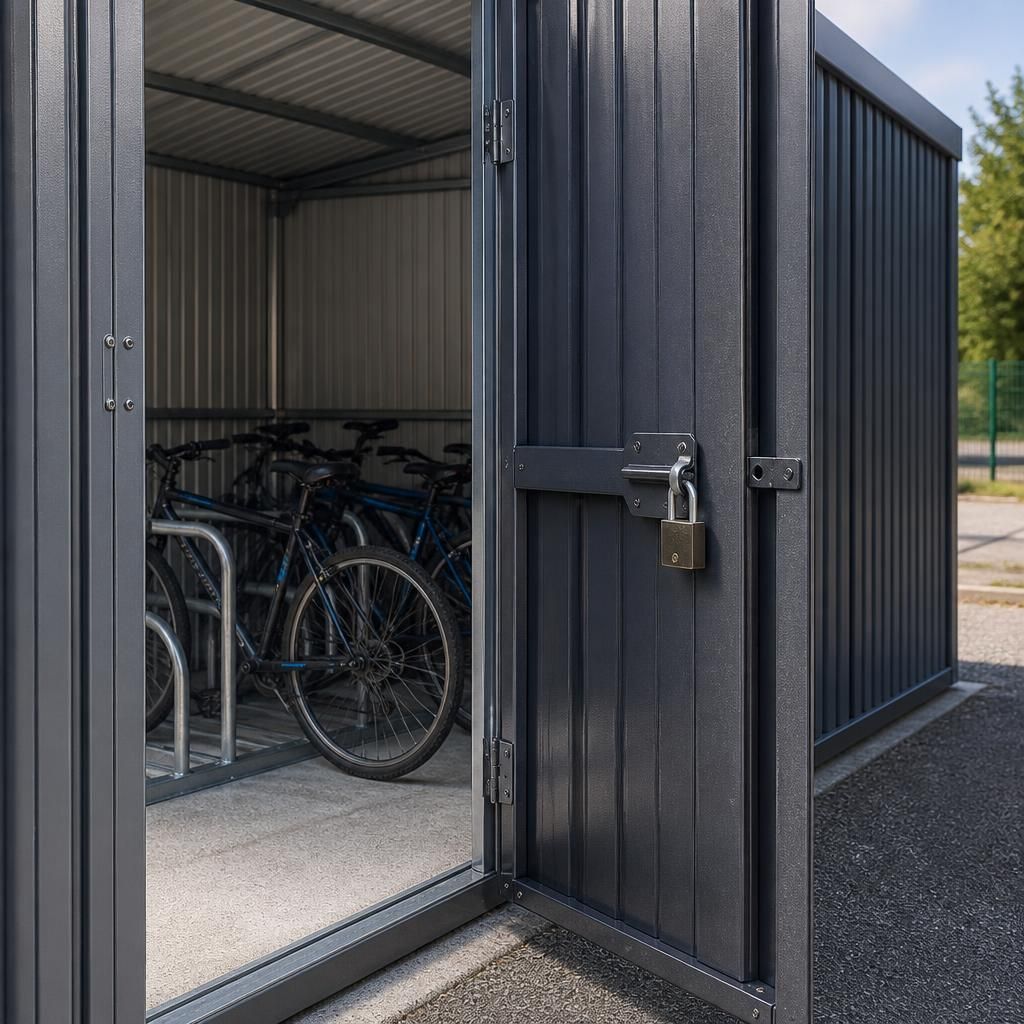
Secure locking systems can be fitted to an existing steel bike shed, but the door and frame must be checked before hardware is selected. The installer needs to confirm that the door leaf is strong enough, that there are suitable fixing points, and that the lock and keep can align correctly without interfering with the shed’s structure or operation.
Cutting or drilling a completed door may damage its protective finish or reduce the strength of the surrounding area if carried out incorrectly. For a new shed, specifying the locking system during design allows the door construction and fixing details to be prepared together. For an existing building, a site assessment can establish whether the preferred system can be fitted directly or whether a replacement door assembly is more appropriate.