
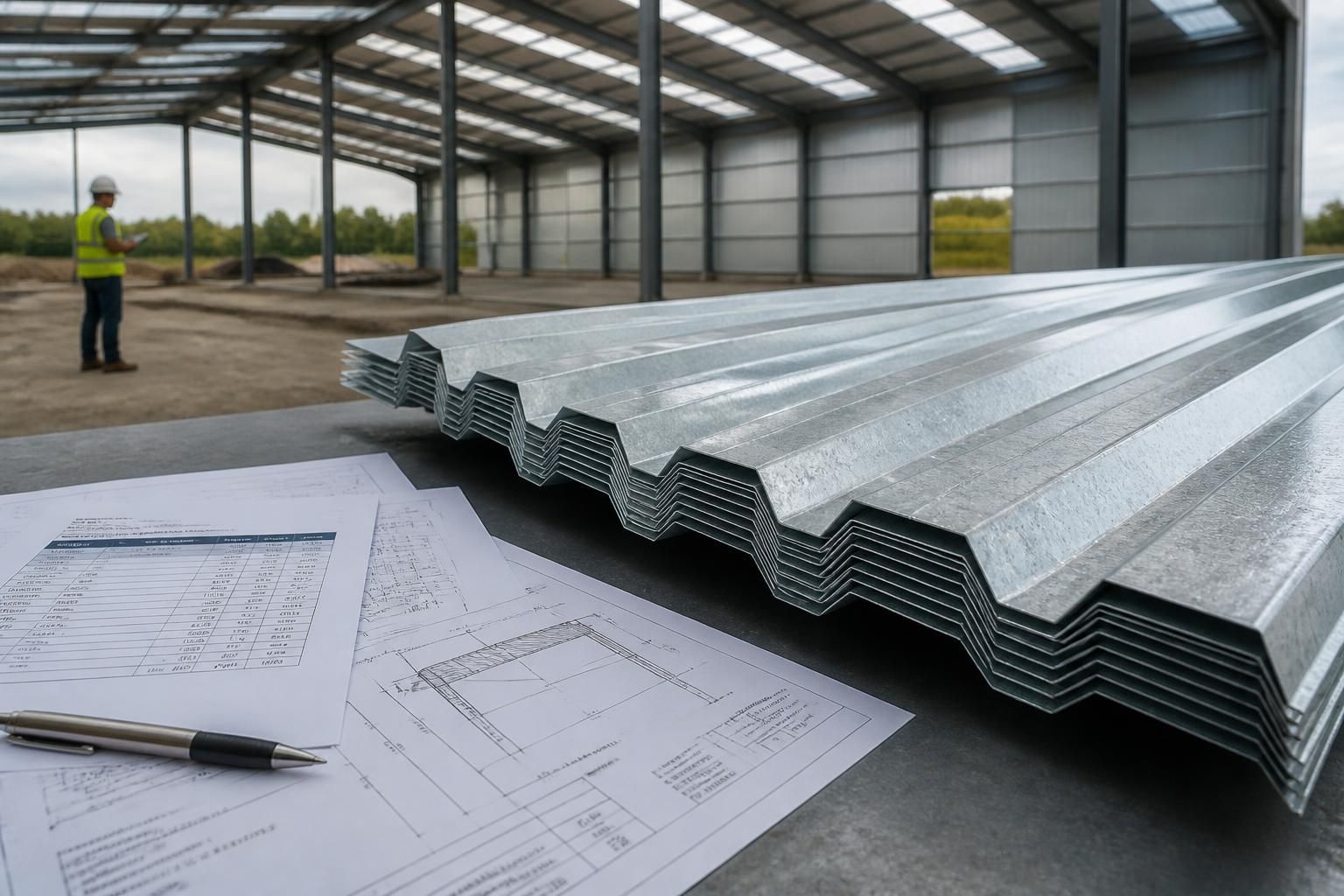
What does a galvanised roofing sheet quotation include?
A galvanised roofing sheet quotation typically sets out the sheet specification, dimensions, quantity, finish, trims, fixings, delivery and any installation or erection work required. It should also clarify the design information and project assumptions used to calculate the price, so you can compare like-for-like quotations.
A galvanised roofing sheet quotation is a written breakdown of the materials, measurements, specification and services used to calculate the proposed price. It should show not only the cost of the sheets, but also the basis on which the quantity has been assessed and any work or items that remain outside the quoted scope.
The sheet specification normally identifies the profile, material type, thickness, coating or finish and colour where relevant. These details affect both suitability and price. A quotation should also state the sheet lengths or cutting arrangement, since ordering sheets to suit the roof layout can affect joints, laps, handling and site installation.
Quantity should be linked to the roof dimensions rather than presented as an unexplained total. The calculation may take account of roof slopes, sheet cover widths, end and side laps, openings, verges and any allowance for cutting. If the quotation is based on drawings or measurements supplied by the customer, that basis should be clear. Any later change to dimensions or design may require the quantity and price to be reviewed.
Ancillary materials may be listed separately or included as part of a roofing package. Depending on the building, these can include ridge and verge pieces, eaves or barge trims, flashings, closures, sealants and compatible fixings. The quotation should make clear whether these items are included, optional or to be provided by others. It should also identify whether the accessories are matched to the selected sheet profile and finish.
Delivery information is another important part of the quotation. It should describe the delivery location used for the calculation and indicate whether transport is included in the stated price or charged separately. Where the delivery arrangement depends on suitable access, unloading facilities or a prepared area, those assumptions should be recorded. This helps distinguish the cost of supplying the materials from any site-handling requirements.
If installation or erection is included, the quotation should define the extent of that work. For example, it may cover fixing the sheets and associated trims, or it may form part of a wider building erection package. It should explain what the customer must provide, such as a suitable supporting structure, clear access and a prepared working area. Roofing work, removal of an existing covering, alterations to the structure, insulation, gutters, electrical work and making good should not be assumed to be included unless they are expressly listed.
Design information and project assumptions can materially affect the quotation. A detailed proposal may refer to roof plans, elevations, structural information, sheet layout drawings or other dimensions used for pricing. It should identify any elements still requiring confirmation, including openings, rooflights, eaves details, drainage interfaces or changes requested after the quotation date.
It is also sensible to check the commercial details before comparing prices. A quotation should state:
- the date of issue and the period for which the price applies;
- whether the figures include VAT;
- the payment terms and any staged payment requirements;
- the treatment of variations, additional materials and customer changes;
- what is excluded from the scope; and
- the documents or drawings that form part of the quotation.
When comparing quotations, match the technical specification first and the headline total second. A lower figure may exclude trims, fixings, delivery, cutting, unloading or installation, while a higher figure may include a more complete package. Asking the supplier to confirm quantities, assumptions and exclusions in writing provides a clearer like-for-like comparison and reduces the risk of unexpected costs during the project.
Buildings UK can use the project information and design requirements to prepare a quotation for a galvanised roofing sheet package, whether the requirement is for materials alone or forms part of a wider steel building project. The appropriate quotation should reflect the intended building use, roof arrangement and level of service required.
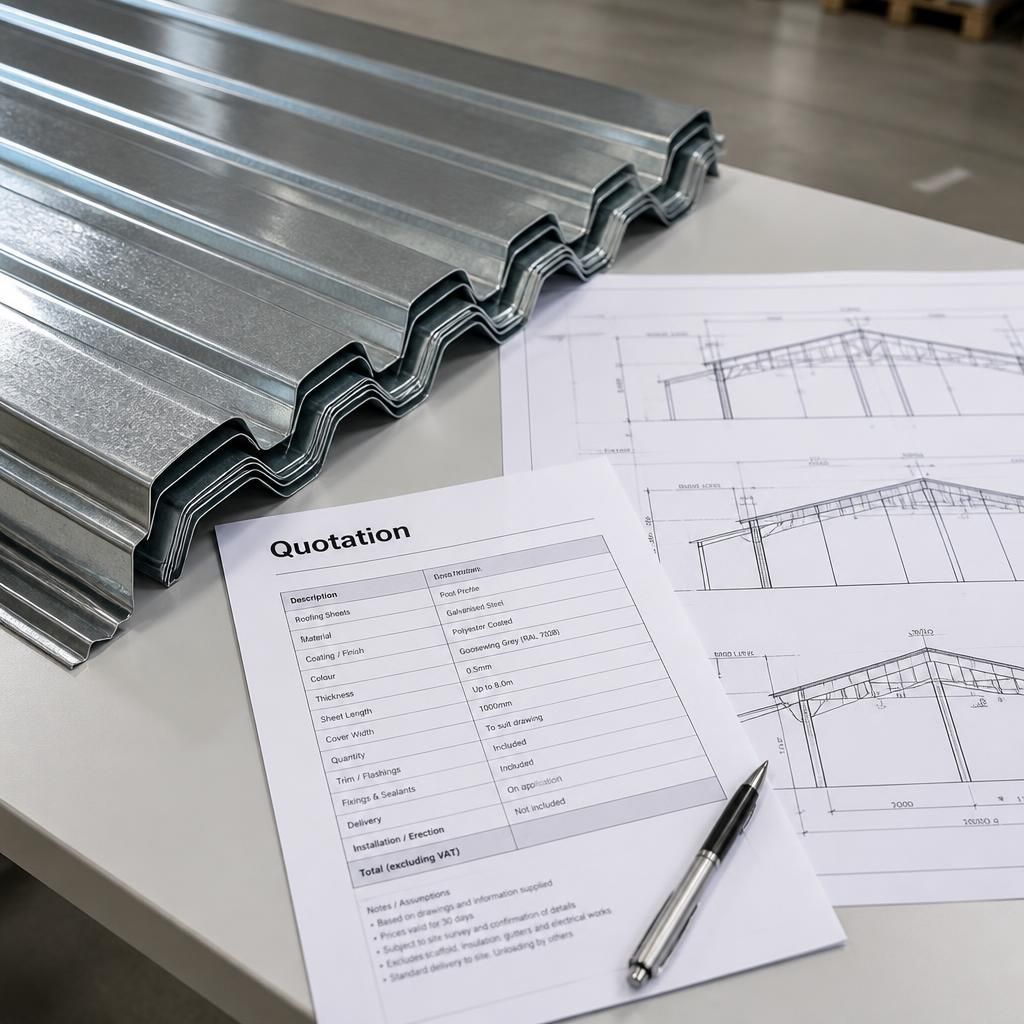
A galvanised roofing sheet quotation should distinguish the roof covering from the structure that supports it. The sheets may be priced as a covering package, while the purlins, rafters, steel frame and any design needed to verify their capacity are dealt with separately. This distinction is important because sheet selection and fixing arrangements depend on the support spacing, roof geometry and building loads.
Check whether the quoted price is based on an existing, suitable structure or on information prepared as part of a wider building design. If the supporting arrangement, spans or loading requirements change, the sheet specification and associated materials may need to be reassessed. A clear quotation therefore identifies the design responsibility for the roof covering and the supporting frame, rather than treating them as one unspecified item.