
Can used steel buildings be inspected before purchase?
Yes, a used steel building should be inspected before purchase wherever access can be arranged. Check the frame’s condition, dimensions, corrosion, alterations, included components and available drawings so its suitability and likely re-use requirements can be assessed before committing.
A proper pre-purchase inspection should establish whether the used steel building is structurally suitable, complete and capable of being adapted to its intended site. It should be treated as a technical assessment rather than a visual check, particularly where the frame has been dismantled, stored outdoors or modified during its previous use.
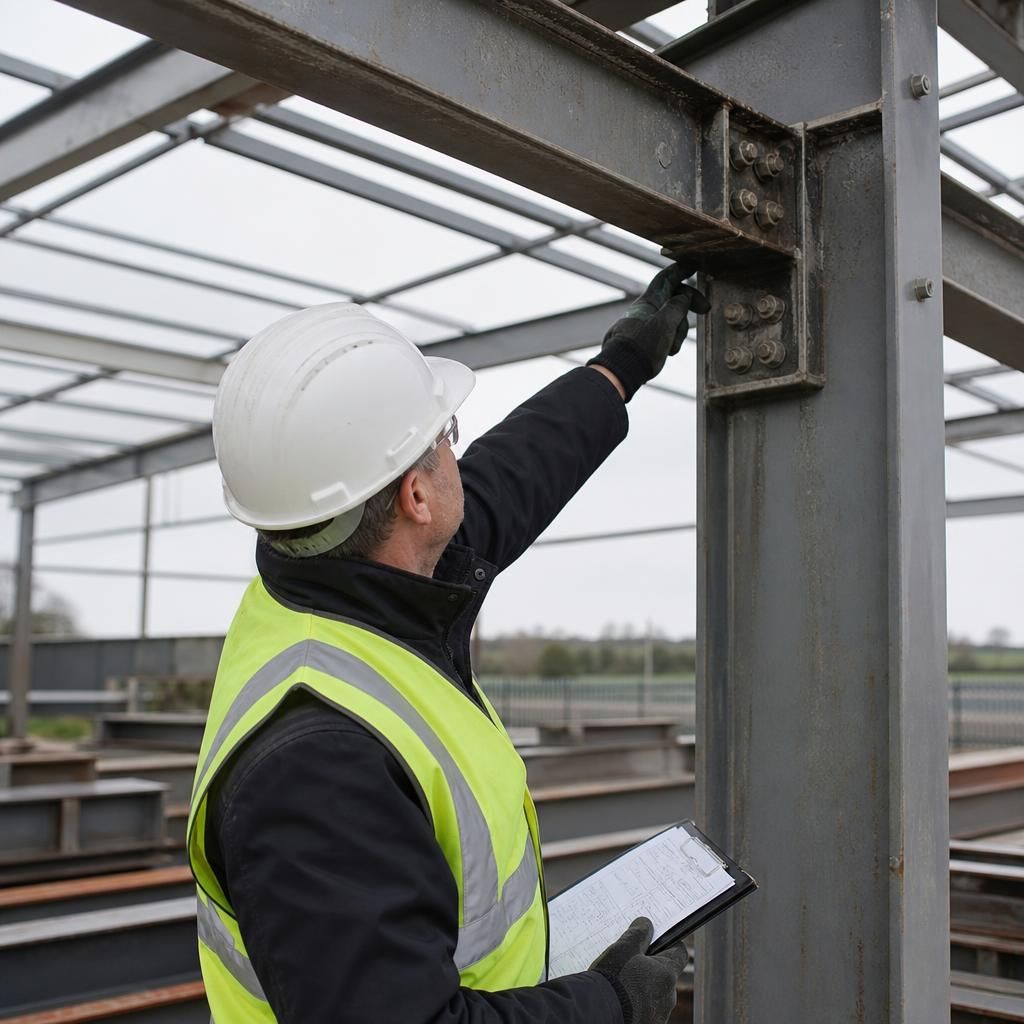
Who should carry out the inspection? A competent structural engineer or steel building specialist should assess the frame. Their review can identify defects that may not be apparent to a general buyer, including localised section loss from corrosion, distorted members, damaged connection plates and alterations that have affected the original load path. If the building is still standing, access should be arranged so that the inspection can cover both the internal and external faces of the structure.
Documentation to request
- Original general arrangement drawings, fabrication drawings and structural calculations, where available.
- A schedule identifying the frame members, purlins, side rails, bracing, connection components and cladding.
- Records of previous repairs, extensions, changes of use or alterations to openings.
- Information about the building’s original design loads, including any assumptions relating to snow, wind, imposed loads or suspended equipment.
- Photographs and an inventory if the building has already been dismantled.
Drawings should be checked against the physical building rather than accepted as a complete description of what is being sold. Missing information does not necessarily make a building unusable, but it may mean that further surveys, calculations or redesign work are needed before re-erection.
Checks on the steel frame
- Measure the spans, bay spacing, eaves height, ridge height and frame geometry against the supplied drawings.
- Inspect columns, rafters, haunches, base plates and connection areas for bending, cracking, impact damage and excessive corrosion.
- Check bolt holes, bolts, cleats and splice plates for elongation, distortion, missing parts or damage caused during dismantling.
- Examine purlins, side rails, bracing and other secondary steelwork, as these components are often more exposed to moisture and handling damage.
- Look for unauthorised openings, removed bracing, welded additions or other changes that may alter the structural behaviour.
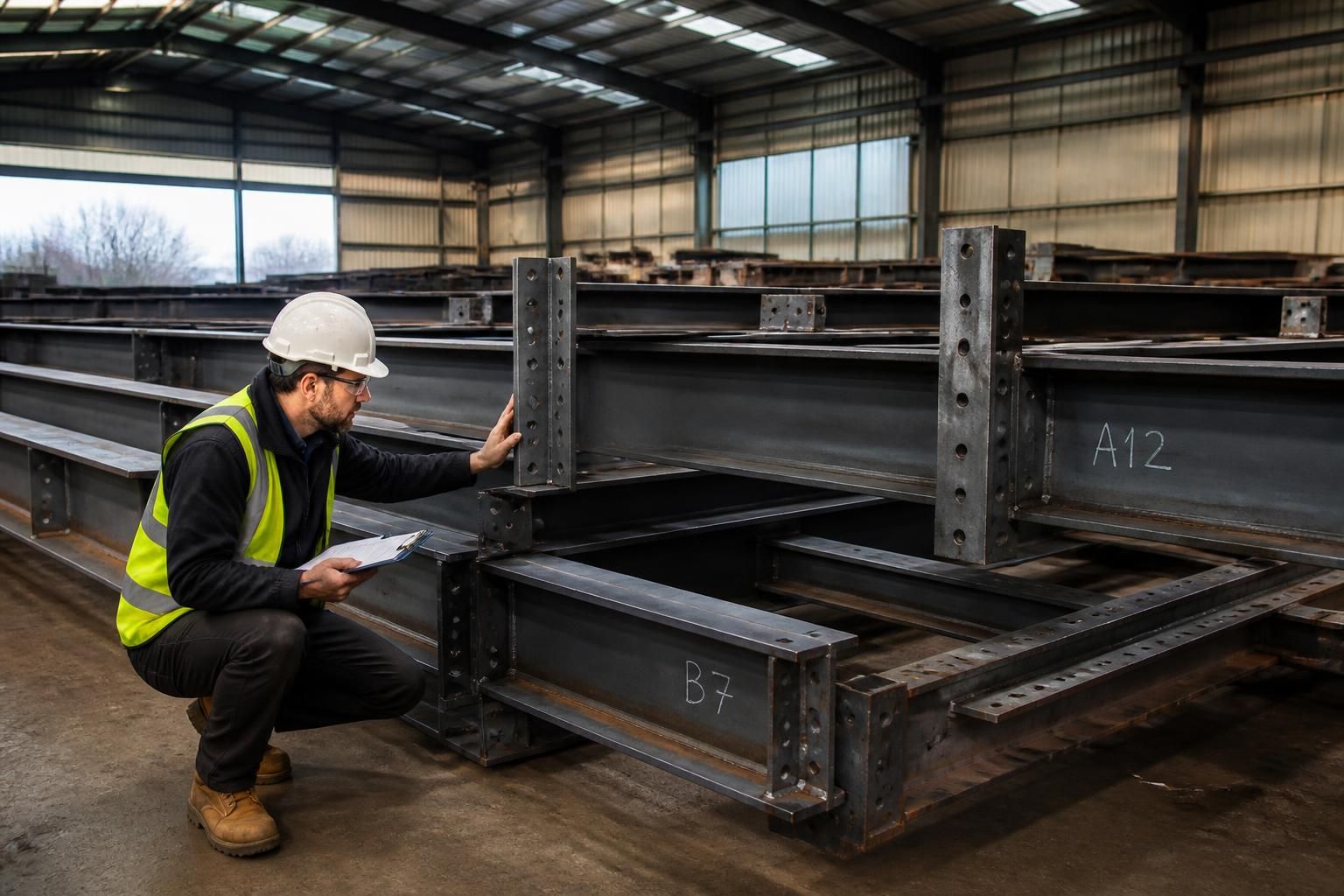
- Confirm that members have clear identification marks so they can be matched to the drawings and reassembly schedule.
Surface rust is not automatically a reason to reject a frame. The important issue is whether corrosion has reduced the effective thickness of a member or weakened a connection. A specialist may need to clean selected areas and take measurements before deciding whether a component can be reused, repaired or replaced.
Inspecting cladding and included components
The purchase should distinguish between the steel frame and items such as roof sheets, wall cladding, gutters, doors, flashings, insulation, fasteners and trims. Each item should be counted and checked for condition. Cladding can be dented, cut or corroded during removal, while fasteners and flashings are easily lost. A building may therefore be structurally reusable but require new envelope materials or replacement connection hardware.
Where insulation or older lining materials are included, their condition and suitability for the proposed use should be considered separately. Any suspected hazardous material should be assessed by an appropriately qualified professional before it is disturbed or transported.
Inspection of a dismantled building
When the building is stored in bundles or stacks, arrange for the components to be laid out sufficiently for identification and examination. Ask for confirmation of how the steel was marked during dismantling and whether a packing list or re-erection sequence exists. Members that cannot be identified, safely accessed or matched to the available information should be treated as an uncertainty in the project assessment.
Check the proposed site as well as the frame
An inspection of the building alone cannot confirm that it will suit a new location. The proposed use, internal loading, required openings, ground conditions, foundation arrangement, drainage, access and local planning requirements may differ from the original application. New calculations may be required even when the frame itself appears sound, especially if the replacement building will carry different equipment, storage loads or cladding.
Before committing to the purchase, obtain a written inspection report that records defects, missing information, recommended repairs and any further surveys or calculations. The report should also make clear which components have been inspected and which could not be accessed. This provides a practical basis for comparing the purchase price with dismantling, transport, refurbishment, redesign and re-erection costs.
Where drawings need interpreting or the frame requires adaptation, a steel building specialist can review the available information and identify what would be needed for a new design package. The inspection should be completed before agreeing that the building is complete and suitable for the intended project.
An inspection provides evidence of the building’s condition at the time it is examined; it does not certify that the frame is automatically suitable for a new project. A sound-looking structure may still require revised calculations for its proposed span, loading, cladding, openings or site conditions.
For that reason, the inspection findings should be recorded separately from the design approval for re-use. Treat the report as a basis for identifying risks, costs and further technical work, rather than as a substitute for the structural checks required before erection.