
What maintenance does a metal field shelter require?
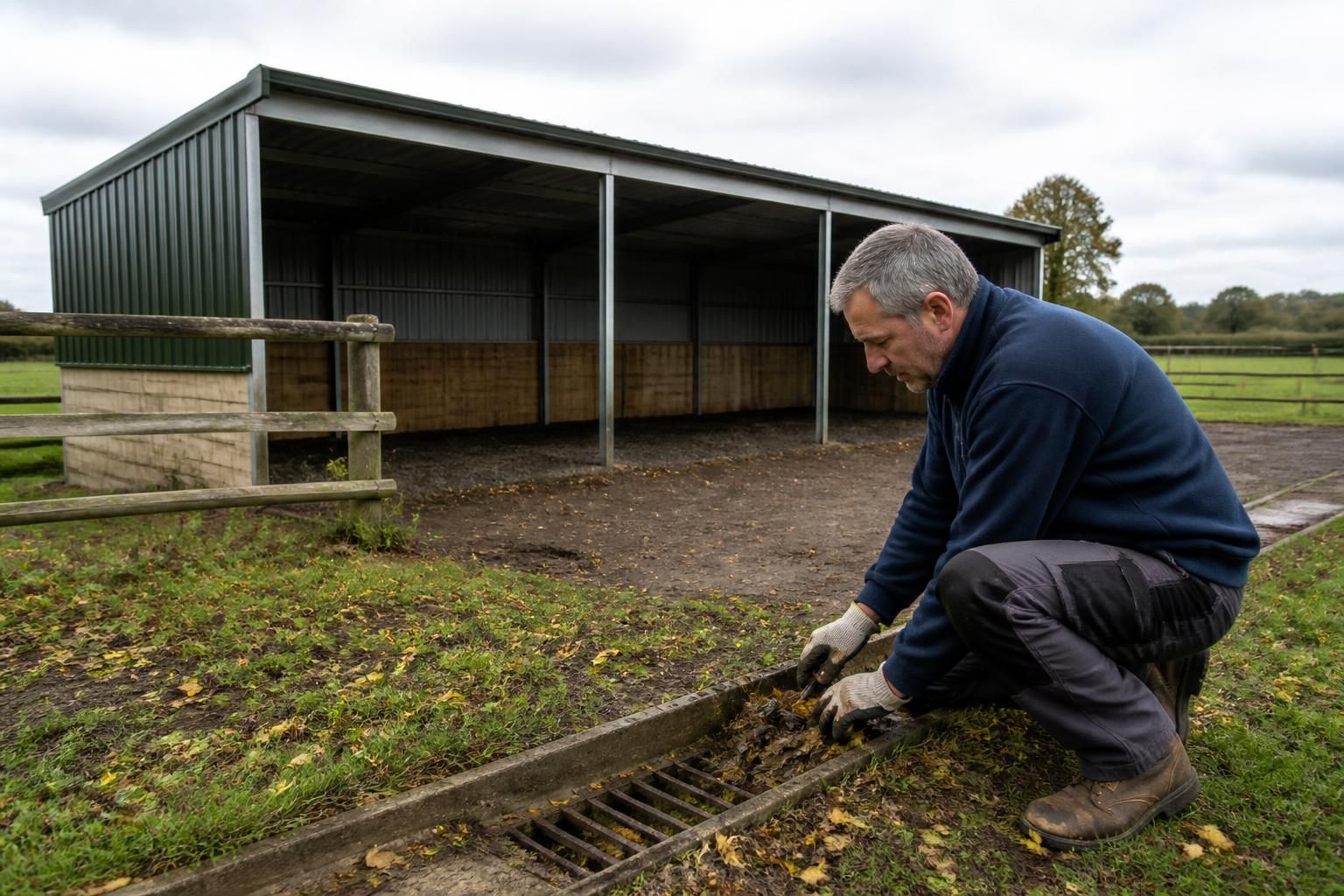
A metal field shelter requires routine checks of its steel frame, fixings, cladding, roof, doors and drainage, with mud, leaves and other debris removed before they cause damage. Any chipped coating, loose component, blocked gutter or early sign of corrosion should be repaired promptly, while the surrounding ground should be kept well drained to protect the foundations.
Maintenance of a metal field shelter is mainly preventative: keep the steel and cladding free from harmful contamination, preserve protective finishes, monitor ventilation and condensation, and deal with impact or weather damage before it affects the building’s safety. The appropriate routine depends on the shelter’s exposure, its construction and whether it houses horses, livestock, machinery or stored materials.
Set a planned inspection routine
Inspect the shelter at intervals suited to its location and use, with additional checks after unusually strong winds, heavy snowfall, flooding or an impact from livestock, vehicles or machinery. A written record should note the inspection date, any defect found, photographs, and the action taken. This makes it easier to identify gradual movement, recurring damage or deterioration that may not be obvious during a single visit.
Pay particular attention to changes in the shelter’s shape, visibly bowed members, distorted panels, failed seals and any opening that no longer operates safely. Significant deformation or suspected structural damage should be assessed by a competent steelwork professional rather than corrected on site by drilling, cutting or welding.
Keep surfaces free from aggressive contamination
Manure, urine, fertiliser dust, chemical residues and salt can attack protective finishes when they remain on metal for prolonged periods. Wash affected areas with clean water and a mild detergent where appropriate, then allow them to dry thoroughly. Avoid abrasive pads, harsh acids and unapproved pressure-washing methods, as these can damage paint, galvanising, sealants or cladding profiles.
Where the shelter is used by horses or livestock, clean splashed areas as part of normal yard management. Stored fertiliser, feed or chemicals should not be placed directly against steelwork or cladding, and incompatible substances should be kept away from the building altogether.
Protect the applied finish
Painted, powder-coated and galvanised steel should be maintained according to the original finish specification. Small areas of surface damage should be cleaned, prepared and treated with a compatible repair product; applying an unsuitable paint can trap moisture or cause poor adhesion. Do not simply cover active corrosion, flaking material or contamination. Remove the affected material safely and follow the coating supplier’s preparation instructions.
Where damage is extensive, the repair may require replacement material or professional preparation rather than a cosmetic touch-up. A repair should also preserve the original weather protection and avoid creating sharp edges that could injure animals or people.
Manage condensation and internal conditions
Condensation can form on the underside of metal roofing when warm, moist air meets a colder surface. It is more likely in occupied shelters, enclosed spaces and buildings with wet bedding or inadequate air movement. Keep designed ventilation paths clear, avoid blocking openings with stored items, and control moisture from bedding, wash-down water and animals where practical.
Persistent dripping, damp insulation or repeated internal moisture should be investigated rather than treated as a cleaning issue. The cause may involve ventilation, changes to the building’s use or a defect in the roof build-up, and the remedy should be compatible with the original design.
Check animal and user safety
Maintenance should consider the people and animals using the shelter, not just the steelwork. Look for sharp projections, exposed cut edges, damaged liner materials, loose sealant, insecure protective covers and surfaces that could catch a rug, lead rope or piece of clothing. Remove redundant hooks, temporary fittings and unauthorised attachments that have been fixed to the structure.
Do not add partitions, hanging equipment, solar equipment or other loads without confirming that the building was designed to support them. Changes in use can alter wind loading, ventilation and the way forces are transferred through the structure.
Use suitable repair methods
Minor maintenance can often be completed by the owner, but structural alterations, extensive corrosion, damaged welds, distorted steel members and major cladding repairs should be referred to a competent contractor. Replacement sheets, sealants, fasteners and coatings should be compatible with the existing specification. Mixing unsuitable metals or products can create premature deterioration through chemical or galvanic reactions.
Never remove a structural member, enlarge an opening or attach heavy equipment without design advice. If the shelter forms part of a larger agricultural or industrial building, maintenance should also account for connections to adjoining structures and any services fixed nearby.
Keep maintenance records
Retain the original drawings, product information, coating details and repair invoices with the maintenance log. Record the cause of damage where it is known, such as livestock impact or vehicle contact, and review whether the building’s use or protective measures should change. Consistent records help the owner distinguish ordinary cosmetic wear from defects requiring technical assessment and support informed decisions about repair or replacement.
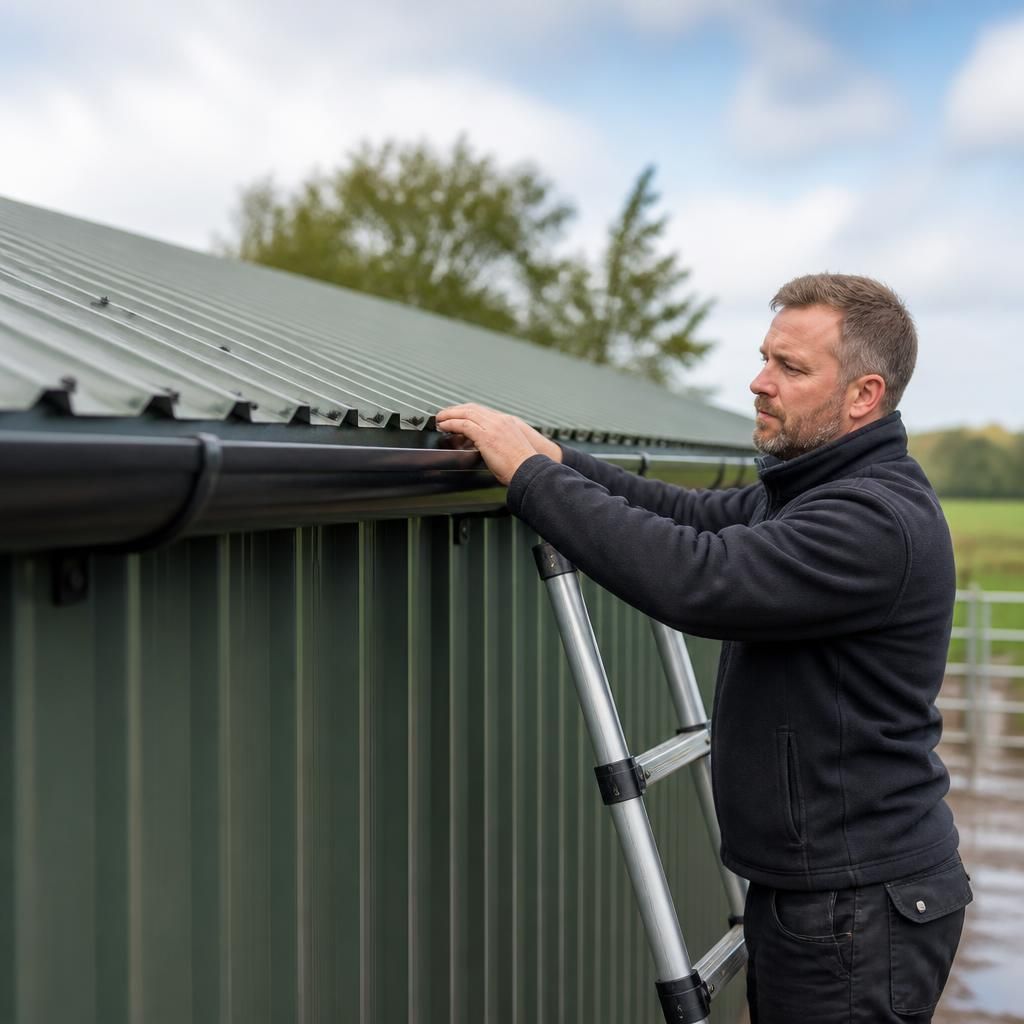
Roof drainage is a specific maintenance point for a metal field shelter because concentrated water from the eaves can cause splashback, ground erosion and persistent wetting around the foundations. Gutters, outlets and downpipes should discharge water away from the shelter without allowing it to pool beside the steelwork or wash soil from beneath the base.
Remove silt, leaves and nesting material from gutters and check that joints, brackets and outlets remain secure. Look for staining or damp patches below connections, as these can indicate a leaking joint rather than a simple blockage. After heavy rain, observe where the water flows and correct any discharge that is eroding the ground or saturating the shelter entrance. Any access equipment used for roof-level work should be stable and appropriate, with structural or difficult-to-reach repairs referred to a competent professional.