
Which site conditions affect feed bin installation?
Feed bin installation depends on the condition and layout of the site, particularly ground stability, levelness, drainage and access for delivery and positioning. Overhead clearances, nearby structures, buried services and the proposed foundation design must also be assessed before installation.
A suitable feed-bin site must support the bin and its operating connections, tolerate local weather and moisture, and allow the installation to be coordinated with planning requirements and future feed-handling arrangements. A site assessment should therefore consider more than the bin footprint: it should examine the ground, surrounding environment, construction sequence and how the completed bin will be used.
Ground conditions below the base
Ground stability needs to be assessed in practical terms. Natural soil, made-up ground, areas of previous excavation and filled land can all behave differently under load. A desktop review may identify potential concerns, but an engineer may also need information about soil bearing capacity, groundwater, settlement risk and any seasonal changes in ground condition. Uncontrolled fill or soft ground may require removal, improvement or a revised foundation arrangement before the bin is installed.
The proposed concrete base should be designed for the loads imposed by the bin, its contents and any connected equipment. It must also provide a suitable interface for fixing the structure and prevent water from collecting around the base. The finished base and surrounding ground should be checked before installation so that defects, cracking or poor curing are dealt with rather than concealed by the completed bin.
Weather and environmental exposure
Local exposure can affect both the structural design and the long-term condition of a feed bin. Open sites may experience greater wind loading, while locations close to the coast or exposed to aggressive agricultural chemicals can present a more corrosive environment. The design should take account of the site’s exposure category and the protection required for exposed steelwork, fixings and ancillary components.
Moisture is another important consideration. Persistent humidity, condensation or splashback can affect stored feed and may accelerate corrosion around the lower sections of the installation. The site layout should help keep rainwater away from the base and should avoid placing the bin where roof runoff, wash-down water or slurry could regularly contact the structure. Where the bin connects to conveyors, augers or pipework, those connections should be arranged to limit water ingress and allow inspection.
Relationship with the feed system
The bin should be positioned in relation to the complete feed-handling route, not treated as an isolated vessel. The loading arrangement, discharge point and route to the livestock building or processing area all influence the practical installation. Long, awkward or poorly supported connections can increase maintenance demands and make blockages more difficult to clear.
Allowances may also be needed for inspection openings, level indicators, filters, access equipment and the removal or replacement of operating components. If the holding is likely to add another bin, an auger or a different feed line later, the initial layout should preserve a sensible route for that expansion. Planning this at the outset can avoid alterations to the base or disruption to the existing system.
Planning and environmental constraints
The proposed position may be affected by local planning conditions, boundary relationships, landscape considerations or restrictions associated with nearby buildings and protected areas. A feed bin’s height and appearance can be relevant even where the surrounding farm already contains agricultural structures. Drainage, surface-water management, dust and vehicle movements may also need to be considered as part of the wider site proposal.
Where a bin forms part of an industrial or agricultural development, its position should be checked against the site’s fire-safety arrangements, separation distances and emergency access requirements. These matters are particularly important when the bin is near combustible materials, machinery, animal housing or areas used for chemical storage. The appropriate requirements depend on the project and should be confirmed with the relevant designer or authority.
Construction readiness
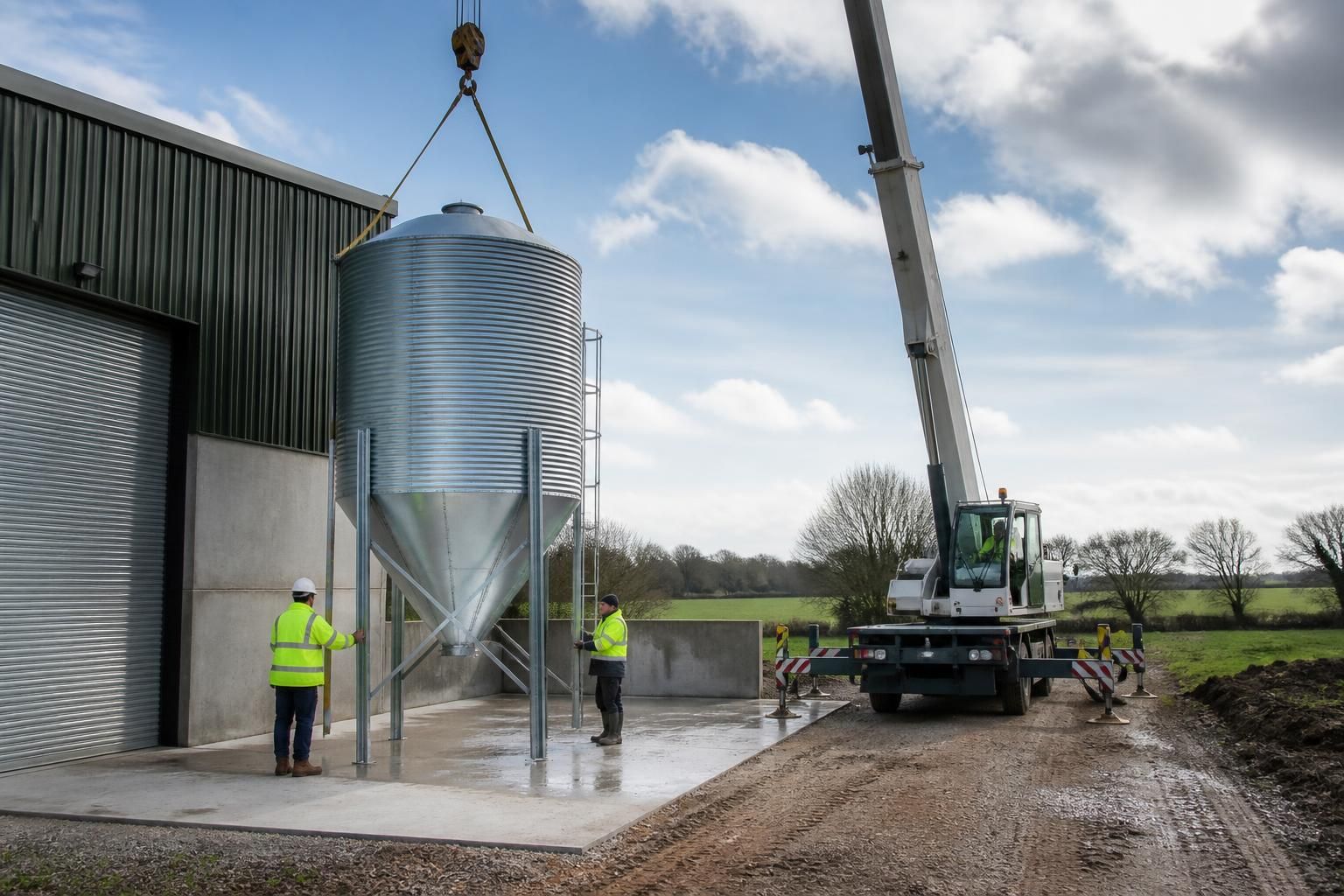
Installation is affected by the condition of the site at the point work begins. The working area should be suitable for the planned lifting and assembly method, with temporary obstructions, stored materials and unrelated site activities managed in advance. The base must be complete and accepted by the responsible designer, while connection points and service routes should match the approved drawings.
A pre-installation review can confirm:
- the surveyed position and orientation of the bin;
- the dimensions and condition of the prepared base;
- the intended loading and discharge arrangements;
- the location of connecting augers, conveyors and control equipment;
- the environmental exposure and required corrosion protection; and
- any planning, fire-safety or site-management conditions that affect the work.
For a bespoke steel-framed project, these findings should be incorporated into the design package before fabrication. Planning elevation drawings help confirm the proposed appearance and position, while fabrication information allows the base, fixings and connected steelwork to be coordinated. Resolving site-specific issues at this stage is generally more effective than modifying the installation after manufacture.
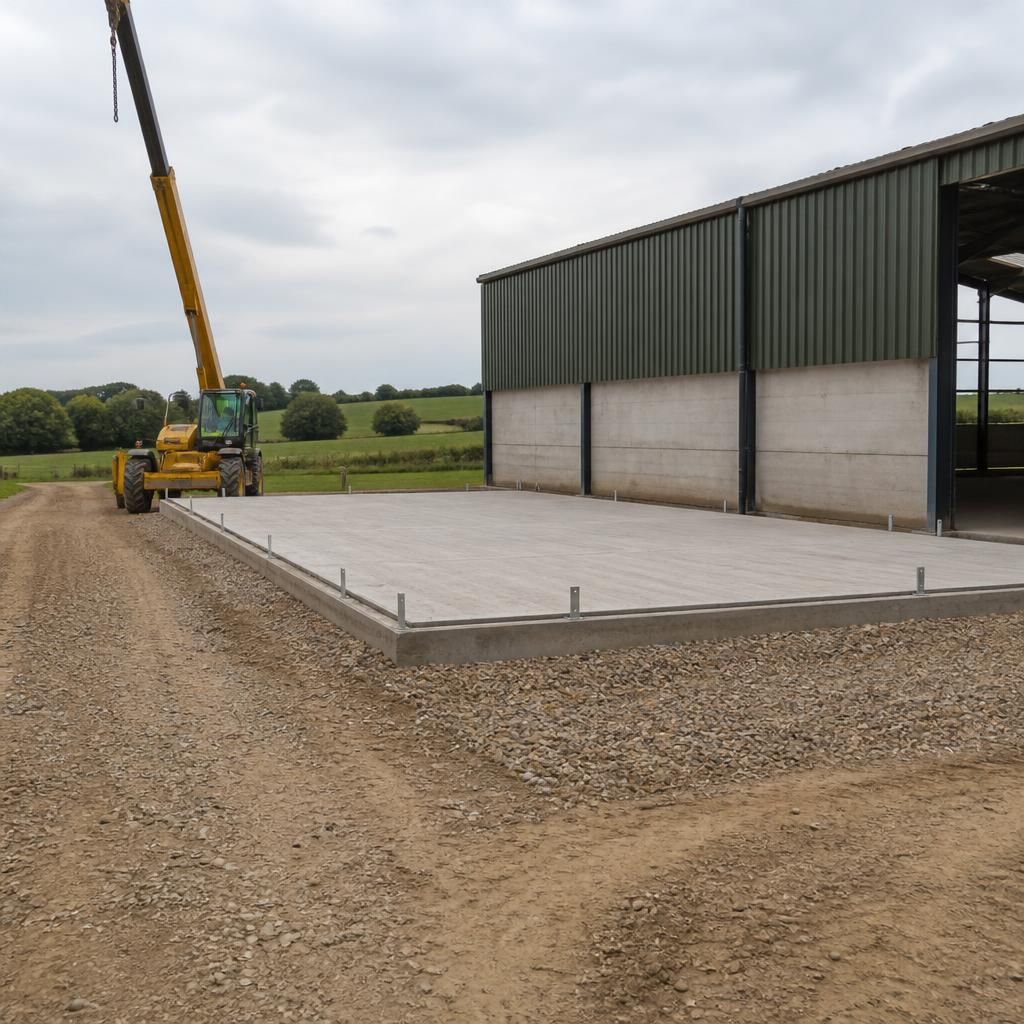
Electrical and control arrangements are also site conditions that can affect feed bin installation. The proposed position should allow power supplies, control panels, sensors and cable routes to be installed without exposing them to unnecessary impact, water or interference from vehicles and machinery. Any existing services must be identified before excavation or fixing work begins, while new routes should be coordinated with the bin base and connected feed equipment.
Control components should remain accessible for inspection and fault finding without requiring operators to work beneath moving equipment or in restricted spaces. Earthing, isolation and cable protection should be addressed within the installation design by the appropriately qualified specialists. Confirming these details before the bin is positioned helps prevent changes to the surrounding slab, ducting or support steelwork after installation.
Discuss your feed bin site requirements
Discuss your proposed feed-bin location and operating requirements with Buildings UK Ltd so the installation can be developed around the site conditions and connected equipment. Their bespoke design package can help coordinate the relevant drawings and structural details before work begins.