
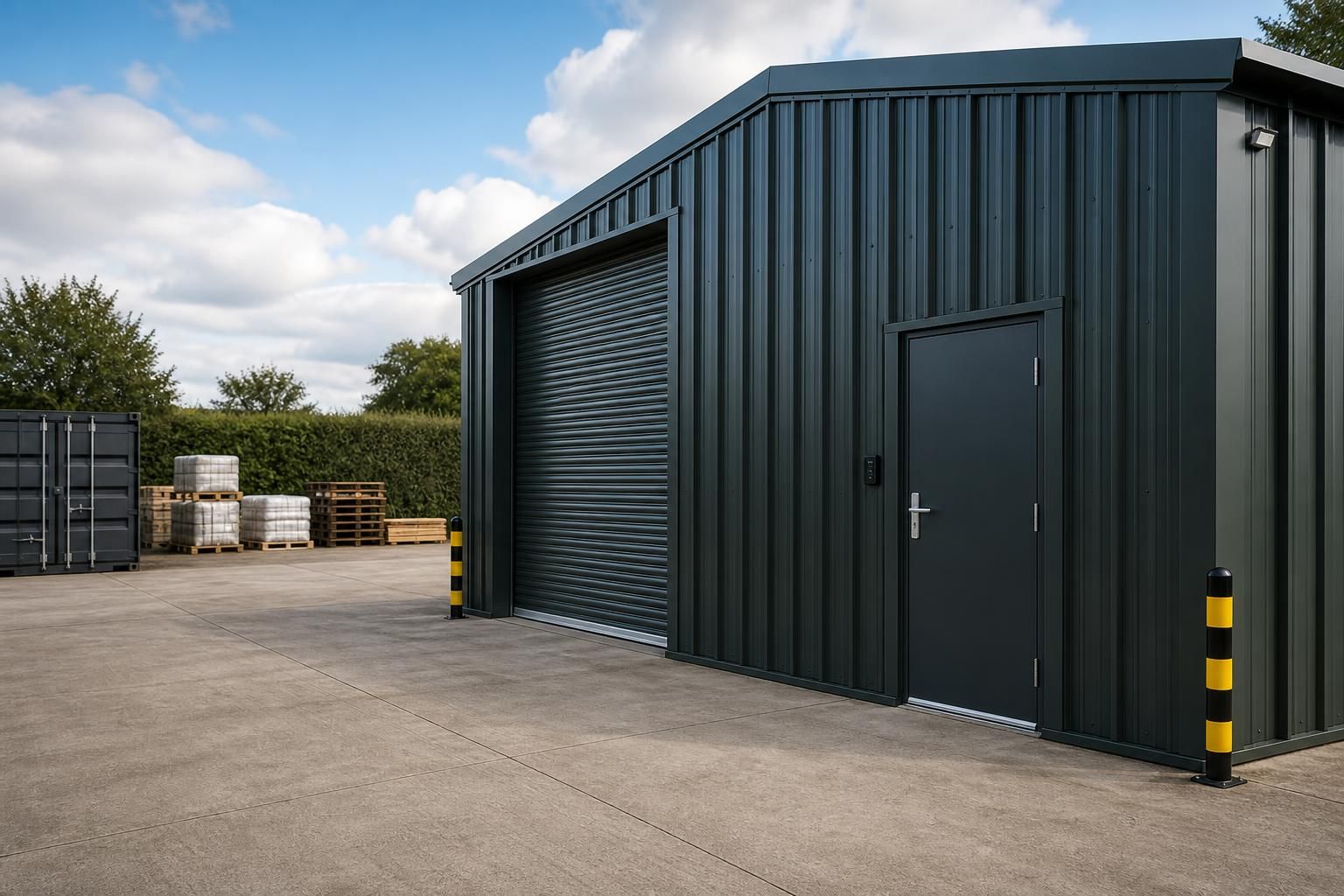
What door options suit a secure metal storage shed?
Secure metal storage sheds commonly use steel personnel doors for controlled everyday access, roller shutters where a wider opening is needed, or larger steel doors for moving vehicles and equipment. The right option depends on the shed’s opening size, traffic, security requirements and whether access is mainly for people, machinery or deliveries.
The most suitable door for a secure metal storage shed is the one that matches the building’s security risk, opening dimensions and method of use. A well-specified door should provide a robust barrier without obstructing the movement of people, vehicles or stored equipment, and its frame, locking arrangement, hinges and surrounding steelwork should be considered as one assembly.
Steel personnel doors are appropriate where the shed is accessed mainly on foot. They are comparatively compact and can be specified as single or double-leaf doors, depending on the required clear opening. Important details include a strong steel leaf, a rigid frame fixed securely to the surrounding structure, protected hinges and a lock case suitable for the level of risk. A door with a glazed panel may improve visibility, but glazing should be selected carefully if forced entry is a concern.
For a more secure personnel entrance, consider how the door behaves at its weakest points rather than looking only at the lock. The frame should not leave easily attacked gaps, the hinge side should be protected against lifting or pin removal, and the threshold should not create an opening that permits tools to be inserted. Door closers, weather seals and a suitable threshold can also help the door remain shut and reduce draughts or water ingress.
Roller shutters suit sheds that need a broad opening while retaining a compact door arrangement. The curtain rolls above the opening, so there is no outward swing and less floor space is taken up than by many hinged arrangements. When assessing a shutter, check the curtain construction, guide rails, bottom rail, locking method and protection around the operating mechanism. These components affect resistance to lifting, prising and accidental impact.
Roller shutters are not all intended for the same environment. A basic industrial shutter may provide convenient closure but may need additional security measures for valuable stock, tools or machinery. Ask whether the shutter is designed for manual or powered operation, how it can be secured when closed, and what happens if the operating system is unavailable. Powered doors may require suitable controls, isolation and a safe manual-release arrangement.
Sliding steel doors can be useful for wide openings where there is insufficient room for a hinged leaf to swing. They may be arranged as single or multiple leaves, but the running gear, top support, bottom guide and locking points all need careful design. A floor track can collect dirt or interfere with vehicle movements, while an unsupported or poorly guided door may become difficult to operate and leave gaps at the meeting edges.
Sectional overhead doors are another option where a clear vehicle opening and a controlled vertical lifting action are required. Their panels travel into the space above the opening, so the available headroom and internal layout must be checked before selection. Panel joints, side tracks, bottom seals and locking hardware should be suitable for the shed’s exposure and security requirements. They can be unsuitable where roof space is needed for storage, lighting or services.
For any door type, compare the following points before finalising the design:
- Security level: specify the lock, hasp, cylinder, hinges, frame and fixings together. A strong door can still be vulnerable if its frame or locking side is weak.
- Opening size: measure the required clear width and height rather than relying on the overall door dimensions. Include mirrors, attachments, pallet loads and delivery equipment where relevant.
- Traffic pattern: frequent pedestrian access may justify a dedicated personnel door, while repeated vehicle movements may favour a larger opening with minimal obstruction.
- Space requirements: check swing clearance, side room, headroom, internal stacking space and any floor track before choosing the operating style.
- Weather protection: seals, thresholds, overlaps and drainage details help limit wind-driven rain and dust entering around the opening.
- Safety and escape: doors used by people should be capable of being opened safely from the inside, with the final arrangement coordinated with the building’s use and any applicable requirements.
- Durability: finishes and materials should suit the shed’s exposure, humidity and likelihood of impact. Damaged coatings should be repaired before corrosion spreads.
Where a shed combines pedestrian access with vehicle or machinery access, using separate doors is often more practical than making one opening serve every purpose. This can reduce unnecessary use of a large door and allow the main access point to be closed while people enter through a smaller, more controllable entrance.
Door positions should also be coordinated with the steel frame, cladding, internal storage layout and access routes at the design stage. Buildings UK Ltd can incorporate door openings into a bespoke steel building design, with planning elevation drawings and isometric fabrication blueprints used to show the proposed arrangement before manufacture. The final specification should confirm the opening dimensions, door operation, locking hardware, finish, fixing method and any electrical requirements.
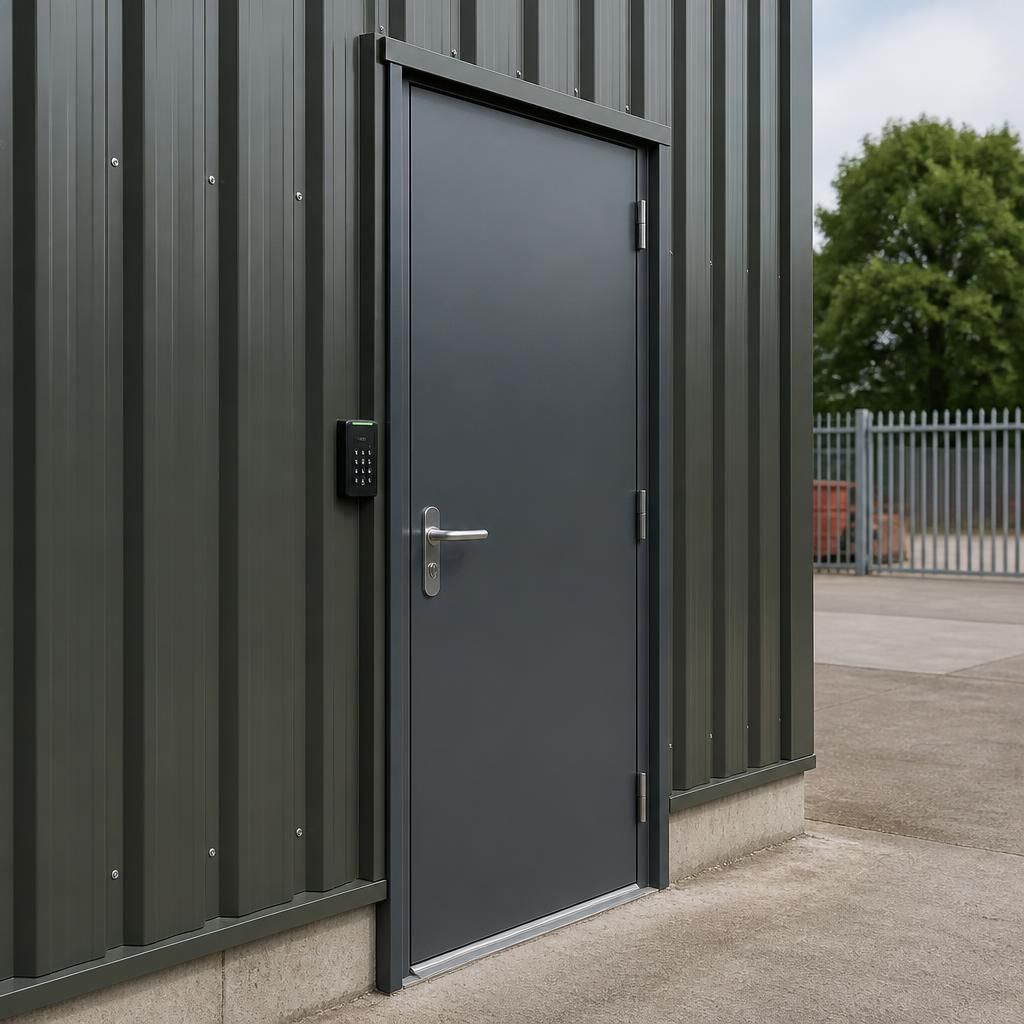
Electronic access control is an additional door option for a secure metal storage shed where entry needs to be restricted to authorised users. A keypad, proximity reader, fob system or controlled release can be fitted to a suitable steel personnel door, avoiding the need to issue physical keys to every user.
When specifying electronic locking, confirm how the system behaves during a power failure, whether there is a protected internal exit method, and how authorised access can be withdrawn if a user leaves. The reader and external components should be suitable for the shed’s exposure, while cabling, control equipment and any emergency override should be protected from tampering. Electronic control should complement a strong door leaf, frame and locking points rather than compensate for weaknesses in the physical assembly.