How secure are metal storage sheds?
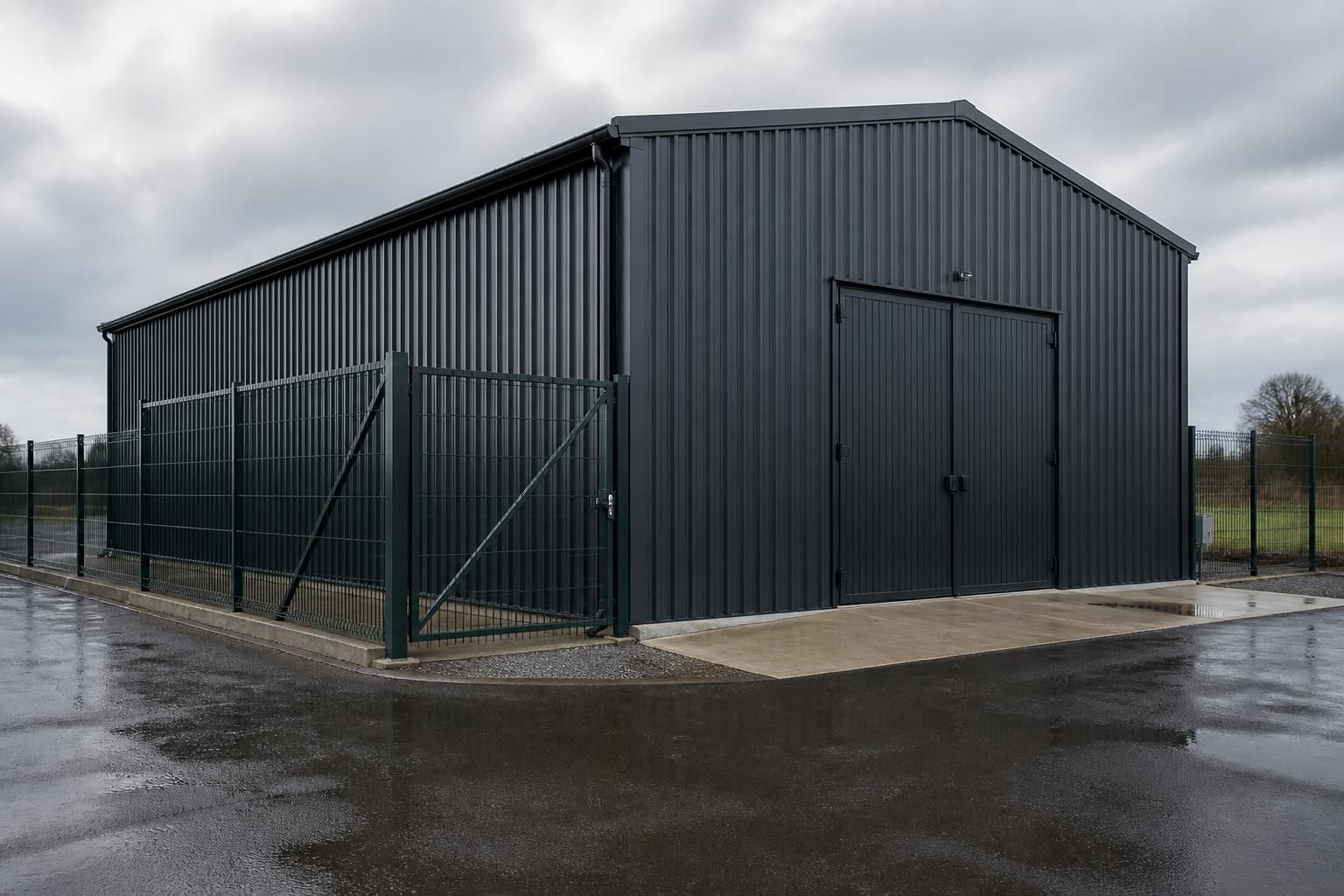
Metal storage sheds can provide a high level of security because their steel frames and cladding are difficult to force or damage compared with many lightweight alternatives. Security depends on the complete design, including secure doors, suitable locking systems, firmly fixed panels, sound foundations and controlled access.
Metal storage sheds are generally secure when their construction, access control and site arrangements are specified for the value and type of goods stored. They are not automatically theft-proof: security is determined by how well the building resists forced entry, limits unauthorised access and allows suspicious activity to be detected.
The most important consideration is the intended threat. A shed used for tools or machinery may need a higher level of protection than one storing low-value materials. Assess the likely entry points, the time an intruder could spend on site, whether the building is overlooked, and whether stored items could be removed through a small opening. This assessment should guide the specification rather than relying on the material alone.
- Access doors: Door leaves, frames, hinges and thresholds should be selected as a complete assembly. Vulnerable hinge arrangements, excessive gaps and lightweight panels can undermine an otherwise robust building. Where practical, doors should open into a controlled area and be protected against being lifted or forced from their frames.
- Locking arrangements: A suitable commercial-grade lock should match the door and the risk. Padlocks should be shielded from cutting tools where possible, while internal release arrangements must still allow safe escape. Several doors should not share an uncontrolled key, particularly where different workers, tenants or contractors use the building.
- Windows and openings: Windows, rooflights, vents and service penetrations can become weak points. Avoid unnecessary openings, and specify robust frames, security glazing or internal protection where the risk justifies it. Any opening large enough for a person to enter should be treated as an access point and assessed accordingly.
- Cladding and internal protection: Cladding is primarily an external weather barrier, so it should not be treated as the sole security measure. High-value areas can be separated with internal cages, mesh partitions or lockable compartments. This creates an additional layer of protection even if someone gains access to the main building.
Site design has a significant effect on practical security. Positioning the shed where it can be seen from occupied buildings reduces concealment. Clear vegetation near walls and doors removes hiding places, while controlled vehicle access makes it harder to remove bulky equipment unnoticed. External lighting should illuminate doors, loading areas and routes to the building without creating deep shadows. Lighting is more useful when combined with cameras or monitored alarms, rather than being treated as a complete deterrent.
Electronic security can provide evidence and notification, but it depends on correct installation and maintenance. Cameras should cover approach routes as well as the door itself, with equipment protected from tampering. Alarms should be arranged to detect unauthorised opening or movement where appropriate. Access records, key control and periodic checks are particularly important for agricultural and industrial sites where several people may legitimately enter the building.
Stored goods should also be secured internally. Machinery can be immobilised, portable equipment marked and high-value items kept away from external walls and doors. Maintain an inventory with identifying details and photographs, and keep records separate from the items being protected. These measures assist recovery and insurance enquiries if a theft occurs, although insurance requirements should be confirmed with the relevant provider before construction.
Fire is a separate security and safety risk. Keep combustible materials, fuels and chemicals segregated and stored in accordance with their requirements. Do not obstruct escape routes with stock or machinery, and ensure electrical installations are suitable for the building’s use. Security measures must never prevent occupants from leaving safely in an emergency.
For a new building, security should be considered during the design stage rather than added after installation. The layout, door positions, openings, internal divisions, lighting points and alarm provisions can then be coordinated with the way the shed will be used. A bespoke design package can help identify these requirements alongside the structural and practical needs of an industrial, agricultural or equestrian building.
In summary, a metal storage shed can offer strong resistance to opportunist intrusion, but its security depends on a coordinated specification and disciplined site management. The right approach combines a suitable door and lock assembly with protected openings, controlled access, detection, good visibility and secure storage practices. For particularly valuable or hazardous contents, obtain advice from a qualified security professional and check the requirements of the insurer and relevant authorities.
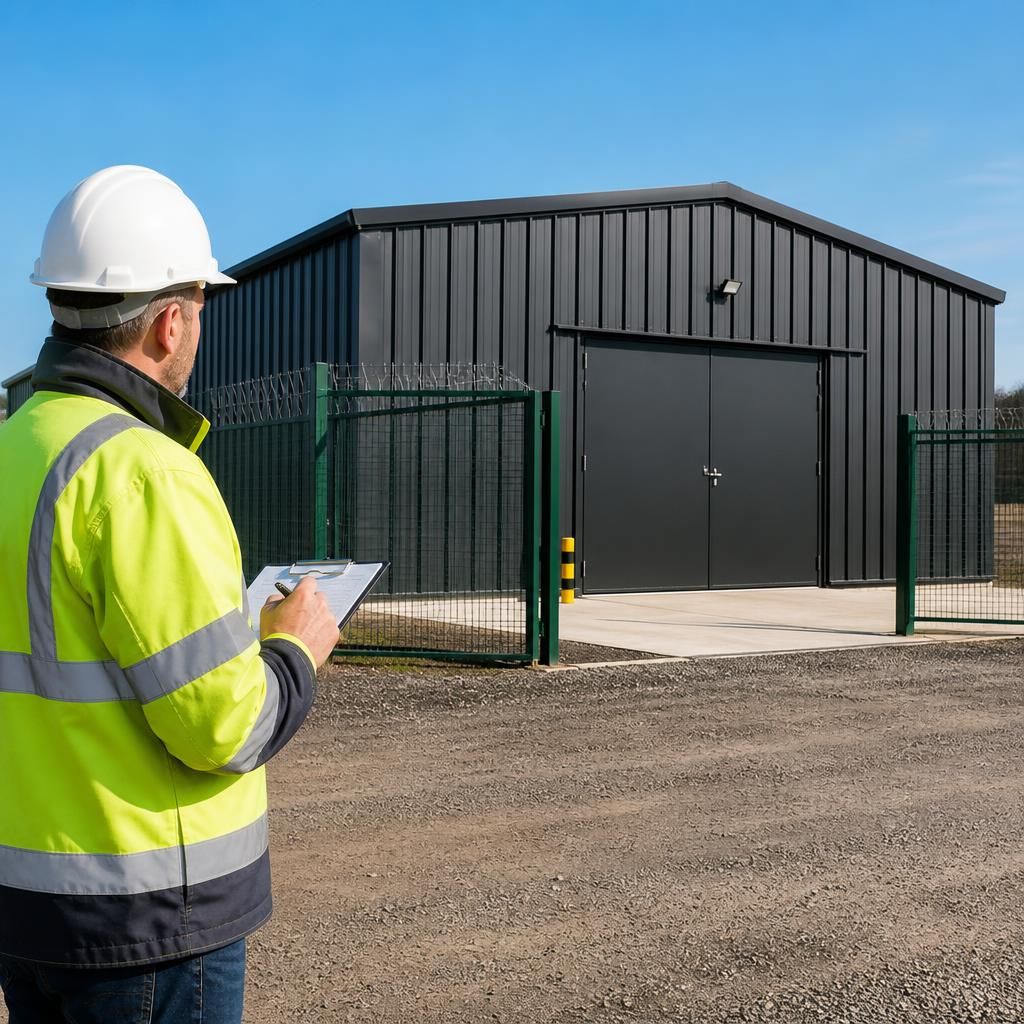
The security of a metal storage shed can deteriorate if damage and wear are left unchecked. Regular inspections should confirm that doors still close squarely, hinges and locking points remain firmly fixed, and cladding or roof panels have not been loosened by impact, corrosion or severe weather.
Pay particular attention to the lower edges of walls and door frames, where contact with vehicles, equipment, water and stored materials can cause gradual damage. Any distortion, corrosion or failed fixings should be repaired promptly, using components suitable for the original building specification. Keep a record of inspections, repairs and changes to who holds keys or access credentials.
This maintenance approach protects the building’s intended level of resistance throughout its working life. A well-designed steel structure is only as secure as its current condition, so scheduled checks should form part of the site’s normal management arrangements.
Discuss Your Metal Storage Shed Security Requirements
Discuss your intended use, stored contents and site layout with Buildings UK Ltd to explore a suitable metal storage shed specification. Their bespoke design service can help coordinate security considerations with the building’s structural and practical requirements.