Can galvanised corrugated roofing sheets be cut to the required length?
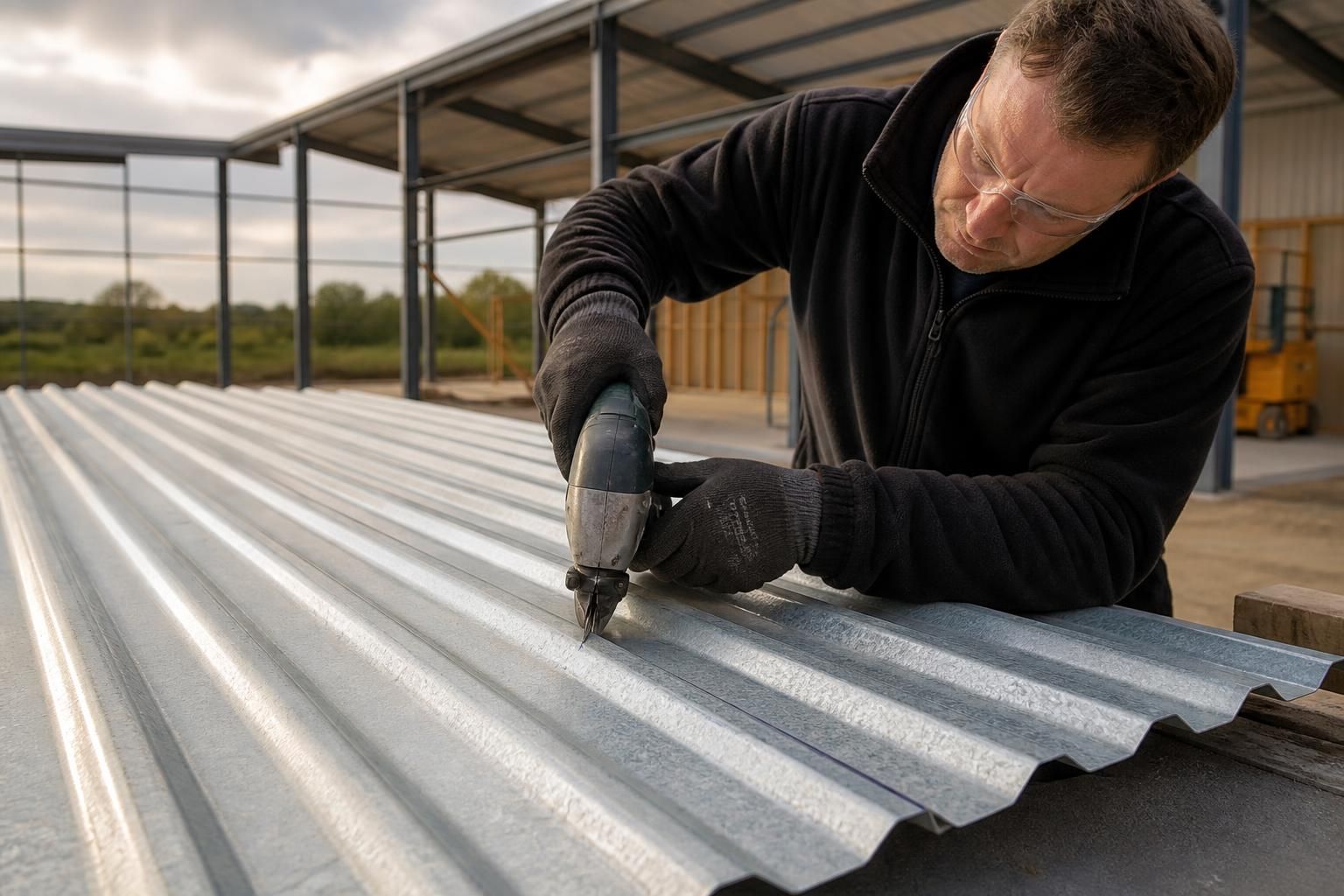
Yes, galvanised corrugated roofing sheets can be cut to the required length using suitable metal-cutting tools. Measure and mark the sheet accurately, support it securely, and use a method that leaves a clean edge without damaging the galvanised coating.
Cutting a galvanised corrugated sheet to length is a cold-cutting task: the steel core is separated while the zinc coating is kept as intact as possible. The selected method should suit the sheet thickness and profile, produce a straight edge, and avoid excessive heat that can damage the corrosion-resistant coating.
Before cutting, establish the finished dimension from the roof layout rather than measuring from an uneven edge. Allow for any required end lap, verge detail, flashing or overhang. Mark the line clearly across the corrugations, checking that it is square to the sheet. A straightedge or guide helps prevent the cut drifting, particularly on longer sheets.
- Hand snips: suitable for short cuts in thinner sheets, although they can distort the edge if forced through several corrugations.
- Nibbler: useful for controlled cuts through profiled metal, with less distortion than conventional snips.
- Jigsaw: a fine metal-cutting blade can be used when the sheet is well supported and the cut needs to follow a marked line.
- Metal-cutting circular saw: appropriate where a long, straight cut is required, provided the blade and operating method are suitable for galvanised sheet.
Support the sheet on a stable, flat surface with the waste section able to separate without pulling down on the retained sheet. Keep the supports close enough to prevent vibration, but do not place them where they will obstruct the cutting tool. Avoid pressing directly on the crowns or valleys of the profile, as this can flatten or deform them and affect the eventual fit.
Abrasive angle-grinder discs are generally a poor choice for routine cuts. They create considerable heat, burn away the zinc at the cut line and scatter abrasive particles across the surface. This can leave a rough edge and produce rust staining if the swarf is not removed. Hot sparks may also damage nearby coatings, insulation or finished surfaces. If a particular cutting method is specified by the sheet manufacturer, that guidance should take priority.
After cutting, inspect the edge for burrs, sharp points and localised damage. Remove burrs with a suitable file or deburring tool, working carefully so the profile is not crushed. Brush or wipe away all swarf, including particles left on the sheet below, because loose steel fragments can rust and mark the galvanised surface. Do not drag the cut sheet across other coated sheets.
The exposed steel at a cut edge should be protected with a compatible zinc-rich repair coating or other product recommended for galvanised steel. Apply it to a clean, dry edge in accordance with the product instructions. The repair coating is not a substitute for accurate cutting: excessive gaps, distorted corrugations or an uneven edge can compromise the weathering detail around the sheet.
For repeated cuts or a large roof, having sheets cut from the fabrication drawings can reduce site trimming and waste. The required dimensions still need to be checked against the actual roof structure, purlin positions and sheet-lap arrangement before manufacture or installation. Any cut-out for flashings, rooflights or penetrations should also be planned so that the remaining sheet retains adequate support and the surrounding weatherproofing can be properly formed.
Wear cut-resistant gloves, eye protection and suitable footwear when handling the sheets. The edges remain sharp even after a clean cut, and long sheets should be controlled by more than one person where their size makes them difficult to manoeuvre safely. Always follow the roofing system and tool manufacturer’s instructions, particularly where the sheet has a specialist coating or forms part of an insulated roof assembly.
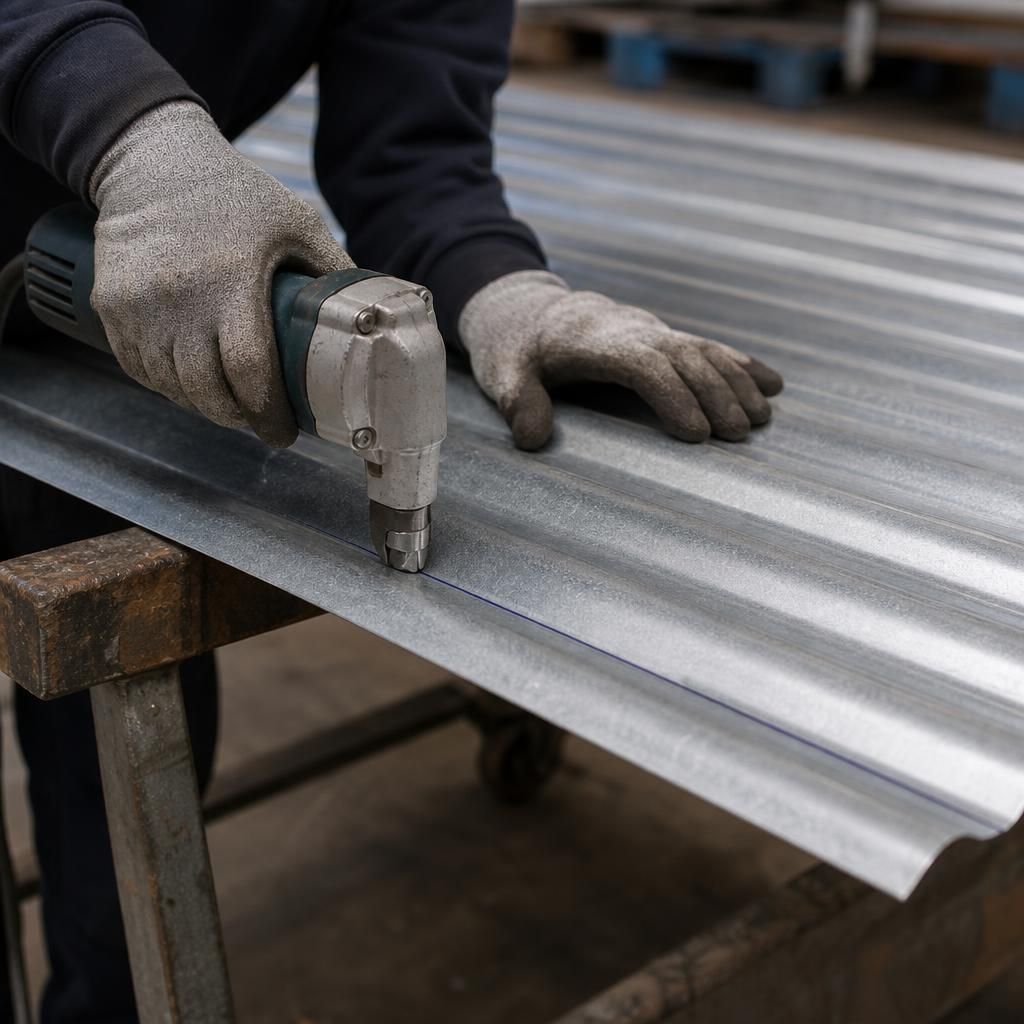
Cutting a galvanised corrugated roofing sheet to length does not alter its side-lap arrangement, because the cut is made across the corrugations. This is different from trimming the sheet along its length, which can remove the designed side lap and may prevent the sheet from engaging correctly with the adjacent panel.
Where a sheet must be shortened, retain the full corrugated profile at both side edges. If the required dimension would remove part of a side lap, revise the sheet layout rather than treating it as a simple length cut. The finished panel should still meet the roofing system’s overlap and fixing requirements once it is positioned on the roof.