Can industrial roof coatings repair leaking steel roofs?
Industrial roof coatings can repair minor leaks in steel roofs by sealing joints, laps, fixings and small areas of surface deterioration. They are not a substitute for replacing severely corroded sheets, failed fixings or damaged structural components, which must be repaired before coating.
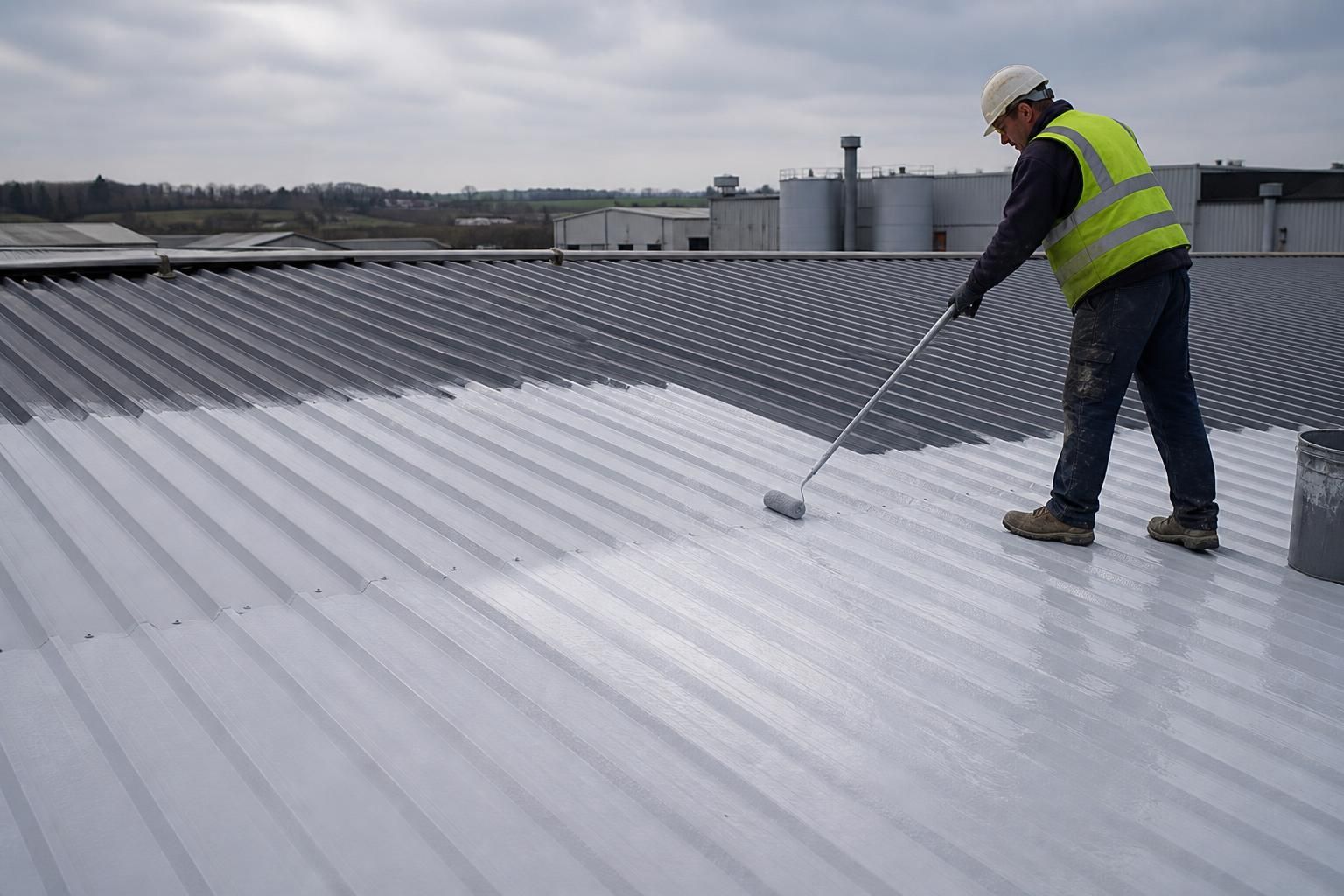
Yes, an industrial roof coating can provide a durable repair for a leaking steel roof when the sheets and supporting construction remain fundamentally sound. The coating creates a continuous waterproof membrane over the prepared surface, reducing water ingress and protecting the steel from further exposure. It is a remedial waterproofing system rather than a method of restoring steel that has already lost significant strength or thickness.
The first step is to establish why water is entering the building. A visible drip may not be directly below the entry point, because water can travel along the underside of a sheet, purlin or support before appearing internally. Inspection should therefore consider roof penetrations, abutments, ridge and eaves details, drainage, overlaps, fixings, condensation and areas where water remains on the roof after rainfall.
Coatings are most suitable where the existing roof has widespread weathering, isolated surface corrosion, ageing sealant or numerous small points of water entry that would be impractical to address individually. They can also extend the serviceable life of a roof by limiting the effect of rain and atmospheric exposure. The system must be compatible with the existing paint or finish, any previously applied treatment and the type of steel substrate.
A coating will not compensate for steel that is extensively perforated, substantially weakened or distorted. Sheets with advanced corrosion may need local or full replacement, while loose or failed components require corrective work before the membrane is installed. Persistent ponding, excessive roof movement and defective drainage also need to be resolved, since standing water and repeated movement can place undue stress on the finished coating.
Preparation has a direct effect on whether the repair succeeds. A suitable application normally involves:
- identifying and repairing the source of water ingress;
- removing dirt, moss, loose rust, flaking paint and failed sealant;
- treating remaining corrosion and priming exposed steel where the specification requires it;
- checking that the surface is sufficiently dry and sound for adhesion;
- reinforcing vulnerable details or local defects with the appropriate compatible material; and
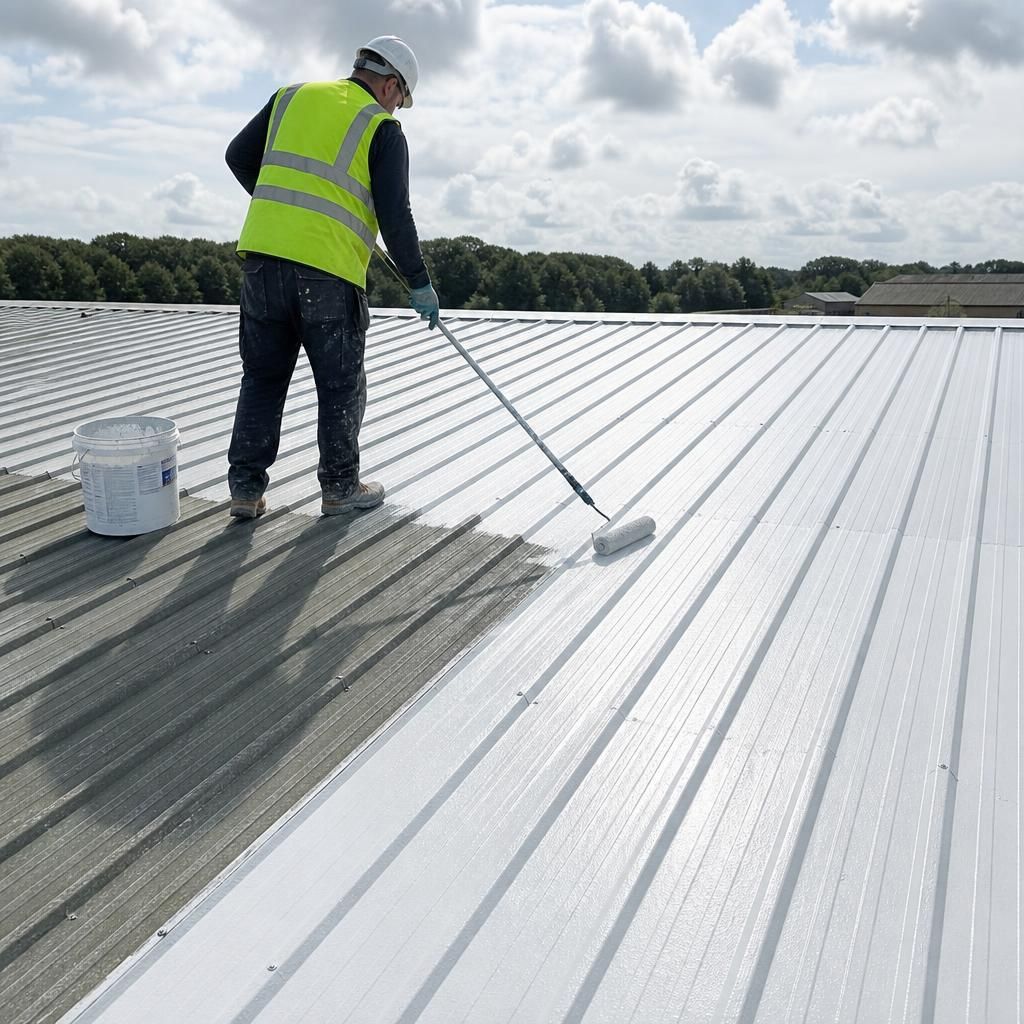
- applying the coating at the specified coverage and thickness, with sufficient curing time between coats where applicable.
Liquid-applied systems are useful on profiled steel roofs because they can follow the contours of the sheets and form a seamless finish around complicated details. Their performance depends on correct detailing at laps, edges, penetrations and changes in roof plane. A coating that is applied over contamination, dampness or unstable existing paint may blister, detach or allow water to pass beneath the membrane.
After application, the roof should be inspected periodically for punctures, mechanical damage, open joints, new corrosion and areas affected by building movement. Gutters and outlets should remain clear, and any damage should be addressed before water reaches the substrate. Maintenance does not replace the original inspection, but it helps identify local defects before they develop into a wider failure.
For an industrial building, the appropriate decision is therefore based on the condition of the whole roof rather than the presence of a single leak. A sound roof with ageing finishes and localised water ingress may be a good candidate for coating. A roof with widespread structural deterioration, severe deformation or failed support components is more likely to require repair or replacement, with coating considered only after the underlying problems have been resolved.
Industrial roof coatings do not resolve condensation that is mistaken for a leak. Condensation forms when warm, moisture-laden air meets a cold surface, often on the underside of steel sheets, and may appear as dripping water even when the roof covering is intact.
Before specifying a coating, the moisture should be traced during suitable weather conditions and checked against rainfall, internal humidity and ventilation. If condensation is the cause, the remedy may involve improving ventilation, controlling internal moisture or upgrading insulation. Coating the external roof surface alone will not correct those conditions, although it may still be appropriate if inspection also identifies genuine water ingress through the steel roof.