
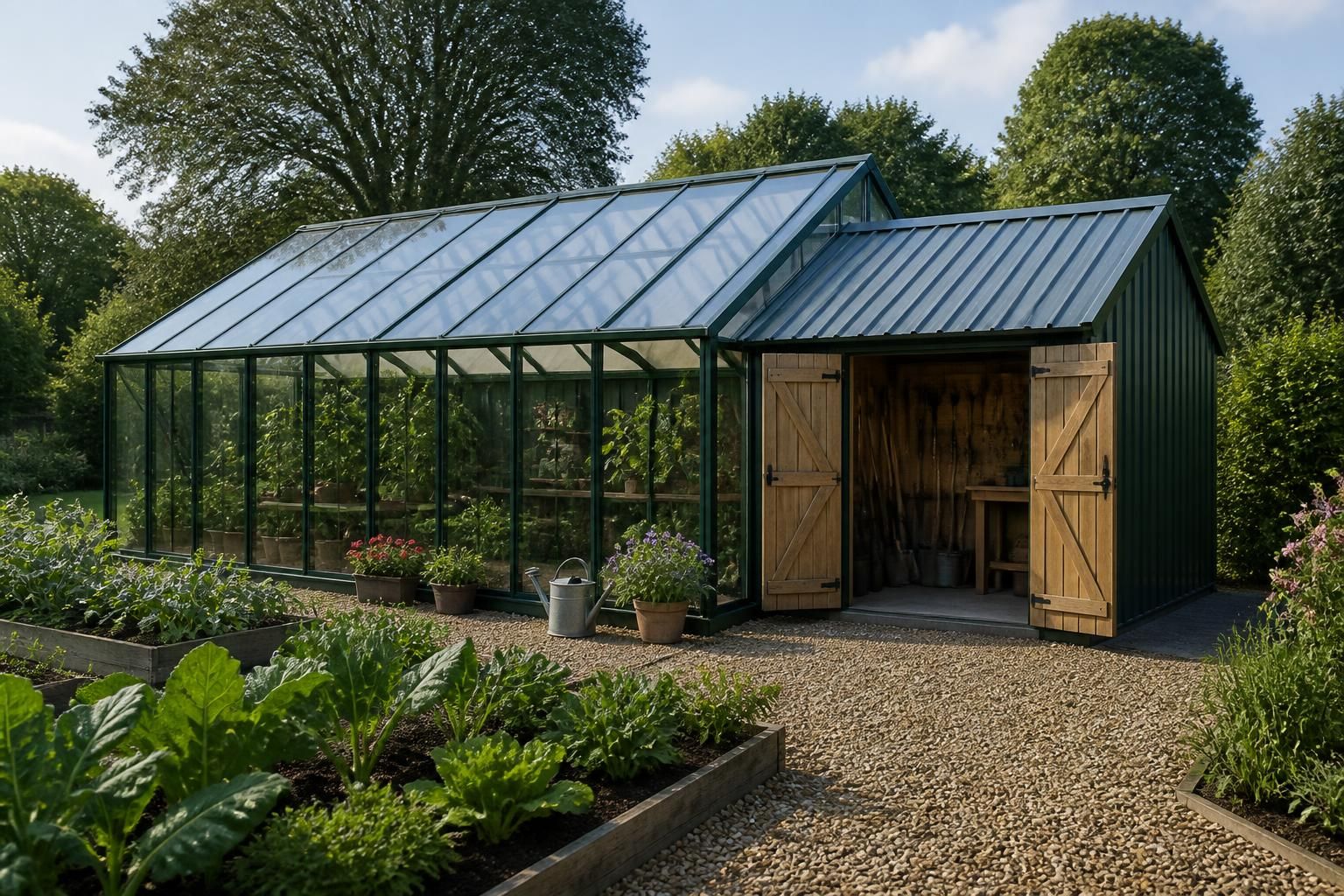
When is a greenhouse garden shed preferable to separate structures?
A greenhouse garden shed is preferable when you need growing space and enclosed storage in one compact structure, particularly where a separate greenhouse and shed would use too much garden area. It can also be a practical choice when shared access, services and a single coordinated design are more useful than the greater separation and flexibility provided by two buildings.
A greenhouse garden shed is preferable to separate structures when the two uses can operate comfortably within one planned layout without compromising light, ventilation, access or storage. It is most suitable for gardeners who want a dedicated growing area alongside secure, weather-protected space for tools, pots and materials, while separate buildings are generally better where each use needs a very different environment or independent access.
Choose a combined structure when the uses are closely related
A combined building works well when the shed section will support the greenhouse rather than function as an unrelated storage room. Potting compost, seed trays, hand tools, canes and plant supports can be kept beside the growing area, making routine tasks more convenient. The enclosed section can also provide a place to prepare plants before moving them into the greenhouse, store equipment between seasons and protect sensitive items from rain and frost.
This arrangement is particularly practical for gardeners who use the greenhouse regularly but do not require a large workshop, office or general-purpose outbuilding. The design can be planned around the way the space will be used, with the greenhouse and storage areas positioned to suit the site, prevailing conditions and preferred access route.
Consider the effect of combining different internal conditions
The growing section normally benefits from sunlight, controlled ventilation and a humid environment. The shed section is usually expected to remain dry, secure and relatively stable. A dividing wall, suitable door and careful detailing around the junction are therefore important. Without adequate separation, moisture from the greenhouse can migrate into the storage area, causing condensation, mould or corrosion on tools and equipment.
Storage contents should influence the layout. Bulky machinery, timber, fertiliser and bags of growing media may need a wider door and a solid floor, while shelves and worktops require usable wall space. If the shed will contain electrical equipment, lighting or heating controls, these installations should be designed with the damp greenhouse environment in mind and carried out appropriately.
Assess whether the growing requirements are compatible
A combined structure is less suitable when plants require sharply different temperatures, humidity levels or ventilation patterns. For example, a propagation area may need more consistent warmth than a general greenhouse, while stored paints, paper products or dry materials may be damaged by humid conditions. Separate structures allow each environment to be managed independently and reduce the likelihood that one use will interfere with another.
Separate buildings may also be preferable for specialist growing, a substantial collection of plants or storage that involves noise, dust, fuel or machinery. In these situations, separating air movement and daily activities can make the site safer and easier to manage.
Compare access and everyday movement
Think about how materials will enter the building and how often the storage area will be used while plants are being cultivated. A shared entrance can be efficient, but it may become inconvenient if muddy tools, wheelbarrows or large bags must pass through the growing area. A carefully positioned external door to the shed section can preserve a cleaner route and reduce disturbance to plants.
Separate structures offer greater freedom to place one building close to the house and another near the main growing area, workshop or vehicle access. A combined structure is more appropriate where a single carefully chosen position serves both activities without creating awkward routes around the garden.
Review future flexibility before committing
Separate buildings can be adapted independently. A greenhouse may later be extended, replaced or converted, while the shed can remain a workshop or storage room. A combined structure has a more fixed relationship between its two sections, so the proportions, door positions, roof arrangement and internal division should be considered in advance.
Allow for changing needs such as larger tools, additional shelving, water storage, work surfaces and improved insulation. It is also worth considering whether the building could be used differently if gardening habits change. A well-planned hybrid can remain useful, but a design based only on current equipment may become restrictive.
Check the site and permissions
Ground conditions, drainage, sunlight, existing trees and access for construction all affect whether one combined building is the sensible option. The greenhouse glazing should receive sufficient natural light, while the shed section should not create unnecessary shading. Water runoff should be directed away from foundations and storage areas, and the structure should not obstruct maintenance access or essential garden routes.
Planning restrictions, boundary requirements and building regulations can vary according to the location, size, position and intended use of the structure. Check the relevant requirements with the local planning authority before finalising the design, particularly if the building is close to a boundary or includes electrical services.
In practical terms, choose a greenhouse garden shed when the storage is directly connected with the growing activity, the two environments can be separated effectively and one position suits both uses. Choose separate structures when independent climate control, specialist storage, flexible future alterations or completely separate access are more important than having one coordinated building.
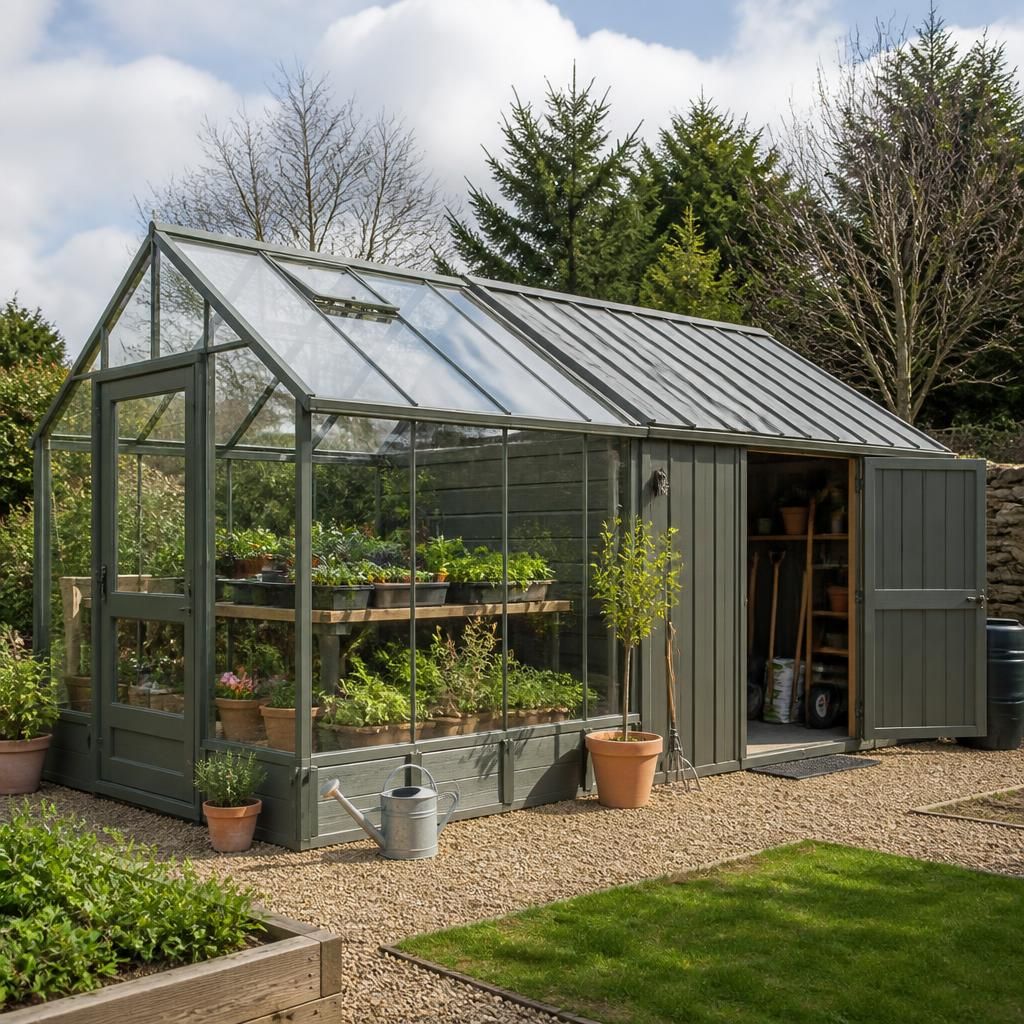
A greenhouse garden shed can be preferable where the appearance of two separate outbuildings would make the garden feel fragmented. One coordinated structure can create a clearer roofline and a more orderly external layout, particularly in a small or highly visible garden. This does not mean the building should be treated as one undivided room: the greenhouse and shed areas still need a properly designed internal separation, with the external finish and proportions balanced so that neither section looks like an afterthought.
Assess the combined building from the main viewpoints around the property as well as from inside it. Door positions, glazing, roof height and the transition between materials can affect how dominant the structure appears. Where a single building provides the required functions without looking oversized, its visual simplicity may be a stronger reason to choose it over two smaller structures.
Discuss whether a greenhouse garden shed is right for you
Discuss your proposed greenhouse garden shed with Buildings UK Ltd to assess the practical requirements and whether a bespoke framed solution suits the site. Their design team can help you consider the building layout before you decide between a combined structure and separate buildings.