Which maintenance requirements affect the choice of steel roofing materials?
Maintenance requirements influence the choice of steel roofing by determining the necessary corrosion protection, coating durability and ease of inspection. Buildings in damp, polluted or chemically aggressive environments may require more robust finishes and planned cleaning, while accessible roofs with straightforward maintenance needs can often use simpler profiled steel solutions.
The maintenance requirements for a steel roof should be assessed alongside the building’s use, internal conditions, roof design and access arrangements. These factors influence whether the most suitable solution is a single-skin sheet, an insulated panel system or a more detailed build-up with separate liner panels, insulation and flashings.
Building use is a key consideration. Agricultural buildings may be exposed to dust, fertiliser residues, livestock gases and high internal humidity, while industrial buildings can generate heat, vapour or airborne contaminants. If these conditions are likely, the roof specification should limit areas where moisture and residue can collect and should provide a practical method of checking vulnerable details. The required maintenance regime may therefore affect the choice of sheet profile, internal finish, insulation arrangement and ancillary components, rather than the outer sheet alone.
Condensation control can reduce future maintenance. Uncontrolled condensation may dampen stored materials, affect machinery and create persistent moisture around fixings and supporting steelwork. Where the building will have high humidity or limited natural ventilation, an insulated roofing system or a correctly designed anti-condensation arrangement may be more appropriate than a basic single-skin roof. The design should consider ventilation, vapour movement, insulation continuity and thermal bridging so that maintenance is not being used to compensate for an unsuitable roof build-up.
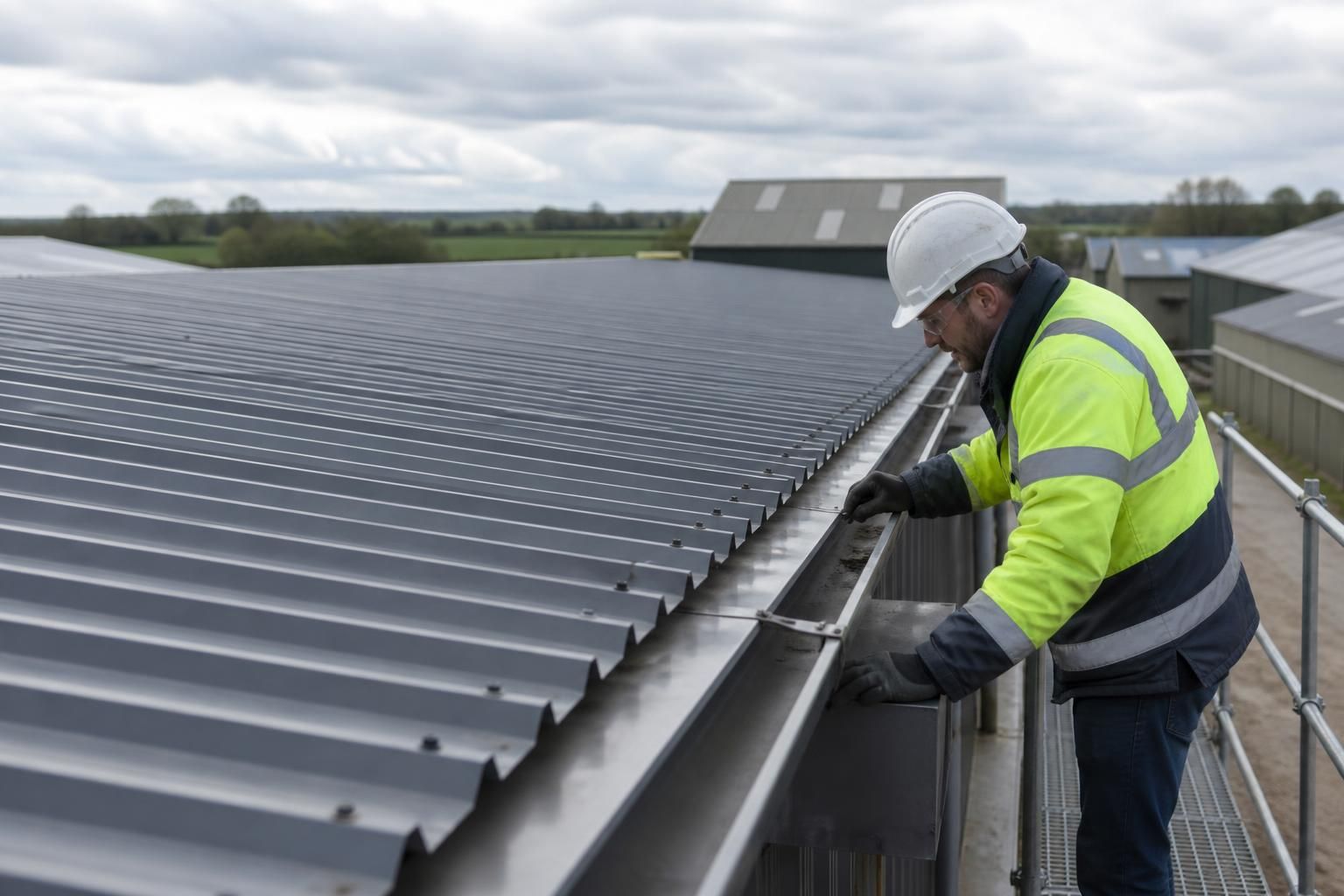
Roof shape and drainage also affect upkeep. A roof should be assessed for its ability to shed rainwater without creating standing water at laps, gutters, valleys, abutments or penetrations. Low pitches and complex layouts generally demand closer attention to detailing and drainage than a simple roof with clear falls. Leaf litter, silt and other debris can obstruct gutters and outlets, so the specification should allow these areas to be inspected and cleaned safely. Flashings, ridge details and seals should be treated as part of the maintenance plan because failure at an interface can allow water into the roof assembly even when the main sheets remain sound.
Fixings and joints deserve particular attention. Screws, washers, side laps and end laps experience movement from temperature changes and wind loading. The maintenance plan should include visual checks for loose or damaged fixings, distorted washers, open laps and localised damage around penetrations. Replacement components need to be compatible with the original roof material and with the surrounding environment. Using a clearly documented fixing schedule and retaining details of the original profile can make later repairs more straightforward.
Access requirements may change the material decision. A roof that is difficult to reach or inspect should not be specified on the assumption that maintenance will be simple. Safe access, walkways, edge protection and suitable points for inspection may be needed, particularly where equipment, rooflights or service installations interrupt the roof plane. Rooflights and translucent sections should be included in the inspection schedule because their seals, fixings and weathering details may require attention at a different rate from the steel sheets.
When comparing systems, consider the complete maintenance burden rather than only the purchase price. Useful questions include:
- Can the roof be inspected without unnecessary disturbance to stored goods, livestock or production activities?
- Are gutters, outlets, valleys, laps and penetrations accessible for cleaning and checking?
- Will internal humidity or condensation require an insulated build-up?
- Can damaged sheets, flashings and fixings be identified and replaced without dismantling large areas?
- Does the proposed profile suit the roof geometry and drainage strategy?
- Are maintenance records available, including the sheet profile, fixing type and construction details?
A practical maintenance schedule normally includes routine visual inspections, removal of debris, checks to gutters and drainage points, examination of laps and fixings, and prompt repair of accidental damage. The frequency should reflect the building’s environment and use. Cleaning methods also need to be appropriate for the specified finish: aggressive tools or unsuitable chemicals can damage the surface and create new maintenance problems.
For a new project, these requirements are best considered during design rather than after the roof has been installed. A detailed design package can coordinate the structural arrangement, sheet layout, insulation, flashings, openings and access provisions. This helps the selected steel roofing material meet the building’s expected maintenance regime while keeping future inspection and repair practical.
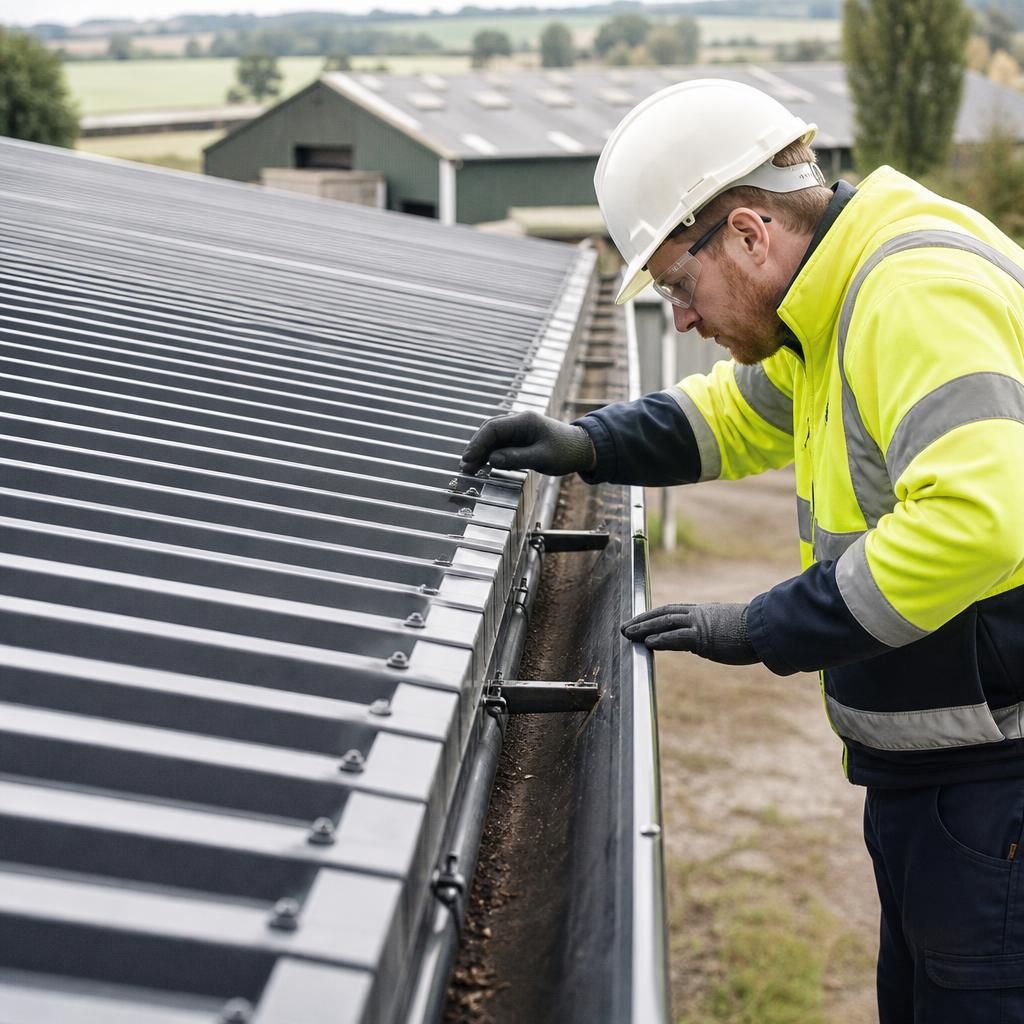
Coating specification is a maintenance consideration because the roof finish must tolerate the building’s external and internal environment. Areas exposed to persistent moisture, salt, industrial pollutants or agricultural gases may require a more suitable corrosion-resistant finish than a relatively dry, low-risk building. The choice should account for both the atmospheric exposure and any contaminants that may settle on the sheet surface.
A durable coating can reduce the need for remedial work, but it does not remove the need for inspection. During maintenance, look for fading, blistering, flaking, edge corrosion and damage around cut edges or penetrations. If deterioration is concentrated in particular areas, the cause should be identified before recoating or replacing sheets; otherwise, trapped moisture, incompatible materials or ongoing contamination may continue to affect the roof.