
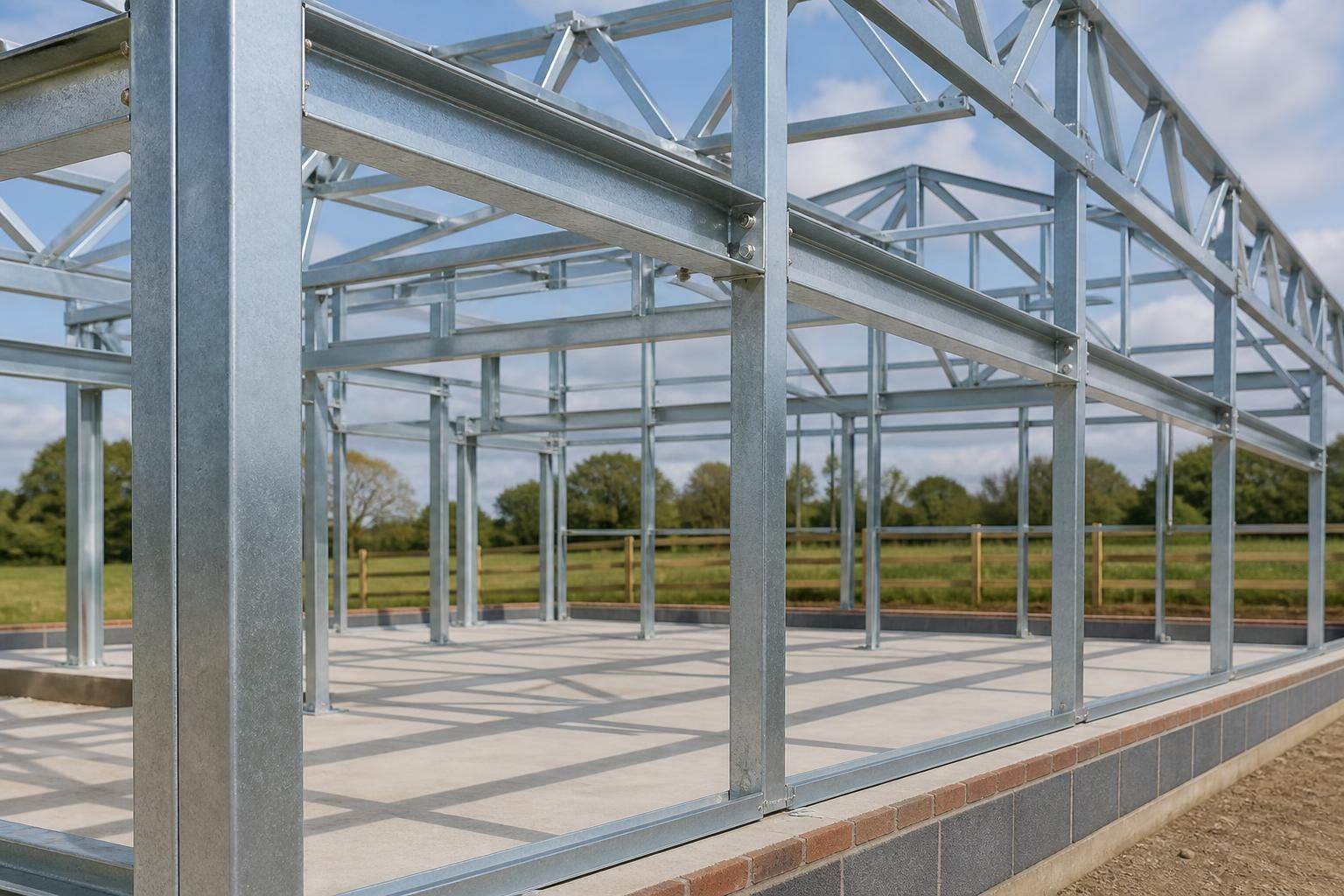
How is a steel frame house protected against corrosion?
A steel frame house is protected against corrosion through a combination of galvanising or suitable protective coatings, careful detailing and effective moisture control. Keeping steel away from persistent dampness, allowing water to drain and repairing damaged protection helps preserve the frame’s strength and service life.
A steel frame house is protected against corrosion by specifying a protection system that suits its exposure, applying it correctly during fabrication, and preventing damage when the frame is transported, assembled and enclosed. The protection must cover not only the main steel sections but also welds, joints, cut edges, connection plates and other areas where corrosion can begin.
Corrosion occurs when steel is exposed to water and oxygen, with the process accelerated by contaminants such as salts, chemicals and persistent condensation. The internal environment therefore matters as much as the external weather. A frame in a dry, sealed and well-ventilated building has a different corrosion risk from one exposed to coastal air, agricultural chemicals, high humidity or repeated condensation.
Before construction, the required durability should be translated into a written specification. This normally identifies the exposure conditions, preparation of the steel, coating or galvanising system, treatment of connection areas and the inspection requirements. It should also state which surfaces require protection after cutting, drilling or welding on site. A clear specification prevents different parts of the frame being treated inconsistently.
Fabrication quality is particularly important. Steel surfaces need suitable preparation before a coating is applied, because mill scale, oil, rust, welding residue and other contaminants can reduce adhesion. Weld spatter and sharp transitions may also create weak points in a coating. Good fabrication practice produces accessible, clean surfaces and avoids details that trap contaminants or make inspection impossible.
Connections require careful consideration because bolts, plates and welds can behave differently from the surrounding steelwork. Where dissimilar metals meet, the design should consider the possibility of galvanic corrosion, particularly if moisture can form an electrical path between them. Suitable separation, compatible materials and appropriate sealing details may be needed. Contact with treated timber, masonry chemicals or other potentially corrosive materials should also be assessed rather than assumed to be harmless.
Handling during delivery and erection can reduce the effectiveness of an otherwise suitable system. Slings, chains, lifting equipment and temporary supports can scratch coated surfaces, while site cutting or welding can expose bare steel. Damaged areas should be cleaned, prepared and repaired using a compatible system, following the protection manufacturer’s instructions. Touch-up work should not simply cover visible rust or dirt.
Once the frame is enclosed, corrosion protection depends on the building design as well as the steel treatment. Roof and wall build-ups should limit condensation, and the completed structure should not leave steel exposed to recurring leaks or trapped moisture. Service penetrations, junctions and areas behind linings deserve particular attention because defects can remain concealed while corrosion progresses.
Inspection should be proportionate to the building’s environment and the consequences of deterioration. Useful checks include:
- looking for coating breakdown, blistering, flaking, staining or visible rust;
- checking vulnerable joints, connections, base details and areas affected by alterations;
- investigating signs of leaks or recurring condensation rather than treating the resulting staining alone;
- recording repairs and any changes that expose or alter the original steel protection.
Fire protection, insulation and other finishes must also be compatible with the corrosion system. A finish that holds moisture against the steel, or a later alteration that punctures a protective layer, can create a localised corrosion risk. For this reason, maintenance information should identify the protection used and explain how future drilling, cutting, repairs and replacements are to be managed.
Galvanising or a coating system is therefore only one part of the solution. Long-term protection comes from matching the system to the exposure, controlling workmanship at vulnerable details, preserving the treatment during construction and maintaining the building so that conditions likely to cause corrosion are identified and corrected.
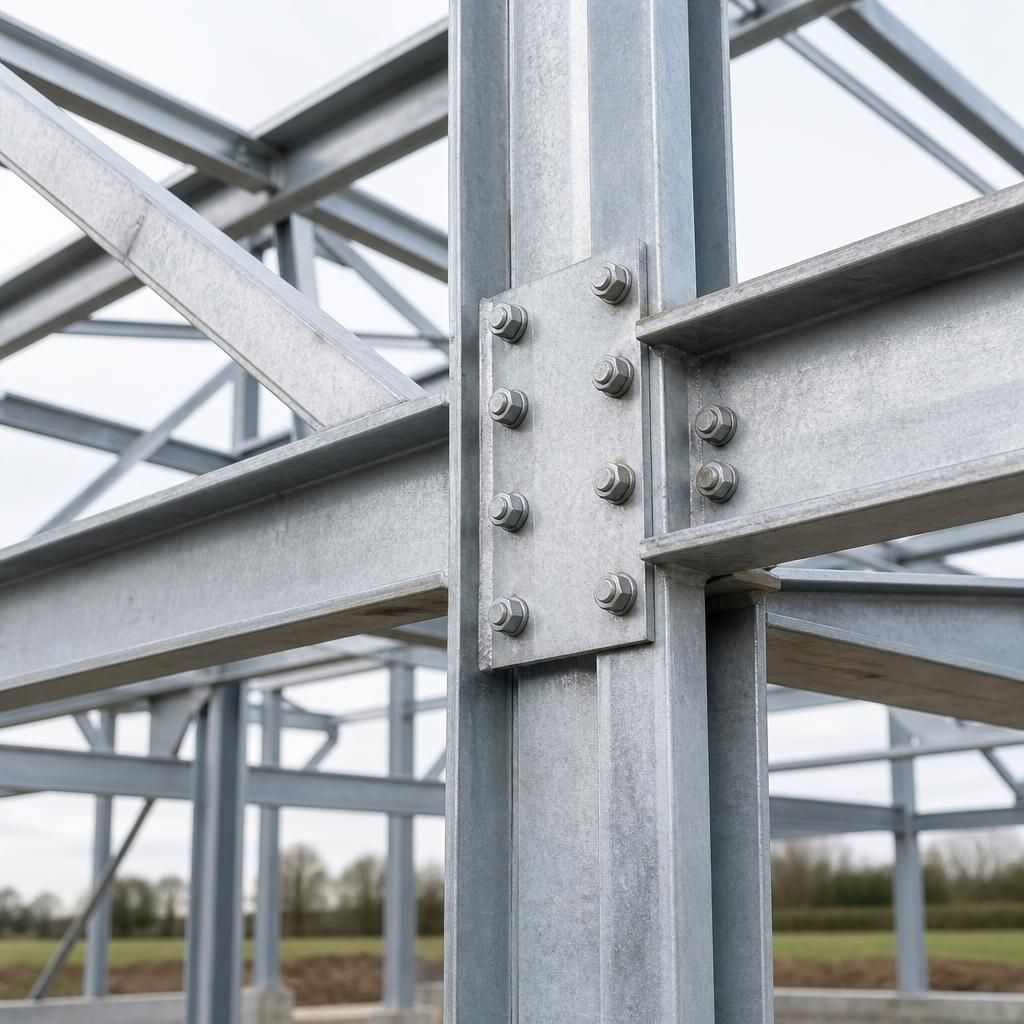
Hot-dip galvanising protects steel by applying a bonded zinc coating, which provides a barrier between the steel and its environment. Zinc also offers sacrificial protection: if a small area is exposed, the surrounding zinc can corrode preferentially and help protect the steel at that point.
This protection is most effective when the steelwork has been designed and fabricated for galvanising. Hollow sections need suitable vent and drain openings so that cleaning fluids and molten zinc can circulate safely, while overlaps, narrow gaps and enclosed pockets may require specific detailing. The galvanising specification should therefore be agreed before fabrication, rather than treated as a finishing process that can resolve unsuitable details afterwards.