
What maintenance do heavy duty metal security sheds require?
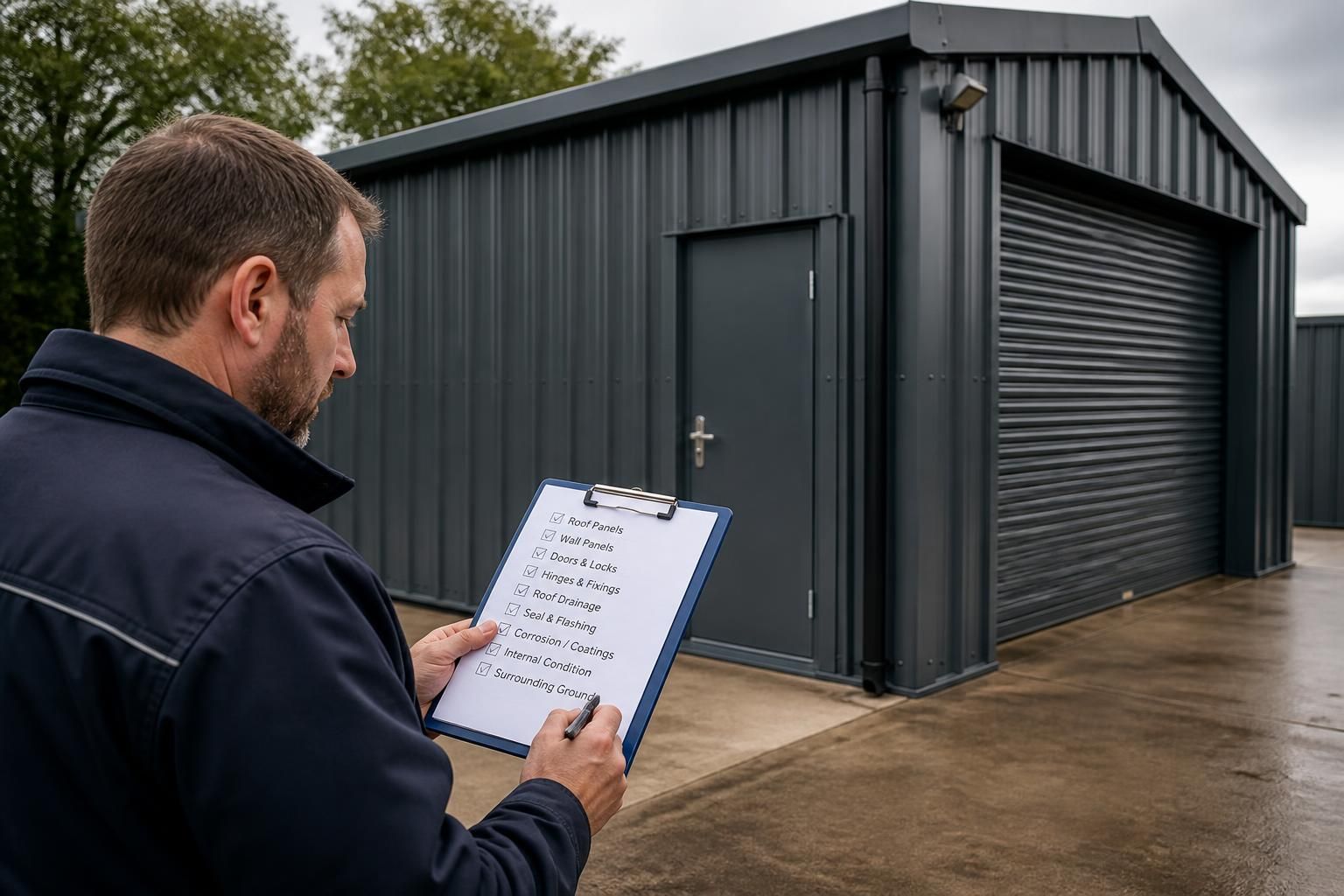
Heavy duty metal security sheds require routine inspections, cleaning and prompt treatment of damaged protective coatings to prevent corrosion. Maintenance should also include checking doors, locks, hinges, fixings, seals, roof drainage and the surrounding ground for signs of wear, water ingress or movement.
Heavy duty metal security sheds require a planned maintenance regime covering the building structure, security hardware, internal environment and any installed services. The frequency and extent of maintenance depend on the shed’s design, exposure, storage use and level of security required, but a written schedule helps prevent minor defects becoming structural, operational or security problems.
Structural maintenance
- Arrange periodic checks by a competent person for distortion, buckling, cracked welds, damaged bracing and any change in the alignment of the frame.
- Check that alterations, suspended loads, racking or plant have not imposed loads that the original design did not allow for.
- Do not drill, cut, weld or attach heavy equipment to structural members without confirming that the change is suitable. Unauthorised alterations can weaken the frame or affect its stability.
- After an impact from vehicles, lifting equipment or stored materials, have the affected area assessed before the shed is returned to normal use.
Controlling condensation and internal conditions
Condensation can form when moist air meets cold metal surfaces, particularly in sheds containing wet equipment, livestock-related materials or temperature-sensitive stock. Keep stored goods raised where appropriate, allow air to circulate around them and avoid placing materials directly against the walls. Ventilation should be kept clear and used in accordance with the building’s design. If persistent moisture is present, investigate the source rather than simply drying the interior, as repeated condensation can damage stored goods and accelerate deterioration of internal components.
Security equipment
Where the shed includes alarms, cameras, lighting, access-control equipment or other electronic security measures, test each system in accordance with its manufacturer’s instructions. Check that cables remain protected from impact, moisture and rodents, and keep sensors and camera views unobstructed. Maintain an up-to-date list of authorised users and remove access permissions when they are no longer required. Any alteration to security hardware should preserve the shed’s intended level of resistance to forced entry.
Internal housekeeping and fire risk
- Keep combustible waste, packaging and flammable liquids controlled and stored in suitable locations.
- Maintain clear access to exits, equipment and service isolation points.
- Prevent oil, chemicals or fertilisers from remaining in contact with metal surfaces or collecting beneath stored items. Use suitable containment and clean spills using methods compatible with the affected surface.
- Keep machinery and stored materials positioned so that they cannot strike the frame, wall panels or security equipment during handling.
Any electrical installation, fire protection system or specialist equipment should be maintained by a suitably qualified person and recorded separately where required. Maintenance records should note the date, area checked, defect identified, action taken and any follow-up inspection needed. Keep drawings, installation information and repair details with these records so future work does not compromise the original design.
Repairs should use materials and methods compatible with the existing construction. Significant structural damage, unexplained movement, repeated condensation or damage following an impact warrants assessment by a structural engineer or other appropriate specialist rather than an improvised repair.
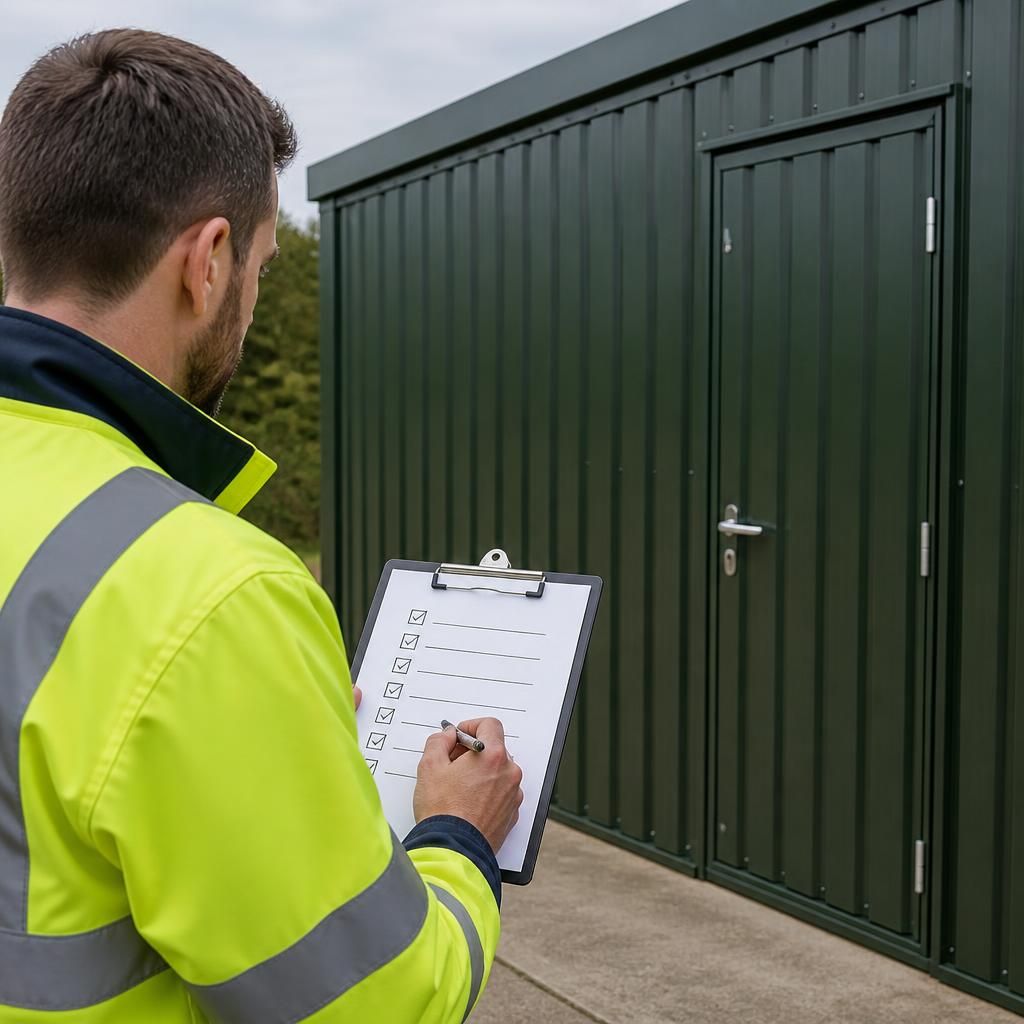
Protective coating maintenance is a key part of preserving a heavy duty metal security shed. Small breaches around panel edges, fasteners, doors and other exposed details can allow moisture to reach the steel, so repairs should be dealt with before corrosion spreads.
- Wash away dirt, salts and chemical residues using a method suitable for the existing finish, then allow the surface to dry fully.
- Remove loose coating and surface corrosion from the affected area without damaging sound surrounding material.
- Apply a compatible repair coating in accordance with the coating system manufacturer’s instructions, including any required preparation or primer.
- Inspect the repaired area during later checks for blistering, peeling, renewed rust or moisture tracking.
Deep pitting, flaking over a wide area or corrosion near structural connections should not be treated as a purely cosmetic defect. The extent of steel loss and the suitability of the repair should be assessed by a competent specialist before the affected part is returned to service.