What maintenance does a metal outbuilding require?
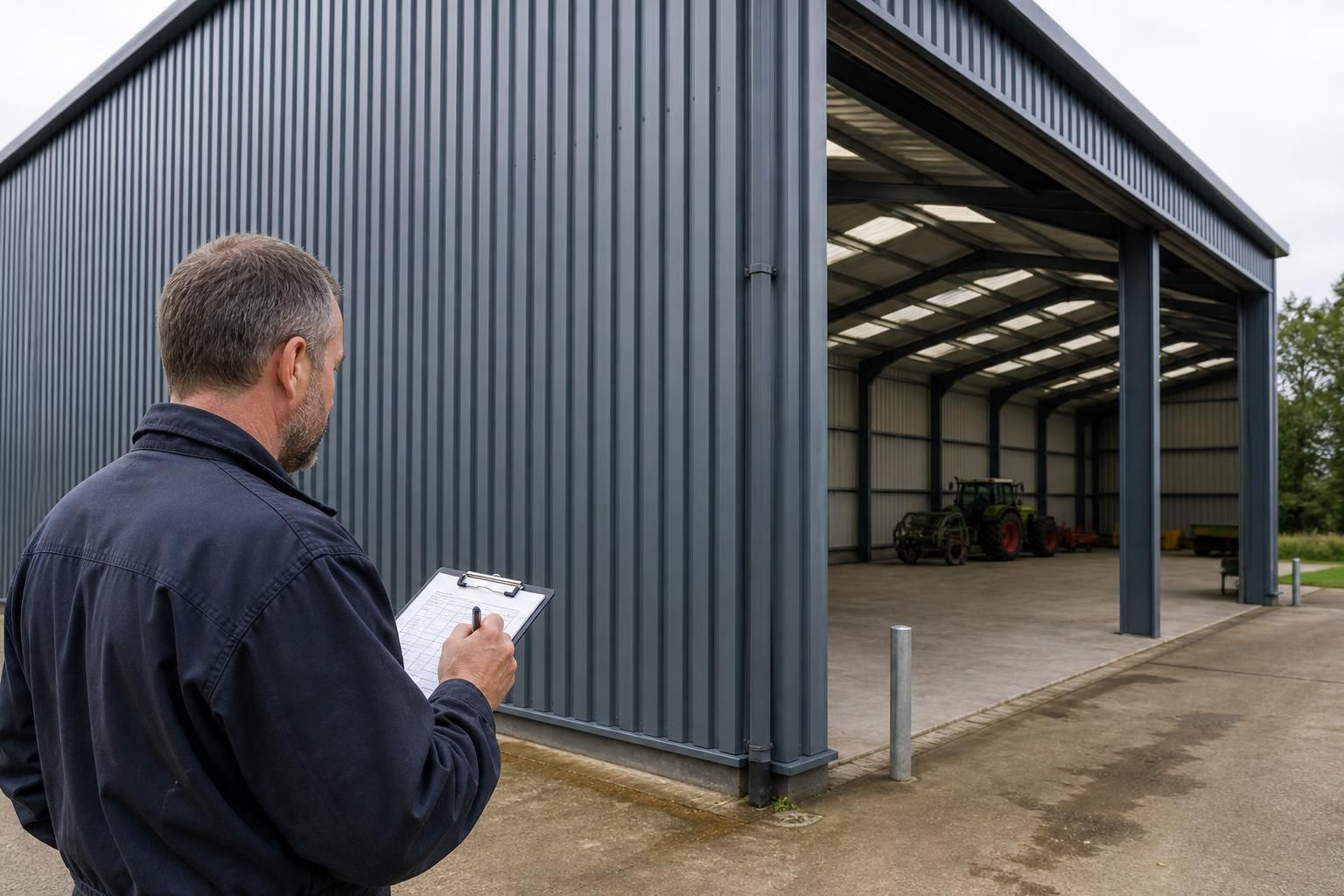
A metal outbuilding requires routine inspections of its steel frame, roof, cladding, fixings, doors and drainage systems. Maintenance should focus on removing debris, clearing gutters, checking for damage or corrosion, and repairing protective coatings or defective components before they affect the building’s performance.
Maintenance of a metal outbuilding is a preventative programme that protects its structural stability, weather resistance and safe operation throughout its service life. The work should be adapted to the building’s use, exposure and internal environment, with particular attention to condensation, impact, chemical contamination, changes in loading and any signs of movement.
Match maintenance to the building’s environment
An agricultural building may be exposed to livestock moisture, ammonia, dust, fertiliser and wash-down water, while an industrial building may contain oils, chemicals, abrasive dust or vehicle movements. These conditions can affect steelwork, cladding, seals and fixings differently. Areas exposed to persistent moisture or corrosive substances need closer observation than clean, dry storage areas.
Internal ventilation should also be reviewed if condensation is present. Water forming on the underside of roof sheets can be mistaken for a roof leak, but it may result from warm, moist air reaching a cold surface. Suitable ventilation, insulation and vapour-control measures can help reduce this risk. Any change to these measures should take account of the building’s original design.
Use appropriate cleaning methods
Remove deposits using methods that will not damage the cladding finish or protective surfaces. Soft brushes, clean water and compatible detergents are generally preferable to abrasive tools. High-pressure washing should be used cautiously, as it can force water beneath sheet laps, around seals or into electrical equipment. Chemical residues should not be left on steel or cladding, particularly where they originate from fertiliser, livestock waste or industrial processes.
Check for movement, impact and altered loads
Vehicle, machinery and handling equipment can cause localised damage that is not immediately obvious from inside the building. Look for distorted sheets, displaced edge trims, damaged door frames and impact around corners or access points. Damage should be assessed before the affected area is put back into regular use.
The building should also continue to be used within the assumptions made for its design. Storing heavier materials, installing suspended equipment, adding solar panels or fixing new machinery to the frame can introduce loads that were not originally allowed for. Obtain an appropriate structural assessment before making such changes. Do not cut, drill, weld or remove elements of the frame without confirming that the alteration is structurally acceptable.
Maintain doors and moving parts
Large agricultural and industrial doors should operate without excessive force, binding or uneven movement. Hinges, rollers, tracks, catches, seals and hold-open devices need to remain correctly aligned and free from accumulated dirt. Lubrication should be compatible with the component and applied according to the manufacturer’s instructions. If a door begins to drop, drag or close unevenly, adjustment should be carried out before the problem places additional stress on the frame or operating gear.
Door safety features should not be bypassed. Damaged cables, springs, powered controls or interlocks require attention from a suitably competent person, particularly where the door is large, heavy or mechanically operated.
Monitor the base and surrounding ground
Although the steel frame may remain sound, changes around the base can affect the building. Watch for standing water, wash-out, cracking or settlement around the floor and external apron, as well as gaps that allow water or pests to enter. Ground levels should not be raised against cladding or altered in a way that directs water towards the building. Any apparent movement, pronounced cracking or separation between the frame and its base warrants professional investigation.
Keep a maintenance record
A simple record should note inspections, cleaning, repairs, environmental changes, impact incidents and alterations to the building’s use. Photographs can help establish whether a mark, distortion or movement is new. Records are particularly useful for buildings containing machinery, stored materials or areas that are difficult to access regularly.
Arrange a competent structural inspection where there is significant deformation, cracking around connections, repeated water entry, unexplained movement or damage following an impact or severe weather event. Maintenance should address the underlying cause rather than merely covering the visible symptom. This approach helps preserve the intended performance of the metal outbuilding and identifies problems before they require extensive remedial work.
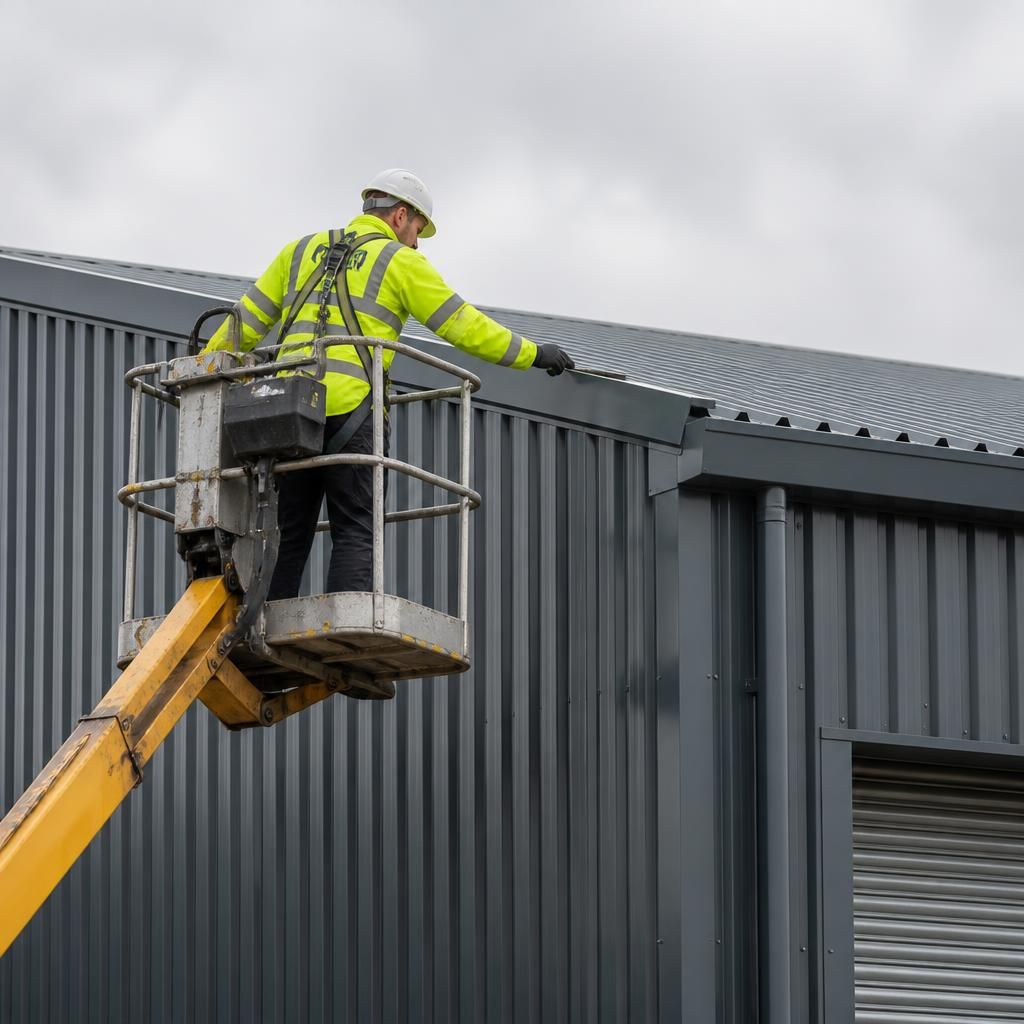
High-level inspections must be carried out safely, because roof sheets and translucent roof panels may not support a person’s weight. Do not walk directly on the roof to investigate suspected damage. Use suitable access equipment, such as a properly positioned access platform, or arrange an inspection by a competent professional.
From a safe position, check roof edges, ridge details, gutters, rooflights, flashings and sheet laps for visible deterioration or displacement. Where an area cannot be inspected safely from ground level, record it for planned professional assessment rather than taking an avoidable risk. Any access equipment should be kept clear of cladding and positioned so it cannot damage the building.