
What maintenance does a steel agricultural building require?
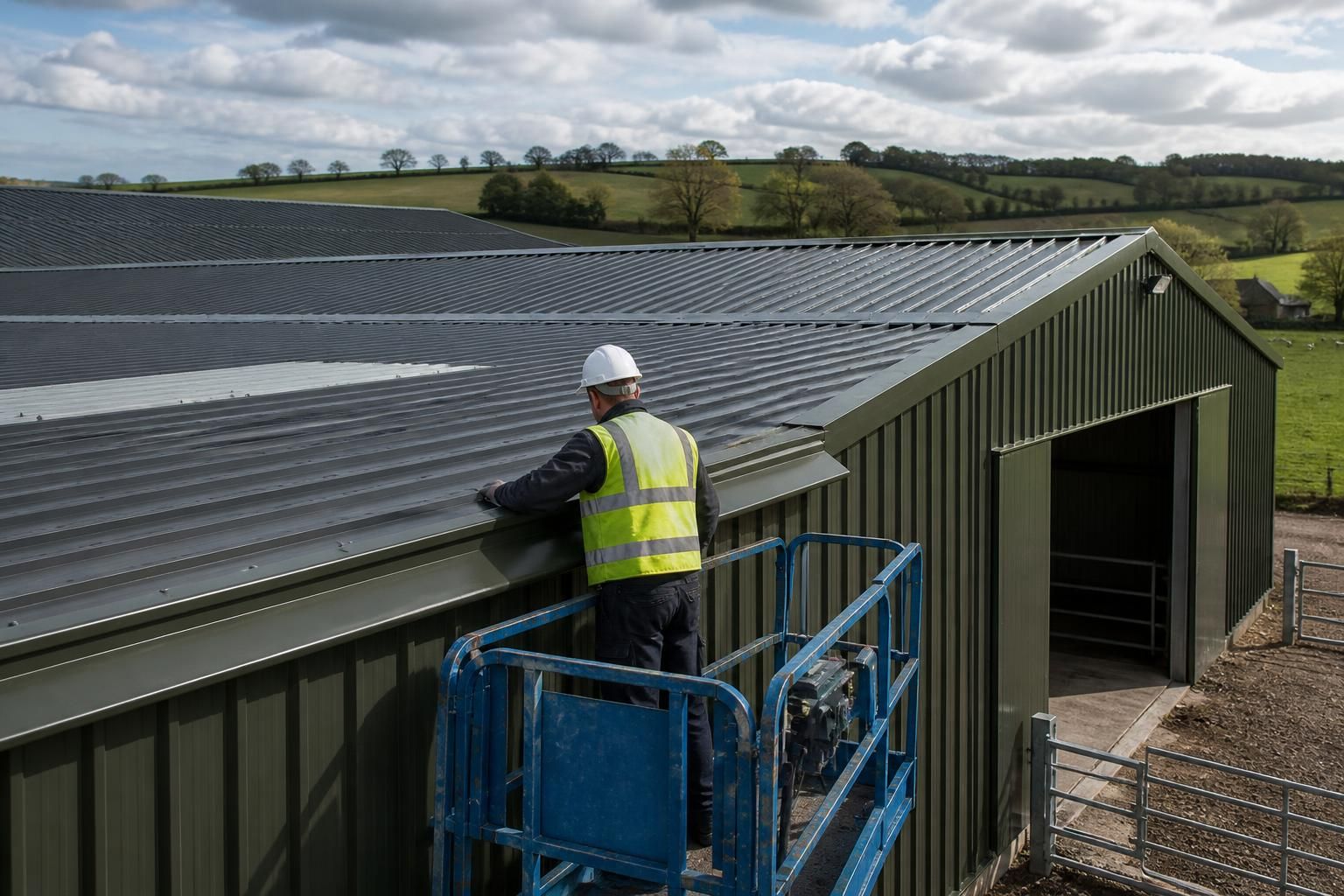
A steel agricultural building requires routine inspections of its frame, cladding, roof, fixings, gutters, doors and drainage, with defects repaired before they allow corrosion, leaks or structural deterioration to develop. Maintenance should also account for the building’s agricultural environment by removing accumulated dirt and moisture, checking areas exposed to livestock or machinery, and keeping ventilation and drainage clear.
Steel agricultural building maintenance is a planned process of preventing corrosion, controlling moisture, preserving protective finishes and ensuring that changes in use do not compromise the structure. The required work depends on the building’s location, exposure, age, materials, internal conditions and the activities carried out inside it.
Start with a written maintenance plan. Record the building’s construction details, cladding type, coating system, drainage arrangements and any manufacturer’s care instructions. Keep drawings and installation information available, particularly if equipment, storage systems or internal partitions may be added later. A simple log should note the date of each check, the areas examined, defects found, photographs taken and action completed. This makes gradual deterioration easier to identify and helps distinguish a new defect from an existing one.
Control the conditions inside the building. Agricultural buildings can be exposed to dust, fertiliser residues, chemicals, animal waste and high humidity. These contaminants can make protective coatings deteriorate more rapidly, especially where they remain on steel or are held against surfaces by stored materials. Good housekeeping reduces this risk. Avoid allowing materials, bedding or waste to remain in contact with steelwork, and leave enough clearance around components for air movement and access during future checks.
Ventilation should be considered as part of the building’s long-term care. Warm, humid air can condense on colder steel surfaces, while poor air circulation can leave moisture trapped in concealed or poorly ventilated areas. Where condensation is recurring, investigate the cause rather than simply cleaning the resulting water. The remedy may involve improving airflow, reducing internal moisture or reviewing the building’s insulation and vapour-control arrangements.
Maintain protective coatings correctly. Painted or coated steel should be cleaned using methods that remove contamination without damaging the finish. Abrasive tools and unsuitable chemicals can expose the underlying steel or create a rough surface that retains moisture. If coating damage is found, the area should be prepared to remove loose material and corrosion, then repaired with a compatible system in accordance with the coating manufacturer’s instructions. Touching up isolated damage at an early stage is generally more controlled than allowing corrosion to spread beneath the surrounding finish.
Do not assume that a visually sound surface is protected in every location. Cut edges, joints, fastener zones, exposed corners and areas where water or debris can collect deserve particular attention. Different metals in contact with one another may also create galvanic corrosion if moisture is present, so replacement components should be compatible with the existing construction.
Take account of agricultural use. The maintenance approach should reflect what happens in and around the building:
- Fertiliser, feed and chemical storage should be managed so that spills cannot remain against steelwork or coated surfaces.
- Livestock areas require careful control of moisture and corrosive contaminants, particularly where wash-down or manure handling takes place.
- Machinery movements should be managed to prevent impact damage to columns, bracing, cladding and protective finishes.
- Stored goods should not obstruct access to structural components or create unintended loads on parts of the building that were not designed to support them.
- Any change from storage to livestock housing, workshop use or another intensive application should prompt a review of ventilation, condensation and corrosion risks.
Manage alterations and attachments carefully. Drilling, welding, cutting or fixing new equipment to the frame can remove corrosion protection and may affect the design assumptions of the structure. New openings, conveyors, hoists, solar equipment, storage systems and internal partitions should be assessed before work begins. Exposed areas created during alteration need suitable repair, and any additional loads should be checked by a competent structural professional rather than assumed to be acceptable.
Use competent advice when defects are uncertain. Surface staining may be minor, but distortion, cracking, unexpected movement, significantly thinned steel, failed connections or repeated water ingress require a more detailed assessment. Do not conceal a suspected structural problem with paint or replacement lining. A suitably qualified person can determine whether the issue is cosmetic, related to corrosion, caused by impact or indicative of a wider structural concern.
Maintenance records should also include repairs, replacement materials and any changes to the building’s use. This information supports future inspections and helps ensure that later work is compatible with the original design. A practical maintenance regime therefore combines good housekeeping, moisture control, protection of coatings, careful management of alterations and documented professional assessment where necessary.
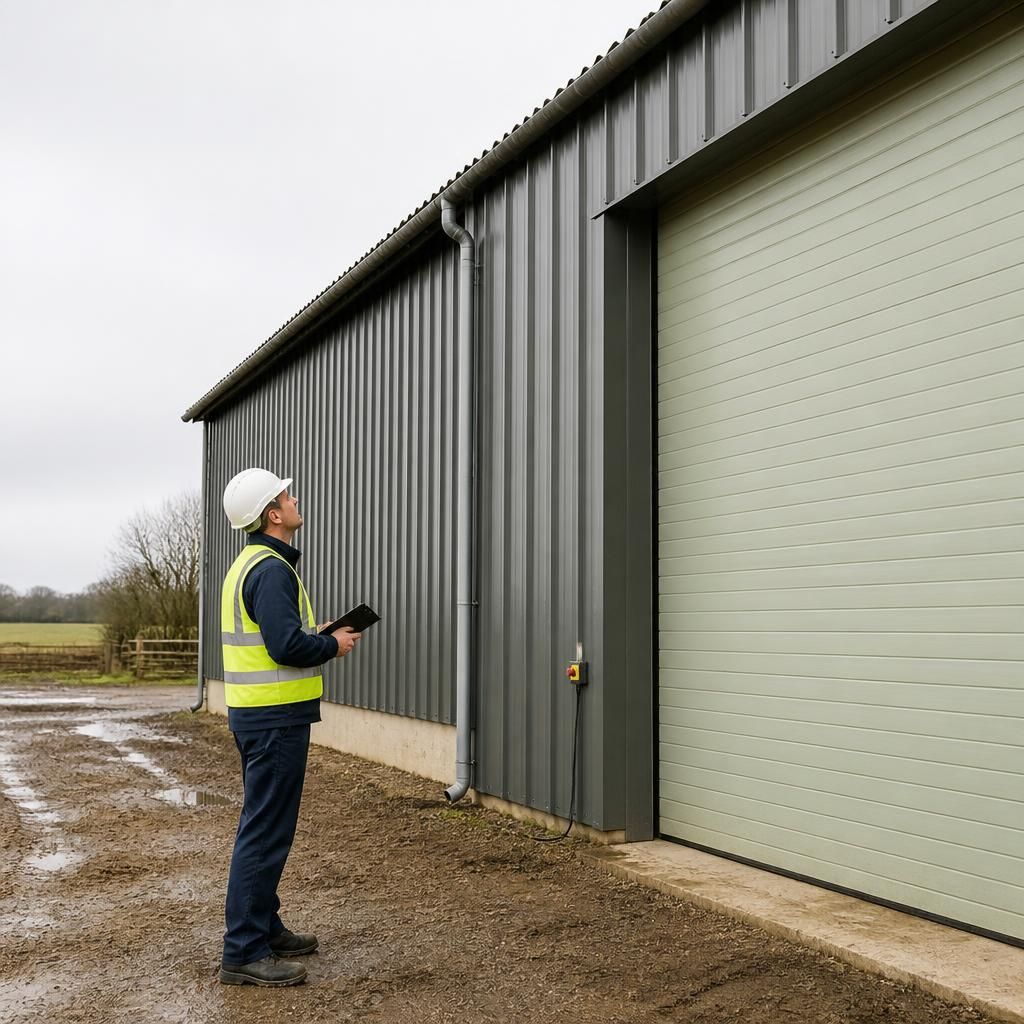
Doors and access equipment require their own maintenance checks because frequent operation, machinery contact and debris can affect alignment, weather resistance and safe movement. Inspect hinges, rollers, tracks, latches, seals and door frames for wear, distortion, looseness or damage. Keep tracks and moving parts clear, and lubricate components only where the manufacturer’s instructions permit it.
Repair damaged seals, bent panels and defective fasteners before water or wind can enter the building. A door that drags, does not close properly or has become difficult to operate may indicate damage to its hardware or surrounding frame. Do not force it back into alignment or alter the supporting steelwork without suitable assessment, particularly where the damage followed an impact.
Discuss Your Steel Agricultural Building Maintenance Requirements
Contact Buildings UK Ltd to discuss your steel agricultural building maintenance requirements and the information needed to plan suitable ongoing care. Their team can help you consider maintenance needs alongside the building’s design and intended agricultural use.