
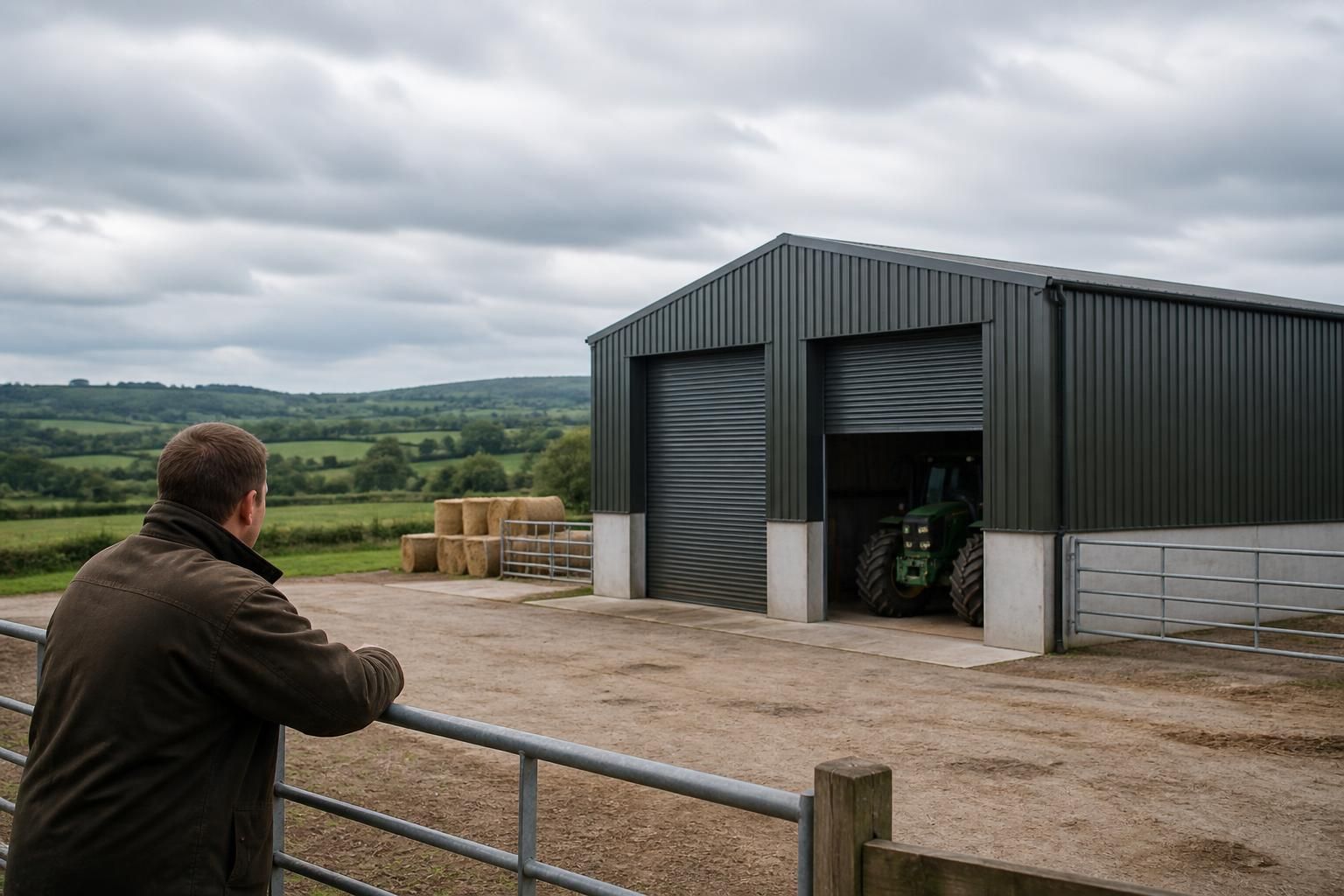
Is a small agricultural building suitable for your intended farm use?
Yes, a small agricultural building can be suitable for uses such as machinery storage, feed storage, livestock shelter or workshop space, provided its dimensions and specification match the intended farm activity. Consider the equipment, materials or animals it must accommodate, along with access, ventilation, internal height and possible future requirements, before finalising the design.
A small agricultural building is suitable when it can accommodate the intended activity without restricting safe working, storage, animal welfare or day-to-day movement around the farm. The key test is not the building’s footprint alone, but whether its usable capacity, structure, services and layout correspond with the job it must perform.
Small buildings are often effective as dedicated spaces rather than as general-purpose farm buildings. Separating a particular activity from the main yard can make stock, materials, tools or machinery easier to organise and protect. A compact structure may also be appropriate where the farm needs an additional enclosed area but does not require a large-span building. This approach can avoid paying for unused space, while keeping the design focused on a defined operational need.
Before deciding on the size, assess the items or activities that will occupy the building throughout the year. Record the dimensions and operating requirements of fixed equipment, vehicles, storage systems and handling equipment. Allow room for loading, unloading, inspection and maintenance rather than measuring only the objects themselves. If the building will contain animals, welfare requirements, cleaning arrangements, bedding management and separation from other farm activities must also be considered.
The building’s proposed role should determine its specification. A dry store may need different wall, roof and floor arrangements from a space used for regular washing, maintenance or livestock management. Consider the following points:
- Floor construction: the slab and sub-base should suit the expected loads, traffic and working conditions. Wet or dirty uses may require falls, drainage and surfaces that can be cleaned effectively.
- Weather protection: the roof, cladding, openings and junctions should be selected to protect the contents and maintain a suitable internal environment.
- Ventilation and daylight: the amount and type of ventilation should reflect moisture, dust, heat and animal welfare requirements. Natural daylight can improve visibility in regularly occupied spaces, although it should not replace suitable task lighting where this is needed.
- Security: doors, locks, lighting and the position of openings should reflect the value and sensitivity of what is stored inside.
- Services: electricity, water, drainage and any specialist installations should be considered at the design stage, even if they are not all required immediately.
A compact building can become unsuitable if its structure is designed around an overly narrow assumption of use. For example, a storage-only arrangement may not provide the openings, floor capacity or service routes needed if the space later becomes a workshop or handling area. It is therefore sensible to identify likely changes in farming practice and discuss them before the frame and foundations are finalised. This does not mean specifying an unnecessarily large building; it means avoiding a layout that prevents practical adaptation.
The proposed location also affects whether a small building works well. Check how it relates to existing yards, drainage, utilities, stock routes, field access and neighbouring structures. A building that is technically large enough may still be inefficient if it creates awkward manoeuvres, interrupts established farm operations or leaves insufficient room for maintenance. Site levels and ground conditions should be confirmed before the structural design is completed, as these can influence foundations, floor construction and drainage requirements.
Planning and building control requirements should be checked before committing to the design. Agricultural use does not automatically remove the need for approvals, and the relevant requirements can depend on the site, building use, dimensions and local circumstances. A professional design package can help establish the proposed arrangement clearly, including planning elevation drawings and fabrication information where required.
Buildings UK Ltd provides bespoke British-made, CE-marked hot rolled steel framed building designs for agricultural applications. The project can be developed as a building kit or with an erection service, depending on the customer’s preferred approach. For a small agricultural building, the most useful starting point is a precise description of the activity, contents, working methods and site limitations. That information allows the design to be judged on practical suitability rather than floor area alone.
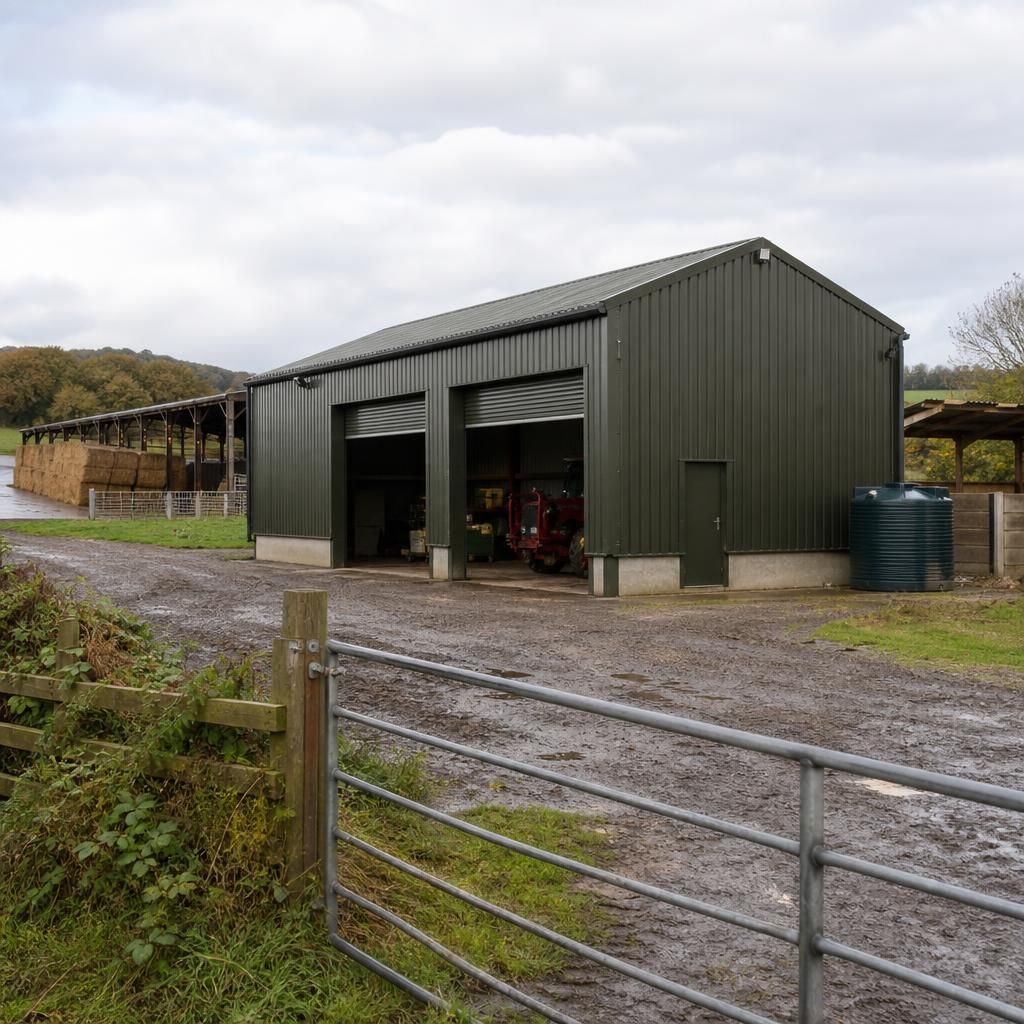
A small agricultural building should be assessed against peak seasonal demand, not only its average daily use. Machinery, feed, bedding or produce may require considerably more space at particular points in the farming calendar, so a building that appears adequate during quieter periods can become restrictive when several items need to be stored or handled at once.
List the activities that coincide during the busiest part of the year and test whether the proposed building can support them without repeatedly moving contents elsewhere. If demand is highly seasonal, a compact structure may still be appropriate for a clearly defined role. If several operations overlap regularly, a larger or differently arranged building may provide a more practical solution than relying on temporary outdoor storage or constant rearrangement.
Discuss your small agricultural building requirements
Discuss your small agricultural building requirements with Buildings UK Ltd, including the intended use, site constraints and any potential changes to your farming operation. This will help establish a practical specification before design work begins.