What does EN 1090-2 cover in structural steel fabrication?
EN 1090-2 sets the technical requirements for executing structural steelwork, covering materials, fabrication, welding, tolerances, inspection and documentation. It provides the framework for controlling how steel components are manufactured and assembled so the finished structure meets its specified design and quality requirements.
EN 1090-2 is the European standard for the technical execution of structural steelwork. It defines how steel components and assemblies are to be prepared, fabricated, joined, protected, transported and erected so that the completed work conforms to the design specification. It is concerned with the process and workmanship used to create the structure, rather than replacing the engineer’s design calculations or specifying the building’s loads.
The standard is used alongside the relevant structural design rules, project specification and product standards. In practice, it provides a common reference for the steelwork contractor, designer, inspector and client. This helps establish what has to be controlled, recorded and verified before the steelwork is accepted.
Scope of the standard
EN 1090-2 applies principally to structural steelwork made from hot-rolled products, hollow sections, plates and other steel components. Its requirements can apply to individual members, fabricated assemblies and complete steel structures. The project specification normally identifies which parts of the standard are relevant and whether additional requirements are needed for the particular use, environment or design.
The standard addresses areas including:
- the selection, identification and condition of constituent steel products;
- cutting, forming, drilling, machining and the preparation of edges and surfaces;
- the fit-up and assembly of components before joining;
- welded joints, bolted connections and other mechanical fasteners;
- dimensional and geometric tolerances;
- surface preparation and corrosion-protection systems where specified;
- inspection, testing and the correction of defects or non-conforming work; and
- records needed to demonstrate that the specified requirements have been followed.
Execution classes
One of the most important features of EN 1090-2 is its use of execution classes, designated EXC1 to EXC4. The class reflects the consequences of failure, the complexity of the structure and the level of control required during manufacture and erection. EXC1 represents the least demanding class, while EXC4 applies where the consequences of failure or the execution risks require the highest level of control.
The execution class is not selected solely by the fabricator. It should be established through the design and project requirements, taking account of the structure’s use, loading, risk and service conditions. A higher class can affect welding controls, inspection, personnel competence, documentation, tolerances and the treatment of non-conformities. The class should therefore be stated clearly in the project documentation rather than assumed from the appearance or size of the steelwork.
Welding requirements
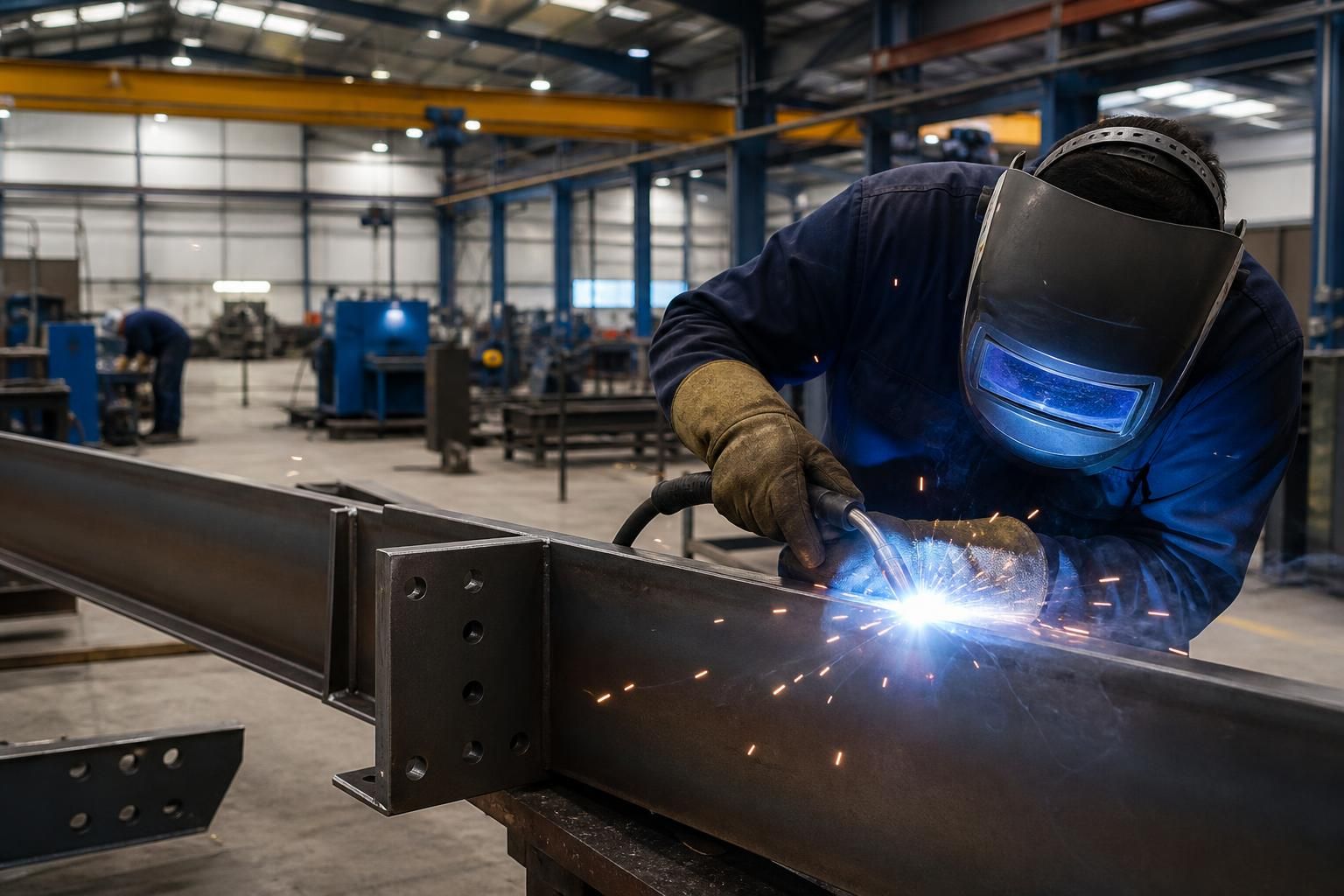
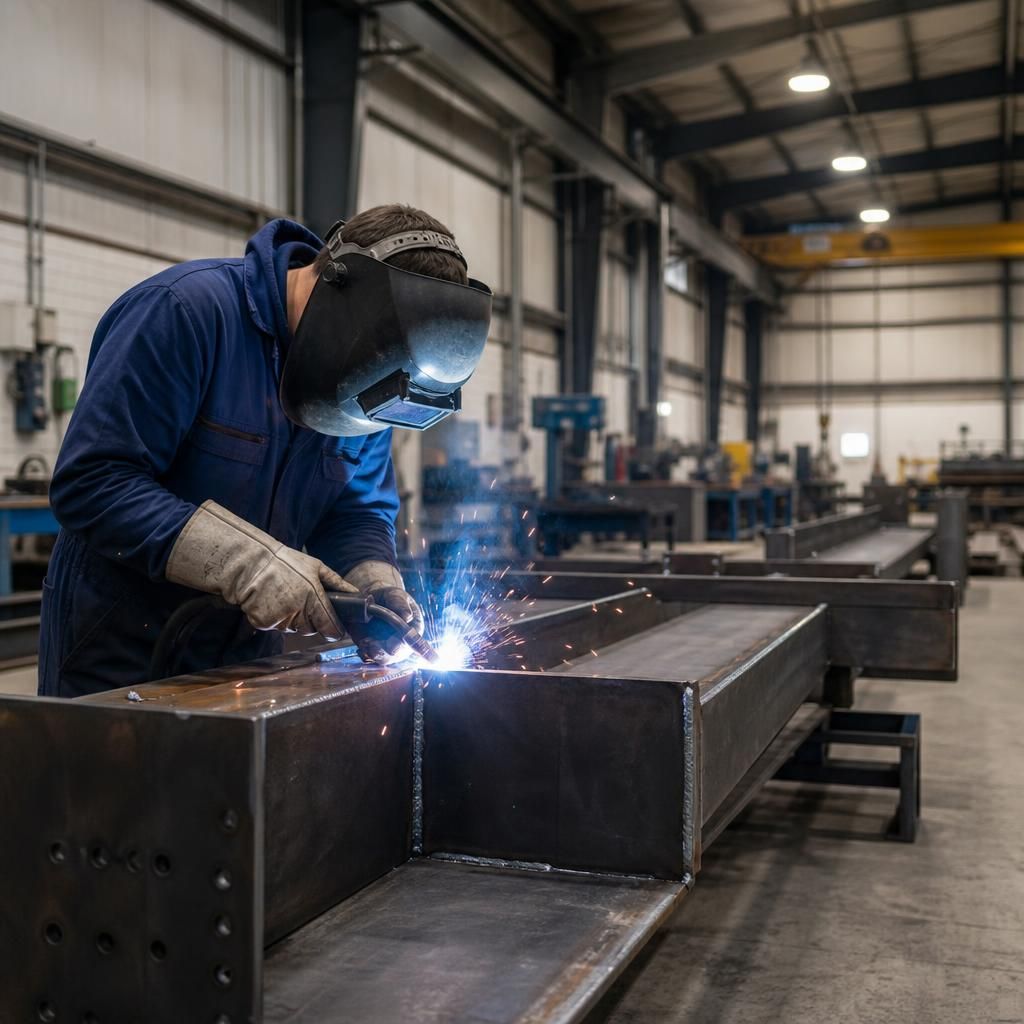
For welded construction, EN 1090-2 works with the wider welding quality framework. The contractor needs suitable welding procedures, competent welding personnel and appropriate control of consumables, joint preparation, preheating and welding conditions. Welding procedure specifications describe how a joint is to be made, while qualification records demonstrate that the procedure can produce an acceptable result where qualification is required.
Inspection may include visual examination and, depending on the execution class and joint requirements, non-destructive testing such as magnetic particle, ultrasonic or radiographic examination. The extent and method of testing should be set by the applicable requirements and project specification. A weld is not judged simply by whether it looks complete; its quality must be assessed against the relevant acceptance criteria.
Materials and traceability
Steel products must be suitable for the design and identifiable through the fabrication process. Material certificates, cast or batch references and component markings can be used to maintain traceability, particularly where the execution class or project specification calls for it. This allows the fabricator to link a finished member or welded part back to the specified material grade and associated quality information.
Traceability does not necessarily mean that every small piece must be individually marked in the same way. The required system depends on the execution class, the product and the project documentation. What matters is that the method provides the level of identification and control required for the work.
Bolted connections and fabrication accuracy
EN 1090-2 also covers the practical control of bolted joints. This includes the suitability and identification of fasteners, hole preparation, joint fit-up and, where specified, the method used to achieve the required tightening condition. Friction-grip connections require particular attention because their performance depends on the condition of the contact surfaces and the correct installation of the fasteners.
Dimensional control is another significant part of execution. The standard distinguishes between essential tolerances, which can affect structural performance or assembly, and functional tolerances, which relate to fit, appearance or the intended use of the structure. Measurements may be required during fabrication and after erection to confirm that members, holes, levels, alignments and interfaces are within the specified limits.
Surface preparation and protection
Where steel is to be painted or otherwise protected against corrosion, the required surface condition must be achieved before the protective system is applied. EN 1090-2 sets execution-related requirements for preparation and application, while the selected coating system and corrosion category are normally defined by the project specification or the relevant corrosion-protection standards.
Areas such as site welds, bolted interfaces, crevices and damaged coatings need to be considered because they can require different treatment from the main surfaces. Fire protection is also not determined by EN 1090-2 alone. Its specification depends on the building’s fire strategy, the required fire resistance and the selected protection system.
Inspection and documentation
Compliance is demonstrated through planned quality control rather than a final visual check alone. Typical project records may include material documentation, fabrication drawings, weld procedure and welder records, inspection reports, non-conformance reports, dimensional checks and information relating to surface treatment. The precise records depend on the execution class and contract requirements.
Where a deviation is found, it should be assessed and dealt with through an agreed process. Possible actions include repair, replacement, acceptance subject to technical justification or further inspection. Unrecorded correction of defects can make it difficult to establish whether the finished steelwork satisfies the design and execution requirements.
What EN 1090-2 does not do
EN 1090-2 does not determine the structural design, member sizes, imposed loads, foundation design or overall building regulations strategy. Those matters are addressed through the engineer’s design, the applicable Eurocodes or other specified design standards, and the project’s regulatory requirements. EN 1090-2 begins where the design requirements need to be translated into controlled fabrication and erection activities.
It is also distinct from the conformity-assessment requirements associated with the supply of structural components. Those requirements may involve a separate standard and the legal marking regime applicable to the project and market. For that reason, EN 1090-2 compliance should be considered as part of the complete design, manufacturing, supply and regulatory documentation package, not as an isolated certificate.
EN 1090-2 covers the erection of structural steelwork as well as its manufacture in the workshop. This means the execution requirements continue on site, where components must be assembled in the intended sequence and the partly completed structure kept stable throughout the work.
Erection planning should account for temporary supports, lifting arrangements, site conditions, connection access and the sequence needed to achieve the specified geometry. The completed frame may then be checked against the project requirements before it is accepted. Treating erection as part of execution helps ensure that correctly fabricated components are assembled safely and perform as intended in the finished structure.
Discuss your EN 1090-2 structural steel requirements
If you are defining EN 1090-2 requirements for a new or existing steelwork project, discuss the execution class, fabrication documentation and inspection needs with Buildings UK. Their team can help relate the standard to your structural steel design and project specification.