
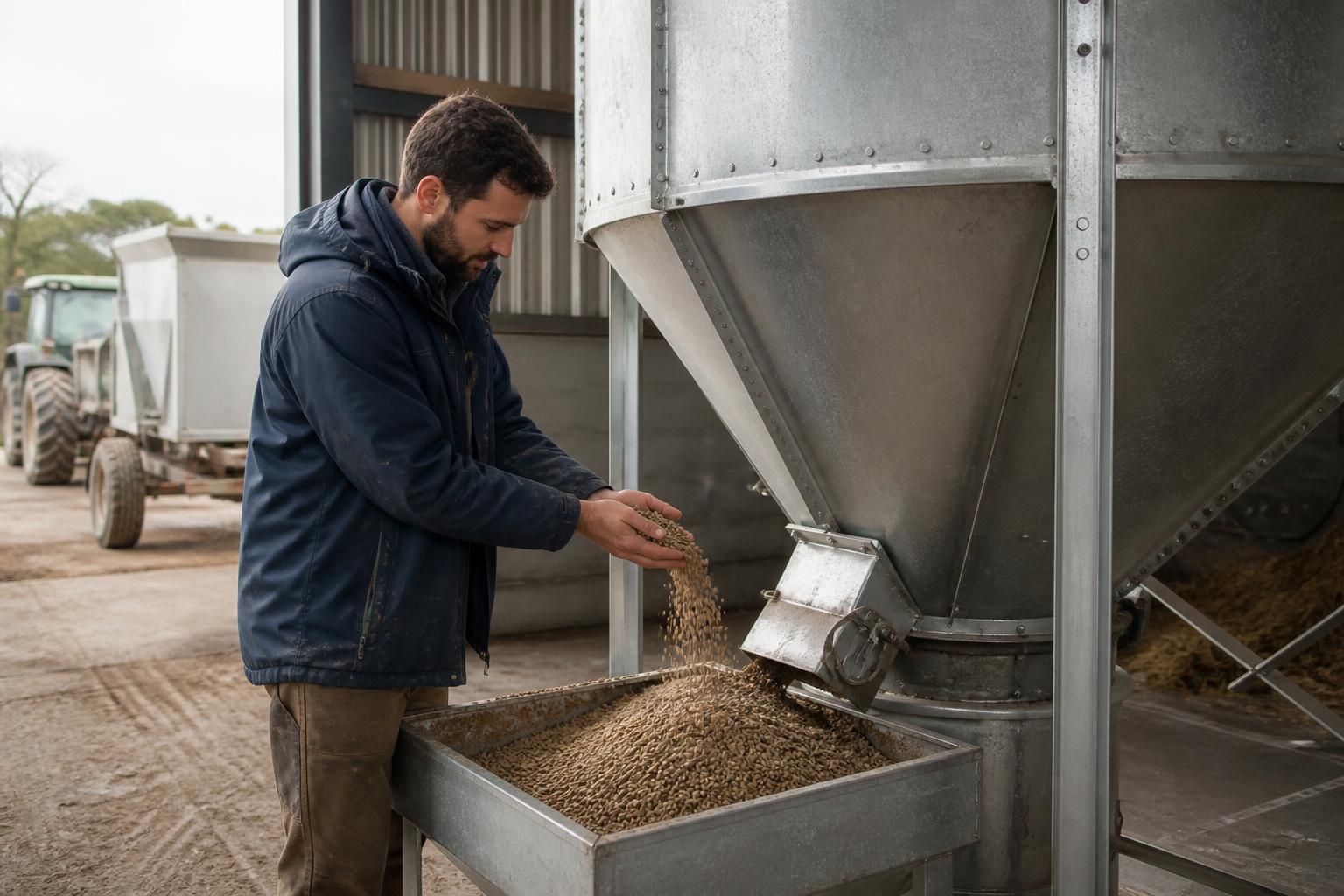
Which livestock feeds can be stored in feeding bins?
Feeding bins can store dry, free-flowing livestock feeds such as whole or rolled grain, compound pellets, coarse mixes and powdered concentrates. The feed must be suitable for the bin’s outlet and handling system, with moisture, bridging, segregation and contamination controlled through correct storage and management.
Feeding bins are suitable for stable, low-moisture feeds that can discharge reliably by gravity or through a mechanical conveying system. Typical contents include cereal grains, pelleted rations, compound feeds, meal-based concentrates, protein blends and selected mineral or vitamin supplements, provided the bin, outlet and handling equipment are designed for the material.
Cereal grains such as wheat, barley, maize and oats are commonly stored in bins in whole, cleaned or processed form. Rolled or lightly processed grain can also be suitable, although its increased surface area may make it more prone to compaction and deterioration if stored with excessive moisture. The grain should be screened for foreign material before filling, as straw, stones and clumps can obstruct outlets or damage augers.
Pelleted feeds generally handle well because their consistent shape and density allow them to flow through a correctly sized outlet. They may include compound cattle feed, calf pellets, sheep feed, pig feed or poultry rations. Pellet durability still matters: excessive fines created during transport can collect at the base of the bin, while damaged pellets may separate from larger pieces and affect the consistency of the ration.
Meal and coarse mixtures can be stored successfully, but they need closer consideration than uniform pellets. Fine meal may compact, bridge above the outlet or form a channel through the centre of the bin, leaving material against the walls. Coarse blends may segregate during loading, particularly where the ingredients differ significantly in particle size or density. Bin geometry, outlet dimensions and the type of discharge equipment should therefore be assessed against the specific feed rather than relying solely on its stated capacity.
Protein concentrates, mineral blends and premixes are suitable where the bin and conveying arrangement can handle their density and fine particle size. These products are often used in smaller quantities and may require dedicated storage to prevent dilution, contamination or accidental mixing with another ration. Some mineral products are abrasive or hygroscopic, so the specification should account for wear and the risk of absorbing moisture from the air.
Feeds that are wet, sticky, fibrous or liable to ferment are generally unsuitable for a conventional dry feed bin. Examples include silage, fresh forage, hay, straw, wet brewers’ grains and other high-moisture by-products. These materials can adhere to the walls, block the outlet, deteriorate in storage or create cleaning problems. Feed with a high oil or molasses content may also require specialist equipment because it can bind fines and reduce reliable flow.
Before selecting a bin, assess the feed’s:
- moisture content and sensitivity to condensation;
- particle size, shape and proportion of fines;
- bulk density and likely weight at full capacity;
- tendency to bridge, compact, segregate or absorb moisture;
- abrasiveness and compatibility with augers or other conveyors; and
- required discharge rate and the number of feed points it must serve.
Storage conditions are as important as the feed category. The bin should remain weather-tight, with sound seals, a protected filling point and arrangements that limit condensation. Feed should be rotated according to its storage stability, and older material should not be left beneath repeated top-ups. Regular inspection helps identify caking, unusual odours, insect activity, damaged seals or changes in flow before the problem affects feeding.
Where several feeds are stored on the same farm, separate bins or carefully managed compartments are preferable to repeated use of one vessel. A bin that has held medicated feed, minerals or a strongly formulated ration may need thorough cleaning before another product is introduced. The final choice should be based on the manufacturer’s handling guidance, the feed supplier’s recommendations and the complete discharge system, not simply on whether the material appears dry.
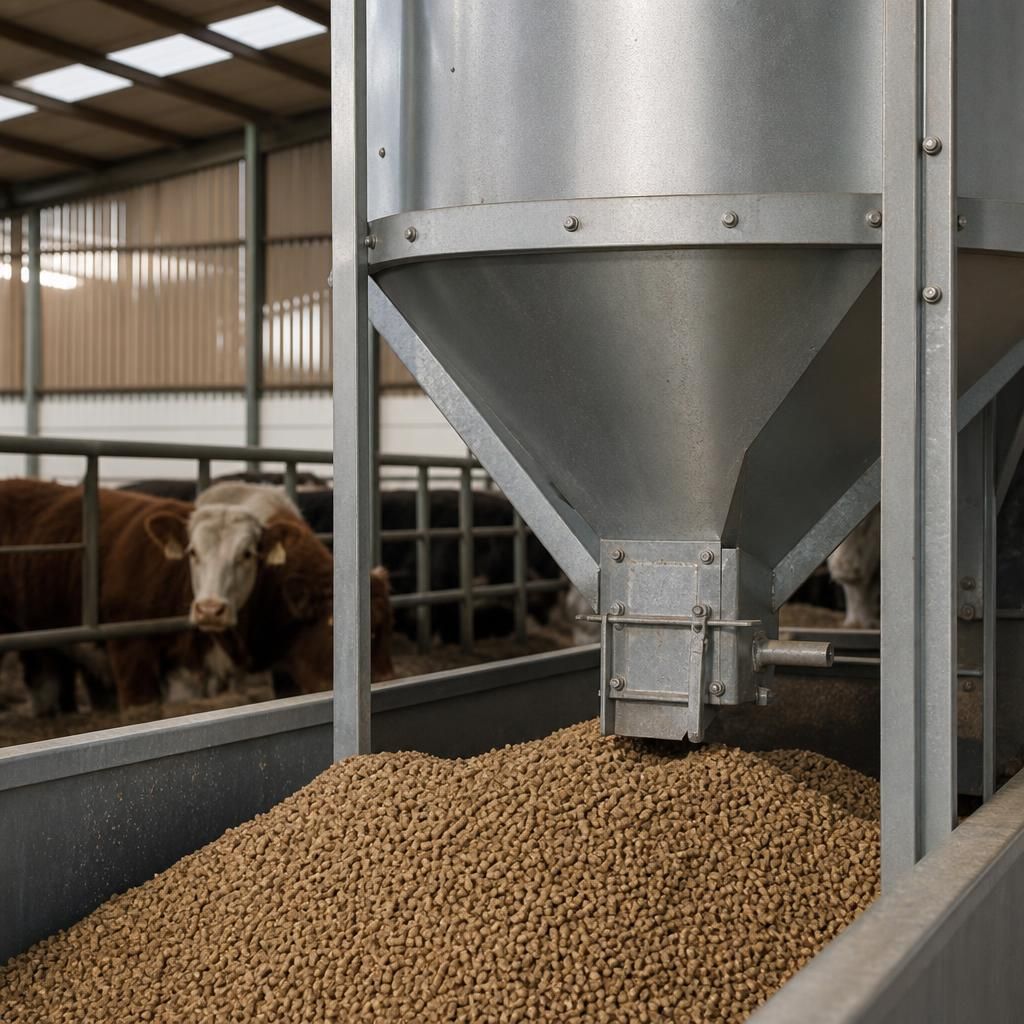
Whether a feed is suitable also depends on how it arrives at the farm. Bulk-delivered grain and compound feed can usually be blown or augered into a bin, while bagged or hand-mixed products may be better kept in smaller, purpose-built storage. The filling method should match the feed’s physical properties and avoid excessive impact, dust or breakdown during transfer.
For farms using several rations, identify each bin clearly by feed type and intended livestock group. This reduces the risk of loading the wrong product and helps ensure that a bin is emptied and checked before a different feed is introduced.