
What drainage requirements matter for a dressage arena surface?
A dressage arena surface needs a stable, well-drained formation, suitable falls, and an effective route for collected water to leave the arena without causing erosion or pooling. The specification should consider the site’s soil, groundwater, perimeter drainage, outfalls or soakaways, and the interaction between the drainage layer and the chosen riding surface.
The essential drainage requirement for a dressage arena surface is a continuous, stable drainage system that removes water through the full construction profile rather than relying on the riding surface alone. The design should keep the arena level enough for accurate work, prevent water from entering from surrounding ground, and discharge collected water in a controlled and legally suitable way.
Drainage should be considered as part of the complete arena build-up. The formation must be shaped and prepared so that water can move towards the drainage infrastructure without creating soft spots or differential settlement. Any weak, organic or disturbed material in the subgrade may need to be removed or improved before the drainage layers are installed. If this preparation is inadequate, the arena can develop depressions where water remains trapped, even when the upper surface appears permeable.
The layer arrangement is also important. A typical specification may include a prepared formation, separation or filtration layer, free-draining stone, perforated carrier drains and the riding surface. Each layer has a distinct function. The stone layer provides voids for water movement, while a suitable geotextile can help prevent fine soil migrating upwards and blocking those voids. The chosen membrane must be compatible with the ground conditions and aggregate; an unsuitable separator can restrict flow or become damaged during construction.
Perforated drainage pipes should be positioned to collect water from the drainage layer and convey it towards an approved discharge point. Their layout depends on the arena dimensions, the permeability of the ground and the volume of water expected on the site. Pipe runs should have a consistent fall, be surrounded by appropriate clean drainage stone and be protected from fines entering through the perforations. Access points or inspection chambers can assist with checking the system and dealing with blockages without disturbing the riding surface.
Surface water from outside the arena must be dealt with separately where there is a risk of it flowing towards the riding area. Sloping land, hardstanding, roofs, gateways and adjacent tracks can all introduce additional runoff. Interceptor or cut-off drainage around the uphill side of the arena may be required to divert this water before it reaches the arena construction. The drainage design should also prevent concentrated flows from discharging onto the arena edge, where they could wash out the surface or expose the stone layers.
The intended outlet needs as much attention as the drains themselves. Depending on the site, water may be directed to a suitable watercourse, existing drainage system or designed soakaway. A soakaway is only appropriate where ground conditions, available space and groundwater levels allow infiltration. In clay or poorly draining soils, it may not function effectively without an alternative arrangement. The discharge route should be confirmed during the design stage, including any permissions, restrictions or requirements imposed by the local authority, water authority or land drainage body.
Groundwater presents a different problem from rainfall runoff. A high or seasonally rising water table can reduce the capacity of the drainage layers and may cause persistent saturation beneath the arena. Site investigation should therefore consider soil structure, existing ditches, nearby water bodies and evidence of seasonal wetness. Where groundwater is a concern, the specification may need additional measures to separate the arena from saturated ground and maintain the required drainage performance.
The surface material must be selected with the drainage system in mind. Fine particles can migrate into the drainage layer, particularly if the surface is overworked, contaminated with soil or installed over an unsuitable membrane. Conversely, an overly open surface may drain quickly but fail to retain enough moisture for consistent going. The specification should balance water movement, moisture retention, stability and the requirements of the horses’ work rather than treating drainage as an isolated civil engineering element.
Construction quality can determine whether the designed drainage performs as intended. The formation and aggregate layers need to be placed to the specified profile and compacted without crushing the stone or closing the voids required for water flow. Pipes should be checked for correct levels and continuity before they are covered. Materials should be kept free from soil contamination during installation, and heavy plant should not be allowed to damage membranes or disturb completed drainage runs.
Drainage should be assessed before the riding surface is laid. Checks may include confirming falls, inspecting chambers and outlets, verifying that pipes are clear and observing whether water moves through the drainage layer as expected. The final surface should then be installed at the specified depth and maintained so that routine grading does not cut into the underlying layers or push surface material against the perimeter.
Maintenance requirements should be included in the original specification. Keep perimeter channels, gullies, inspection chambers and outlet points free from leaves, silt and vegetation. Repair damage to edging promptly, because broken edges can allow surface material to migrate into the drainage system. Regular grading should restore the intended surface profile without creating a raised perimeter or low central area. If puddles persist, the cause should be investigated rather than concealed with additional surface material; possible causes include compaction, blocked pipes, settlement, contaminated aggregate or a failed outlet.
A suitable drainage design is therefore site-specific. Before selecting a dressage arena surface, assess the ground, anticipated runoff, groundwater, construction layers, pipe arrangement, discharge route and future maintenance method as one coordinated specification. A bespoke design package can help translate those requirements into planning elevations and fabrication or construction information, allowing the arena layout and associated steelwork or boundary details to be coordinated with the groundworks.
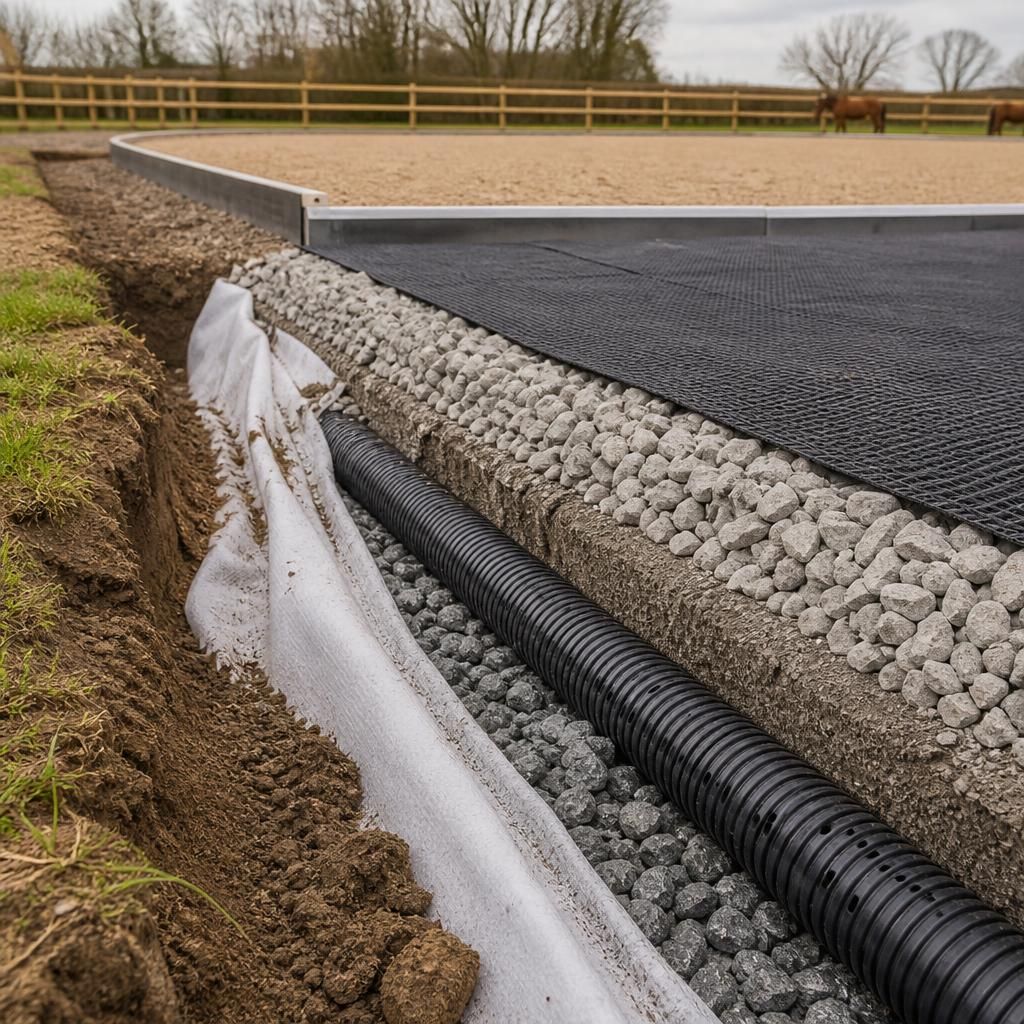
Soakaway suitability should be established through site investigation rather than assumed from the apparent permeability of the topsoil. An infiltration assessment can indicate whether the ground will accept collected water, while trial pits or boreholes can reveal compacted layers, clay, made ground and seasonal groundwater that may restrict drainage performance.
Useful information to obtain before finalising the dressage arena surface specification includes:
- the soil sequence beneath the proposed arena and discharge area;
- evidence of standing water or a seasonally high water table;
- the presence of nearby ditches, watercourses, land drains or buried services;
- the proposed soakaway location and its separation from buildings, boundaries and other infrastructure; and
- the likely effect of roof, track and hardstanding runoff on the drainage system.
This evidence helps determine whether infiltration is appropriate or whether a different controlled discharge arrangement is needed. It also prevents the riding surface from being selected before the ground conditions and drainage route are properly understood.
Discuss your dressage arena surface drainage requirements
Discuss your proposed dressage arena surface and drainage requirements with Buildings UK Ltd, so the site information and intended specification can be considered together. Request the design information needed before planning and construction.