
What affects the duration of steel building erection?
Steel building erection duration is mainly affected by the frame’s size and complexity, design readiness, ground and foundation conditions, site access, weather, and the coordination of deliveries and erection work. Clear fabrication information, a prepared site and experienced supervision can help reduce avoidable delays.
Steel building erection duration depends on the amount of work that must be completed on site, the chosen erection method and how smoothly the frame interfaces with the rest of the project. The lifting and bolting of the primary frame may represent only one stage of the programme; secondary steelwork, temporary stability measures, inspections and follow-on work can also affect the date when the building is ready for use.
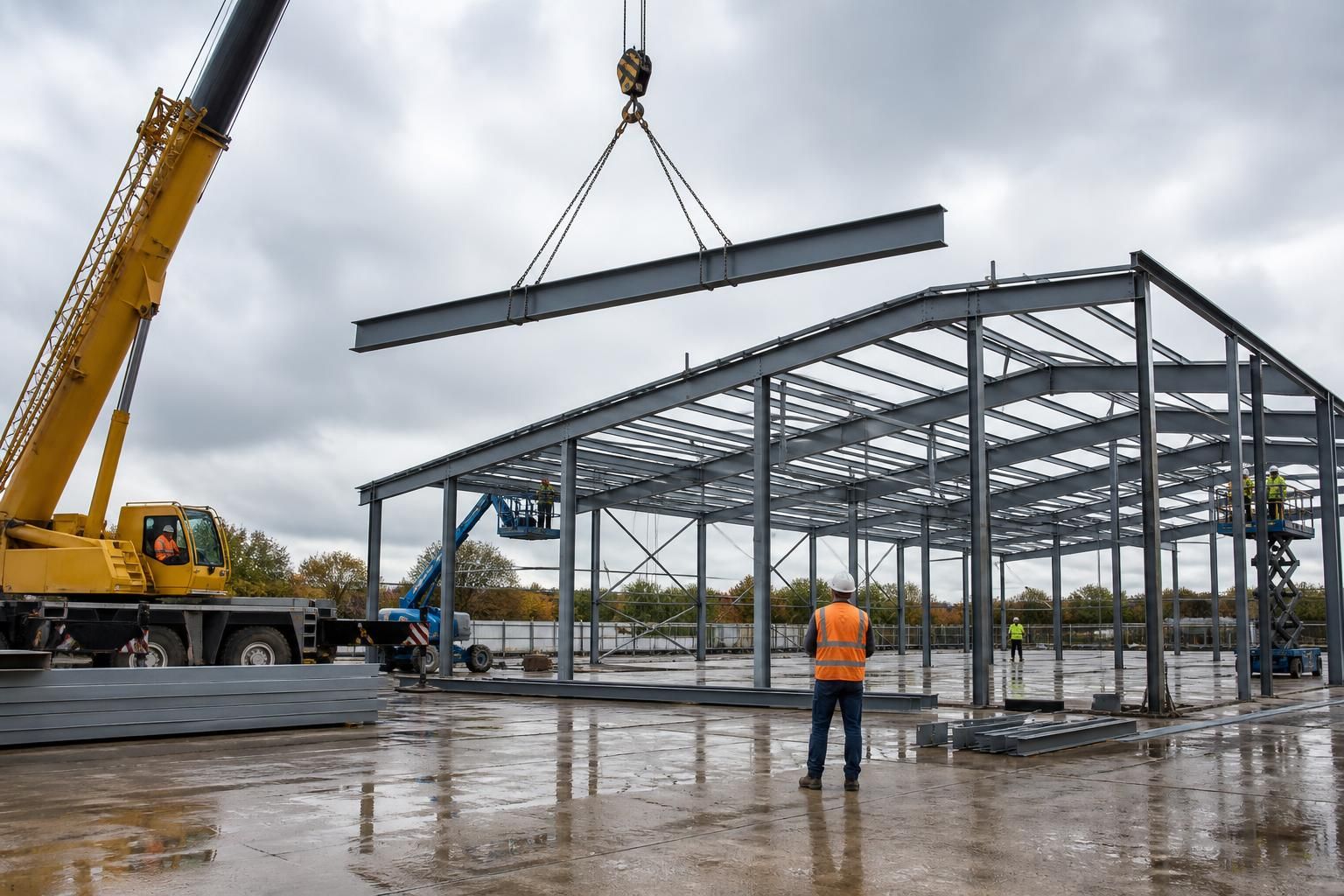
The erection method has a direct influence on the programme. Frames assembled from bolted connections can often be positioned and secured in a planned sequence, whereas site welding introduces additional preparation, equipment and inspection requirements. Pre-assembling suitable sections at ground level may reduce work at height, but it requires sufficient space and lifting arrangements. A contractor should confirm the proposed sequence, connection method and temporary works before work begins, rather than judging duration from the frame’s overall tonnage alone.
Temporary stability is another important consideration. Steelwork may need temporary bracing, guying or other restraints until enough permanent members, purlins and cladding are installed. These measures are essential to maintain stability during construction and can add operations to the erection sequence. The removal of temporary supports must also be planned so that it does not conflict with the installation of permanent steelwork or other building elements.
The number and type of lifting operations affect how efficiently the work can proceed. Individual members may be lifted directly into position, while larger assemblies may be prepared before lifting. The selected crane and lifting accessories must be suitable for the loads and working radius, and each lift must follow the agreed method statement and lift plan. Restrictions on when particular lifts can take place, or the need to reposition equipment between work areas, can extend the programme even where the frame itself is straightforward.
Workforce organisation also matters. The programme may involve separate activities such as setting out, assembling members, making connections, installing secondary steelwork and checking completed sections. These tasks can sometimes run in parallel, but only where the sequence is safe and the preceding work has been inspected and accepted. A larger workforce does not automatically shorten the programme if the site cannot safely support additional people or if teams are waiting for the same work area.
Duration is also affected by the scope included in the erection package. Some quotations cover the primary steel frame only, while others include secondary steelwork, bracing, metal decking, stairs, edge protection or associated items. Cladding, doors, concrete floors, insulation, services and internal fit-out may be carried out by different trades and should not be confused with the frame erection period. Establishing the precise scope avoids treating a longer overall construction programme as a delay to steelwork.
Inspection and approval points can add planned time to the sequence. Connections, tolerances, base positions and the alignment of members may need checking before the next stage is released. If an inspection identifies a misplaced item, a connection issue or a component that requires adjustment, corrective work can interrupt subsequent activities. Allowing for these checks is more realistic than assuming that every member will be accepted without intervention.
Changes after fabrication has started are particularly disruptive. Altering openings, roof arrangements, imposed loads, connection details or the position of attached equipment may require revised drawings, replacement components or additional fabrication. Even a small change can affect the erection sequence if it involves a member already delivered or one needed to stabilise adjacent steelwork. Design decisions should therefore be settled before manufacture wherever possible, with any later changes formally assessed for their effect on the programme.
Coordination with other contractors can influence when the frame is released for the next stage. For example, a steelwork team may need to leave clear working zones for concrete operations, or cladding may depend on particular sections being aligned and signed off. Site rules, permit procedures and shared lifting areas can also limit how many activities take place at once. These interfaces should be included in the construction programme rather than treated as separate administrative matters.
For a more reliable estimate, ask the erection contractor to identify:
- the work included in the erection package and what is excluded;
- the proposed erection sequence and any temporary stability arrangements;
- the lifting equipment, assembly areas and planned work zones;
- inspection, hold-point and handover requirements;
- the assumptions made about other trades and site operations; and
- the effect of potential design changes or additional work.
The most useful programme separates frame erection from the wider building schedule and shows the dependencies between each activity. This makes it easier to identify whether a delay relates to steelwork itself, an approval, a change in scope or an interface with another contractor.
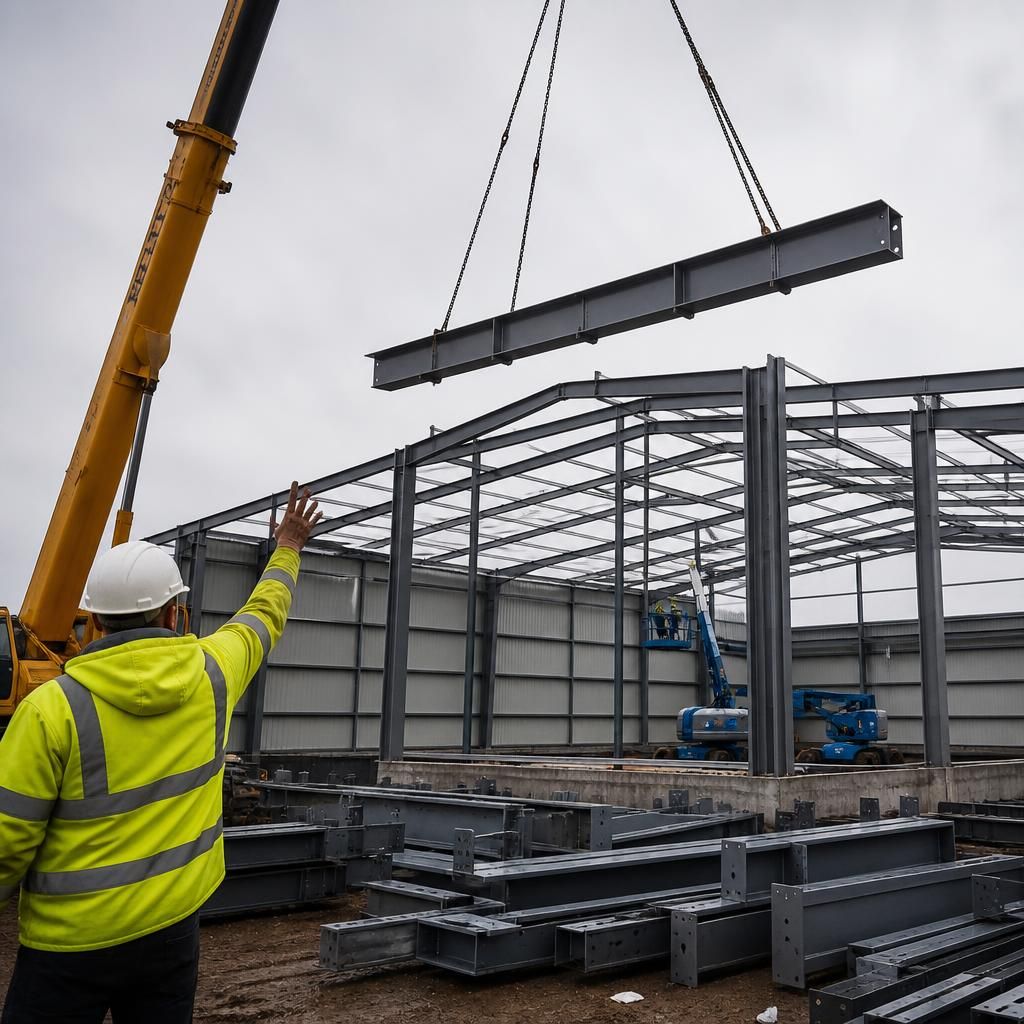
Weather can alter steel building erection duration because lifting and working at height depend on safe site conditions. High winds may prevent crane operations or the handling of large steel members, while heavy rain can affect access, visibility and the safe use of equipment. Frost, standing water or saturated ground may also restrict vehicle and plant movements, particularly where temporary access routes are being used.
A well-planned programme should identify which activities can continue during unsuitable weather and which require a pause. Ground-level preparation, checking components or completing documentation may remain possible, but suspended lifting operations should only resume when conditions comply with the lift plan, equipment limits and site safety requirements. Allowing weather-sensitive activities to affect the sequence, rather than treating them as unexpected interruptions, gives a more realistic erection duration.