
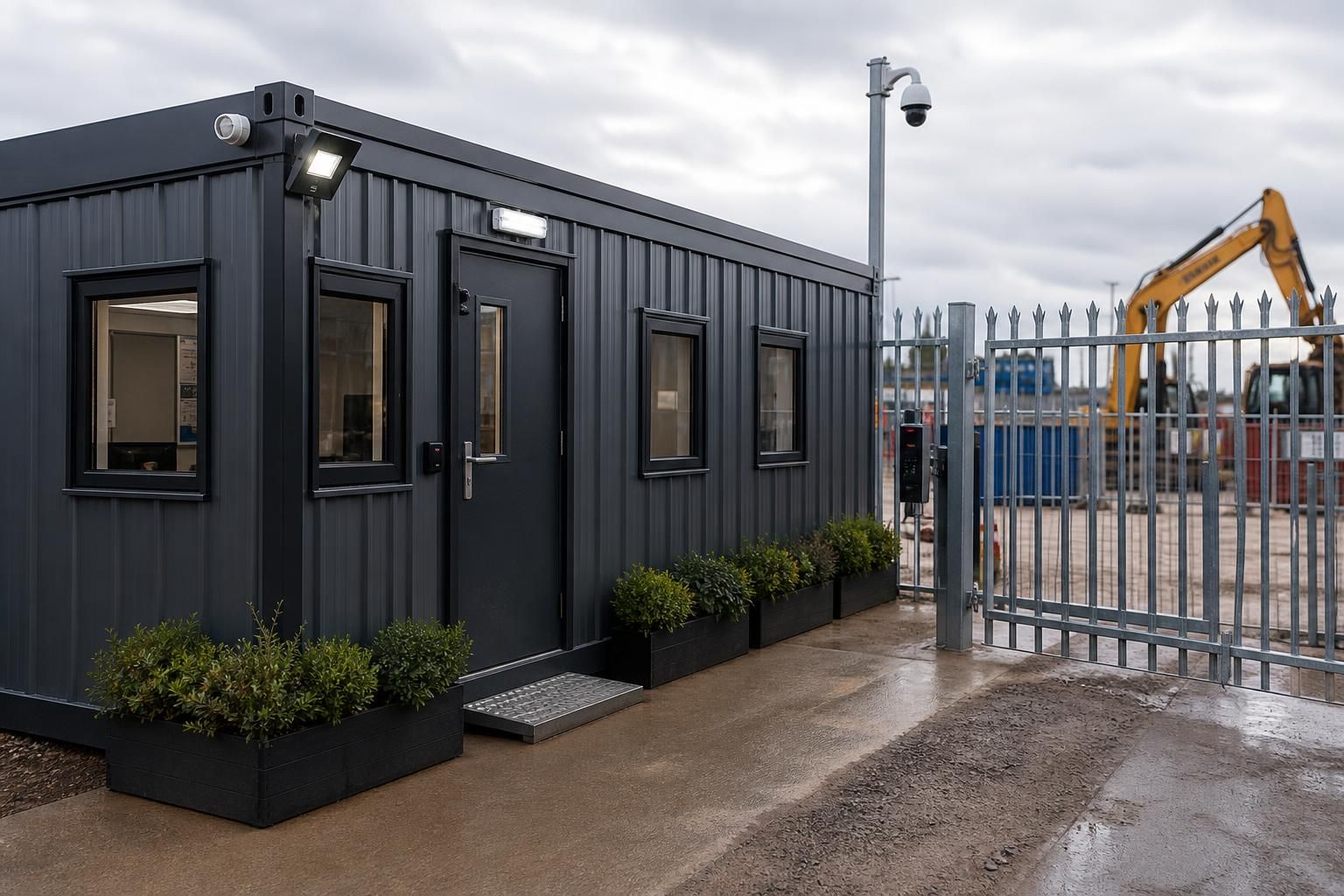
What security measures should a construction site office include?
A construction site office should use layered security measures, including controlled access, robust doors and windows, intruder alarms, suitable lighting and CCTV where appropriate. Protect sensitive documents and equipment further with secure storage, clear key or access-card controls, visitor procedures and regular checks of the office and its surroundings.
Effective construction site office security combines physical protection, information security, site procedures and regular review. The measures should be based on a documented risk assessment covering the value of equipment and records, the office’s location, the presence of remote or temporary workers, nearby public access and the consequences of theft, vandalism or unauthorised disclosure.
Start with a site-specific security plan. Identify what needs protecting and who is responsible for each control. This may include project drawings, permits, personnel records, laptops, plant and vehicle keys, fuel cards and portable equipment. The plan should also record vulnerable areas, likely access routes, arrangements for securing the office when unoccupied and the actions to take after an attempted or confirmed breach.
Integrate the office with the wider site. Security is weaker if the office is treated as an isolated unit while the rest of the site remains uncontrolled. Coordinate its arrangements with the principal contractor and site management team, particularly where the office shares welfare, storage, parking or delivery areas. Separate staff, visitor and delivery movements where practicable, and keep access routes clear so unusual activity is easier to identify.
Control keys, credentials and permissions. Give each worker only the access needed for their role and remove permissions promptly when responsibilities change or someone leaves the project. Do not rely on shared codes or unmarked keys. Maintain a controlled record of issued keys, cards and credentials, and review it when staff, subcontractors or site arrangements change. A designated responsible person should be able to confirm who has access without relying on memory.
Protect information as well as physical assets. Construction offices often contain drawings, tender information, commercial records and personal data. Use password-protected devices, automatic screen locking, multi-factor authentication where available and encrypted storage for portable equipment. Keep working files on an approved, backed-up system rather than on a single laptop or removable drive. Paper records that are no longer required should be disposed of securely, and sensitive documents should not be left visible to visitors or accessible through unattended printers.
Manage cyber risks on site. Temporary offices may use shared networks, mobile connections and personal devices, creating additional points of exposure. Change default passwords on network equipment, keep operating systems and security software updated, restrict the use of unknown USB devices and separate guest connectivity from business systems. Staff should know how to report suspicious emails, lost devices, unusual account activity or suspected malware without delay.
Use monitoring responsibly. Where cameras or electronic records are used, define their purpose, limit access to recordings and set a retention period based on the security need. Display appropriate notices and handle images in line with UK data protection requirements. Keep an audit trail of significant security events, including attempted access, missing keys, damaged equipment and system alerts. Reviewing these records can reveal recurring weaknesses rather than treating each incident separately.
Prepare an incident response procedure. The procedure should state who must be contacted, how the area is preserved, how access is restricted after an incident and when the police, the client or other relevant parties should be informed. Do not disturb potential evidence unnecessarily. Record times, observations, damaged items and missing information while details are fresh, then review the risk assessment and amend controls after the incident.
Security measures should be checked throughout the project rather than installed once and forgotten. Reassess them when the workforce changes, valuable equipment arrives, the site layout develops or the project moves into a different phase. This keeps the construction site office proportionately protected as the risks and assets change.
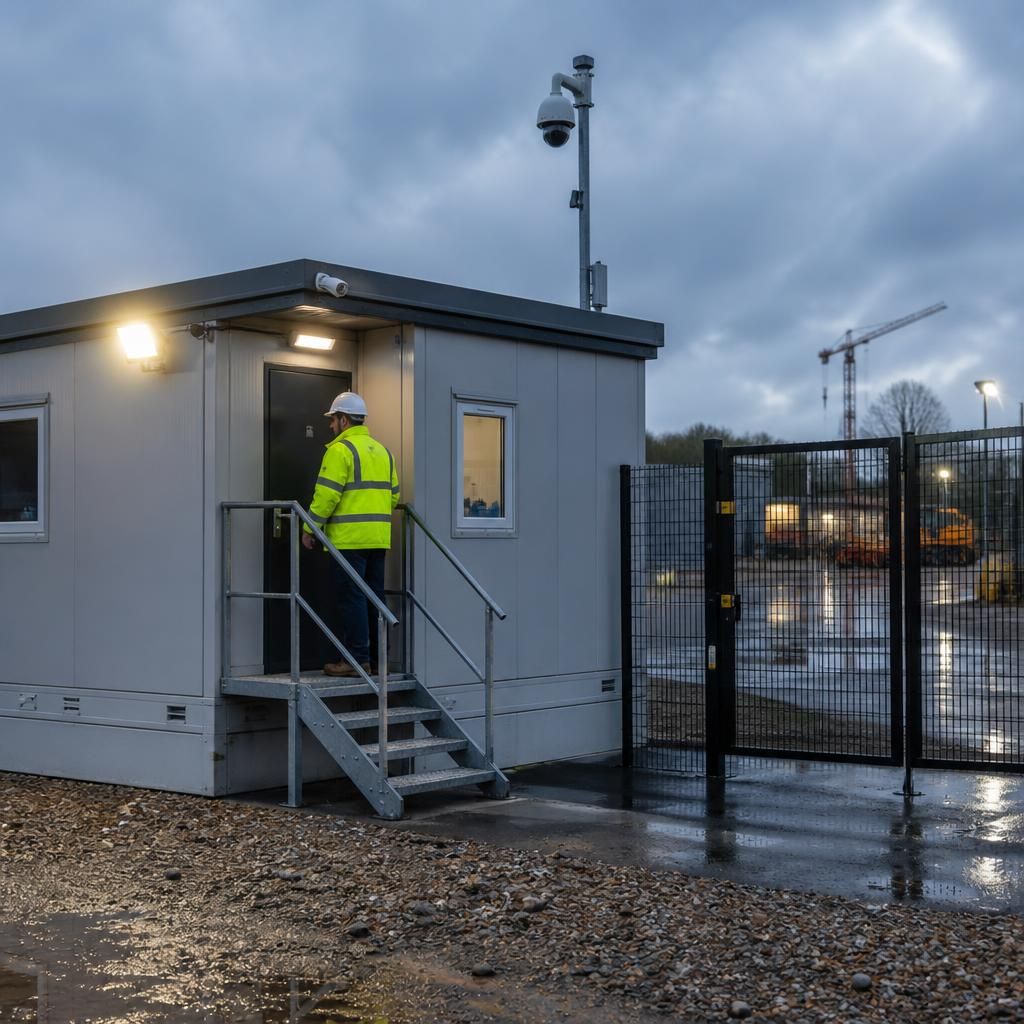
Security controls must not compromise safe escape from the construction site office. Doors used for emergency egress should be openable from inside without a key, code or access card, while any electronic locking system should have an appropriate emergency release. Keep escape routes clear and ensure that added bars, shutters or storage arrangements cannot prevent occupants leaving quickly.
Use the internal layout to create a clear boundary between general circulation and restricted areas. A reception or sign-in point can keep visitors away from desks, key storage and project records, while lockable cupboards or a separate room can protect sensitive materials. This zoning limits casual access without making every movement around the office dependent on an access-control system.