
Can steel shelters protect equipment as well as vehicles?
Yes. A steel shelter can protect equipment as well as vehicles by providing a durable, weather-resistant structure that limits exposure to rain, wind and sunlight, with the layout and level of enclosure tailored to the items being stored.
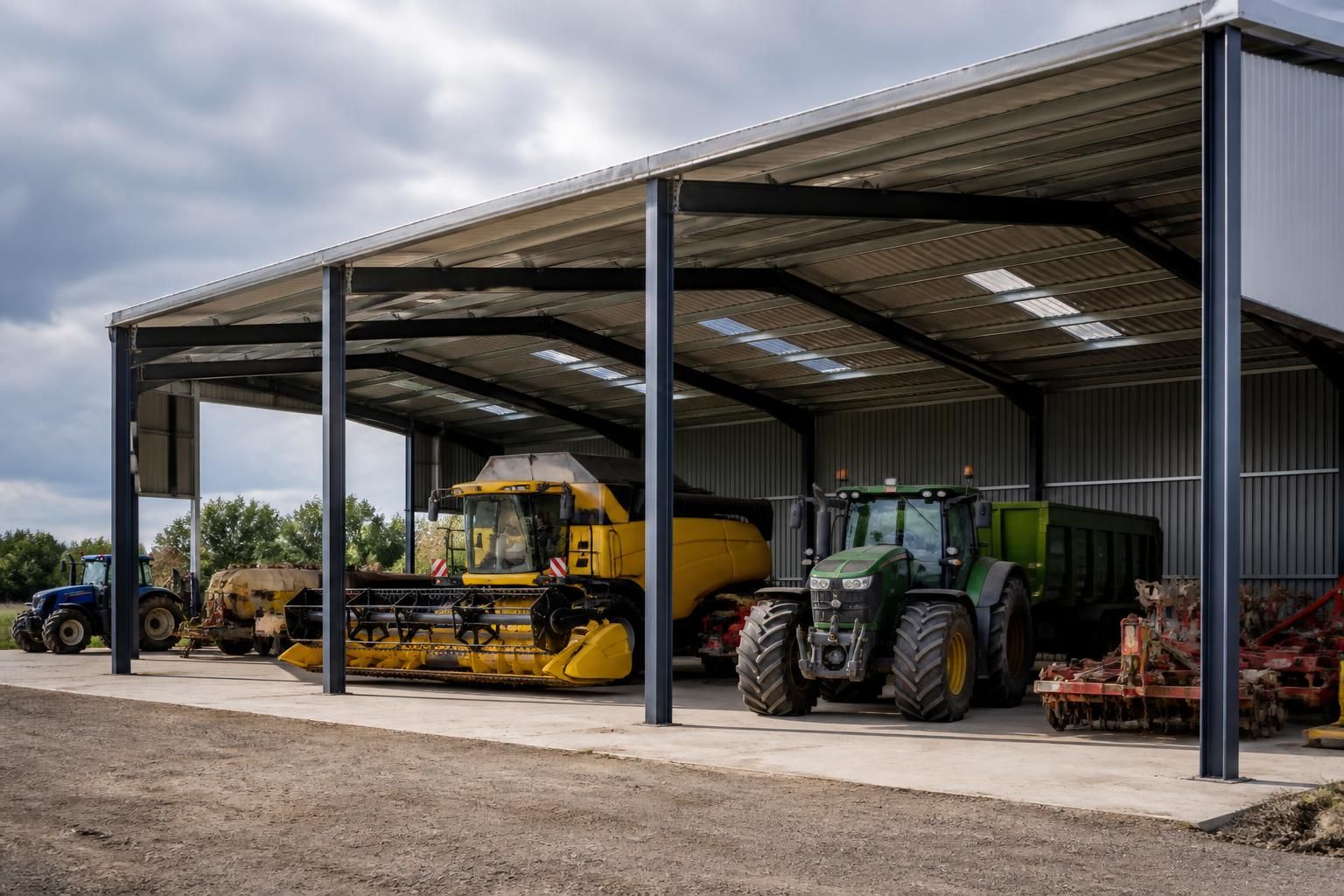
Steel shelters can protect equipment by keeping machinery, plant, trailers, attachments and stored materials under a purpose-designed roof and steel frame. The appropriate arrangement depends on whether the priority is shielding equipment from precipitation and direct sunlight, maintaining access for frequent use, or creating a more enclosed storage area.
For agricultural and industrial equipment, the shelter should be designed around the dimensions, access requirements and operating weight of the items being stored. Key considerations include:
- Clearance and access: Door openings, bay widths and internal heights need to accommodate the largest equipment, including raised or attached implements. Turning space and access for loading equipment should also be considered.
- Roof design: The roof should provide sufficient coverage beyond the equipment footprint to reduce exposure at the sides, while its form and drainage arrangements are selected for the site and intended use.
- Degree of enclosure: An open-sided shelter offers convenient drive-through access and natural ventilation. Partial or full side cladding gives greater separation from wind-driven rain and can provide a more controlled storage environment.
- Ventilation and condensation: Equipment brought into a shelter may carry moisture, particularly after use in wet conditions. Ventilation should therefore be considered alongside enclosure, especially where machinery, tools or materials will remain stored for extended periods.
- Ground conditions: The base must provide a stable surface for the stored load and the vehicles or handling equipment moving within the building. Drainage, finished floor levels and access from surrounding ground should be addressed during design.
A shelter is not automatically a secure store. Open sides allow straightforward access, whereas valuable tools, removable attachments or smaller equipment may require lockable doors, suitable cladding and a more enclosed layout. Where theft prevention or restricted access is important, the brief should identify those requirements before the frame and elevations are designed.
Steel construction also allows the building to be configured around equipment that may change over time. Additional bays, altered cladding arrangements and different entrance positions can be considered at the design stage rather than relying on a standard vehicle-sized structure. Buildings UK Ltd produces bespoke design packages with planning elevation drawings and isometric fabrication blueprints, helping the proposed shelter to be assessed against its intended use before manufacture.
For equipment that needs regular inspection or servicing, the shelter should allow safe circulation around the machinery and enough room to move attachments without striking the frame or cladding. Separating stored items from working areas can also reduce the risk of damage during loading and unloading. The result is a structure that protects more than vehicles: it provides organised, accessible cover for the equipment and materials that support agricultural and industrial operations.
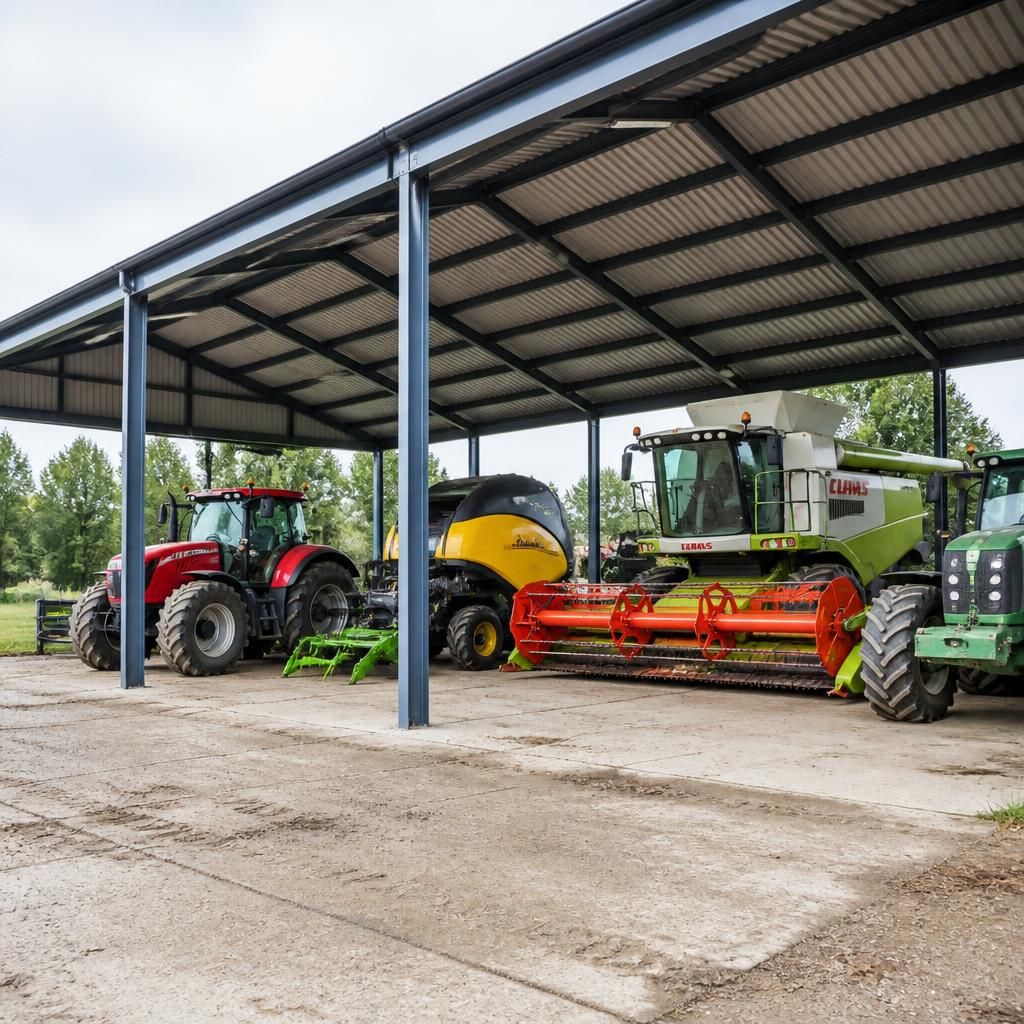
Steel shelters protect equipment most effectively when the level of protection is matched to the equipment’s sensitivity. Robust machinery may only need overhead cover and unrestricted access, while tools, electrical components and precision equipment may need a more enclosed building to limit exposure to wind-driven moisture, dust and unauthorised handling.
A shelter should not be treated as a climate-controlled store. Equipment that requires tightly controlled temperature or humidity may need specialist environmental measures in addition to the steel structure. For general agricultural and industrial storage, however, selecting the appropriate combination of roofing, cladding, doors and ventilation can create practical cover without making routine access unnecessarily difficult.