
When are open-sided equestrian buildings suitable for horse shelter?
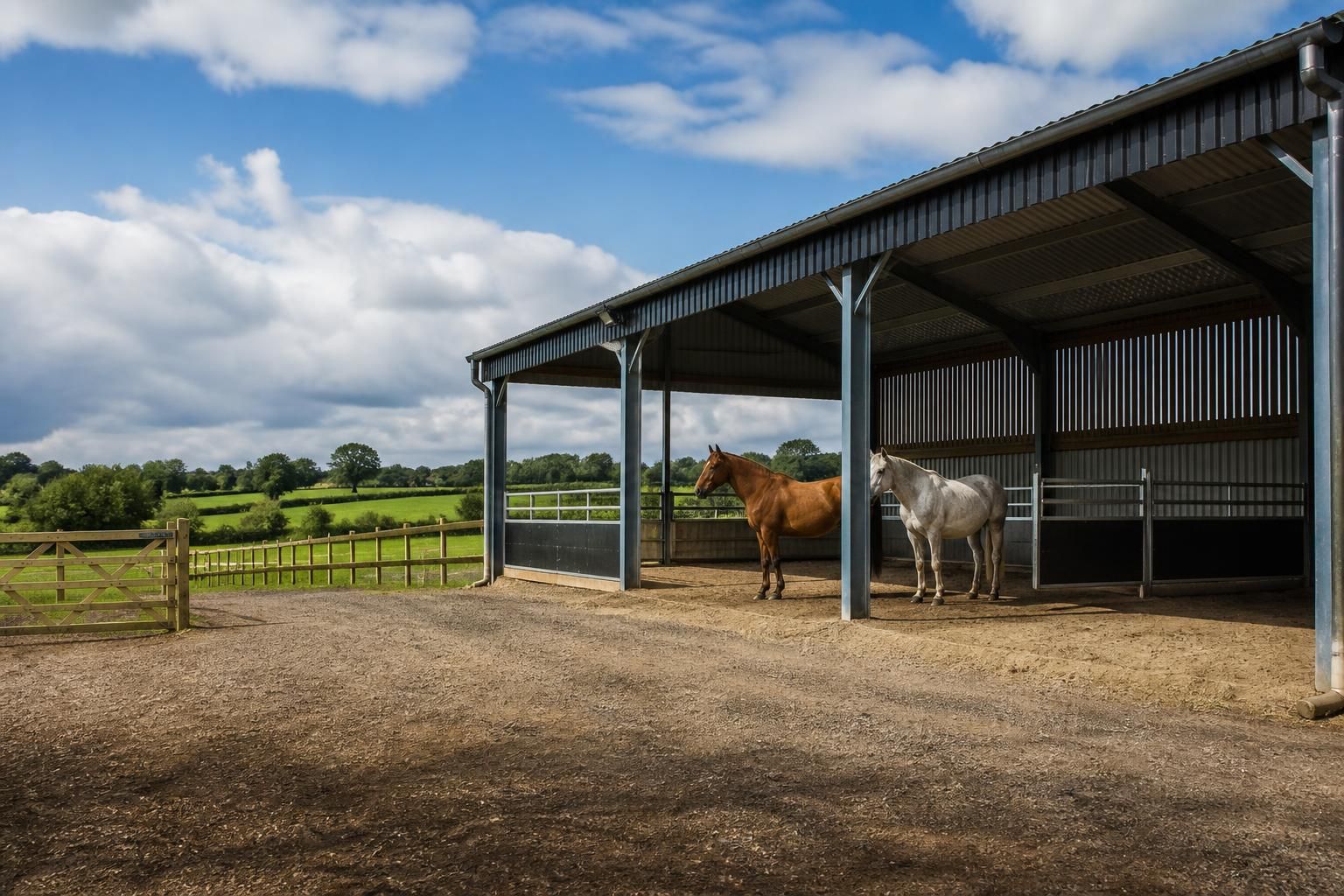
Open-sided equestrian buildings are suitable where horses need dependable shelter from rain, wind and strong sun while retaining excellent natural ventilation. They work particularly well for turnout areas, field shelters and sites with relatively moderate exposure, provided the building is correctly positioned and the open elevation does not leave horses vulnerable to prevailing weather.
Open-sided equestrian buildings are most suitable where horses need a permanent covered refuge within a turnout, grazing or yard area, but do not require the close environmental control of individual stables. Their value depends on more than the presence of a roof: the site, orientation, ground conditions, herd behaviour and daily management must all support safe use.
They are particularly appropriate for:
- field shelters providing shade and a dry resting area during turnout;
- covered turnout pens where horses need access to protection without being fully enclosed;
- seasonal shelter for horses that spend much of their time outdoors;
- resting, feeding or waiting areas connected to paddocks and handling facilities;
- groups of compatible horses that can share space without conflict.
An open-sided structure can help horses regulate their exposure to changing conditions by allowing them to move between the covered area and the open paddock. This choice is often more practical than fully enclosed accommodation where natural airflow, easy access and a direct relationship with turnout are priorities.
Exposure and orientation are critical. The open elevation should be positioned with the prevailing wind, driving rain and winter weather in mind. A building that faces directly into the most exposed direction may provide considerably less useful shelter than its roof area suggests. Existing hedges, banks, trees and neighbouring buildings can provide some protection, but they should not be relied upon if they create drainage problems, obstruct access or introduce falling-branch risks. A site assessment should consider conditions across the seasons rather than relying only on a calm summer day.
Ground preparation is equally important. Water running from the roof or collecting around the entrance can quickly create muddy, slippery conditions. Suitable drainage, a stable surface and enough space for horses to enter and leave without crowding help protect welfare and reduce wear around the building. The approach should also accommodate routine tasks such as delivering forage, removing soiled bedding and checking the structure after severe weather.
Ventilation is an advantage, but it does not remove the need for careful design. The roof height, enclosed end walls, orientation and surrounding obstructions affect how air moves through the shelter. Good airflow can help reduce condensation, dust and stale air, while excessive exposure can make the covered area uncomfortable or unusable. Roof overhangs, rainwater management and the position of openings should therefore be considered together rather than treated as separate details.
Shared shelters are best suited to horses with compatible temperaments and similar management needs. Dominant animals may prevent others from using the protected area, particularly where the entrance is narrow or the internal space is constrained. More than one access route, generous circulation space or separate shelter provision may be appropriate for larger groups or mixed herds. Feeding arrangements should also be planned to avoid competition and allow every horse to reach forage safely.
An open-sided building is less suitable when horses need isolation, close observation or protection from all directions. Examples may include horses recovering from injury, animals requiring individual medication, mares approaching foaling, vulnerable youngstock or horses that cannot safely share space. In these circumstances, enclosed stabling or a more controlled pen arrangement may be necessary. An open shelter should not be treated as a replacement for accommodation that supports veterinary care, quarantine or individual management.
The building’s relationship with the rest of the yard also affects its suitability. Access to water, fencing, gateways, lighting and handling areas should be considered at the design stage. A shelter that is difficult to inspect or separated from essential facilities may be underused, even if its construction is sound. The roof, frame and any enclosed sections should be selected for the intended agricultural or equestrian environment, with finishes and details that support regular cleaning and maintenance.
Planning requirements and building control considerations can apply to permanent equestrian shelters, particularly where the structure is substantial, close to boundaries or part of a wider yard development. Local constraints, drainage, access and the proposed use should be checked before construction. A bespoke design package can help test the shelter’s position, elevations and structural arrangement against the practical requirements of the site.
For a permanent horse shelter, an open-sided design is therefore a sound choice when turnout remains central to the management system, the site can be protected from the worst weather, and the horses can share the space safely. Where the priority is individual control, maximum weather protection or specialist care, an enclosed stable, barn or arena-based arrangement is likely to be more appropriate.
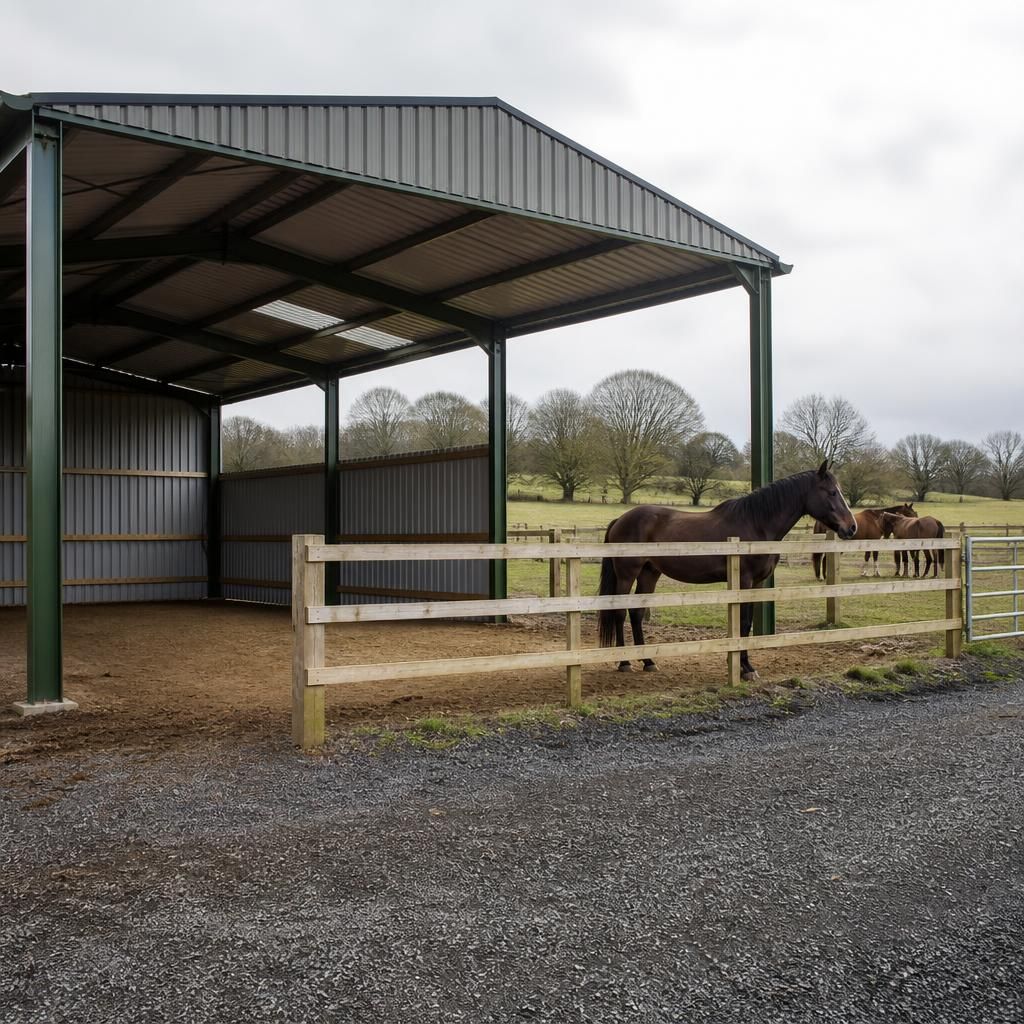
The suitability of an open-sided equestrian building should be reviewed through the horses’ actual use of it, not judged by the structure alone. After installation, observe whether all horses enter freely, whether the shelter remains usable in wet weather and whether any animals consistently stand outside despite needing protection.
- Unevenly worn ground may show that access points or circulation areas are becoming congested.
- Accumulated dung or bedding in one corner can indicate that horses are using only part of the available space.
- Horses avoiding the shelter during particular weather conditions may indicate problems with wind direction, rain penetration or internal comfort.
- Repeated crowding around one entrance can reveal tension within the group or insufficient access for subordinate animals.
These observations can inform changes to fencing, gateways, forage placement, drainage or internal layout. This practical review is especially important where turnout arrangements change during the year, because a shelter that works well for one group or season may need different management when herd composition, ground conditions or daily routines alter.