Do galvanised roofing sheets require insulation?
Galvanised roofing sheets do not include insulation, so insulation is not automatically required but may be necessary depending on the building’s use, required thermal performance and condensation-control needs. For occupied, heated or temperature-sensitive spaces, an insulated roof build-up is generally more suitable than single-skin sheeting.
The need for insulation is determined by the required roof build-up, rather than by the galvanised finish itself. A single-skin galvanised sheet can be appropriate for some storage buildings, but a roof serving an occupied, heated or moisture-sensitive space normally needs a designed insulation and condensation-control system.
For a basic unheated storage building, the main requirement may be weather protection rather than a controlled internal temperature. In that situation, single-skin sheeting can be considered, provided the designer has assessed the likely condensation risk and the way the building will be used. Agricultural stores, workshops, livestock buildings and buildings used to house damp materials can generate substantially different internal moisture conditions.
Where insulation is required, common solutions include:
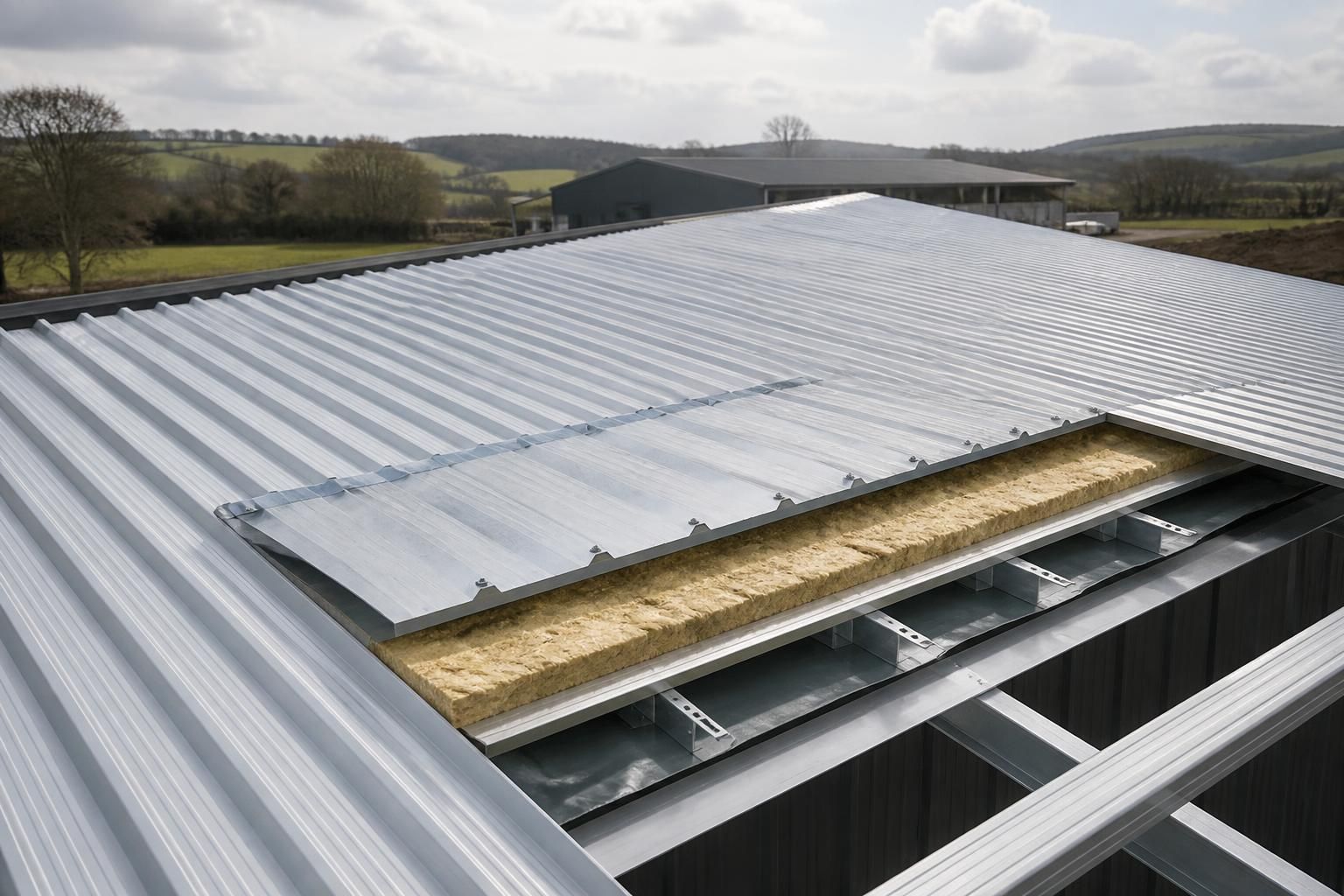
- Built-up roof systems: an outer galvanised sheet is combined with insulation, spacer components and an internal liner or vapour-control layer. This arrangement allows the individual layers to be selected for the building’s thermal and moisture requirements.
- Composite insulated panels: insulation is manufactured between external and internal faces, creating a more integrated roof element. Particular attention is needed at panel joints, edges and penetrations so that the intended performance is maintained.
- Insulation below the roof sheets: insulation can be installed beneath the outer sheet as part of a suitable structural and vapour-control arrangement. It must be detailed around purlins, fixings, eaves and the ridge rather than treated as a loose layer added after the roof has been designed.
Insulation and condensation control are related but are not the same thing. Condensation forms when warm, moisture-laden air reaches a surface cold enough for water vapour to condense. Insulation raises the temperature of the internal surface, but the roof may also need a continuous vapour-control layer, well-sealed junctions and suitable ventilation. Gaps, unsealed penetrations and thermal bridges at steelwork can reduce the effectiveness of the overall build-up.
An anti-condensation fleece applied to the underside of some sheets should not be treated as a substitute for thermal insulation. It can help manage limited surface condensation in suitable conditions, but it does not provide the same thermal performance as an insulated roof system and may not be appropriate for a heated or humidity-controlled building.
The correct specification depends on several factors:
- the intended internal temperature and whether the building will be heated;
- the number of occupants, animals, vehicles or processes producing moisture;
- the storage contents and their sensitivity to temperature or humidity;
- the required energy performance and any applicable Building Regulations requirements;
- the desired internal finish, lighting and service routes; and
- the roof’s junctions, penetrations, ventilation strategy and method of fixing to the steel frame.
For buildings containing livestock, horses, wet machinery or moisture-producing processes, condensation assessment is particularly important. Ventilation may be needed alongside insulation, but it should be designed so that it supports moisture control without undermining the continuity of the insulated and vapour-controlled layers.
Insulation should therefore be selected before the galvanised sheets and supporting details are finalised. For a steel-framed building, the roof specification needs to coordinate the sheet profile, purlin arrangement, insulation depth, liner or vapour-control layer, fixings and edge details. Buildings UK Ltd can incorporate these considerations into a bespoke design package, including the drawings needed to define the building and its steelwork accurately.
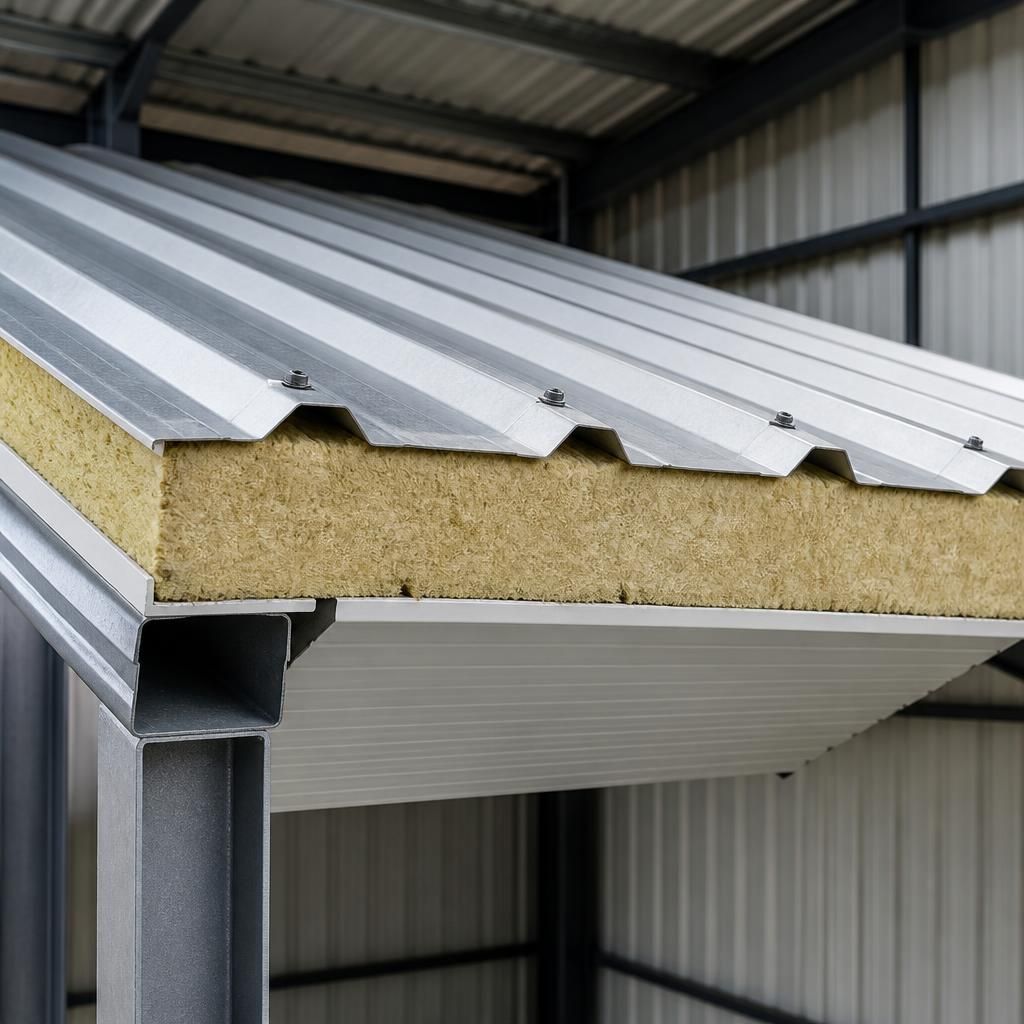
The galvanised coating protects the steel from corrosion; it does not provide thermal insulation. Because steel conducts heat readily, a single galvanised sheet offers weather protection but does little to limit heat loss or heat gain. Insulation must therefore be specified as a separate layer within the roof construction, with its thickness and position selected for the building’s intended performance.
Discuss your galvanised roofing sheet insulation requirements
Discuss your galvanised roofing sheet insulation requirements with Buildings UK Ltd to help define a suitable roof build-up for your building. Their bespoke design package can coordinate the insulation, steelwork and roof details before manufacture.