What profile options are available for galvanised corrugated roofing sheets?
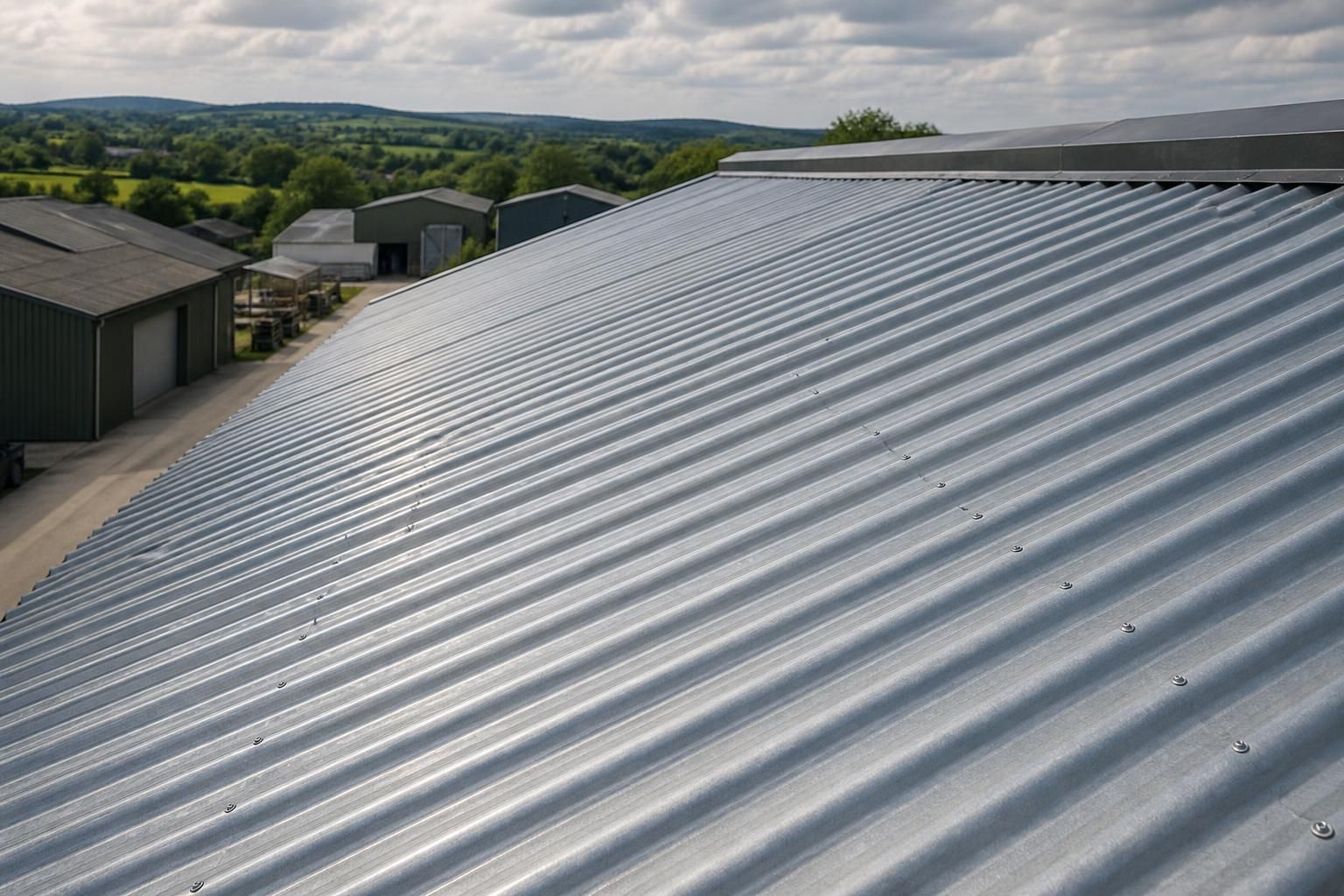
Galvanised corrugated roofing sheets are available in several sinusoidal profiles, with variations in corrugation depth, pitch and effective cover width. The appropriate profile depends on the building’s span, loading requirements, purlin spacing and desired appearance, with sheet length specified to suit the roof layout.
The main profile options for galvanised corrugated roofing sheets are standard sinusoidal profiles, shallower profiles and deeper structural profiles. Each has a different combination of stiffness, visual character, cover arrangement and compatibility with the supporting steelwork. The correct choice should be made from the manufacturer’s profile data rather than by appearance alone.
Standard sinusoidal profiles are the conventional choice for many agricultural, rural and industrial buildings. Their regular wave pattern provides a familiar appearance and allows sheets to be laid in consistent side laps. They are commonly used for single-skin roof coverings, although the chosen sheet must still be checked against the roof design, support arrangement and environmental exposure.
Shallower corrugations have a less pronounced appearance and can be suitable where the roof covering needs to look relatively unobtrusive. The reduced profile depth may affect the sheet’s stiffness, spanning capability and resistance to deflection, so these sheets are not automatically interchangeable with deeper alternatives. They can be considered where the structural design provides closely positioned support and the appearance is an important factor.
Deeper corrugated profiles generally provide greater geometric stiffness than shallow profiles. This can make them appropriate for buildings where the roof covering is subject to more demanding design conditions, although the profile alone does not determine the permitted span or load capacity. Sheet thickness, steel grade, support spacing, fixings, wind exposure and imposed loads must all be considered together.
Some suppliers also offer profiles with different cover arrangements within the same general corrugated form. These may vary in the width covered by each sheet after side laps are made. A profile with a larger effective cover can reduce the number of sheets required across a roof slope, while a narrower-cover profile may be selected to match an existing building or a particular detailing system. The nominal sheet width should not be confused with the finished coverage.
For a replacement roof, the new profile should match the existing sheets as closely as possible. Differences in corrugation shape, pitch or cover width can prevent side laps from seating correctly, leaving uneven joints or exposed fixing lines. Matching the profile also helps roof edges, verges, ridge pieces and other flashings fit without excessive modification.
Profile selection should also account for the construction method:
- Single-skin roofing: the sheet profile must provide the required performance when fixed directly to the supporting purlins or rails.
- Built-up roof systems: the outer sheet must be compatible with the liner, spacer system, insulation and associated flashings.
- Insulated panels: the visible outer profile is determined by the panel system, so a separate corrugated sheet profile may not be suitable.
- Roof-mounted details: ridge, verge, eaves, valley and penetration flashings need to be made or selected for the precise profile.
Galvanising describes the zinc coating applied to the steel; it does not identify the corrugation shape. Two galvanised sheets can therefore have different profiles and different design properties. When specifying the roof covering, record the profile designation, steel thickness, effective cover, sheet length, coating specification and fixing requirements. This gives the designer, fabricator and installer the information needed to produce a compatible roof assembly.
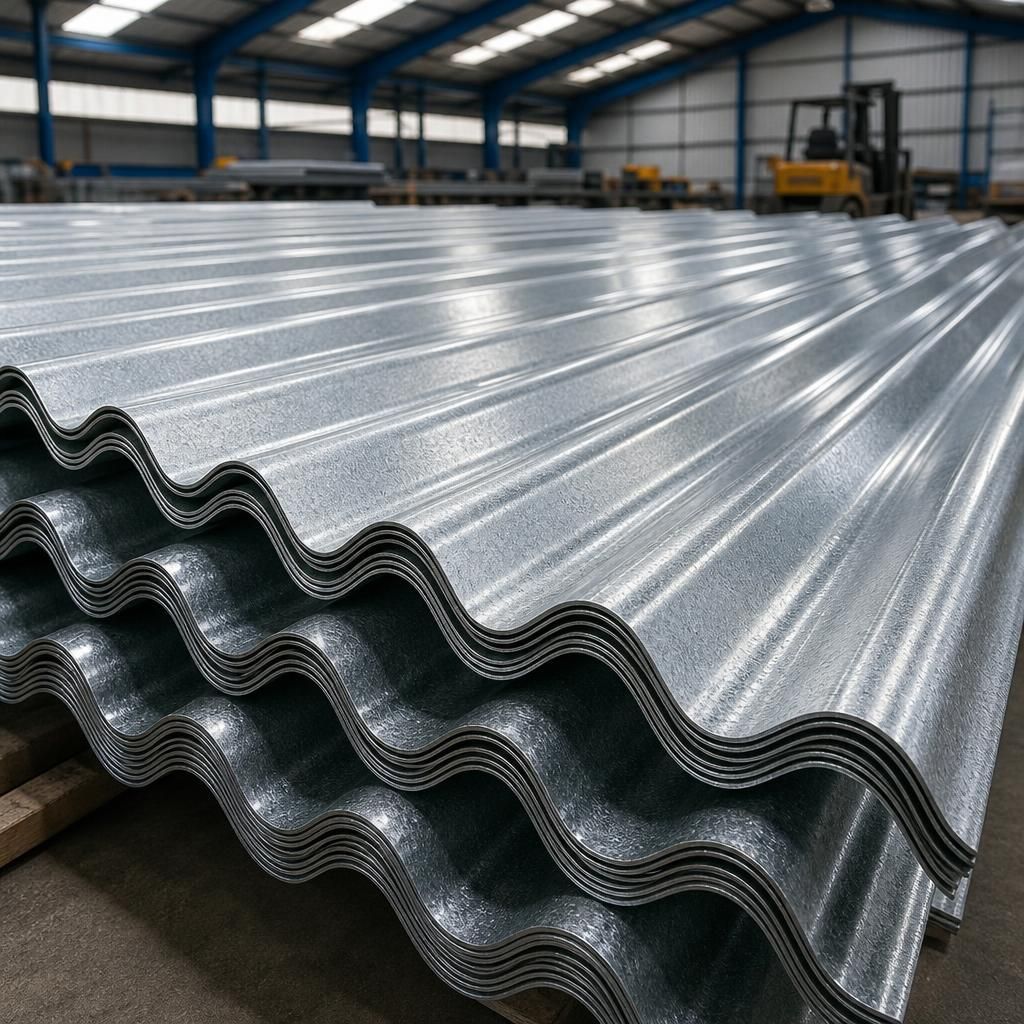
Profile choice also affects how water is shed from the roof. Each galvanised corrugated roofing sheet profile has a manufacturer’s minimum recommended pitch, together with requirements for side laps, end laps and flashing details. A profile that appears suitable by shape may therefore be unsuitable for a roof with a low slope or long drainage run. Check the profile data against the roof geometry before selecting the sheets, particularly where sheets are being used to replace an existing covering.
Find the right galvanised corrugated roofing sheet profile
If you are comparing profile options for a new roof or replacement covering, contact Buildings UK Ltd to discuss the building layout, supporting steelwork and required roof specification. Their team can help develop a suitable design package for your project.