How is an industrial roof coating applied?
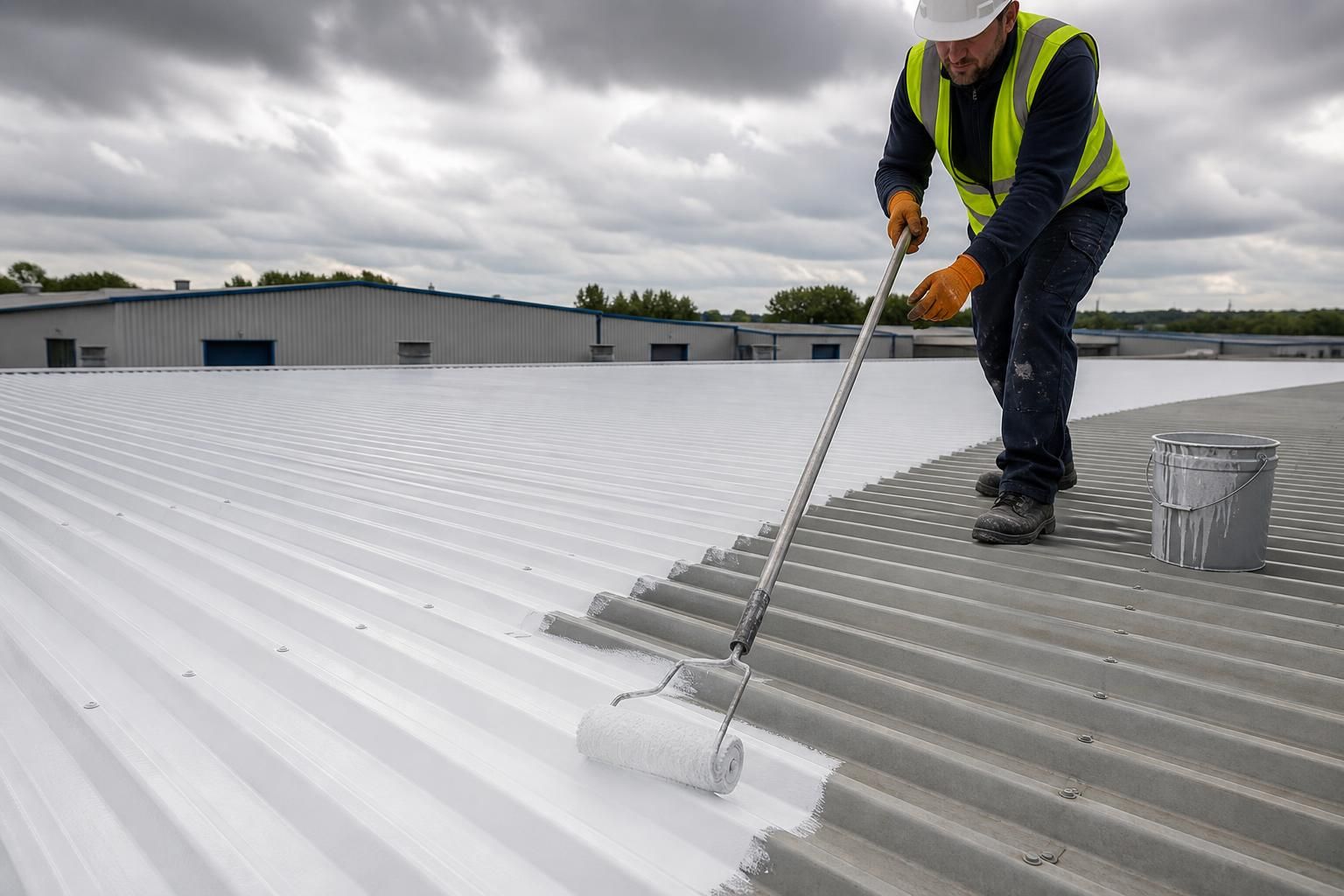
An industrial roof coating is applied after the roof has been inspected, cleaned and prepared, with corrosion, failed sealant and other defects addressed first. The coating is then applied evenly to the suitable roof surface, including details and joints, and allowed to cure according to the product specification.
An industrial roof coating is applied as a controlled liquid-applied system over a suitable roof substrate, using the method and number of coats specified by the product manufacturer. The process normally involves confirming the roof’s condition, preparing the surface, treating vulnerable details, applying the coating in an even film and allowing each layer to cure before the next stage.
Before work begins, the coating system must be matched to the roof material and its existing finish. Steel roofs may have areas of sound paint, exposed metal, corrosion, old sealants or previous coatings, and these surfaces do not all behave in the same way. Compatibility is important: an incompatible product can fail to bond, soften an existing layer or trap moisture beneath the new finish. The specification should therefore identify the substrate, any primer required and the expected dry film build.
Application conditions also affect the result. The roof must be sufficiently dry, and the surface temperature should be suitable for the product being used. Rain, condensation, frost, excessive heat and strong wind can interfere with adhesion, drying or spray application. Manufacturers’ instructions normally set limits for temperature, humidity, recoat intervals and the conditions under which the coating can be exposed to water.
Once the surface is ready, the application generally follows this sequence:
- Detailing: joints, laps, fastener heads, penetrations, rooflights, gutters, edge trims and other changes in the roof plane are treated first. These areas often move more than the main roof surface or provide routes for water entry, so they may require sealant, reinforcement or a separate detail coat.
- Priming: exposed steel, porous areas or difficult substrates may receive a compatible primer. Primer is not automatically required across every roof; its use depends on the coating system and the condition of the substrate. It must be applied evenly and allowed to dry or cure as specified.
- First coat: the main coating is applied by brush, roller or spray equipment. Rollers and brushes provide control around details and smaller areas, while spray equipment can distribute material efficiently across broad, accessible roof sections. The applicator must avoid excessive thinning, runs, missed areas and pooling.
- Reinforcement where specified: some systems incorporate a scrim, fleece or other reinforcing layer into wet coating at joints, cracks or movement-prone areas. The material must be fully embedded without wrinkles, gaps or raised edges before the surrounding coating sets.
- Further coats: additional coats are applied after the preceding layer has reached the required condition for recoating. The direction, colour or application method may be varied to make incomplete coverage easier to identify. Each coat needs to be spread consistently rather than used to compensate for isolated defects or low areas.
- Inspection and finishing: the completed surface is checked for pinholes, holidays, thin spots, runs, contamination and poorly covered details. Any defects are corrected with compatible material, and the coating is left to cure fully before routine access or exposure to severe weather.
Spray application requires particular control on an industrial roof. Adjacent cladding, vehicles, plant, rooflights and ventilation openings may need protection from overspray. Wind can carry atomised material beyond the working area, so the choice of equipment and application method must reflect the site layout. Roller or brush application may be more appropriate around obstructions, close to boundaries or where detailed work demands greater precision.
Coverage should be assessed by more than appearance. A smooth, uniform colour does not necessarily confirm that the specified coating thickness has been achieved. Good practice includes checking material usage against the roof area, observing the wet film during application and examining the cured surface for discontinuities. Where the specification calls for it, dry film thickness measurements and documented quality checks provide a more objective record.
Roof access must be managed throughout the work. Fragile rooflights, unsupported sheets, open edges and areas that have not cured can create hazards. Operatives need suitable access arrangements and fall protection, and the roof should not be treated as available for normal maintenance until the coating system has cured and the site supervisor has confirmed that it can be walked on safely.
The finished coating is only as reliable as the substrate assessment, detailing and application control beneath it. A coating can improve water resistance and protect a suitable roof surface, but it is not a substitute for replacing severely deteriorated sheets, correcting structural movement or resolving persistent moisture trapped within the roof build-up. The product specification and the roof’s actual condition determine whether coating is an appropriate treatment and how it should be applied.
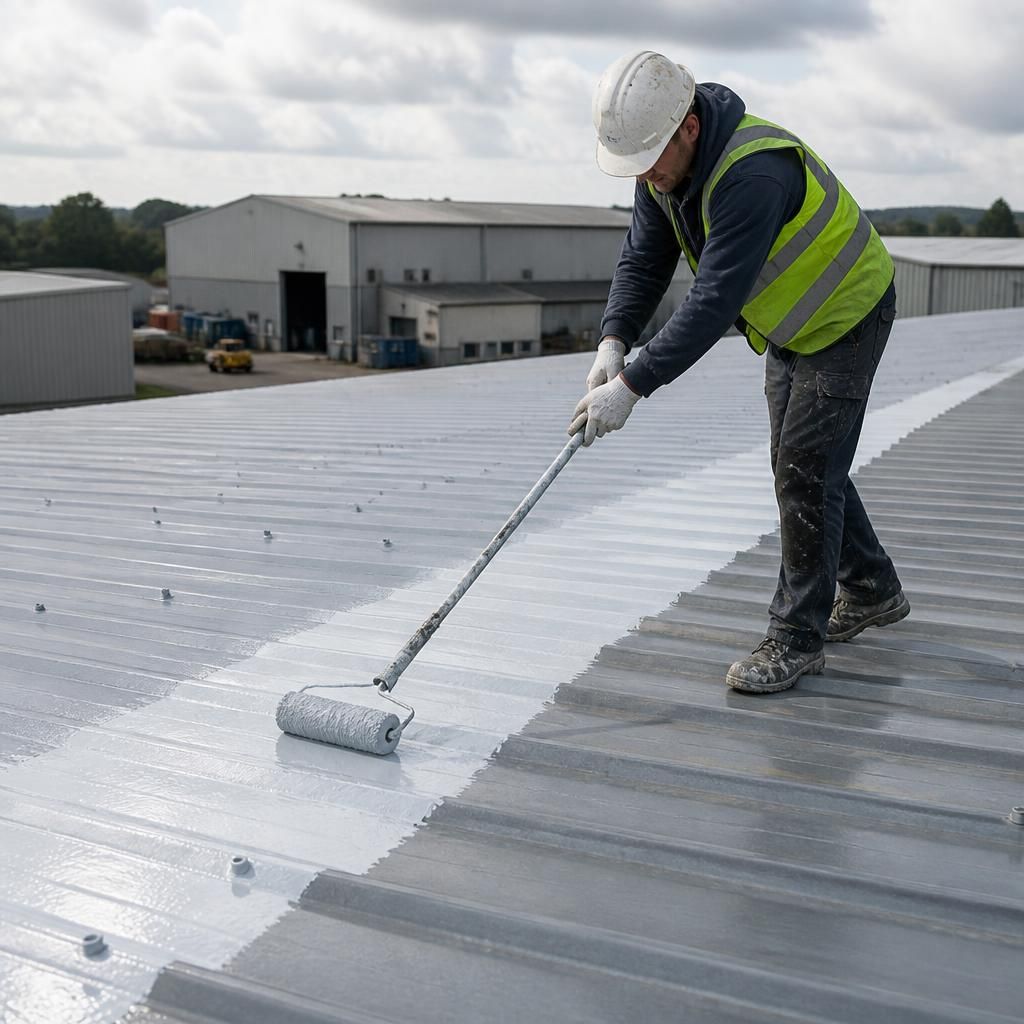
When a roller is used, the applicator works in manageable sections, loading the roller consistently and spreading the coating without forcing material into a thin film. Maintaining a wet edge helps prevent visible lap marks between sections, while steady passes reduce ridges, runs and areas of uneven build. The coating is then checked before the next section is started, particularly where the roof profile changes or access is restricted.