
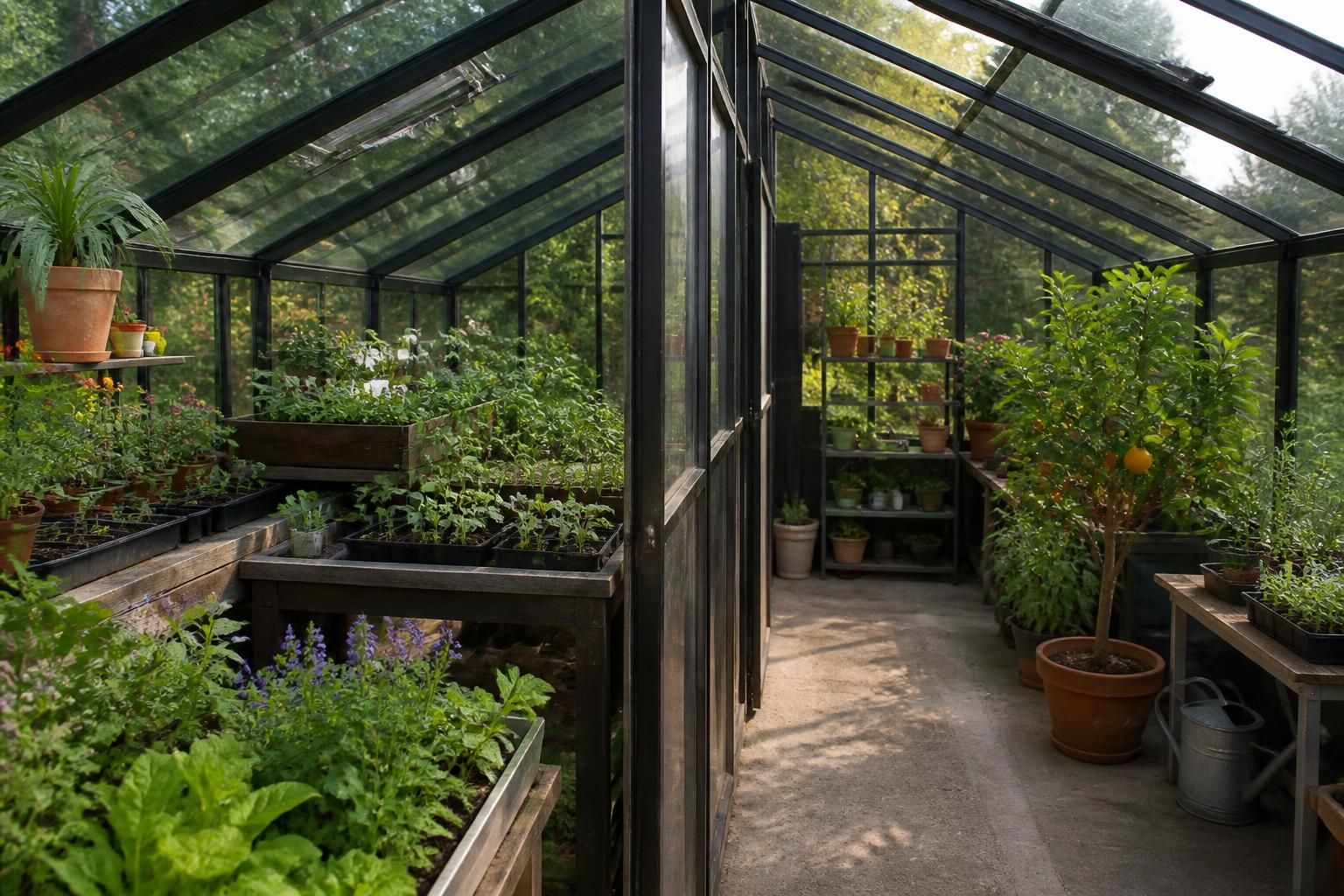
Can a greenhouse garden shed accommodate separate temperature zones?
Yes. A greenhouse garden shed can accommodate separate temperature zones by dividing the growing area and using independent ventilation, heating, shading and insulation controls, allowing plants with different requirements to be managed within the same structure.
A greenhouse garden shed can be planned as a series of controlled growing compartments rather than one uniform environment. This works best where the plants have different but compatible requirements, such as a cooler area for overwintering, a moderate area for general propagation and a warmer area for tender crops.
The most effective separation usually involves a full-height internal partition. A solid or insulated partition reduces heat transfer between areas, while a clear horticultural partition can allow light to pass through. The partition should meet the roof and external walls carefully, with a closable doorway or screened opening to limit unwanted movement of warm, humid air. An open shelf or partial divider may create visual separation, but it will not produce a reliable temperature zone.
Each compartment needs to be considered as its own growing environment. A shared heating system may be suitable where the target temperatures are close, but substantially different zones generally need separate thermostatic control. Ventilation also requires careful planning: opening vents in one compartment can affect neighbouring areas if the internal division is not reasonably airtight. Extract fans, intake points and air circulation should therefore be positioned to prevent warm, moist air from being pushed into a cooler zone.
Light levels can vary within the same structure. Roof glazing, shading screens and the position of internal benches all affect how much light reaches each area. Taller crops can cast shade over a lower-growing zone, while a shaded compartment may be useful for seedlings, cuttings or plants that are sensitive to strong sunlight. Shading should be capable of being adjusted independently where the crop requirements differ significantly.
Humidity is another important distinction between zones. A propagation area may need higher humidity, whereas stored plants or overwintering specimens may require drier conditions to reduce the risk of fungal problems. Separate watering routines, drainage and air circulation help prevent one compartment’s conditions from undermining another’s. Condensation should also be considered at the design stage, particularly around insulated partitions and colder internal surfaces.
- Warm zone: suitable for tender plants or crops requiring a longer growing season.
- Moderate zone: useful for general growing, potting and raising established plants.
- Cool zone: appropriate for hardy plants, dormant specimens or overwintering material.
- Propagation zone: suited to seedlings and cuttings where humidity and gentle air movement need closer control.
There are practical limits. A small greenhouse garden shed may lose useful floor area when partitions, access routes, heaters and equipment are added. Very different climates, such as a hot humid compartment alongside a cold dry one, are also more difficult to maintain efficiently than zones with moderately different settings. In some cases, separate structures are more straightforward if the plants require completely contrasting conditions.
Before construction, list the crops, their preferred temperature range, light exposure, humidity and seasonal use. This information can then inform the position of partitions, doors, benches, vents, electrical supplies, water points and insulation. Planning these details together is more reliable than dividing an existing structure after installation, because the frame, glazing and services must work with the intended zoning arrangement.
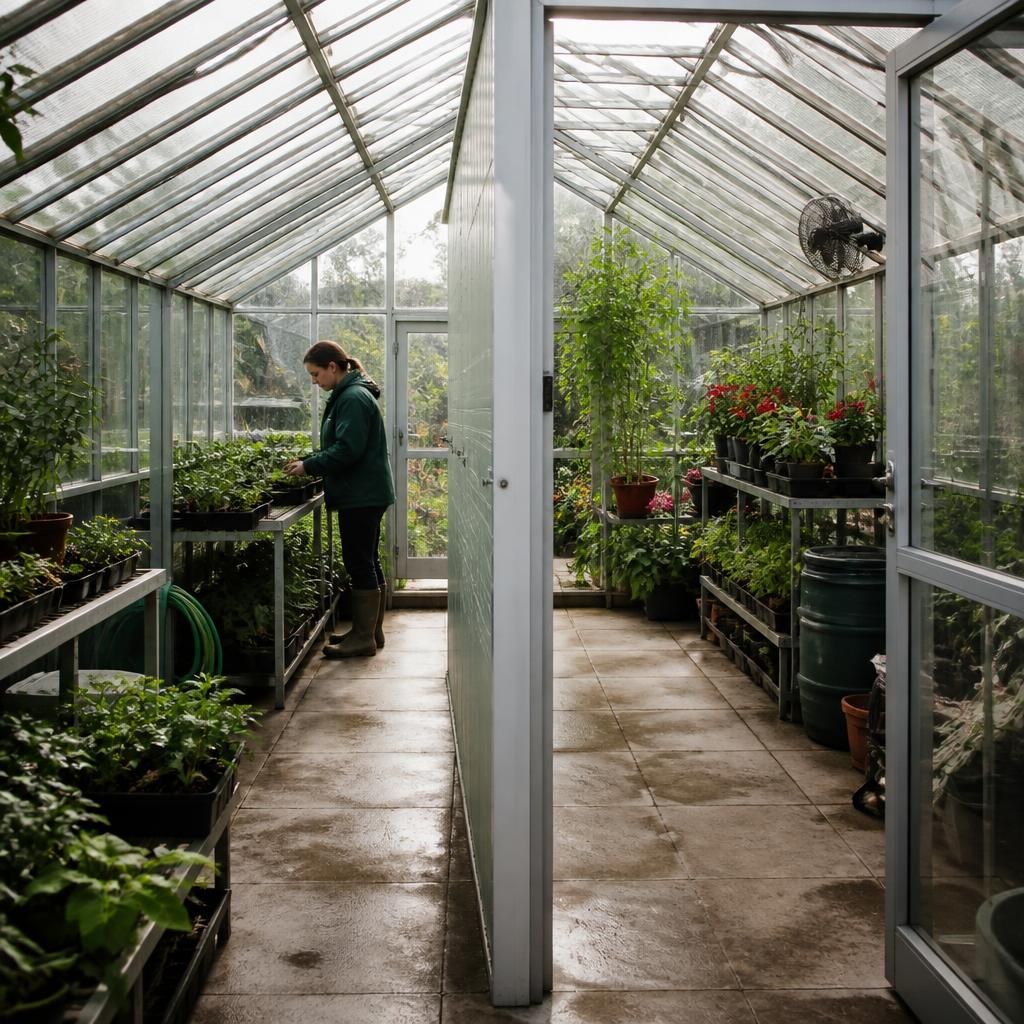
Separate temperature zones are most reliable when each compartment is monitored at plant level, rather than controlled from a single sensor. Sensors should be positioned away from heaters, doors and direct sunlight, at representative crop height, so readings reflect the conditions the plants actually experience.
Temperature also changes between day and night and across the growing season. A controller may therefore need different day and night targets, with settings reviewed as crops mature or the greenhouse garden shed is used for overwintering. Thermometers or data loggers in each zone can identify cold corners, heat build-up and slow temperature changes that a wall-mounted controller may miss.
Allow for thermal lag when selecting equipment and operating routines. A heavily insulated compartment may remain warm after heating stops, while a glazed area can cool rapidly after sunset. Monitoring these patterns helps refine the settings without repeatedly exposing plants to abrupt changes.
Plan Your Greenhouse Garden Shed’s Temperature Zones
Discuss your crop requirements with Buildings UK Ltd before finalising a greenhouse garden shed layout, so the proposed partitions, insulation and services can be assessed together. Request a bespoke design discussion to determine whether your intended temperature zones are practical within one structure.