What maintenance requirements should be considered for perforated metal wall cladding?
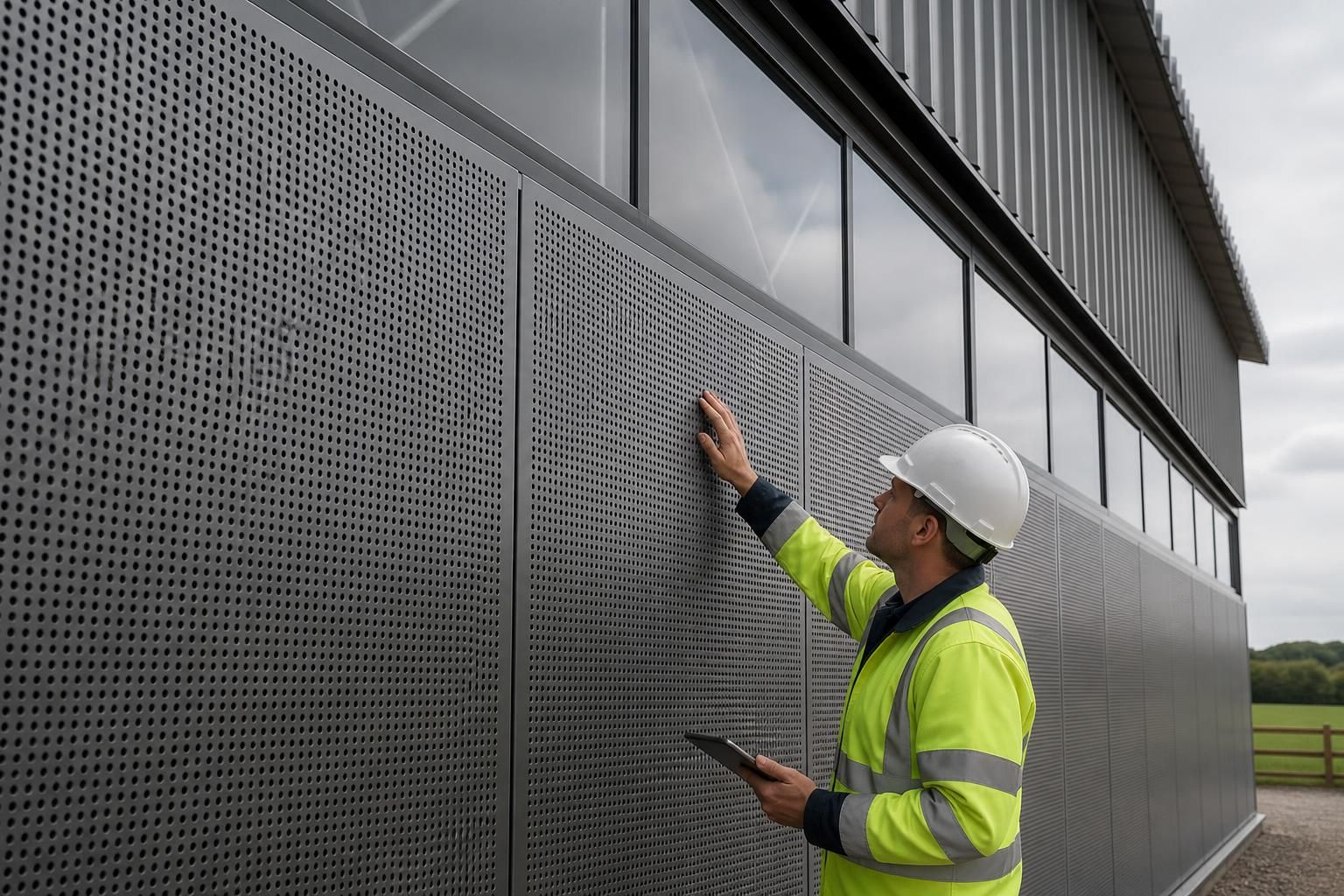
Perforated metal wall cladding should be maintained through planned cleaning, routine inspections and prompt repair of damage or coating deterioration. Checks should focus on blocked perforations, corrosion, loose fixings, damaged edges and the condition of junctions, trims and supporting components.
Maintenance for perforated metal wall cladding is a planned process for preserving the panels’ protective finish, open area, fixings and interfaces with the rest of the building. The appropriate regime depends on the metal and coating specification, the building’s exposure and the contaminants present, so the cladding manufacturer’s care instructions should be treated as the starting point.
Cleaning should remove deposited dust, agricultural residues, traffic film, bird debris and other contaminants before they become firmly bonded to the finish. Use clean water with a mild, non-abrasive detergent and a soft brush or suitable low-pressure washing method. Rinse thoroughly so that detergent and loosened contamination do not dry across the panel. Avoid wire brushes, abrasive pads, strong solvents, unapproved chemicals and excessively aggressive pressure, as these can mark the coating, deform the perforations or force water into unintended areas.
Particular care is needed around the perforated pattern. Dirt can collect on the edges of openings, while fibrous material or nesting debris may restrict airflow and alter the appearance of a screened elevation. Cleaning tools should not be forced through the openings, and any obstruction should be removed without enlarging, bending or tearing the perforations.
Inspection intervals should reflect the surrounding conditions rather than relying on a universal timetable. Cladding on agricultural buildings may be exposed to fertiliser dust, slurry vapour, feed residues and persistent moisture. Industrial sites can introduce chemical deposits, airborne particles or heat-related contamination, while coastal locations may experience salt deposition. These environments generally justify closer attention to the coating, panel edges and metal interfaces than a cleaner inland setting.
- Check whether the coating has changed colour, become chalky, blistered or detached.
- Look for scratches, impact marks, dents, buckling and distortion around openings.
- Examine cut edges and drilled areas, where the protective system may be more vulnerable.
- Confirm that replacement components are compatible with the original metal and coating system.
- Review areas affected by alterations, new equipment, wash-down systems or changes to nearby drainage.
Coating damage should be assessed before it develops into broader corrosion. Small defects may be treatable with a compatible preparation and touch-up system, but the repair product should match the existing finish and be approved for the substrate. Loose scale, contamination and corrosion products need to be removed using a method that does not widen the defect. More extensive deterioration, perforated metal loss or distortion may require replacement rather than repeated painting.
Metal compatibility is an important consideration when repairs or additions are made. Contact between dissimilar metals can create galvanic corrosion when moisture is present. Replacement fixings, washers, brackets and trims should therefore be selected for compatibility with the panel material and coating. Protective separators or isolating measures may be needed where specified by the cladding design. Unplanned drilling, cutting or attachment of signs, lights and services can also create new corrosion points and should be controlled.
Sealants and protective finishes at interfaces have a finite service life. Where these components are part of the weathering design, check for shrinkage, cracking, loss of adhesion and gaps around penetrations. Any renewal should follow the original joint design; applying a new sealant over unsound material can conceal rather than resolve the defect. Drainage paths and cavity openings should remain unobstructed so that water is not retained against the back of the cladding.
Maintenance work must be carried out with suitable access equipment and a task-specific risk assessment. Perforated panels should not be treated as walkways, handholds or support points unless they have been specifically designed for that purpose. Access methods should prevent concentrated loads, impact from equipment and accidental snagging of the perforated surface. Work near roof edges, elevated elevations, machinery or live industrial processes may require additional controls.
Keep a record of the panel material, coating specification, cleaning products used, areas inspected, defects identified and repairs completed. Photographs and marked-up elevation drawings can help establish whether a defect is new or recurring. The record should also note any change in the building’s use or surrounding environment, since a new process, exhaust outlet or wash-down arrangement can alter the conditions acting on the cladding.
Where damage is extensive, corrosion is recurring or the cause is uncertain, obtain a condition assessment before carrying out local repairs. A competent cladding or structural professional can distinguish a surface-finish issue from movement, impact, water-management or support-related problems and can specify a repair that preserves both the appearance and intended performance of the perforated wall system.

Repairs to perforated panels require control of the coating application as well as attention to the underlying metal. Excessive paint or repair compound can bridge openings, build up around perforation edges and reduce the panel’s effective open area. Local repairs should therefore be applied only to prepared defects, with the perforations kept clear and the finished surface checked for runs, bridging or blocked openings.
If deterioration is widespread, overcoating should not be treated as an automatic solution. The existing finish, substrate condition and effect on the perforation pattern should be assessed first. A repair specification should identify the preparation method, compatible coating system and acceptable finish, so that the work restores protection without changing the panel’s ventilation or screening function.
Discuss Your Perforated Metal Wall Cladding Maintenance Requirements
Discuss your perforated metal wall cladding maintenance requirements with Buildings UK Ltd to review the panel specification, exposure conditions and access arrangements. Their team can help identify suitable maintenance considerations within a bespoke building design package.